
 (800) 949-0401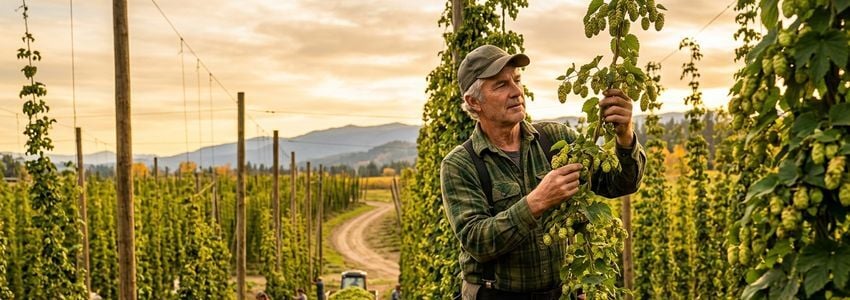
Hop Farm Equipment Financing: The Complete Guide for Hop Growers and Craft Brewers
Growing hops at commercial scale requires a level of specialized equipment that most general agricultural lenders simply do not understand. Hop farm equipment financing gives hop growers, brewery-owned hop yards, and craft beverage suppliers a way to fund trellis systems, mechanical pickers, kilns, and pelletizing lines without draining cash reserves during a season where revenue arrives only once a year. Whether you are planting your first acres or expanding an established hop yard, understanding how this financing works can determine how quickly you scale.
Hop farm equipment financing is a category of agricultural equipment lending built around the unique cost structure of hop production: high upfront capital for trellising and harvesting equipment, a single annual harvest window, and a narrow list of lenders who actually understand what a hop picker or kiln is worth as collateral. This guide covers every financing option available to hop growers in 2026, how to qualify, and how to choose the right structure for your operation.
In This Article
What Is Hop Farm Equipment Financing?
Hop farm equipment financing is a form of agricultural equipment lending designed specifically to fund the machinery, trellising systems, and processing equipment that hop growers need to plant, train, harvest, dry, and package their crop. Unlike row-crop farming, hop production requires a permanent trellis infrastructure that can run 18 feet high or more, plus dedicated harvesting and drying equipment that has almost no use outside the hop industry.
Because this equipment is so specialized, generic small business lenders and even many general agricultural lenders struggle to properly value it as collateral. A used hop picking machine, for example, is a niche asset with a thin resale market compared to a tractor or combine. Lenders who work regularly with specialty crop producers and craft beverage supply chains are far more comfortable financing this equipment, structuring loans around the true useful life of the assets and the seasonal nature of hop farm cash flow.
This financing typically comes in the form of an equipment loan or equipment lease, where the equipment itself serves as the primary collateral. Growers can also combine equipment financing with a seasonal line of credit or working capital loan to cover labor, fertilizer, and other operating costs between planting and harvest.
Industry Insight: According to the USDA National Hop Report, U.S. hop acreage totaled 41,564 acres in 2025, with the Pacific Northwest accounting for roughly 98 to 99 percent of national production. Washington State alone produced hops valued at approximately $329.1 million in 2025, making the Yakima Valley the single most concentrated hop-growing region in the country.
Key Benefits of Hop Farm Equipment Financing
Financing hop farm equipment instead of paying cash upfront offers several advantages that matter to growers operating on tight seasonal margins:
- Preserves working capital for labor, fertilizer, pest control, and irrigation costs that hit before a single cone is harvested
- Matches payments to your harvest cycle with seasonal or annual payment structures instead of fixed monthly payments that ignore your cash flow reality
- Fast approval and funding compared to traditional bank agricultural loans, which can take months to close
- Access to new and used equipment including refurbished pickers and kilns, which can significantly reduce upfront costs for smaller operations
- Tax advantages that may apply to equipment financing and leasing arrangements, depending on your business structure and accounting method
- Builds business credit separate from your personal credit history, which helps you qualify for larger financing as your hop yard expands
Ready to Expand Your Hop Yard?
Crestmont Capital funds trellis systems, pickers, kilns, and more for hop growers nationwide. Apply in minutes with no obligation.
Apply Now →How Hop Farm Equipment Financing Works
The mechanics of hop farm equipment financing follow the same basic structure as other equipment loans, with a few adjustments that reflect the realities of hop farming. Here is how the process typically unfolds.
Step 1: Identify the Equipment and Get a Quote
Before applying, you need a specific piece of equipment in mind, whether that is a new mechanical hop picker, a replacement kiln, or a used baler. Get a written quote or invoice from the equipment dealer or manufacturer. This quote becomes the basis for your loan amount.
Step 2: Apply and Submit Documentation
Lenders will typically request business bank statements, tax returns, a description of your hop yard (acreage, varieties grown, years in production), and the equipment quote. Established growers with multiple harvest seasons behind them generally see faster approvals and better rates than first-year operations.
Step 3: Underwriting and Approval
The lender evaluates the equipment's collateral value, your business's cash flow history, and your credit profile. Because hop equipment has a thinner secondary market than general farm machinery, lenders familiar with the specialty crop space are more likely to approve financing at reasonable terms than a generalist lender who does not understand the asset.
Step 4: Structuring Payments Around Harvest
Many agricultural equipment lenders offer seasonal or annual payment structures instead of standard monthly payments. This means your first payment might not be due until after your hop harvest generates revenue, rather than the month after you take delivery of the equipment.
Step 5: Funding and Equipment Delivery
Once approved, funds are released to the equipment vendor (or reimbursed to you if you already purchased the equipment, depending on the lender's policy) and the equipment is delivered or installed before the next growing season begins.
Equipment You Can Finance for a Hop Farm
Hop production requires a distinct set of specialized equipment at every stage, from planting through processing. Here is what growers typically finance:
- Trellis systems - the permanent pole and wire infrastructure, often 18 feet tall, that hop bines climb during the growing season
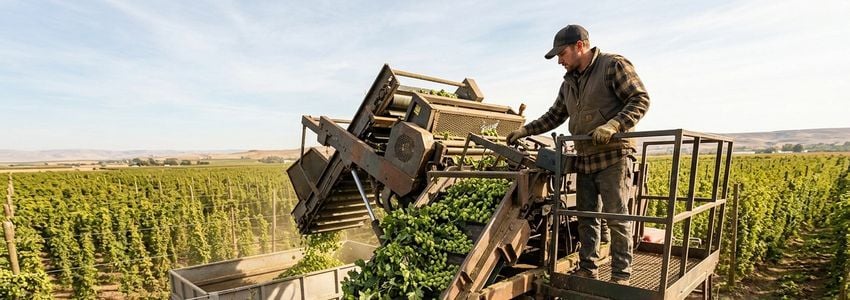
- Mechanical hop pickers - large stationary or portable machines that separate hop cones from bines during harvest
- Hop kilns and drying equipment - forced-air drying systems (oast houses or kilns) that reduce moisture content from roughly 80 percent to 8 to 10 percent immediately after harvest
- Baling equipment - compresses dried hops into bales for storage and shipping
- Pelletizing lines - equipment that grinds and compresses hops into pellets, the form most commonly sold to breweries today
- Cold storage and refrigeration units - preserves hop alpha acid content and aroma compounds between processing and sale
- Irrigation systems - drip or overhead irrigation equipment tailored to hop yard spacing and water needs
- Bine cutting and training equipment - tools and small machinery used during spring training season
- Tractors and specialty attachments - equipment adapted for the narrow rows and tall trellis rows typical of hop yards
- Packaging and vacuum sealing equipment - protects processed hops from oxidation before shipment to brewers
New vs. Used Hop Equipment
Given the specialized and expensive nature of hop harvesting machinery, many growers, especially those under 20 acres, choose used or refurbished equipment to control costs. Lenders can finance both new and used equipment, though used equipment may require an independent appraisal and could come with a slightly shorter loan term to account for remaining useful life.
By The Numbers
The U.S. Hop Industry in 2025
41,564
Total U.S. hop acreage harvested in 2025
$329M+
Value of Washington State hop production
98-99%
Share of U.S. hops grown in the Pacific Northwest
1,990 lbs
Average yield per acre in Washington, 2025
Who This Financing Is Best For
Hop farm equipment financing serves a range of operators across the hop supply chain, including:
- First-generation hop growers converting acreage from row crops or orchards into a hop yard and needing trellis, irrigation, and harvest equipment all at once
- Established growers expanding acreage who need additional pickers, kilns, or trellis materials to scale existing operations
- Craft breweries developing their own hop yards to secure a proprietary supply chain and reduce dependence on outside hop brokers
- Hop processing and pelletizing operations that serve multiple smaller growers and need shared processing infrastructure
- Growers replacing aging equipment such as decades-old kilns or pickers that no longer meet capacity or efficiency needs
- Diversified specialty crop farms adding hops as a secondary crop and needing dedicated equipment separate from existing row-crop machinery
Comparing Hop Farm Financing Options
Growers have several financing structures available, each suited to different needs and timelines.
| Financing Type | Typical Amount | Term Length | Best For |
|---|---|---|---|
| Equipment Loan | $25K - $2M | 3 - 10 years | Pickers, kilns, trellis systems |
| Equipment Lease | $10K - $1M | 2 - 7 years | Lower upfront cost, upgrade flexibility |
| SBA 7(a) Loan | Up to $5M | Up to 25 years | Larger, multi-purpose expansion |
| Seasonal Line of Credit | $10K - $500K | Revolving | Labor, fertilizer, pre-harvest costs |
| Working Capital Loan | $10K - $250K | 6 - 36 months | Between-harvest operating costs |
Equipment loans build ownership equity and are often the best fit for growers planning to keep the equipment for its full useful life. Equipment leases can lower upfront costs and make sense for growers who want to upgrade machinery every few years as harvesting technology improves. SBA loans work well for larger, multi-purpose projects that combine equipment purchases with land improvements or facility expansion.
Get Matched With the Right Financing
Crestmont Capital's team understands specialty crop and agricultural equipment. Get pre-qualified without impacting your credit score.
Start Your ApplicationHow Crestmont Capital Helps Hop Growers
Crestmont Capital is a leading business lender that understands the seasonal cash flow realities of specialty crop operations, including hop farms. Unlike traditional agricultural lenders that may be unfamiliar with hop-specific equipment values, Crestmont's team works with growers, processors, and brewery-owned hop yards across the country.
Our lending solutions for hop growers and processors include:
- Agricultural equipment financing - Fund trellis systems, pickers, kilns, and pelletizing lines through our agricultural equipment financing program
- Irrigation equipment financing - Finance drip or overhead irrigation systems designed for hop yard spacing through our irrigation equipment financing program
- SBA loans - Access government-backed financing for larger expansion projects through our SBA loan services
- Seasonal working capital - Cover labor, fertilizer, and operating expenses between planting and harvest with fast-funding working capital products
Growers looking to understand the broader agricultural equipment financing landscape can also review our guide to agricultural equipment financing and leasing for a wider look at farm machinery lending. Hop growers supplying craft breweries directly may also find our brewery and distillery financing guide useful for understanding how buyers on the other end of the supply chain fund their own equipment needs.
Did You Know? Crestmont Capital is rated the #1 business lender in the United States. Our agricultural clients have used equipment financing to plant new acreage, replace aging harvest machinery, and build out processing capacity without depleting operating cash during the growing season.
Real-World Financing Scenarios for Hop Growers
Seeing how hop farm equipment financing plays out in practice can help you plan your own strategy. Here are five real-world scenarios showing how growers structure financing.
Scenario 1: New Grower Converting Acreage to Hops
A fourth-generation farmer converts 15 acres from wheat to hops, needing $220,000 for trellis poles, wire, anchors, and a small used picker. An equipment loan covers $180,000 with a 7-year term structured around annual harvest payments. The farmer covers the remaining $40,000 from personal savings. First-year yield is modest, but the trellis infrastructure is built to last 20-plus years.
Scenario 2: Established Grower Replacing an Aging Kiln
A 12-year hop operation in the Yakima Valley needs to replace a 30-year-old kiln that can no longer keep up with harvest volume. The new kiln costs $310,000. An equipment loan finances the full amount over 8 years, with the equipment itself as collateral. Improved drying capacity reduces post-harvest spoilage and allows the grower to process the full crop within the critical drying window.
Scenario 3: Brewery-Owned Hop Yard Expansion
A regional craft brewery that started a small hop yard three years ago wants to expand from 8 to 20 acres to reduce reliance on outside hop brokers. Total equipment need, including additional trellis, irrigation, and a shared mechanical picker, is $410,000. A combination of an equipment loan ($350,000) and a working capital loan ($60,000) funds the expansion, with the picker shared across the brewery's growing acreage.
Scenario 4: Small Grower Financing Used Equipment
A 6-acre hop grower wants to move from hand-harvesting to mechanical picking but has a limited budget. A used mechanical picker, appraised at $85,000, is financed through an equipment loan with a 5-year term. The equipment loan requires an independent appraisal given the machine's age, but approval comes through within 10 business days.
Scenario 5: Processor Building Shared Pelletizing Capacity
A hop processing cooperative serving six smaller growers in Idaho needs $650,000 for a pelletizing line and cold storage facility to serve the group collectively. An SBA 7(a) loan covers the majority of the project cost with a 15-year term, spreading payments over a period that matches the useful life of the processing equipment while keeping monthly costs manageable for the cooperative's member growers.
Frequently Asked Questions
Grow Your Hop Operation With the Right Financing
From trellis systems to pelletizing lines, Crestmont Capital funds the equipment hop growers depend on. Apply today, no obligation.
Apply Now →How to Get Started with Hop Farm Equipment Financing
Complete our quick application at offers.crestmontcapital.com/apply-now - it takes just a few minutes and does not affect your credit score.
A Crestmont Capital advisor familiar with agricultural and specialty crop equipment will review your hop yard's needs and match you with the best financing structure.
Once approved, funds are released for your equipment purchase, with many equipment loans closing within days so you can prepare before your next planting or harvest season.
Hop farm equipment financing is not a one-size-fits-all product. The right structure depends on the size of your operation, whether you are buying new or used equipment, and how your cash flow lines up with a single annual harvest. Crestmont Capital works with hop growers, processors, and brewery-owned hop yards at every stage, from first-time growers converting acreage to established operations replacing aging harvest infrastructure.
If you are ready to explore hop farm equipment financing for your operation, reach out to our team today. We will help you understand your options, compare rates and terms, and build a financing plan that fits the realities of growing hops for the craft beverage industry.
Disclaimer: The information provided in this article is for general educational purposes only and is not financial, legal, or tax advice. Funding terms, qualifications, and product availability may vary and are subject to change without notice. Crestmont Capital does not guarantee approval, rates, or specific outcomes. For personalized information about your business funding options, contact our team directly.








