
 (800) 949-0401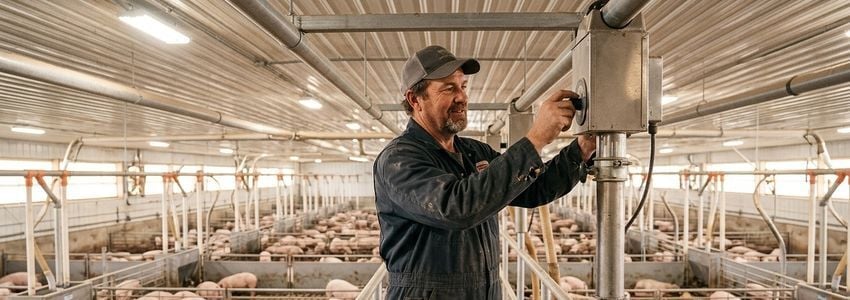
Hog and Swine Farm Equipment Financing: The Complete Guide for Hog Farm Owners
Raising hogs at commercial scale requires more than good genetics and a steady feed supply - it requires serious capital investment in buildings, ventilation, feeding systems, and manure management infrastructure. Hog farm equipment financing gives swine producers a way to acquire confinement buildings, automated feeders, climate control systems, and handling equipment without draining the cash reserves needed to run day-to-day operations. Whether you are expanding a farrow-to-finish operation, retrofitting an aging confinement barn, or starting a new finishing operation, financing is often the difference between growing on schedule and falling behind competitors.
This guide walks through exactly how hog farm equipment financing works, what equipment qualifies, who typically gets approved, and how Crestmont Capital helps swine producers across the country move quickly when opportunity or necessity calls for new equipment.
In This Article
What Is Hog Farm Equipment Financing?
Hog farm equipment financing is a category of business financing designed to help swine producers purchase or lease the physical assets needed to raise hogs at commercial scale. Rather than paying cash upfront for confinement buildings, ventilation systems, automated feeders, or manure handling equipment, a producer borrows the funds - or enters a lease - and repays over a fixed term, typically 3 to 10 years depending on the asset's useful life.
Because the equipment itself generally serves as collateral, lenders can often extend more favorable terms than they would on an unsecured loan. Confinement buildings, feed systems, and ventilation controllers are durable, income-producing assets, which makes them attractive collateral compared to inventory or accounts receivable. This is one reason equipment financing tends to be faster to close and easier to qualify for than a general-purpose working capital loan.
For hog and swine operations specifically, financing is often used to fund a complete finishing barn buildout, retrofit an older confinement facility with modern climate control, or add automated feeding and watering systems that reduce labor costs and improve feed conversion ratios.
Industry Insight: According to the 2022 Census of Agriculture, the number of U.S. farms raising hogs fell to just over 60,000, down from nearly 65,000 in 2017 - a 13.3% decline. Fewer, larger, and more automated operations are absorbing the production, which means the farms that remain are investing heavily in equipment to stay competitive.
Equipment Commonly Financed
Lenders evaluate the durability, resale value, and income-generating potential of an asset when deciding whether it qualifies for equipment financing. The following categories are routinely financed for hog and swine operations:
- Confinement Buildings and Barn Structures - Metal buildings, farrowing facilities, nursery barns, and finishing barns, including slat floors and structural components
- Ventilation Systems - Tunnel ventilation, curtain-sided natural ventilation, EC (electronically commutated) fans, and automated environmental controllers that regulate temperature, humidity, and air quality
- Feeding Systems - Dry feeders, wet/dry feeders, automated electronic feeding stations, feed mixers, grain storage bins, and feed transport equipment
- Watering Systems - Nipple waterers, water medication systems, and water treatment equipment
- Manure Management Equipment - Manure pits, pumps, agitators, and land application equipment for waste handling and nutrient management
- Farrowing Equipment - Farrowing crates, heat lamps and mats, and specialized nursery equipment for piglets
- Handling and Sorting Equipment - Sorting gates, load-out chutes, scales, and hog handling systems that reduce labor and stress on animals during movement
- Biosecurity Equipment - Wash stations, disinfection systems, and controlled-entry infrastructure to reduce disease transmission risk
- Transport Equipment - Livestock trailers and specialized hauling equipment for moving hogs between facilities or to market
- Backup Power Systems - Generators and automated power failure alarm systems, critical for ventilation-dependent confinement operations
Both new and quality used equipment can typically be financed. If you are purchasing a used confinement building or retrofitting an existing structure with used ventilation or feeding equipment, be prepared to document the equipment's age, condition, and current market value.
Ready to Expand Your Hog Operation?
Get fast, flexible equipment financing from the #1 business lender in the U.S. Approval decisions in as little as 24 hours.
Apply Now →How Hog Farm Equipment Financing Works
The process of obtaining hog farm equipment financing follows a fairly standard path, with a few nuances specific to agricultural and livestock operations. Here is a step-by-step breakdown:
1. Define Your Equipment Needs
Before applying, put together a detailed list of what you need: confinement building specs, ventilation system type, feeder models, and vendor quotes. A clear scope of work speeds up underwriting and demonstrates you have a concrete plan rather than a vague expansion idea.
2. Gather Business and Farm Documentation
Lenders typically request 3 to 6 months of bank statements, recent business and personal tax returns, and information about the farm's production history. Producers with 2 or more years of consistent operation and clean financial records generally see more favorable terms.
3. Submit Your Application
With Crestmont Capital, the application process is streamlined and can be completed online in minutes. Equipment loans under $500,000 typically receive a decision within 24 to 48 hours of a complete application.
4. Review Your Offer
Your lender presents terms including loan amount, interest rate, repayment term, monthly payment, and any upfront fees or down payment requirement. Compare offers carefully if you have applied with more than one lender.
5. Sign and Fund
Once you sign the financing agreement, funds are typically disbursed within 1 to 5 business days. For vendor purchases, many lenders can pay the equipment supplier or contractor directly.
6. Take Delivery and Put Equipment to Work
After funding, construction or installation can begin. Repayment typically starts 30 to 60 days after funding, giving you time to complete installation before the first payment comes due.
By the Numbers
Hog Farm Equipment Financing - Key Statistics
60K+
U.S. hog farms as of the 2022 Census of Agriculture
$425-650
Typical cost per pig space for a complete finishing barn
3-10 Yrs
Typical equipment loan term length
24hrs
Typical Crestmont approval timeline
Financing Options: Loans, Leases, and Lines of Credit
Hog and swine operations have several financing structures to choose from, each suited to different goals and cash flow patterns.
Equipment Loans
An equipment loan works like a traditional term loan: the lender advances funds to purchase the confinement building, ventilation system, or feeding equipment, and you repay principal plus interest over a fixed term. At the end of the term, you own the asset outright. Equipment loans make sense when:
- You plan to keep the building or equipment long-term
- You want to build equity in farm infrastructure
- You prefer predictable, fixed monthly payments
- The equipment has a long useful life (10+ years, as with a confinement building)
Equipment Leasing
A lease functions more like a rental agreement for a fixed period. At lease end, you may purchase the equipment for fair market value, return it, or renew. Leasing can make sense for:
- Feeding or ventilation technology that becomes outdated every few years
- Producers who want lower monthly payments during a buildout
- Operations that prefer to avoid the risk of owning equipment that may need replacement sooner than expected
A business line of credit is another option worth considering, particularly for producers who need to make incremental equipment purchases throughout the year rather than one large capital outlay. Draw funds as needed and repay based on actual usage, which works well for smaller feeder or handling equipment upgrades that happen on an ongoing basis.
Pro Tip: Many hog producers combine a term loan for the confinement building itself with a shorter-term lease for feeding and ventilation technology, since buildings last decades while automated feed and climate control systems tend to be upgraded more frequently.
Who Qualifies for Hog Farm Equipment Financing?
Financing is accessible to a range of swine producers, from established multi-generational operations to newer entrants expanding into hog production. Qualification criteria vary by lender, but Crestmont Capital works across the funding spectrum.
Established Producers (2+ Years in Operation)
Farms with a track record of consistent production and revenue are the strongest applicants. Lenders want to see healthy bank statements, a clean credit profile, and evidence of stable contracts with processors or integrators. Established producers can typically access:
- Loan amounts from $25,000 to $5 million or more
- Terms of 3 to 10 years depending on the asset
- Competitive rates based on creditworthiness
- Minimal documentation for smaller equipment purchases
Newer Operations (Under 2 Years)
Newer hog operations are not excluded, but they typically face more scrutiny. Lenders may require a stronger personal credit score, a larger down payment, or a signed contract with an integrator or processor demonstrating a reliable revenue stream before construction begins.
Diversified Farms Adding Hog Production
Row crop or mixed livestock operations adding a hog enterprise often qualify based on their existing farm history and financial statements. Lenders view this as a manageable expansion rather than a standalone startup risk.
General Qualification Benchmarks
- Credit Score: 600+ for most programs; 680+ for the most competitive rates
- Time in Operation: 6 months to 2+ years depending on the program
- Annual Revenue: Varies by operation size; consistent, documented revenue strengthens any application
- Down Payment: 0% to 20% depending on credit profile and deal size
See If You Qualify in Minutes
Crestmont Capital works with established hog operations, diversifying farms, and newer producers alike. No obligation to apply.
Check Your Options →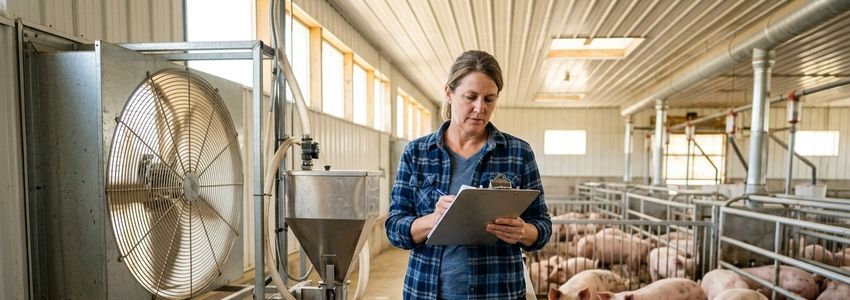
Financing Options Compared
Different financing structures suit different situations. Use this comparison to identify which approach fits your hog operation best:
| Feature | Equipment Loan | Equipment Lease | Line of Credit |
|---|---|---|---|
| Ownership | You own at end of term | Option to buy, return, or renew | You own immediately |
| Monthly Payments | Moderate, fixed | Lower, fixed | Variable (interest on drawn balance) |
| Best For | Confinement buildings, long-life assets | Feeding and ventilation tech | Incremental equipment additions |
| Down Payment | 0-20% | Often 1-2 months upfront | None |
| Application Time | 1-3 days | 1-3 days | 1-5 days |
Note: Hog operations with seasonal cash flow tied to market timing may benefit from loans with deferred first payments or step-up structures that align repayment with expected sale proceeds.
How Crestmont Capital Helps Hog and Swine Farm Owners
Crestmont Capital is a nationally recognized business lender with experience serving agricultural and livestock operations. Unlike traditional banks that may be unfamiliar with swine production economics, Crestmont Capital understands the capital cycle of hog farming, from the upfront cost of a finishing barn to the seasonal timing of market hog sales.
Here is what sets Crestmont Capital apart for hog and swine producers:
Fast, Streamlined Approvals
Producers cannot always wait weeks for a financing decision when a confinement building needs repair before winter or a contract deadline is approaching. Crestmont Capital's equipment financing decisions typically arrive within 24 to 48 hours, with funds available within days of approval.
Flexible Loan Structures
Crestmont Capital offers equipment loans, leases, and business lines of credit, giving producers the structure that fits their specific situation - whether that is a full barn buildout or an incremental feeder upgrade.
Broad Equipment Eligibility
Crestmont Capital finances new and used equipment across the hog production cycle, including:
- Confinement buildings and structural components
- Ventilation and environmental control systems
- Automated feeding and watering equipment
- Manure management and biosecurity infrastructure
- Handling equipment, trailers, and backup power systems
Working Capital Options
Beyond equipment financing, Crestmont Capital offers unsecured working capital loans that hog producers use to cover feed costs during price spikes, manage payroll between market cycles, or bridge cash flow gaps. These can run alongside equipment financing for complete financial flexibility.
You can also explore our agricultural equipment financing page or our broader farm equipment financing programs for a full overview, or contact our team to discuss your specific operation. For producers managing livestock movement and handling infrastructure, our guide to livestock handling equipment financing covers additional equipment categories that pair well with a hog operation buildout.
Real-World Scenarios: Hog Farm Financing in Practice
Understanding how other producers have used financing can help you think through your own strategy. Here are six realistic scenarios representing situations hog and swine operators commonly face:
Scenario 1: Building a New Finishing Barn
A fourth-generation farm family in Iowa is adding a 2,400-head finishing barn to diversify beyond row crops. The complete buildout, including structure, ventilation, slats, and feeding systems, runs approximately $650,000. Rather than tying up land equity, the family secures an equipment loan through Crestmont Capital with a 10-year term structured around expected finishing cycles, preserving working capital for feed and operating expenses.
Scenario 2: Retrofitting an Aging Confinement Facility
An established producer in North Carolina operates a 20-year-old confinement barn with outdated curtain-sided ventilation. Rising energy costs and inconsistent temperature control are hurting feed conversion rates. The owner uses a $65,000 equipment loan to install a modern tunnel ventilation system with EC fans and automated environmental controllers, cutting energy costs and improving weight gain within the first finishing cycle.
Scenario 3: Upgrading to Automated Feeding Systems
A mid-size operation in Minnesota is spending too much labor time on manual feed delivery across multiple barns. The owner finances $85,000 in automated wet/dry feeders and a feed mixing system through a 5-year equipment loan, reducing labor hours and improving feed efficiency across the operation.
Scenario 4: Expanding a Farrow-to-Finish Operation
A producer in Indiana with an established farrowing operation wants to add finishing capacity to capture more margin rather than selling feeder pigs. A $400,000 equipment loan funds a new finishing barn and handling equipment, allowing the farm to control the full production cycle from birth to market weight.
Scenario 5: Adding Biosecurity Infrastructure
After a regional disease outbreak affects nearby farms, a producer in Missouri invests in upgraded biosecurity infrastructure, including a controlled-entry wash station and disinfection system. A $40,000 equipment loan covers the investment, protecting the herd and satisfying integrator requirements for continued contract eligibility.
Scenario 6: Replacing Manure Management Equipment
An operation in Nebraska needs to replace aging manure pit pumps and agitation equipment before the next application season. Rather than delaying the purchase and risking a compliance issue, the owner uses a business line of credit to acquire the equipment quickly, then repays the draw after the fall harvest and hog sales.
Finance Your Hog Operation's Next Upgrade
Join producers across the country who have used Crestmont Capital to fund confinement buildings, ventilation, and feeding equipment. Apply in minutes, no obligation required.
Apply Now →How to Get Started
Complete our quick application at offers.crestmontcapital.com/apply-now - takes just a few minutes. Have your equipment list, vendor quotes, and recent bank statements ready.
A Crestmont Capital financing advisor will review your application, discuss your equipment needs, and match you with the right loan or lease structure for your operation.
Once approved and documents are signed, funding typically arrives within 1 to 5 business days so construction or installation can move forward on schedule.
Conclusion
Hog and swine production is a capital-intensive business, and the operations that invest in modern confinement buildings, efficient ventilation, and automated feeding systems are the ones best positioned to compete as the industry consolidates around fewer, larger, more efficient farms. Hog farm equipment financing gives producers a practical way to make these investments without depleting the working capital needed to keep the operation running day to day.
Whether you are building a new finishing barn, retrofitting an aging confinement facility, or adding automated feeding and biosecurity infrastructure, Crestmont Capital offers the fast approvals, flexible structures, and agricultural lending experience you need to move forward confidently. Don't let equipment costs slow down a hog operation that is ready to grow.
Explore our equipment leasing options or SBA loan programs to find the right fit for your hog or swine operation.
Grow Your Hog Operation Today
Get fast, flexible financing from the #1 business lender in the U.S. No obligation - apply in minutes.
Apply Now →Frequently Asked Questions
Disclaimer: The information provided in this article is for general educational purposes only and is not financial, legal, or tax advice. Funding terms, qualifications, and product availability may vary and are subject to change without notice. Crestmont Capital does not guarantee approval, rates, or specific outcomes. For personalized information about your business funding options, contact our team directly.








