Parade float building is a specialized craft that blends welding, foam sculpting, fiberglass work, animatronics, and large-format fabrication into a single demanding trade. Whether you run a commercial float construction studio building entries for the Rose Parade, Mardi Gras krewes, or local homecoming and holiday parades, the equipment required is expensive, specialized, and often hard to finance through conventional channels. Float building equipment financing gives studio owners a practical path to acquire the tools, trailers, and fabrication technology needed to compete for larger contracts and scale their operation.
In This Article
- What Is Float Building Equipment Financing?
- Benefits of Financing Your Float Building Studio
- Types of Financing for Float Builders
- How Float Building Equipment Financing Works
- Equipment Float Builders Commonly Finance
- Who Qualifies for Float Building Equipment Financing?
- Parade Float Industry - Key Numbers
- How Crestmont Capital Helps Float Builders
- Real-World Financing Scenarios
- Comparing Financing Options
- Frequently Asked Questions
- How to Get Started
What Is Float Building Equipment Financing?
Float building equipment financing is a category of business financing designed to help parade float construction studios purchase or lease the specialized tools and machinery their craft requires. This includes welding equipment for steel chassis and armatures, hot-wire and CNC foam cutters for sculpting, fiberglass and paint spray systems, hydraulic and animatronic mechanisms, flatbed trailers for hauling finished floats, and large-format tools for frame fabrication.
Unlike a generic small business loan, equipment financing is structured around the asset being purchased. The equipment itself typically serves as collateral, which makes approval more accessible for studios that may not have extensive credit history but do have a clear plan for the machinery they need. According to the Small Business Administration, equipment-based lending is one of the most common financing paths for specialty fabrication and manufacturing businesses because lenders can tie loan terms directly to the useful life of the asset.
Parade float construction is a genuine niche industry. Firms like Kern Studios in New Orleans operate out of a 250,000-square-foot facility and use seven-axis sculpting robots alongside traditional hand craftsmanship, while builders like Phoenix Decorating Company and Artistic Entertainment Services construct multi-hundred-thousand-dollar entries for the Rose Parade every year. Even smaller regional float builders serving homecoming parades, holiday parades, and local festivals need reliable fabrication equipment to compete and deliver on deadline.
Industry Insight: A single high-end Rose Parade float can cost between $275,000 and over $1,000,000 to build, with construction typically taking around ten months from concept to parade day.
Benefits of Financing Your Float Building Studio
Float construction is capital-intensive work. Steel benders, foam cutting rigs, hydraulic animation systems, and transport trailers can each run into the tens of thousands of dollars. Financing spreads that cost over time instead of requiring a studio to pay cash upfront or turn down contracts due to lack of capacity.
- Take on larger contracts - More equipment and capacity means you can bid on bigger parade entries, corporate floats, and theme park installations
- Upgrade fabrication technology - CNC foam cutters and sculpting robots reduce labor hours and improve consistency on complex designs
- Expand transport capacity - Purpose-built trailers let you deliver larger, more elaborate floats safely and on schedule
- Smooth seasonal cash flow - Parade season is concentrated around specific calendar dates; financing helps cover costs during slower production months
- Preserve working capital - Financing equipment instead of paying cash keeps cash reserves available for materials, labor, and unexpected costs
- Build business credit - Successfully repaying equipment financing strengthens your credit profile for future growth
- Compete for prestige events - Studios bidding on nationally televised parades need equipment that meets strict safety and quality standards
Ready to Grow Your Float Building Studio?
Get fast, flexible equipment financing to expand your fabrication capacity. Apply in minutes with no obligation.
Apply Now →Types of Financing for Float Builders
Float construction studios have several financing paths available, each suited to different needs and timelines.
Equipment Financing
Fabrication equipment financing is typically the best fit for float studios buying welding rigs, foam cutters, spray booths, or hydraulic animation components. The equipment serves as collateral, which generally means lower rates and easier approval than unsecured products, even for studios without a long credit history. Terms usually run 24 to 84 months depending on the equipment's useful life.
Equipment Leasing
Equipment leasing can make sense for technology that evolves quickly, such as CNC foam-cutting machines or 3D modeling and design software systems. Leasing preserves capital and allows you to upgrade equipment as new fabrication technology becomes available, rather than owning equipment that may become outdated.
Commercial Vehicle and Trailer Financing
Transporting finished floats safely requires purpose-built flatbed trailers and tow vehicles. Commercial vehicle financing lets studios acquire the trucks and trailers needed to deliver floats to parade routes and staging areas without draining cash reserves ahead of a big event.
Business Line of Credit
A business line of credit gives float studios revolving access to funds for materials, overtime labor, and last-minute design changes that come up during the intense production push before a parade date. You only pay interest on what you draw, making it ideal for managing the uneven cash flow typical of event-based production work.
Working Capital Loans
Working capital loans provide fast, unsecured funding to cover payroll, materials, or facility costs between contracts. Approvals are often available within 24 to 48 hours, which matters for studios working against hard parade deadlines.
SBA Loans
SBA loans offer the lowest rates and longest terms available to qualifying small businesses. An SBA 7(a) loan can finance up to $5 million and is commonly used for equipment purchases, with terms up to 10 to 15 years depending on the equipment's useful life. The SBA 504 program is designed specifically for major fixed-asset purchases, such as large fabrication machinery or a dedicated production facility, with terms extending to 20 to 25 years. For smaller needs, the SBA Microloan program offers up to $50,000 with repayment terms up to seven years.
How Float Building Equipment Financing Works
The application and funding process for float building equipment financing follows a straightforward path through alternative lenders like Crestmont Capital, especially compared to the longer SBA approval timeline.
Quick Guide
How Float Building Equipment Financing Works
Provide basic business details, the equipment you want to purchase, and the loan amount needed.
3-6 months of bank statements, an equipment quote or invoice, and basic business formation documents.
Alternative lenders can approve applications within 24-72 hours. SBA loans take longer but offer stronger long-term terms.
Funds are typically deposited within 1-3 business days, letting you place equipment orders right away.
Equipment Float Builders Commonly Finance
Parade float construction spans several fabrication disciplines, and studios typically need financing across multiple equipment categories rather than a single machine purchase.
Steel Fabrication and Welding Equipment
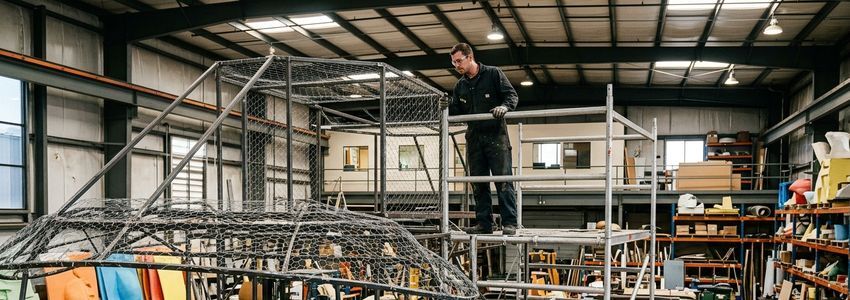
Every float begins with a steel or aluminum chassis and armature. Welding equipment financing covers MIG and TIG welders, plasma cutters, and metal benders used to build the structural frame that supports the entire float.
Foam Sculpting and CNC Cutting Tools
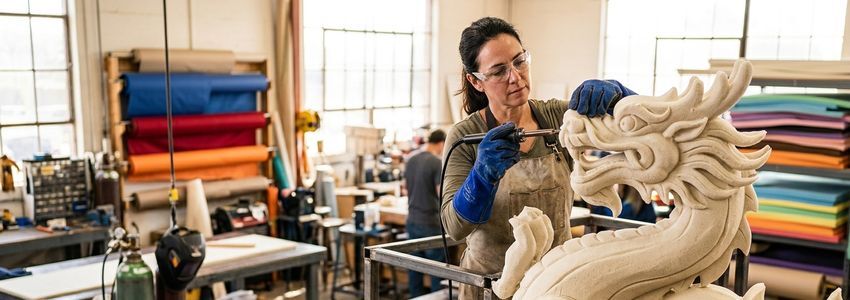
Modern float studios increasingly rely on hot-wire foam cutters and CNC-controlled sculpting machines to shape large decorative elements quickly and consistently. Some of the largest commercial float builders use multi-axis robotic sculpting systems to carve intricate shapes that would take weeks by hand.
Fiberglass and Paint Spray Systems
After foam shaping, float surfaces are often coated in fiberglass or specialty paint for durability and visual finish. Spray booths, compressors, and application equipment represent a significant equipment investment for studios producing multiple floats per season.
Animatronics and Hydraulic Systems
High-end parade and theme park floats often include moving elements, from simple rotating platforms to complex animatronic figures. Financing can cover the hydraulic pumps, actuators, and control systems needed to build these mechanical features.
Trailers and Transport Equipment
Commercial truck and trailer financing covers the flatbed trailers, tow vehicles, and rigging equipment needed to transport finished floats safely from the studio to the parade route, often across significant distances for national events.
Who Qualifies for Float Building Equipment Financing?
Qualification requirements vary by lender and loan type, but here is a general benchmark for float building studios seeking equipment financing:
| Factor | Traditional Bank | Alternative Lender |
|---|---|---|
| Time in Business | 2+ years | 6+ months |
| Minimum Credit Score | 680+ | 550+ |
| Annual Revenue | $100K+ | $50K+ |
| Documentation | Full financials, tax returns | Bank statements, equipment quote |
| Funding Speed | 2-6 weeks | 24-72 hours |
Because float construction contracts are often seasonal and tied to specific calendar events like Mardi Gras, Rose Parade season, or holiday parades, many lenders will review revenue patterns over a full production cycle rather than expecting consistent month-to-month income. Studios with a signed contract for an upcoming parade entry often strengthen their application by including that documentation.
Parade Float Industry - Key Numbers
By the Numbers
Parade Float Construction Industry - Key Statistics
$275K-$1M+
Typical cost of a high-end Rose Parade float
~10 Months
Average construction timeline for a major parade float
$300M
Estimated economic impact of the Tournament of Roses events
$200M+
Annual NYC tourism revenue tied to the Macy's Thanksgiving Day Parade
How Crestmont Capital Helps Float Builders
At Crestmont Capital, we understand that parade float construction studios operate differently than most small businesses. Production cycles are tied to fixed calendar dates, contracts can be large relative to typical annual revenue, and the specialized equipment required is not something most lenders are familiar with evaluating.
We offer fabrication equipment financing, commercial vehicle financing for transport trailers, and flexible small business financing solutions built around the realities of event-based production businesses. Our advisors take the time to understand your production schedule, contract pipeline, and equipment needs so we can match you with financing that fits your actual cash flow pattern rather than a generic monthly repayment assumption.
According to Forbes Small Business reporting, specialty fabrication and event production businesses are among the small business categories that benefit most from financing tailored to irregular revenue cycles, since traditional bank underwriting often struggles to evaluate seasonal or contract-based income patterns.
Our clients in the float building and large-format fabrication space have used Crestmont financing to:
- Purchase CNC foam cutting systems to reduce production time on complex sculptural elements
- Acquire flatbed trailers and tow vehicles to transport finished floats to out-of-state parade events
- Upgrade welding and metal fabrication equipment to handle larger steel armature projects
- Expand fiberglass and paint application capacity to take on more floats per season
- Bridge cash flow between contract deposits and final payment on completed floats
Ready to Expand Your Float Building Capacity?
Work with the #1 rated business lender in the U.S. Fast approvals, flexible terms, and funding for specialty fabrication studios of all sizes.
Get Funded Today →Real-World Financing Scenarios
Here are several realistic scenarios showing how float building studios commonly use equipment financing in practice:
Scenario 1: Regional Studio Adding CNC Foam Cutting Capacity
Marcus runs a regional float construction studio that builds entries for local holiday parades and homecoming events. His team was hand-carving all foam elements, which limited how many contracts he could accept per season. He secured a $45,000 equipment loan to purchase a CNC hot-wire foam cutting system. The new equipment cut production time on large sculptural pieces by nearly half, allowing him to take on four additional contracts in his first season with the new machine.
Scenario 2: Mardi Gras Krewe Builder Expanding Steel Fabrication
A New Orleans-area float construction company serving Mardi Gras krewes needed to replace aging welding equipment before the start of carnival season. They secured a $30,000 equipment loan covering two new MIG welders and a metal bending machine. The upgraded equipment let their fabrication crew build steel armatures faster, helping them deliver all contracted floats on schedule despite a compressed production calendar.
Scenario 3: Studio Expanding Transport Capacity for National Events
A commercial float studio that had previously built only local parade entries was approached to build a float for a nationally broadcast parade. The float required transport across three states. The studio secured a $65,000 commercial trailer financing package to acquire a purpose-built flatbed trailer and escort vehicle equipment, allowing them to safely deliver the completed float and win the contract.
Scenario 4: Small Studio Bridging Cash Flow Between Deposit and Final Payment
A small float building operation typically receives a deposit at contract signing and the balance upon delivery, leaving a cash flow gap during the months of active construction. The studio used a $20,000 business line of credit to cover materials and payroll during production, repaying the balance once the final client payment arrived after parade day.
Scenario 5: Established Builder Adding Animatronics Capability
An established float studio wanted to offer animatronic and moving-element floats to compete for higher-value theme park and corporate parade contracts. They secured a $55,000 equipment loan for hydraulic systems, actuators, and control hardware. Within one season, the new animatronic capability helped them win two corporate parade contracts worth significantly more than their typical static float projects.
Comparing Financing Options for Float Builders
Different financing products suit different needs within a float building operation. Here is a practical breakdown:
- Buying welding or foam cutting equipment: Fabrication equipment financing - uses the equipment as collateral, competitive rates
- Acquiring transport trailers or tow vehicles: Commercial vehicle financing - structured around the vehicle's useful life
- Covering production-cycle cash flow gaps: Business line of credit - draw only what you need between contract milestones
- Large facility or major equipment investment: SBA 504 loan - lowest rates, longest terms for fixed assets
- Fast access to working capital: Working capital loan - 24-48 hour approvals, no collateral required
- Technology that evolves quickly: Equipment leasing - preserves capital and allows upgrades over time
If you are unsure which financing structure fits your studio's production cycle and contract pipeline, a conversation with a Crestmont Capital advisor can help identify the best option based on your revenue pattern, credit profile, and growth goals. You can also explore our small business financing hub to compare options side by side.
Important Note: Rising material costs have significantly affected float builders in recent years - a sheet of plywood commonly used in float frame construction rose from roughly $16 to $66 in recent seasons, making equipment that reduces material waste and labor time an even more valuable investment.
Frequently Asked Questions
How to Get Started
Complete our quick application at offers.crestmontcapital.com/apply-now - takes just a few minutes with no commitment required.
A Crestmont Capital advisor will review your production schedule and contract pipeline to match you with the right financing structure.
Receive your funds, often within 24 to 72 hours, and put them to work expanding your fabrication capacity.
Conclusion
Float building equipment financing gives parade float construction studios a practical way to acquire the welding gear, foam cutting technology, fiberglass systems, and transport equipment their craft demands. Whether you are a regional studio upgrading your first CNC foam cutter or an established builder competing for nationally televised parade contracts, the right financing structure can accelerate your growth without draining the working capital you need to run daily operations.
Parade float construction remains a resilient niche industry with meaningful contract values and consistent seasonal demand tied to fixed calendar events. Float building equipment financing from lenders like Crestmont Capital gives studio owners the capital access to take on bigger contracts, modernize their fabrication process, and build a sustainable, growing operation.
Apply today and discover how fast and straightforward business financing can be when you work with a lender who understands your industry.
Disclaimer: The information provided in this article is for general educational purposes only and is not financial, legal, or tax advice. Funding terms, qualifications, and product availability may vary and are subject to change without notice. Crestmont Capital does not guarantee approval, rates, or specific outcomes. For personalized information about your business funding options, contact our team directly.