
 (800) 949-0401
Equipment Financing for Opening a Mobile Division: The Complete Guide for Business Owners
In today's dynamic business landscape, agility and customer accessibility are paramount. Companies across countless industries are discovering a powerful strategy to meet these demands: launching a mobile division. This approach involves taking services and products directly to the customer, breaking free from the constraints of a traditional brick-and-mortar location. From mobile medical clinics and on-site auto repair to gourmet food trucks and pop-up retail boutiques, the mobile business model offers unparalleled flexibility and market reach. However, this strategic pivot comes with a significant initial hurdle: acquiring the necessary vehicles and specialized equipment.
The upfront cost of a fully outfitted commercial vehicle, along with the sophisticated technology and tools required to operate effectively, can be substantial. For many business owners, this capital expenditure represents a major barrier to entry, potentially draining crucial working capital needed for marketing, inventory, and payroll. This is precisely where a strategic financial tool becomes essential. Rather than depleting cash reserves or seeking complex, slow-moving traditional loans, businesses are turning to a more targeted and efficient solution: equipment financing.
Equipment financing for a mobile division is a specialized form of funding designed specifically to cover the cost of vehicles, machinery, and technology. It allows a business to acquire these essential assets immediately while spreading the cost over a predetermined period through manageable monthly payments. This financial strategy not only makes the launch of a mobile division feasible but also provides a predictable and sustainable path to growth. It aligns the cost of the equipment with the revenue it generates, creating a healthier cash flow cycle from the outset.
This comprehensive guide will walk you through every aspect of equipment financing for your new mobile venture. We will explore what a mobile division entails, the specific types of equipment you can finance, how the financing process works, and the various options available. We will also cover qualification requirements, potential costs, and common pitfalls to avoid. By understanding the intricacies of this powerful funding solution, you can confidently take the next step in expanding your business, reaching new customers, and unlocking the full potential of a mobile division.
In This Article
- What Is a Mobile Division?
- Why Equipment Financing Makes Sense for Mobile Divisions
- Types of Equipment You Can Finance for a Mobile Division
- How Equipment Financing for a Mobile Division Works
- Types of Equipment Financing Options Available
- Qualifying for Equipment Financing
- How Much Does It Cost to Finance Mobile Division Equipment?
- Who Should Consider Equipment Financing for a Mobile Division?
- How Crestmont Capital Helps You Launch Your Mobile Division
- Real-World Scenarios: Industries Expanding with Mobile Divisions
- Common Mistakes to Avoid When Financing Mobile Equipment
- Comparison: Equipment Financing vs. Other Funding Options
- Frequently Asked Questions
- Your Next Steps to Launching a Mobile Division
- Conclusion
What Is a Mobile Division?
A mobile division is an extension of a business that operates outside of a fixed, physical location. It utilizes specially equipped vehicles to deliver products, services, or experiences directly to customers at their homes, workplaces, or other convenient locations. This model represents a fundamental shift from the traditional "come-to-us" approach to a more proactive and customer-centric "we-come-to-you" strategy. It is not just for new businesses; established companies often launch mobile divisions to expand their reach, test new markets, and enhance customer convenience.
The core components of a mobile division are the vehicle and the onboard equipment. The vehicle-a van, truck, trailer, or even a customized bus-serves as the operational hub. The equipment inside is tailored to the specific industry and service being offered. This could range from medical diagnostic tools in a mobile health clinic to commercial-grade ovens in a food truck or advanced diagnostic computers in a mobile mechanic's van. The synergy between the vehicle and its equipment is what defines the division's capabilities and its value proposition to the customer.
The benefits of establishing a mobile division are numerous and can provide a significant competitive advantage:
- Reduced Overhead Costs: One of the most compelling advantages is the potential for significantly lower overhead. A mobile division eliminates the need for expensive commercial rent, property taxes, and the extensive utility costs associated with a brick-and-mortar storefront. While there are costs for vehicle maintenance, fuel, and insurance, they are often substantially less than the carrying costs of a permanent physical location.
- Expanded Geographic Reach: A mobile unit is not tied to a single neighborhood or zip code. It can travel to various communities, business parks, residential areas, and special events, dramatically expanding the potential customer base. This allows businesses to tap into underserved markets or areas where a physical location would not be financially viable.
- Enhanced Customer Convenience: In an economy driven by convenience, bringing your services directly to the customer is a powerful differentiator. Clients save time and effort, leading to higher satisfaction and loyalty. For services like pet grooming, auto repair, or healthcare, the on-site model removes logistical challenges for the customer, making the service far more attractive.
- Increased Brand Visibility: A professionally wrapped vehicle acts as a mobile billboard. As it travels through communities and parks at job sites, it constantly advertises the business. This form of marketing is highly effective and builds brand recognition and trust within the operational area. Every service call becomes a marketing opportunity.
- Market Testing and Agility: For businesses considering expansion, a mobile division offers a low-risk way to test the demand in a new geographic area before committing to the massive investment of a new physical location. If a particular area proves lucrative, the business can establish a permanent presence with confidence. If not, the mobile unit can simply be redirected to a more promising market.
- Niche Service Opportunities: The mobile model opens the door to highly specialized, niche services that might not attract enough foot traffic to sustain a traditional storefront. Services like mobile knife sharpening, on-site document shredding, or specialized tech support can thrive by serving a broad geographic area rather than relying on a small local population.
Ultimately, a mobile division transforms a business from a static entity into a dynamic service provider. It redefines the customer relationship by prioritizing accessibility and convenience, creating a robust platform for growth in a competitive marketplace. Funding this transformation is the first critical step, and that is where specialized financing becomes indispensable.
Why Equipment Financing Makes Sense for Mobile Divisions
Launching a mobile division is an equipment-intensive endeavor. The vehicle itself is a major purchase, and outfitting it with specialized tools, technology, and machinery can easily double or triple the initial investment. Paying for these assets with cash is often impractical and strategically unwise for most businesses. Equipment financing provides a structured and intelligent alternative that offers numerous strategic advantages specifically tailored to the needs of a mobile expansion.
Here’s a detailed look at why equipment financing is the ideal funding mechanism for this type of business growth:
- Preservation of Working Capital: This is arguably the most critical benefit. Working capital-the cash available for day-to-day operations-is the lifeblood of any business, especially a new venture or division. Using a large sum of cash to purchase a vehicle and equipment outright can leave a company financially vulnerable. It depletes the funds needed for fuel, marketing campaigns, employee salaries, inventory, and unforeseen expenses. Equipment financing allows the business to retain its cash reserves for these operational necessities, ensuring a smoother launch and sustained operations.
- Predictable, Fixed Monthly Payments: Equipment financing agreements typically come with fixed interest rates and consistent monthly payments over a set term (e.g., 36, 48, or 60 months). This predictability is a cornerstone of effective financial planning. Business owners can accurately forecast their monthly equipment expenses and build them into their budget, avoiding the uncertainty of fluctuating costs. This stability simplifies cash flow management and allows for more strategic long-term planning.
- Significant Tax Advantages: The tax benefits associated with equipment financing can be substantial. Under Section 179 of the IRS tax code, businesses may be able to deduct the full purchase price of qualifying new or used equipment in the year it is put into service. This can lead to a significant reduction in the company's tax liability. Additionally, bonus depreciation rules may allow for further deductions. These tax incentives can effectively lower the net cost of the equipment, making the investment even more affordable. (Note: Businesses should always consult with a tax professional to understand the specific implications for their situation).
- Fast and Streamlined Funding Process: Unlike traditional bank loans that can involve a lengthy, bureaucratic process with extensive paperwork, equipment financing is designed for speed. Lenders specializing in this area, like Crestmont Capital, have optimized their application and underwriting processes. Many applications can be completed online in minutes, and funding decisions are often made within 24 to 48 hours. This speed is crucial when an opportunity arises to purchase a specific vehicle or a piece of equipment at a good price.
- The Equipment Itself Serves as Collateral: In an equipment financing agreement, the asset being financed (the vehicle, the machinery, etc.) typically serves as the collateral for the loan. This is a significant advantage for many businesses, as it means they do not have to pledge other business or personal assets, such as commercial real estate or personal property, to secure the funding. This self-collateralizing structure reduces the risk for the business owner and simplifies the qualification process.
- Builds Business Credit: Making timely payments on an equipment loan or lease is reported to business credit bureaus. By responsibly managing the financing agreement, a business can build a strong credit profile. A robust business credit history is a valuable asset, making it easier and more affordable to secure other forms of financing-such as working capital loans or lines of credit-in the future.
- Flexible Terms and Structures: Equipment financing is not a one-size-fits-all product. Lenders often offer a variety of terms and payment structures to match a business's specific cash flow patterns. For example, a business with seasonal fluctuations might arrange for a financing plan with lower payments during the slow season and higher payments during peak months. This flexibility ensures that the financing plan supports the business's operational reality rather than constraining it.
In essence, equipment financing for a mobile division is a strategic tool that enables growth without compromising financial stability. It allows businesses to acquire revenue-generating assets immediately, aligning the cost of those assets with the income they produce over time. This smart allocation of resources empowers business owners to focus on what they do best: serving customers and growing their enterprise.
Types of Equipment You Can Finance for a Mobile Division
The success of a mobile division hinges on having the right vehicle and the correct onboard equipment. The term "equipment" in this context is broad, encompassing everything from the truck or van itself to the highly specialized tools and technology inside. Equipment financing is versatile enough to cover nearly any asset that is essential for the operation of the mobile unit. The financing can often be bundled, allowing a business to acquire the vehicle and all its necessary outfitting under a single financing agreement.
Below is a detailed breakdown of the types of equipment that can be financed, categorized by popular mobile industries:
1. Base Vehicles
The foundation of any mobile division is the vehicle. Financing can cover the purchase of both new and used vehicles, including:
- Cargo Vans: (e.g., Ford Transit, Mercedes-Benz Sprinter, Ram ProMaster) - Ideal for trades like plumbing, electrical, IT support, and delivery services.
- Step Vans: (e.g., Freightliner MT, Ford F-59) - The classic choice for food trucks, mobile retail, and package delivery due to their spacious, boxy interiors.
- Box Trucks: (e.g., Isuzu NPR, Hino 195) - Suitable for larger operations like mobile document shredding, moving services, or large-scale catering.
- Trailers: (e.g., concession trailers, enclosed utility trailers) - A cost-effective option that can be towed by an existing truck, popular for food service, mobile workshops, and event services.
- Customized Buses and RVs: Often used for mobile medical clinics, luxury pet grooming, and mobile showrooms.
2. Industry-Specific Onboard Equipment
This is where the mobile unit is transformed into a specialized service center. Financing can cover the full cost of outfitting the vehicle.
Mobile Food Service (Food Trucks, Coffee Carts, Catering Vans)
- Cooking Equipment: Commercial-grade grills, fryers, flat-tops, ranges, and convection ovens.
- Refrigeration: Undercounter refrigerators, freezers, prep tables with refrigerated compartments, and walk-in coolers for larger trucks.
- Ventilation: Professional hood and fire suppression systems, which are required by health and safety regulations.
- Food Prep: Stainless steel countertops, sinks (three-compartment and hand-washing), and food processors.
- Power: Commercial generators, inverters, and shore power hookups.
- Point-of-Sale (POS) Systems: Tablets, card readers, and receipt printers for processing transactions.
Mobile Healthcare and Wellness (Clinics, Dentistry, Physical Therapy)
- Diagnostic Equipment: Portable X-ray machines, ultrasound devices, EKG monitors, and blood analyzers.
- Medical Furniture: Examination tables, dental chairs, and specialized seating.
- Sterilization Equipment: Autoclaves and medical-grade sanitizers.
- Refrigeration: Medical-grade refrigerators for vaccines and samples.
- Technology: Laptops with electronic health record (EHR) software, telehealth video conferencing equipment.
- Accessibility: Wheelchair lifts and ramps.
Mobile Auto Repair and Detailing
- Mechanical Tools: Air compressors, hydraulic lifts (in larger trucks), tire changing and balancing machines, and comprehensive mechanics' tool sets.
- Diagnostic Technology: Advanced OBD-II scanners and computer diagnostic systems.
- Detailing Equipment: High-pressure washers, steam cleaners, carpet extractors, and industrial-grade vacuums.
- Fluid Management: Oil caddies, waste oil tanks, and fluid-dispensing systems.
- Power and Lighting: Generators and powerful LED work lights for various conditions.
Mobile Pet Grooming
- Grooming Stations: Hydraulic or electric grooming tables and stainless steel tubs.
- Bathing Systems: High-velocity dryers, specialized water heaters, and water pumps.
- Grooming Tools: Professional-grade clippers, shears, brushes, and nail grinders.
- Holding: Secure, built-in crates and kennels.
- Climate Control: Dedicated air conditioning and heating systems to ensure animal safety and comfort.
Construction and Trades (Plumbing, HVAC, Electrical)
- Specialized Tools: Pipe threaders, drain cameras (for plumbers), refrigerant recovery machines (for HVAC), and conduit benders (for electricians).
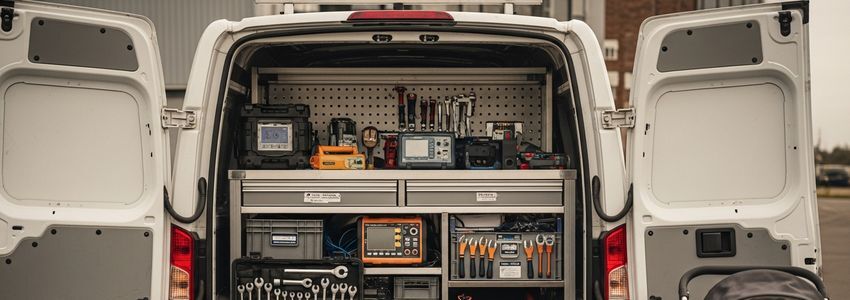
- Storage Systems: Custom shelving, bins, and ladder racks installed in the vehicle.
- Heavy Equipment: Onboard generators, welders, and air compressors.
- Safety Equipment: Lighting, beacons, and specialized safety gear.
Mobile Retail and Boutiques
- Custom Interiors: Built-in shelving, clothing racks, and display cases.
- Customer Experience: Fitting rooms, mirrors, and high-quality interior lighting.
- POS and Inventory Systems: Integrated systems for sales and stock management.
- Branding: Awnings, exterior signage, and sound systems.
The ability to finance this wide array of assets under a single, cohesive plan is a major advantage. It simplifies the procurement process and ensures that the mobile division is fully equipped and ready to generate revenue from day one, without compromises due to budget constraints.
How Equipment Financing for a Mobile Division Works
Navigating the equipment financing process is typically more straightforward and faster than securing a traditional bank loan. Lenders who specialize in this field have refined their procedures to get businesses the capital they need with minimal friction. While specifics can vary between lenders, the core process generally follows a clear, four-step path from application to acquisition.
Step 1: Application and Initial Consultation
The journey begins with a simple application. Most modern lenders, including Crestmont Capital, offer a secure online application that can be completed in just a few minutes. This initial form gathers basic information about your business, such as its legal name, time in business, annual revenue, and details about the owner(s). You will also specify the type and estimated cost of the equipment you wish to finance. Following the application, a financing specialist will typically reach out to discuss your goals, understand the specifics of your mobile division plan, and explain the financing options that best suit your needs.
Step 2: Submission of Documentation
After the initial consultation, the lender will request a set of documents to verify the information provided and assess the financial health of your business. The required documentation is usually less extensive than that for a bank loan. For financing amounts under $250,000, many lenders only require:
- The completed application.
- Recent business bank statements (typically 3-6 months).
- An invoice or quote from the vendor for the vehicle and equipment.
Step 3: Underwriting and Approval
Once all documents are submitted, the application moves to the underwriting stage. This is where the lender's credit team analyzes your business's financial profile. They will review your credit history (both business and personal), time in business, revenue consistency, and the value of the equipment being financed. Because the equipment itself serves as collateral, underwriters also consider its resale value and lifespan. This asset-backed nature of the loan often leads to higher approval rates compared to unsecured loans. The underwriting process is typically very fast, with many lenders providing a final credit decision and a formal financing offer within 24 to 48 hours.
Step 4: Funding and Equipment Acquisition
Upon approval, you will receive a financing agreement that outlines all the terms, including the loan amount, interest rate, monthly payment, and term length. After you review and sign these documents, the process is finalized. The lender then works directly with your chosen equipment vendor. They will pay the vendor the full amount for the vehicle and any onboard equipment. Once the vendor confirms receipt of payment, you can take possession of your new assets and officially launch your mobile division. Your first payment to the lender is typically due 30 days after the funding is complete.
Quick Guide
How Mobile Division Equipment Financing Works - At a Glance
Apply Online
Complete a simple online application in minutes with basic business and equipment information.
Submit Documents
Provide basic financial documents like bank statements and the equipment invoice.
Get Approved
Receive a credit decision and formal financing offer, often within 24-48 hours.
Acquire Equipment
Sign the agreement, we pay your vendor, and you take possession of your new mobile assets.
Ready to Fund Your Mobile Division?
Get the vehicle and equipment you need to expand your business. Our simple application takes just minutes.
Apply Now ->Types of Equipment Financing Options Available
When seeking equipment financing for a mobile division, businesses have several distinct options. The best choice depends on factors like your long-term plans for the equipment, your accounting preferences, and your cash flow situation. Understanding the nuances of each option is key to selecting the most advantageous financial product for your company.
1. Equipment Loans
An equipment loan, also known as an Equipment Financing Agreement (EFA), is a straightforward financing product. The lender provides you with the capital to purchase the vehicle and equipment, and you make regular principal and interest payments over a fixed term. At the end of the term, you own the equipment outright.
- How it Works: It functions much like a traditional auto loan. The business holds the title to the equipment from the beginning, and the lender places a lien on it as collateral. Once the loan is fully repaid, the lien is released.
- Pros:
- Ownership: You build equity in the asset and own it free and clear at the end of the term. This is ideal for long-life equipment like vehicles and heavy machinery.
- Tax Benefits: You can typically take advantage of Section 179 and bonus depreciation deductions, potentially writing off a large portion of the cost in the first year.
- No Usage Restrictions: As the owner, you face no restrictions on mileage or wear and tear.
- Cons:
- Higher Monthly Payments: Because you are financing the full cost of the asset toward ownership, monthly payments are often higher than with a lease.
- Obsolescence Risk: You are responsible for the equipment even after it becomes outdated. This is a bigger concern for technology-heavy equipment than for a vehicle chassis.
- Best For: Businesses that plan to use the vehicle and core equipment for many years and want to build long-term assets on their balance sheet.
2. Capital Leases (Finance Leases)
A capital lease is structured as a lease for accounting purposes but functions more like a loan. It is essentially a rent-to-own agreement. The terms of the lease usually cover the majority of the equipment's useful life, and at the end of the term, the business can purchase the equipment for a nominal amount, often just $1 (this is known as a "$1 Buyout Lease").
- How it Works: You make regular lease payments for the duration of the term. The agreement includes a provision to purchase the equipment at the end. For tax and accounting purposes, a capital lease is treated as a purchase, meaning the asset is listed on your balance sheet.
- Pros:
- Ownership Intent: It provides a clear path to ownership, similar to a loan.
- Tax Treatment: Like a loan, it generally allows you to claim depreciation and interest expense deductions, including Section 179.
- Lower Initial Outlay: Sometimes requires a smaller down payment or fewer upfront costs than a standard loan.
- Cons:
- Long-Term Commitment: You are effectively locked into acquiring the asset, making it less flexible than an operating lease.
- Maintenance Responsibility: You are responsible for all maintenance and repairs throughout the lease term.
- Best For: Companies that want the benefits of ownership but prefer the lease structure, potentially for accounting reasons or slightly lower upfront costs.
3. Operating Leases
An operating lease is a true rental agreement. You pay to use the equipment for a specific period, which is typically shorter than its full economic life. At the end of the lease term, you have several options: you can return the equipment, renew the lease, or purchase the equipment at its Fair Market Value (FMV).
- How it Works: The lender (the lessor) purchases the equipment and retains ownership. You (the lessee) pay a monthly fee to use it. Because you are only paying for the depreciation of the asset during the lease term, not its full value, monthly payments are significantly lower.
- Pros:
- Lowest Monthly Payments: This is the most affordable option in terms of monthly cash flow.
- No Obsolescence Risk: Ideal for equipment that quickly becomes outdated (like computer systems or diagnostic tools). You can simply return it and lease the newest model at the end of the term.
- Off-Balance Sheet Financing: Lease payments are treated as an operating expense, and the asset does not appear on your balance sheet. This can improve certain financial ratios.
- Cons:
- No Equity: You are not building any ownership equity in the asset.
- Higher Total Cost for Ownership: If you decide to buy the equipment at the end, the total cost (lease payments + FMV purchase price) will be higher than if you had financed it with a loan from the start.
- Usage Restrictions: Leases often come with restrictions, such as mileage limits on vehicles or limits on hours of use for machinery.
- Best For: Businesses that need to keep their monthly payments as low as possible, require technology that needs frequent upgrading, or want to keep debt off their balance sheet.
4. Sale-Leaseback Agreements
This is a more specialized option for businesses that already own their vehicles or equipment. In a sale-leaseback, the business sells its existing equipment to a lender and then immediately leases it back from them. This transaction provides a quick infusion of working capital.
- How it Works: You receive a lump sum of cash for your equipment, which can be used for expansion, marketing, or any other business need. You continue to use the equipment without interruption while making regular lease payments.
- Pros:
- Generates Working Capital: Unlocks the equity tied up in your existing assets.
- No Operational Disruption: You never lose access to your essential equipment.
- Cons:
- Loss of Ownership: You no longer own the asset until the end of the leaseback term (if a purchase option is exercised).
- Only for Existing Equipment: This is not an option for acquiring new equipment.
- Best For: Established businesses that need a quick cash injection and have valuable, unencumbered equipment to leverage.
Qualifying for Equipment Financing
One of the main attractions of equipment financing is its accessibility. The qualification criteria are often more flexible than those for traditional bank loans because the loan is secured by the equipment itself. However, lenders still perform a thorough risk assessment to ensure the business can meet its payment obligations. Here are the key factors that lenders evaluate during the underwriting process:
1. Credit Score
Lenders will typically review both the personal credit score of the business owner(s) and the business's credit profile.
- Personal Credit Score (FICO): This is often the most heavily weighted factor, especially for newer businesses. A strong personal credit score demonstrates a history of responsible financial management. While requirements vary, a score of 620 or higher is generally needed to qualify for favorable terms. Applicants with scores above 680 are often considered prime candidates and can access the best rates.
- Business Credit Score: For more established businesses, the company's credit history (tracked by agencies like Dun & Bradstreet, Experian Business, and Equifax Small Business) is also important. A history of on-time payments to vendors and other creditors will strengthen an application.
2. Time in Business
Lenders prefer to work with established businesses that have a proven track record of operations. The standard minimum requirement is often two years in business. Companies that meet this threshold are seen as more stable and less risky.
However, startups and businesses with less than two years of history are not automatically disqualified. Many lenders, including Crestmont Capital, have specific programs designed for newer businesses. For these applicants, lenders will place greater emphasis on other factors, such as the owner's personal credit score, industry experience, and a detailed business plan with strong revenue projections.
3. Annual Revenue and Cash Flow
Lenders need to be confident that your business generates enough income to comfortably cover the new monthly financing payment in addition to its existing expenses. They will analyze your recent business bank statements to assess your monthly revenue and average daily balance.
- Revenue Consistency: Lenders look for steady, predictable revenue streams. Erratic cash flow with significant dips can be a red flag.
- Debt-to-Income Ratio: They will evaluate your existing debt obligations to determine if you have sufficient free cash flow to take on a new payment. A strong, positive cash flow is one of the most persuasive factors in an application.
4. The Equipment Itself (Collateral)
Since the vehicle and onboard equipment serve as collateral, their value and condition are crucial.
- Asset Value: The lender will assess the fair market value and expected lifespan of the equipment. Assets that hold their value well over time (like a standard cargo van or high-quality commercial kitchen equipment) are considered strong collateral and can make financing easier to obtain.
- New vs. Used: Financing is available for both new and used equipment. However, financing older equipment can sometimes be more challenging or come with shorter repayment terms, as its useful life and resale value are lower.
- Vendor Reputation: Purchasing from a reputable, established dealer or vendor can also strengthen an application, as it provides the lender with confidence in the quality and stated value of the asset.
5. Industry
While financing is available for nearly every industry, lenders do assess industry-specific risks. Some industries, like transportation, food service, and construction, are very familiar to equipment lenders and have well-established financing norms. Other, more niche or perceived high-risk industries might face greater scrutiny. Having strong financials and a solid business plan can overcome any industry-related concerns.
How Much Does It Cost to Finance Mobile Division Equipment?
Understanding the full cost of financing is crucial for accurate budgeting and ensuring the long-term profitability of your mobile division. The total cost is not just the sticker price of the equipment; it includes interest, fees, and other related expenses. The specific costs you will encounter depend on your business's financial profile, the type of financing you choose, and the lender you work with.
1. Interest Rates and Factor Rates
The primary cost of financing is the interest you pay on the borrowed amount. This is expressed as an interest rate for loans or a factor rate for some lease products.
- Interest Rates: For an equipment loan, this is expressed as an Annual Percentage Rate (APR). Rates can range from as low as 6% for the most qualified borrowers (excellent credit, strong revenue, years in business) to over 25% for high-risk or subprime borrowers. The rate is determined by the lender's assessment of your risk profile.
- Factor Rates: Some financing products, particularly certain leases or short-term loans, use a factor rate instead of an APR. A factor rate is a decimal figure (e.g., 1.15). To calculate the total repayment amount, you multiply the financing amount by the factor rate. For example, a $50,000 financing with a 1.15 factor rate means you will repay a total of $57,500 ($50,000 x 1.15). While simple to calculate, it's important to convert the factor rate to an equivalent APR to accurately compare it with other loan offers.
2. Down Payment
Many equipment financing agreements require a down payment. This is an amount of money you pay upfront, which reduces the total amount being financed. A down payment lowers the lender's risk and demonstrates your commitment to the investment.
- Typical Amount: Down payments can range from 0% for highly qualified applicants to 20% or more for startups or businesses with weaker credit profiles. Often, the first and last month's payments are required upfront, which acts as a form of down payment.
- Benefits of a Larger Down Payment: Providing a larger down payment can help you secure a lower interest rate and will result in a smaller monthly payment, reducing the strain on your cash flow.
3. Fees
In addition to interest, there may be several fees associated with the financing agreement. It is important to ask your lender for a full breakdown of all potential fees.
- Origination Fee: This is a fee charged by the lender for processing and underwriting the loan. It is typically a small percentage of the total loan amount and is often rolled into the financing.
- Documentation Fee: A flat fee to cover the costs of preparing the legal documents for the financing agreement.
- Prepayment Penalties: Some loans include a penalty for paying off the loan before the end of the term. This compensates the lender for the interest they would have earned. It is crucial to understand if your agreement has a prepayment penalty, especially if you anticipate being able to pay off the debt early.
- Late Payment Fees: As with any loan, there will be fees for making payments after the due date.
4. Term Length
The term length-the amount of time you have to repay the loan-directly impacts both your monthly payment and the total cost of financing.
- Shorter Term (e.g., 24-36 months): Results in higher monthly payments but a lower total interest paid over the life of the loan.
- Longer Term (e.g., 60-84 months): Results in lower, more manageable monthly payments but a higher total interest paid over the life of the loan.
To get a clear picture, always ask for a full amortization schedule. This document will show you exactly how much of each payment goes toward principal and interest over the entire term, providing a transparent view of the total cost.
Who Should Consider Equipment Financing for a Mobile Division?
Equipment financing is a versatile tool that can benefit a wide range of businesses, from nascent startups to established enterprises looking for a new growth channel. The decision to use this type of funding depends on a company's strategic goals, financial position, and operational needs. Here are several profiles of businesses that are ideal candidates for using equipment financing to launch a mobile division.
1. Startups with a Strong Business Plan
New businesses, by definition, have limited capital and a short operational history, making it difficult to qualify for traditional bank loans. However, a startup with a well-researched business plan, solid revenue projections, and an owner with strong personal credit and relevant industry experience is an excellent candidate. Equipment financing allows these entrepreneurs to acquire the essential revenue-generating assets needed to get off the ground without depleting their initial seed capital, which is better used for marketing, inventory, and initial operating expenses.
2. Established Businesses Seeking Expansion
A brick-and-mortar business with a loyal customer base may want to expand its geographic reach without taking on the immense risk and cost of opening a second physical location. Launching a mobile division is a perfect solution. For these companies, equipment financing is a strategic move. They can leverage their established revenue and credit history to secure excellent financing terms. This allows them to test new markets, serve a wider area, and increase revenue streams, all while keeping their existing operations stable.
3. Businesses in High-Demand Mobile Industries
Companies in sectors where the mobile model is proven and in high demand-such as food service, pet grooming, auto repair, and home healthcare-are prime candidates. Lenders are very familiar with the equipment and revenue models in these industries, which can streamline the approval process. For these businesses, the question is not "if" they should go mobile, but "how." Equipment financing provides the clear, fast, and predictable "how," enabling them to capitalize on market demand quickly.
4. Companies Needing to Upgrade or Replace Aging Mobile Assets
For businesses that already operate a mobile division, equipment financing is essential for fleet management and technology upgrades. An old, unreliable vehicle can lead to costly downtime, missed appointments, and a poor brand image. Financing allows these businesses to replace aging vehicles or upgrade to more efficient, modern onboard equipment. This ensures operational reliability, improves efficiency, and enhances the professional image of the company, ultimately protecting and growing their revenue.
5. Businesses Wanting to Preserve Cash for Other Opportunities
Even a highly profitable company with significant cash reserves can benefit from equipment financing. Tying up a large amount of cash in depreciating assets may not be the most strategic use of capital. By financing the equipment, the business keeps its cash free for other opportunities, such as a large inventory purchase, a strategic acquisition, a major marketing campaign, or simply as a safety net for unforeseen circumstances. This financial flexibility is a hallmark of sophisticated business management.
6. Service-Based Businesses Aiming to Enhance Customer Convenience
Any service-based business-from IT support and consulting to personal training and tutoring-can fundamentally change its value proposition by going mobile. Equipment financing provides the means to acquire a professional vehicle and the necessary tech (laptops, presentation equipment, specialized tools). This allows them to move from a model where clients must come to them to a premium, on-site service model that commands higher prices and builds stronger customer loyalty.
How Crestmont Capital Helps You Launch Your Mobile Division
Choosing the right financing partner is just as important as choosing the right equipment. At Crestmont Capital, we specialize in providing fast, flexible, and transparent commercial financing solutions designed to help businesses like yours grow. We understand the unique challenges and opportunities that come with launching a mobile division, and our entire process is built to support your success.
Here’s how Crestmont Capital stands apart and helps you get your mobile operations on the road:
- Simplified and Fast Application Process: We value your time. Our secure online application takes only a few minutes to complete. We've eliminated the burdensome paperwork and long waiting periods associated with traditional lenders. Our goal is to get you a credit decision quickly, often within a few hours, so you can move forward with confidence.
- Dedicated Financing Experts: When you work with Crestmont Capital, you are not just a number in a queue. You are paired with a dedicated financing expert who will be your single point of contact throughout the entire process. They will take the time to understand your specific business goals, answer all your questions, and guide you to the financing structure that best aligns with your budget and objectives.
- High Approval Rates: Because we specialize in equipment financing, we have a deep understanding of asset-backed lending. We look beyond just a credit score, taking a holistic view of your business's health and potential. This approach, combined with our extensive network of lending partners, allows us to maintain high approval rates and find solutions for a wide range of business profiles, including startups and those with less-than-perfect credit.
- Flexible and Customized Terms: We know that no two businesses are alike. We don't offer rigid, one-size-fits-all loan products. Instead, we work with you to structure a financing plan with flexible terms, competitive rates, and payment schedules that match your cash flow. Whether you need a short-term loan to get started or a longer-term lease to keep payments low, we can build a solution for you.
- Funding for a Wide Range of Equipment: From the vehicle chassis to the most specialized onboard technology, we can finance it all. We have extensive experience funding assets across dozens of industries, including food service, healthcare, transportation, and skilled trades. We can bundle your vehicle and all its outfitting into a single, convenient financing package.
- Transparency and Trust: We believe in building long-term relationships with our clients based on trust and transparency. We provide clear, upfront information about all rates, terms, and fees. There are no hidden costs or surprises. Our experts will walk you through every line of your financing agreement to ensure you are completely comfortable and informed before you sign.
Launching a mobile division is a significant step forward for your business. Let Crestmont Capital be the partner that provides the financial foundation for your journey. We handle the financing so you can focus on what matters most: building your mobile brand and serving your customers.
Partner with the Experts in Mobile Division Financing
Experience the Crestmont Capital difference with our fast, flexible, and transparent funding solutions.
Get Your Quote ->Real-World Scenarios: Industries Expanding with Mobile Divisions
The mobile business model is incredibly versatile, and its adoption is accelerating across a diverse range of industries. To better illustrate how equipment financing facilitates this expansion, let's explore several real-world scenarios.
Scenario 1: The Mobile Medical Clinic
- The Business: An established primary care practice wants to serve elderly patients with mobility issues and reach underserved rural communities in their region. They decide to launch a "Health on Wheels" division.
- Equipment Needed:
- A customized Class C RV or large bus chassis ($120,000)
- An examination room build-out with a patient table and cabinetry ($15,000)
- A wheelchair lift for accessibility ($7,000)
- Portable diagnostic equipment (EKG, blood analyzer, ultrasound) ($40,000)
- Medical-grade refrigerator for vaccines ($3,000)
- Laptops with cellular connectivity for EHR access ($5,000)
- Onboard generator and HVAC system ($10,000)
- Total Equipment Cost: $200,000
- Financing Solution: The practice uses an equipment loan to finance the full $200,000 over a 7-year (84-month) term. This preserves their operating cash for hiring a dedicated nurse practitioner and marketing the new service. The fixed monthly payment is easily integrated into their budget, and the asset provides a significant Section 179 tax deduction in the first year.
Scenario 2: The Gourmet Food Truck
- The Business: A talented chef with a popular catering business wants to enter the lucrative food truck scene to serve lunch crowds at business parks and weekend festivals.
- Equipment Needed:
- A used step van ($25,000)
- A complete kitchen build-out including stainless steel surfaces, sinks, and plumbing ($15,000)
- A commercial grill, two deep fryers, and a sandwich prep table ($12,000)
- A commercial refrigerator and freezer ($6,000)
- A professional ventilation hood and fire suppression system ($8,000)
- A quiet-run commercial generator ($7,000)
- A tablet-based POS system ($1,500)
- A professional vehicle wrap with branding ($5,500)
- Total Equipment Cost: $80,000
- Financing Solution: The chef secures a 5-year (60-month) capital lease with a $1 buyout option. This allows for a slightly lower monthly payment than a traditional loan, helping manage cash flow during the initial launch phase. The chef intends to own the truck long-term, so the capital lease structure is a perfect fit, providing a clear path to ownership while offering manageable payments.
Scenario 3: The On-Site IT Support Service
- The Business: A small IT consultancy that services local businesses wants to expand into a neighboring city and offer a more responsive, on-site service model for troubleshooting, network installation, and hardware repair.
- Equipment Needed:
- A new cargo van like a Ford Transit Connect ($35,000)
- Custom interior shelving and a secure workbench ($4,000)
- Advanced network diagnostic tools and cable testers ($5,000)
- A set of high-end laptops for diagnostics and configuration ($6,000)
- A small inventory of common replacement parts (hard drives, RAM, power supplies) ($3,000)
- A power inverter to run tools from the van's battery ($1,000)
- Total Equipment Cost: $54,000
- Financing Solution: The consultancy opts for a 4-year (48-month) operating lease for the van and the technology. Their reasoning is that the diagnostic tools and laptops will likely be outdated in a few years. The operating lease provides the lowest possible monthly payment and gives them the flexibility to upgrade to the latest technology at the end of the term without being stuck with obsolete equipment.
Scenario 4: The Mobile Dog Grooming Business
- The Business: An experienced pet groomer working for a large chain decides to start her own business, focusing on a premium, convenient service for busy pet owners.
- Equipment Needed:
- A new Mercedes-Benz Sprinter van, high-roof model ($60,000)
- A professional grooming conversion package, including insulation, water-resistant walls, plumbing, and electrical ($20,000)
- A stainless steel grooming tub and an electric grooming table ($4,000)
- A high-velocity dryer and a water heater ($2,500)
- A powerful generator and a rooftop A/C unit ($8,000)
- Crates, clippers, and other grooming supplies ($1,500)
- Total Equipment Cost: $96,000
- Financing Solution: As a startup, cash flow is a major concern. The groomer secures a 6-year (72-month) equipment loan. While the term is longer, it provides a monthly payment that is manageable based on her projected number of daily appointments. The lender was comfortable with the loan because of the owner's strong personal credit, extensive industry experience, and the high resale value of a professionally converted Sprinter van.
Common Mistakes to Avoid When Financing Mobile Equipment
Securing financing is a major step, but navigating the process without a clear strategy can lead to costly errors. Being aware of common pitfalls can help you secure the best possible terms and set your mobile division up for long-term success. Here are some critical mistakes to avoid:
- Not Reading the Fine Print: This is the most common and potentially most damaging mistake. A financing agreement is a legally binding contract. It is essential to read and understand every clause before signing. Pay close attention to the interest rate (APR), the total repayment amount, all associated fees, and especially the terms regarding prepayment penalties. If you don't understand something, ask your financing specialist to explain it in plain language.
- Underestimating the Total Cost of Ownership (TCO): The purchase price is just the beginning. A mobile division comes with ongoing operational costs, including fuel, insurance, vehicle maintenance, repairs, permits, and marketing. Failing to budget for these expenses can quickly strain your cash flow, even if the financing payment is manageable. Create a comprehensive budget that includes the TCO, not just the monthly loan payment.
- Choosing the Wrong Type of Financing: As detailed earlier, an equipment loan, a capital lease, and an operating lease serve different strategic purposes. Choosing a loan when an operating lease would be better (e.g., for rapidly depreciating tech) or vice versa can be a costly error. Carefully assess your long-term plans for the equipment and your accounting preferences before deciding on a financing structure.
- Financing Non-Essential "Wants" vs. Essential "Needs": When outfitting a new mobile unit, it can be tempting to include every possible upgrade and gadget. However, financing non-essential items inflates your loan amount and monthly payment. Focus first on financing the core equipment that is absolutely necessary to deliver your service and generate revenue. You can always add upgrades later as your business grows and profits increase.
- Not Preparing Your Documentation in Advance: The financing process is designed to be fast, but it can be delayed if you are not prepared. Before you even apply, gather the necessary documents, such as the last 3-6 months of business bank statements, your business registration information, and a quote from your equipment vendor. Having these ready will ensure a smooth and rapid underwriting process.
- Focusing Only on the Monthly Payment: While a low monthly payment is attractive, it should not be the only factor you consider. A very long loan term might offer a low payment, but it will result in a significantly higher total interest cost. Conversely, the lowest-interest-rate loan might have a monthly payment that is too high for your current cash flow. The goal is to find the optimal balance between a manageable payment and a reasonable total cost of financing.
- Ignoring Your Credit Profile: Before applying for financing, it is wise to review both your personal and business credit reports. Check for any errors or inaccuracies that could be pulling down your score. Resolving these issues before you apply can help you qualify for a much better interest rate, saving you thousands of dollars over the life of the loan.
By avoiding these common mistakes, you can approach the financing process as a well-informed, strategic business owner, ensuring you secure a deal that truly benefits your company's growth.
Comparison: Equipment Financing vs. Other Funding Options
Equipment financing is a specialized tool, but it's not the only way to fund a mobile division. Understanding how it stacks up against other common funding methods is key to making an informed decision. Here's a comparative look at the most popular options.
Key Insight: According to Forbes, the market size of the Food Trucks industry in the US has demonstrated significant growth, highlighting the viability and popularity of mobile business models. This trend underscores the increasing demand for effective financing solutions to launch such ventures.
| Feature | Equipment Financing | Traditional Bank Loan | SBA Loan | Working Capital Loan | Paying with Cash |
|---|---|---|---|---|---|
| Use of Funds | Restricted to purchasing specific vehicles and equipment. | Can be used for various business purposes, but often requires a detailed plan. | Versatile use, including equipment, real estate, and working capital. | Unrestricted; for short-term operational needs like payroll or inventory. | Completely unrestricted. |
| Collateral | The equipment being financed serves as its own collateral. | Often requires a blanket lien on all business assets, and potentially personal assets. | Similar to bank loans, often requires extensive collateral and personal guarantees. | Typically unsecured, but may require a personal guarantee. | Not applicable. |
| Funding Speed | Very Fast: 1-3 business days is common. | Slow: Can take several weeks to months. | Very Slow: The slowest option, often taking 2-4 months. | Extremely Fast: Often same-day or within 24 hours. | Instant (if available). |
| Qualification Difficulty | Easier: Higher approval rates due to collateral. More flexible on credit/time in business. | Difficult: Strict requirements for credit score, revenue, and time in business. | Very Difficult: Extremely strict criteria and extensive paperwork. | Moderate: Focuses heavily on recent cash flow and revenue. | Not applicable. |
| Impact on Cash Flow | Positive: Preserves working capital by spreading a large cost over time. | Neutral: Adds a monthly payment but doesn't require a large upfront cash outlay. | Neutral: Similar to a bank loan. | Short-term strain due to higher payments over a shorter period. | Very Negative: Drastically depletes cash reserves, increasing financial risk. |
| Best For... | Acquiring specific revenue-generating vehicles and machinery quickly. | Highly established, profitable businesses with pristine credit seeking large, multi-purpose loans. | Businesses that meet the very strict criteria and can wait months for the lowest-rate funding. | Covering short-term cash flow gaps, not for large capital expenditures. | Businesses with extremely large cash reserves where the purchase won't impact operations. |
As the comparison shows, equipment financing occupies a unique and valuable niche. It provides the speed and accessibility of alternative lending while offering competitive rates and terms for a specific, asset-focused purpose. For the distinct goal of launching a mobile division, it is often the most logical and strategically sound choice.
Frequently Asked Questions
1. What exactly is equipment financing for a mobile division?
Equipment financing for a mobile division is a type of business loan or lease specifically designed to fund the purchase of a vehicle (like a van, truck, or trailer) and the specialized onboard equipment needed to operate a mobile business. Instead of paying cash, you make regular payments over a set term. The equipment itself serves as the collateral for the financing.
2. How does the equipment financing process work?
The process is typically very streamlined. It starts with a simple application, followed by the submission of basic financial documents (like bank statements and an equipment invoice). The lender then underwrites the application, usually providing a credit decision within 1-2 days. Once approved and the agreements are signed, the lender pays your vendor directly, and you take possession of the equipment.
3. Who qualifies for this type of financing?
A wide range of businesses can qualify, from startups to established companies. Lenders typically look at the owner's personal credit score (often 620+ is preferred), time in business (2+ years is ideal, but startup programs exist), and annual revenue. Because the loan is secured by the asset, qualification standards are often more flexible than for unsecured loans.
4. What are the typical interest rates and terms?
Interest rates vary widely based on your credit profile, time in business, and the lender. They can range from 6% for top-tier applicants to over 25% for higher-risk borrowers. Repayment terms typically range from 24 to 84 months (2 to 7 years), allowing businesses to choose a payment plan that fits their budget.
5. What are the main benefits of launching a mobile division?
The key benefits include significantly lower overhead costs compared to a brick-and-mortar location, a vastly expanded geographic reach, enhanced convenience for your customers, increased brand visibility from your wrapped vehicle, and the flexibility to test new markets with minimal risk.
6. What types of vehicles and equipment can I finance?
You can finance almost any asset essential to your mobile operation. This includes the base vehicle (cargo vans, box trucks, trailers), and all onboard equipment such as commercial kitchen appliances, medical diagnostic tools, auto repair machinery, pet grooming tubs, custom shelving, generators, and POS systems.
7. Is a down payment always required?
Not always, but it is common. Some lenders offer 100% financing for highly qualified businesses. More typically, a down payment of 10-20% may be required, or the lender may ask for the first and last month's payments upfront. A larger down payment can help you secure better terms and a lower monthly payment.
8. What is the minimum credit score needed for equipment financing?
While there is no universal minimum, a personal FICO score of 620 is often the threshold for consideration by many lenders. Scores above 680 will typically qualify for more competitive rates and terms. Some lenders have programs for businesses with lower credit scores, but this will likely result in higher interest rates.
9. How long does it take to get approved and receive funding?
The process is very fast compared to traditional loans. After submitting a complete application and the required documents, approval can often be granted within 24 to 48 hours. Funding usually occurs shortly after the financing agreements are signed, meaning you can acquire your equipment in a matter of days.
10. What is the difference between an equipment loan and an equipment lease?
With an equipment loan, you borrow money to purchase the asset and you own it from the start. You build equity and own it outright after the final payment. With an equipment lease, you are essentially renting the equipment for a set term. This results in lower monthly payments, but you do not own the asset. At the end of the lease, you can typically return it, renew the lease, or buy it at its fair market value.
11. Can I pay off my equipment financing early?
This depends on the specific terms of your agreement. Some financing agreements allow for early payoff without any penalty. However, others may include a prepayment penalty to compensate the lender for the lost interest. It is crucial to clarify this point with your lender before signing any documents.
12. Can I finance multiple pieces of equipment at once?
Yes. It is very common to bundle the vehicle and all of its necessary onboard equipment into a single financing agreement. This simplifies the process, leaving you with one application, one approval, and one convenient monthly payment for all of your mobile division's assets.
13. Is it possible to get financing with bad credit?
While more challenging, it is not impossible. Lenders will place more weight on other factors, such as your business's recent cash flow, the value of the equipment as collateral, and the size of your down payment. You should expect to pay a higher interest rate, but financing can still be accessible.
14. How does this compare to a loan from my local bank?
Equipment financing from a specialized lender is typically much faster, requires less paperwork, and has higher approval rates than a bank loan. Banks often have very strict underwriting criteria and a slow, bureaucratic process. Equipment financing is specifically structured for the purpose of acquiring assets, making it a more efficient tool for this goal.
15. How do I apply for equipment financing with Crestmont Capital?
Applying is simple. You can visit our website and complete our secure online application in just a few minutes. A dedicated financing specialist will then contact you to discuss your needs and guide you through the next steps. You can start the process by visiting our Apply Now page.
Have More Questions? We Have Answers.
Our team of financing experts is ready to help you navigate your options and fund your mobile expansion.
Apply in Minutes ->Your Next Steps to Launching a Mobile Division
You have the vision for your mobile division; now it's time to take actionable steps to bring it to life. Following a structured approach will make the process smoother and more successful.
Step 1: Assess Your Needs and Create a Budget
Clearly define the scope of your mobile division. Make a detailed list of the exact vehicle and equipment you need. Research costs from multiple vendors to create a realistic total project budget. Don't forget to include soft costs like vehicle wrapping, initial inventory, and permits.
Step 2: Gather Your Financial Documents
Be proactive and collect the necessary paperwork. This typically includes the last 3-6 months of your business bank statements, your business registration documents (e.g., articles of incorporation), and a formal quote or invoice from your chosen equipment vendor.
Step 3: Consult with a Financing Specialist
Discuss your project with an expert. A financing specialist can review your budget, explain the different financing options (loan vs. lease), and help you understand the potential terms and payments based on your business profile. This no-obligation consultation is invaluable for strategic planning.
Step 4: Submit Your Application
With a clear plan and your documents in hand, you are ready to apply. A complete and accurate application will ensure the fastest possible turnaround time for approval. Once you submit, the lender will begin the underwriting process to provide you with a formal financing offer.
Conclusion
Launching a mobile division is more than just an expansion; it is a strategic transformation. It is about meeting your customers where they are, breaking down geographical barriers, and building a more resilient, agile, and visible brand. The potential to increase revenue, reduce overhead, and dominate a market niche is immense. However, the primary obstacle for most businesses is the significant upfront investment in vehicles and specialized equipment.
Equipment financing for a mobile division is the key that unlocks this potential. It is a powerful financial tool that bridges the gap between ambition and reality. By allowing you to acquire essential, revenue-generating assets without depleting your vital working capital, it provides a financially sound foundation for growth. With predictable payments, potential tax advantages, and a fast, streamlined process, it is the most logical and effective way to fund your move into the mobile marketplace.
By understanding the process, choosing the right financing structure, and partnering with an experienced lender like Crestmont Capital, you can confidently invest in your business's future. The road to a successful mobile division is paved with the right equipment-and the right financing makes acquiring that equipment possible. Take the next step today to put your business on the move and drive your success forward.
Disclaimer: The information provided in this article is for general educational purposes only and is not financial, legal, or tax advice. Funding terms, qualifications, and product availability may vary and are subject to change without notice. Crestmont Capital does not guarantee approval, rates, or specific outcomes. For personalized information about your business funding options, contact our team directly.








