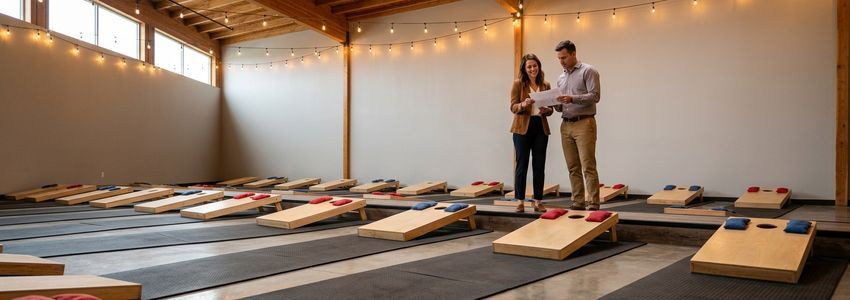
Cornhole has exploded from a backyard tailgate game into one of the fastest-growing participation sports in America, and entrepreneurs are racing to open dedicated cornhole venues, leagues, and combo bar concepts to meet the demand. Securing the right cornhole equipment financing is the difference between opening with tournament-grade boards, professional lighting, and a layout that keeps players coming back, or cutting corners that hurt your reputation before you even open the doors. This guide walks through every financing option available to cornhole business owners, how to qualify, and how to choose the right funding partner.
In This Article
- What Is Cornhole Equipment Financing?
- Benefits of Financing Your Cornhole Venue
- Types of Loans for Cornhole Businesses
- How Cornhole Equipment Financing Works
- Who This Financing Is Best For
- How Crestmont Capital Helps Cornhole Venue Owners
- Qualification Requirements
- Real-World Scenarios
- Comparison Table: Cornhole Financing Options
- Frequently Asked Questions
- How to Get Started with Crestmont Capital
What Is Cornhole Equipment Financing?
Cornhole equipment financing is a category of commercial funding built specifically around the capital needs of cornhole league venues, bar-and-board combo concepts, and dedicated tournament facilities. Rather than forcing a cornhole entrepreneur to fit into a generic small business loan product, this type of financing accounts for the specific costs of building and equipping a regulation-compliant playing space, from board construction to scoring technology.
Funds from cornhole equipment financing are typically used for expenses such as:
- Regulation Boards and Bags: ACA/ACL-sanctioned cornhole boards, tournament-grade bags, and replacement sets for high-traffic play.
- Venue Build-Out: Constructing multiple lanes, spectator seating, partitions, and a check-in or scorer's table.
- Lighting and Flooring: Overhead venue lighting, LED board lighting for night play, and durable flooring suited for high foot traffic.
- Scoring and Technology: Digital scoreboards, league management software, POS systems, and Wi-Fi infrastructure for live-streamed matches.
- Bar and Food Service Equipment: For combo cornhole-and-bar concepts, financing can cover draft systems, coolers, and kitchen equipment.
- Working Capital: Payroll, rent, insurance, marketing, and league operations during ramp-up.
Cornhole's rise from a tailgate pastime to a televised professional sport has been remarkable. According to Forbes, the American Cornhole League has seen an 800% increase in players since its founding, and a 2023 Ipsos poll found cornhole to be the most-played sport in America. That kind of participation growth is exactly what draws entrepreneurs to open dedicated venues, and the right financing partner makes it possible to build a facility that matches the sport's growing professionalism.
Key Stat: The global cornhole equipment market was estimated at roughly $169.2 million in 2025 and is projected to grow to $257.8 million by 2032, reflecting the sport's rapid mainstream adoption according to industry market research cited by Forbes.
Benefits of Financing Your Cornhole Venue
Many aspiring cornhole venue owners assume they need to bootstrap the entire build-out themselves, but taking on the right financing offers real strategic advantages that go well beyond simply having enough cash to open the doors.
Protect Your Cash Reserves
Opening a cornhole venue, league facility, or bar-and-boards combo concept requires a meaningful upfront investment in construction, boards, and technology. Financing lets you preserve your personal and business cash reserves for the unpredictable early months of operation, rather than draining your savings on day one and leaving nothing for slow weeks, repairs, or marketing pushes.
Invest in Tournament-Grade Equipment From Day One
Cornhole players, especially those involved in leagues or tournaments, notice the difference between a regulation ACA-spec board and a backyard-quality knockoff. Financing allows you to invest in professional boards, consistent bag weighting, and durable surfaces that hold up under constant competitive play, which directly affects your venue's reputation among serious players and league organizers.
Build Out a Professional, Multi-Lane Facility
A single set of boards in the corner of a bar is not the same as a purpose-built venue with multiple regulation lanes, proper spacing between boards, spectator seating, and lighting designed for night play or televised league matches. Financing provides the capital to build a facility that can host leagues, private events, and tournaments rather than just casual walk-in play.
Fund League Technology and Scoring Systems
Modern cornhole venues increasingly rely on digital scoreboards, league management software, and live-streaming setups to support competitive play and attract sponsorship dollars. These technology investments can be expensive upfront, and financing allows you to roll them into your build-out budget rather than delaying them until after you're already generating revenue.
Accelerate Expansion While the Sport Is Growing
With participation numbers climbing every year, cornhole venue owners who wait to self-fund expansion risk losing ground to competitors who move faster. Financing allows you to add lanes, open a second location, or expand your league programming while demand is actively growing, rather than waiting years to reinvest profits.
Ready to Build Your Cornhole Venue?
Get the capital you need for boards, build-out, and technology. Apply in minutes with no obligation.
Apply Now →Types of Loans for Cornhole Businesses
Different cornhole business needs call for different financing tools. Here's a breakdown of the most effective equipment financing and small business lending options for venue owners and league operators.
Equipment Financing
Equipment financing is often the best fit for cornhole venues because so much of the startup cost is tied directly to physical equipment: boards, bags, digital scoreboards, lighting rigs, and POS hardware. The equipment itself typically serves as collateral, which can make approval easier than for an unsecured loan, and repayment terms are usually structured to match the useful life of the gear.
Equipment Leasing
For owners who want to preserve capital or plan to upgrade boards and technology regularly as the sport evolves, equipment leasing can be an attractive alternative to an outright purchase. Leasing spreads the cost of boards, lighting, and scoring systems over manageable monthly payments and can include upgrade options at the end of the term.
SBA Loans
For a full venue build-out, including leasing or purchasing commercial real estate, SBA loans offer long repayment terms and competitive rates. The SBA 7(a) program is versatile enough to cover construction, boards, technology, and working capital in a single package, while the SBA 504 program is geared toward major fixed-asset purchases like a building.
Business Line of Credit
A business line of credit gives cornhole venue owners flexible access to capital for ongoing needs: replacing worn bags, covering payroll during a slow stretch, or funding a marketing push before a big league season kicks off. You only pay interest on what you draw, making it a cost-efficient tool for managing seasonal cash flow swings.
Working Capital Loans
Working capital loans provide a lump sum to cover short-term operational needs, such as stocking up on bags and boards ahead of a tournament season or bridging cash flow while sponsorship payments are processed. These loans are typically funded quickly and repaid over a shorter term than a traditional loan.
Term Loans
A traditional term loan delivers a lump sum repaid over a fixed schedule, making it a good fit for planned, larger investments like adding a second set of lanes, building out a bar area, or launching a second location. Streamlined alternative lenders can often approve and fund term loans far faster than a traditional bank.
How Cornhole Equipment Financing Works

Financing a cornhole venue or league facility generally follows a predictable process, and understanding each step ahead of time helps you move faster and avoid surprises.
- Calculate Your Total Project Cost: Build a detailed budget that covers boards, bags, lighting, flooring, scoring technology, construction, insurance, and a contingency fund of roughly 10-15% for unexpected costs.
- Gather Financial Documentation: Most lenders will want to see 3-6 months of business bank statements, personal and business tax returns, a profit and loss statement, and a detailed business plan if you are opening a new venue.
- Choose the Right Product: Match your need (equipment, real estate, working capital, or a flexible credit line) to the loan type best suited for it, rather than defaulting to whatever product is easiest to apply for.
- Submit Your Application: With a streamlined lender, this step can take just a few minutes online, and you'll typically hear back with preliminary terms within one to two business days.
- Review Terms and Get Funded: Once approved, review the rate, term, and repayment structure, sign your agreement, and funds are often deposited directly into your business account within 24 to 48 hours for many equipment and working capital products.
By the Numbers
Cornhole's Growth - Key Statistics
800%
Growth in American Cornhole League players since founding
$257.8M
Projected global cornhole equipment market by 2032
100K+
Registered competitive cornhole players nationwide
#1
Most-played sport in America per a 2023 Ipsos poll
Who This Financing Is Best For
Cornhole equipment financing serves a wide range of business models as the sport continues to professionalize and diversify. Understanding where your concept fits helps determine the best financing structure.
New Venue Startups
Entrepreneurs building a dedicated, multi-lane cornhole facility from the ground up typically need the largest capital infusion, covering real estate, construction, boards, and technology in one package. These owners are usually best served by an SBA loan or a combination of SBA funding and equipment financing.
Bar and Restaurant Owners Adding Cornhole
Existing bar or restaurant owners who want to add cornhole lanes to an existing space have a smaller capital need focused mainly on boards, bags, lighting, and possibly a small footprint expansion. Equipment financing or a working capital loan is often the fastest path for this group.
League Operators and Tournament Organizers
Operators who run traveling leagues or host tournaments in rented or borrowed space need financing focused on portable, durable equipment: transportable boards, scoring technology, and branded signage. A business line of credit provides the flexibility to restock and upgrade equipment between seasons.
Franchise and Multi-Location Operators
As successful cornhole venue concepts begin to expand, owners scaling to a second or third location need financing that supports repeatable build-outs. Term loans and equipment financing packages that can be replicated location to location are typically the most efficient structure.
How Crestmont Capital Helps Cornhole Venue Owners
As the #1 rated business lender in the country, Crestmont Capital understands that emerging entertainment and recreation concepts like cornhole venues need a financing partner who moves fast and understands the business model, not a traditional bank unfamiliar with the industry.
Experience With Emerging Entertainment Concepts
We work regularly with owners of niche and emerging recreation and entertainment venues, so our advisors understand revenue models built around league memberships, tournament hosting, corporate events, and bar or food service add-ons. That familiarity translates into faster, better-informed lending decisions.
Speed That Matches a Fast-Growing Industry
Cornhole's popularity is growing quickly, and opportunities like a prime lease or a bulk equipment discount don't wait for a 90-day bank approval process. Our streamlined online application and underwriting process can deliver approval and funding in as little as 24 to 48 hours for many products.
A Full Range of Financing Products
Whether you need a large SBA loan to build a flagship venue, equipment financing to outfit your lanes, or a flexible line of credit to manage league season cash flow, Crestmont Capital offers a full portfolio of funding solutions matched to your specific stage of growth.
Dedicated Support From a Funding Advisor
Every client is assigned a dedicated funding advisor who guides you through the application, helps assemble documentation, and works to secure the most favorable terms available. We build long-term relationships designed to support your venue as it grows, not just your first loan.
Let's Get Your Venue Funded
Our team specializes in financing for emerging entertainment and recreation concepts. See what you qualify for with no obligation.
Get a Free Quote →Qualification Requirements
Understanding what lenders evaluate helps you prepare a stronger application and improves your odds of approval on favorable terms.
Credit Score
Personal credit is a significant factor, especially for a new venue with no operating history. A score of 680 or higher opens up the widest range of options, including SBA loans, but Crestmont Capital can often work with business owners in the low 600s by placing more weight on overall business performance and cash flow.
Time in Business
Established venues with one to two years of operating history have an easier path to approval because lenders can evaluate actual revenue data. Startups face a steeper climb but can still qualify, particularly for SBA loans, with a strong business plan, solid personal credit, and some personal capital invested in the project.
Annual Revenue
Lenders review bank statements and tax returns to confirm your business generates enough revenue to support new debt payments. Minimum annual revenue requirements vary by lender and loan size but commonly start in the $100,000 to $250,000 range for mid-sized financing requests.
Business Plan (Especially for New Venues)
A new cornhole venue needs a clear business plan covering your target market, local competition, pricing model (memberships, league fees, walk-in play, event rentals), facility layout, and financial projections. A thorough plan demonstrates to lenders that you understand the business beyond your passion for the sport.
Pro Tip: Lenders increasingly view sponsorship agreements, league partnerships, and corporate event bookings as positive signals of revenue diversification beyond walk-in play. Document these relationships in your business plan and loan application.
Real-World Scenarios
Here's how different types of cornhole business owners might approach financing in practice.
Scenario 1: The Startup - "Bag Toss Social Club"
- The Goal: Marcus wants to open a 12-lane cornhole venue with a full bar in a 6,000 sq. ft. warehouse space, targeting league nights, corporate events, and weekend tournaments.
- The Need: $300,000 to cover construction of regulation lanes, bar build-out, digital scoreboards, lighting, and three months of operating capital.
- The Best Financing Solution: An SBA 7(a) Loan.
- Why It Works: The SBA loan's long repayment term keeps monthly payments manageable while the venue builds a membership and league base, and its versatility covers construction, equipment, and working capital under one package.
Scenario 2: The Upgrade - "Corner Pocket Cornhole"
- The Goal: Dana's existing bar has offered casual cornhole for two years, but she wants to add four regulation lanes, professional lighting, and a digital scoreboard to start hosting league nights.
- The Need: $45,000 for regulation boards, lighting rigs, and a scoring display system.
- The Best Financing Solution: Equipment Financing.
- Why It Works: The equipment itself serves as collateral, keeping the approval process fast and avoiding the need to leverage other business assets, with repayment aligned to the equipment's useful life.
Scenario 3: The Cash Flow Bridge - "Midwest Cornhole League"
- The Goal: James runs a traveling cornhole league that rents space at multiple venues each season. He needs flexible capital to restock bags and boards between seasons and cover deposits on rented venues before sponsorship payments arrive.
- The Need: Around $25,000 in flexible, revolving capital.
- The Best Financing Solution: A Business Line of Credit.
- Why It Works: James draws funds as needed for equipment and venue deposits and repays as sponsorship revenue comes in, paying interest only on what he actually uses.
Comparison Table: Cornhole Financing Options
Comparing your options side by side makes it easier to choose the right fit for your cornhole venue or league operation.
| Loan Type | Best For | Typical Amount | Repayment Term | Funding Speed |
|---|---|---|---|---|
| SBA Loan | New venue build-outs, real estate, large expansions | $50,000 - $5 Million | 10 - 25 years | Slow (4-8 weeks) |
| Equipment Financing | Boards, bags, scoreboards, lighting, POS systems | $10,000 - $500,000+ | 2 - 7 years | Fast (1-3 days) |
| Equipment Leasing | Boards and tech you plan to upgrade regularly | $5,000 - $250,000 | 2 - 5 years | Fast (1-3 days) |
| Business Line of Credit | Seasonal cash flow, restocking bags and boards | $10,000 - $250,000 | Revolving | Very Fast (1-2 days) |
| Working Capital Loan | Tournament season prep, short-term bridging | $5,000 - $500,000 | 3 - 18 months | Very Fast (1 day) |
Frequently Asked Questions
What is the minimum credit score needed for cornhole equipment financing?
A credit score of 680 or higher opens up the most options, including SBA loans, but Crestmont Capital can often work with business owners in the low 600s by focusing more on business revenue and cash flow.
Can I get financing to open a brand-new cornhole venue?
Yes. Startup financing is available, most commonly through SBA loans, though it requires a strong business plan, solid personal credit, and typically some personal investment in the project.
How much financing can I get for my cornhole facility?
Amounts vary widely based on loan type, business financials, and credit profile, ranging from a few thousand dollars for equipment upgrades to several million dollars for a full venue build-out with real estate.
What can cornhole equipment financing funds be used for?
Funds can cover regulation boards and bags, venue construction, lighting, flooring, digital scoreboards, POS systems, bar or food service equipment, licensing, insurance, marketing, and working capital.
How fast can I get funded?
Equipment financing and working capital loans can often be funded within 24 to 48 hours. Term loans typically take a few days, while SBA loans usually take four to eight weeks due to the more extensive underwriting process.
Do I need collateral to finance cornhole equipment?
Equipment financing typically uses the equipment itself as collateral. SBA loans and larger term loans may require additional collateral, while many working capital loans and lines of credit are unsecured but may require a personal guarantee.
Can I finance a cornhole venue that also serves as a bar?
Yes. Combo bar-and-cornhole concepts are common, and financing can cover both the cornhole equipment and build-out as well as bar and food service equipment as part of a single funding package.
What documents do I need to apply?
Typically 3-6 months of business bank statements, personal and business tax returns, a profit and loss statement, and a completed application. New venues should also prepare a detailed business plan and financial projections.
Is insurance required before I can get financing?
Lenders generally want to confirm you have or will have adequate general liability insurance in place before funding, since it demonstrates responsible risk management for a venue with public foot traffic.
What are typical repayment terms for this type of financing?
Working capital loans often run 3 to 18 months, equipment financing 2 to 7 years, term loans 1 to 5 years, and SBA loans can extend from 10 to 25 years depending on the use of funds.
Can seasonal cornhole businesses qualify for financing?
Yes. Lenders who understand seasonal entertainment businesses will look at your overall annual revenue and cash flow patterns. A business line of credit is particularly well suited for managing seasonal peaks and valleys.
Will applying for financing affect my credit score?
Most lenders, including Crestmont Capital, can pre-qualify you with a soft credit pull that does not affect your score. A hard pull is only performed once you move forward with a specific loan offer.
Can I use financing to fund a traveling cornhole league rather than a fixed venue?
Yes. League operators without a fixed location can finance portable equipment, scoring technology, branded signage, and venue rental deposits, typically through equipment financing or a flexible line of credit.
How do I choose the right lender for my cornhole business?
Look for a lender with experience funding emerging entertainment and recreation venues, transparent terms, a range of loan products, and a willingness to understand your specific business model rather than forcing you into a one-size-fits-all product.
Should I choose cornhole equipment financing or leasing for my venue?
Financing is usually better if you plan to keep the equipment long-term and want to build ownership equity, while leasing can make sense if you expect to upgrade boards, lighting, or scoring technology frequently as the sport evolves.
Score Big With the Right Financing
From a single set of lanes to a full multi-location league operation, we have a financing solution for you. Find out what you're eligible for in minutes.
Apply Now →How to Get Started with Crestmont Capital
Getting your cornhole venue or league operation funded is a straightforward process designed to move at the speed of your business.
Submit a Simple Application
Complete our secure online application in just a few minutes, free and with no obligation.
Consult With a Funding Advisor
A dedicated advisor will discuss your venue's specific needs, answer questions, and walk you through the documentation required for your loan type.
Review Your Offer and Get Funded
Review clear, straightforward terms, sign your agreement, and receive funds deposited directly into your business account, often within days.
Conclusion
Cornhole has evolved from a tailgate pastime into a fast-growing professional sport with a rapidly expanding market for dedicated venues, leagues, and combo concepts. Turning that momentum into a profitable business takes more than a passion for the game, it takes the right capital to build a facility that reflects the sport's growing professionalism. Whether you're opening your first venue, upgrading to regulation equipment, or funding a traveling league, the right cornhole equipment financing gives you the foundation to compete and grow. Crestmont Capital is ready to help you build a venue players want to come back to.
Disclaimer: The information provided in this article is for general educational purposes only and is not financial, legal, or tax advice. Funding terms, qualifications, and product availability may vary and are subject to change without notice. Crestmont Capital does not guarantee approval, rates, or specific outcomes. For personalized information about your business funding options, contact our team directly.