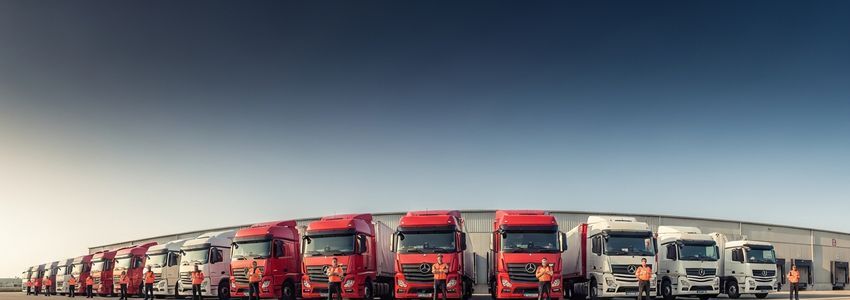
Running a transportation company means managing some of the largest capital expenditures in the small business world. A single semi-truck can cost $150,000 or more. A fleet of delivery vans, refrigerated trucks, or specialized vehicles can represent millions in assets. Add fuel, maintenance, insurance, driver wages, and compliance costs, and it becomes clear why transportation company loans are not just useful - they are often essential to growth, sustainability, and daily operations.
Whether you own a trucking company, a last-mile delivery service, a logistics operation, or a specialized transport business, access to business financing can mean the difference between winning a major contract and watching a competitor take it. This comprehensive guide covers every major loan type available to transportation businesses, how to qualify, what lenders look for, and how Crestmont Capital can help you get funded fast.
In This Article
- Why Transportation Companies Need Financing
- Types of Transportation Business Loans
- Common Uses for Transportation Loans
- How Transportation Financing Works
- Comparing Your Financing Options
- How to Qualify for a Transportation Loan
- How Crestmont Capital Helps Transportation Companies
- Real-World Scenarios
- How to Get Started
- Frequently Asked Questions
Why Transportation Companies Need Financing
The transportation industry is capital-intensive by nature. Unlike a consulting firm or an online retailer, transportation businesses require expensive physical assets just to operate. A startup trucking company needs at least one fully-equipped truck before earning its first dollar. An established carrier seeking to expand must invest in vehicles, drivers, and insurance before the revenue from new contracts arrives.
Transportation businesses also face unique cash flow challenges. Freight brokers and shippers often pay on 30, 60, or even 90-day terms. Meanwhile, fuel must be paid daily, driver payroll runs weekly, and insurance premiums are due quarterly. This mismatch between expenses and revenue creates persistent working capital shortfalls even for profitable companies.
Industry Context: According to the American Trucking Associations, the U.S. trucking industry moves approximately 72.5% of all freight transported domestically, generating $875 billion in annual revenue. Yet the average owner-operator spends over $1.38 per mile in operating costs, highlighting the need for consistent capital access.
The most common financing needs for transportation companies include:
- Purchasing or leasing new and used commercial vehicles
- Covering payroll and fuel costs between invoice payments
- Upgrading GPS tracking, dispatch software, and telematics
- Meeting insurance premium obligations
- Funding unexpected repairs on fleet vehicles
- Acquiring a competitor or absorbing a new contract
- Opening a new terminal or depot
- Complying with new regulatory requirements
Ready to Fuel Your Fleet's Growth?
Crestmont Capital offers fast, flexible financing for transportation businesses of every size. No obligation - apply in minutes.
Apply Now →Types of Transportation Business Loans
Transportation companies have access to a wide range of financing products. The right choice depends on your specific need, credit profile, time in business, and how quickly you need funds. Here is a breakdown of the most relevant options:
1. Commercial Vehicle and Equipment Financing
This is the most common loan type for transportation companies. Equipment financing allows you to purchase trucks, trailers, refrigerated vehicles, box vans, or specialized transport equipment with the asset itself serving as collateral. Terms typically run 24 to 84 months, and you build equity in the vehicle with every payment.
Because the truck or equipment secures the loan, lenders are often more flexible with approval criteria than they would be for an unsecured loan. This makes equipment financing accessible even for newer companies or those with less-than-perfect credit.
2. SBA Loans for Transportation Companies
The U.S. Small Business Administration guarantees several loan programs that transportation businesses can use for vehicles, facilities, working capital, and refinancing. The SBA 7(a) loan program offers up to $5 million with repayment terms up to 10 years for working capital and up to 25 years for real estate. The SBA 504 program targets fixed assets like buildings and heavy equipment.
SBA loans feature government-backed guarantees that allow lenders to offer lower rates and longer terms than conventional loans. The tradeoff is a more involved application process and longer approval timelines - typically 30 to 90 days from application to funding.
3. Business Lines of Credit
A business line of credit gives transportation companies revolving access to funds up to a set limit. You draw what you need, repay it, and the credit becomes available again. Lines of credit are ideal for managing cash flow gaps between invoice payments, covering fuel expenses during peak demand, and handling unexpected repairs.
4. Working Capital Loans
Short-term working capital loans provide a lump sum to cover operating costs. Unlike equipment financing, these loans are not tied to a specific asset. They work well for bridge financing when waiting on a large invoice payment, for seasonal cash flow support during slow periods, or for covering new contract startup costs like driver onboarding and fuel deposits.
5. Invoice Financing and Factoring
Invoice financing lets transportation companies borrow against outstanding invoices rather than waiting for customers to pay. Freight factoring - a common variant in the trucking industry - involves selling your accounts receivable to a factoring company at a small discount in exchange for immediate payment. This is especially useful for carriers dealing with long payment terms from freight brokers or large shippers.
6. Fleet Financing Programs
Dedicated commercial fleet financing programs bundle multiple vehicles into a single financing structure. This simplifies payments, allows fleet-wide insurance and maintenance planning, and often yields better terms than financing each vehicle individually. Fleet programs are available for companies adding 3 or more vehicles at a time.
7. Revenue-Based Financing
Revenue-based financing provides capital in exchange for a percentage of future monthly revenue until the advance is repaid. This structure works well for transportation companies with strong, consistent revenue but limited collateral. Repayments flex up or down based on actual sales - helpful during seasonal slow periods.
Common Uses for Transportation Company Loans
Understanding the most strategic uses for transportation company loans helps you plan your financing request and build a stronger application. Here are the most common and impactful ways transportation businesses deploy borrowed capital:
Fleet Expansion and Vehicle Replacement
Adding vehicles to meet growing demand or replacing aging trucks before they fail is the number-one use of transportation financing. A well-timed expansion can secure a major new contract. Replacing vehicles before they break down avoids costly downtime and emergency repair bills.
Driver Recruitment and Training
The transportation industry faces a persistent driver shortage. Recruiting experienced drivers often requires signing bonuses and competitive pay packages. Training new CDL holders is also expensive. Working capital loans can fund these HR investments during periods of fleet growth.
Technology and Telematics
Modern transportation operations depend on GPS fleet tracking, electronic logging devices (ELDs), dispatch software, and route optimization platforms. These systems reduce fuel costs, improve compliance, and provide the data needed to win contracts with large shippers. Equipment financing and business lines of credit commonly fund these technology investments.
By the Numbers
Transportation Industry Financing - Key Statistics
$875B
U.S. trucking industry annual revenue
72.5%
All domestic freight moved by truck
3.5M+
Professional truck drivers employed in the U.S.
80K+
Driver shortage gap currently facing the industry
Insurance Premium Financing
Commercial trucking insurance is among the most expensive in any industry. Annual premiums for a small fleet can reach $15,000 to $30,000 per truck. Many insurers offer discounts for annual payment, but most small carriers cannot afford to write a six-figure check upfront. Working capital loans and specialized insurance financing programs allow carriers to pay premiums annually while spreading the cost across monthly installments.
Terminal and Facility Expansion
As transportation businesses grow beyond a handful of trucks, they need dedicated facilities for parking, maintenance, dispatch, and administration. Acquiring or building a terminal requires commercial real estate financing, and tenant improvements inside a leased facility require construction or renovation loans.
Compliance and Safety Upgrades
Federal and state regulations governing commercial transport are constantly evolving. ELD mandates, FMCSA compliance programs, emissions standards, and safety technology requirements all demand capital investment. Loans help transportation companies stay ahead of regulatory requirements without disrupting operations.
How Transportation Financing Works
The process of securing transportation company loans is more streamlined than most business owners expect - especially when working with specialized lenders. Here is a step-by-step breakdown:
Quick Guide
How Transportation Business Financing Works
Determine how much capital you need, what it will fund, and what repayment timeline works for your cash flow.
Collect 3-6 months of bank statements, recent tax returns, business license, and equipment details if applicable.
Apply online in minutes. Crestmont Capital's team reviews your file and matches you with appropriate lenders.
Review competitive offers and choose the loan product and terms that best fit your business goals.
Funds are typically deposited within 24 to 72 hours of approval for most loan types.
Comparing Your Financing Options
Choosing the right loan product for your transportation business requires comparing key features across the available options. Use this comparison to guide your decision:
| Loan Type | Best For | Typical Amount | Speed | Key Requirement |
|---|---|---|---|---|
| Equipment Financing | Purchasing trucks/trailers | $25K - $500K+ | 2-5 days | Asset as collateral |
| SBA 7(a) Loan | Large purchases, refinancing | Up to $5 million | 30-90 days | 2+ years in business |
| Business Line of Credit | Cash flow, fuel, payroll | $10K - $500K | 1-3 days | 6+ months in business |
| Working Capital Loan | Short-term operating needs | $10K - $500K | 24-48 hours | $120K+ annual revenue |
| Invoice Financing | Outstanding invoices | 80-95% of invoice value | 1-2 days | Creditworthy customers |
| Fleet Financing | Multiple vehicles at once | $100K - $5M+ | 3-7 days | 3+ vehicles, established business |
How to Qualify for a Transportation Company Loan
Lenders evaluate transportation companies using a combination of financial and operational factors. Understanding what lenders look for allows you to prepare a stronger application and access better terms.
Credit Score Requirements
For most conventional and SBA loans, a personal credit score of 650 or higher is expected. Equipment financing and working capital loans are available to borrowers with scores in the 580-640 range, especially when supported by strong revenue. Specialized transportation lenders sometimes work with scores below 580 when vehicles and equipment serve as collateral.
Time in Business
Most lenders prefer at least 12 months of operating history. SBA loans typically require 2 or more years. Equipment financing programs are often more accessible to newer carriers - some programs fund owner-operators with just 3 to 6 months of operation.
Revenue and Cash Flow
Lenders want to see sufficient revenue to service the debt. For working capital loans, most lenders look for $120,000 to $150,000 in annual gross revenue. Equipment financing lenders focus more on collateral value but still evaluate cash flow. Fleet financing for larger operations may require $500,000 or more in annual revenue.
Industry-Specific Factors
Transportation lenders pay attention to factors specific to the industry:
- USDOT and MC numbers: Active operating authority is often required
- FMCSA Safety Rating: A "Satisfactory" rating improves approval odds
- Insurance coverage: Current commercial auto and cargo insurance is typically required
- Existing equipment condition: Age and condition of fleet affect collateral value
- Customer concentration: Lenders prefer diversified customer bases over reliance on a single shipper
Pro Tip: Even if your credit score is below ideal, strong bank statements showing consistent deposits and responsible account management can help overcome score deficiencies. Lenders want to see reliable cash flow, not just a number.
How Crestmont Capital Helps Transportation Companies
Crestmont Capital specializes in business financing for transportation, logistics, and fleet-based operations. As the #1 business lender in the U.S., we work with carriers of all sizes - from single-truck owner-operators to multi-location logistics companies with hundreds of vehicles.
Our approach is built around your specific situation. We do not apply a one-size-fits-all credit box. Instead, our funding advisors evaluate your full financial picture - revenue trends, operational history, fleet composition, and growth plans - to match you with the financing structure that best serves your business.
Key advantages of working with Crestmont Capital include:
- Fast approvals - many decisions in 24 hours or less
- Multiple loan products available through one application
- Funding for both new and used commercial vehicles
- Flexible terms designed for transportation cash flow cycles
- Financing available for owner-operators and established fleets
- Access to SBA loan programs for qualifying businesses
- Working capital solutions to bridge invoice payment gaps
Explore our dedicated transportation and logistics business loans page to learn more about what we offer.
Get Financing That Keeps Your Fleet Moving
Our transportation financing specialists are ready to help you find the right funding solution for your operation.
Get Your Quote →Real-World Financing Scenarios for Transportation Companies
The following scenarios illustrate how transportation company loans create real business value across different company types and situations:
Scenario 1: The Owner-Operator Adding a Second Truck
A solo owner-operator running a flatbed truck for 18 months lands a larger contract that requires a second truck. He has steady revenue of $18,000 per month but cannot afford the $95,000 purchase price upfront. With commercial vehicle financing, he secures a 60-month loan at competitive terms, puts down 10%, and adds the second truck within a week. The new contract revenue more than covers the monthly payment.
Scenario 2: The Regional Carrier Managing Invoice Delays
A regional carrier with 12 trucks consistently earns $1.2 million per year, but a major retail client pays on 60-day terms. Between driver payroll, fuel, and insurance, the carrier runs short on cash during the first two months of each quarter. A $150,000 business line of credit allows the company to draw funds as needed, cover obligations, and repay the line when client payments arrive - all without disrupting operations or taking on long-term debt.
Scenario 3: The Last-Mile Delivery Company Scaling a Fleet
An urban last-mile delivery company specializing in e-commerce fulfillment wins a contract with a national retailer requiring 15 additional cargo vans within 30 days. Fleet financing allows the company to structure all 15 vehicles into a single agreement with uniform monthly payments. The contract revenue covers the payments and the company completes its first major enterprise contract on time.
Scenario 4: The Trucking Company Upgrading to ELD Compliance
A mid-size truckload carrier needs to upgrade all 30 of its trucks with electronic logging devices and a new dispatch software system. The total technology investment is $120,000. A working capital loan funded within 48 hours allows the company to complete all installations before the regulatory deadline, avoiding potential fines and service disruptions.
Scenario 5: The Logistics Company Acquiring a Competitor
A successful logistics company with 40 trucks identifies a competitor whose owner is retiring. The acquisition price is $2.8 million, including fleet, facilities, and contracts. An SBA 7(a) loan provides the bulk of the acquisition financing with a 10-year repayment term, keeping monthly payments manageable relative to the acquired company's revenue.
Scenario 6: The Specialized Carrier Replacing Aging Equipment
A hazmat carrier with 8 specialized tanker trucks discovers that two primary vehicles are approaching the end of their reliable service life. Rather than wait for breakdowns that could disrupt a major chemical company client, the carrier secures equipment financing to replace both trucks with new compliant models. The pre-emptive replacement protects the client relationship and avoids emergency repair costs.

How to Get Started
Complete our quick application at offers.crestmontcapital.com/apply-now - it takes just a few minutes and requires no upfront commitment.
A Crestmont Capital advisor who understands the transportation industry will review your needs and identify the best products for your situation.
Receive your funds - often within days - and put them to work expanding your fleet, managing cash flow, or seizing a growth opportunity.
Conclusion
Transportation companies operate in one of the most capital-intensive and economically vital sectors of the U.S. economy. Access to the right transportation company loans - whether for fleet expansion, cash flow management, technology upgrades, or acquisition financing - can directly determine whether your business grows or stagnates.
The good news is that transportation businesses have more financing options available today than ever before. Equipment financing, SBA programs, business lines of credit, working capital loans, and specialized fleet programs give you a toolkit to address virtually any financing need. The key is matching the right product to your specific situation, with terms that align with your revenue cycle and growth objectives.
Crestmont Capital is here to help you navigate those choices. With experience across the transportation and logistics sector and access to a broad network of lenders, we can help you find competitive financing quickly - without excessive paperwork or long delays.
Frequently Asked Questions
What types of transportation companies qualify for business loans?
Most types of transportation and logistics businesses qualify for some form of financing. This includes trucking companies, freight carriers, last-mile delivery services, refrigerated transport, specialized haulers, moving companies, limousine and charter services, bus companies, and courier operations. Eligibility varies by loan type, with equipment financing being the most accessible and SBA loans typically requiring at least 2 years in business.
How much can a transportation company borrow?
Loan amounts vary widely based on the product type and your financial profile. Working capital loans and business lines of credit typically range from $10,000 to $500,000. Equipment financing for individual vehicles can range from $25,000 to over $500,000 per unit. Fleet financing programs can exceed several million dollars. SBA loans go up to $5 million. The right amount depends on your needs, revenue, and the value of any assets being financed.
What credit score is needed for transportation business loans?
Requirements vary by loan type. SBA loans typically require a personal credit score of 650 or above. Equipment financing programs are available with scores as low as 580-600, especially when the vehicle serves as collateral. Working capital loans and lines of credit generally require 620 or higher for the best terms. Some specialized transportation lenders work with scores below 580 for established businesses with strong revenue history.
Can a new trucking company get a business loan?
Yes, though options are more limited for startups. Equipment financing is often available to newer carriers - some programs fund owner-operators within 3 to 6 months of operation. Lenders typically require an active USDOT number, current insurance, and a down payment of 10-20%. A business plan showing projected revenue and contracts can strengthen the application significantly. Working capital loans become more accessible once you have 6-12 months of bank statements demonstrating consistent deposits.
How long does it take to get approved for a transportation business loan?
Approval timelines depend on the loan type. Working capital loans and business lines of credit through alternative lenders can be approved in as little as 24 to 48 hours, with funding shortly after. Equipment financing typically takes 2 to 5 business days from application to funding. SBA loans have longer timelines of 30 to 90 days due to the additional government guarantee process. Having your documents prepared in advance significantly accelerates approval for all loan types.
What documents do I need to apply for a transportation loan?
For most transportation business loans, you will need 3 to 6 months of business bank statements, the most recent 1 to 2 years of business and personal tax returns, a copy of your business license and operating authority (USDOT and MC numbers), proof of current commercial insurance, and a completed loan application. For equipment financing, you will also need details about the specific vehicle or equipment being purchased, including year, make, model, and purchase price or dealer invoice.
Is freight factoring the same as a business loan?
No. Freight factoring is not technically a loan - it involves selling your outstanding invoices to a factoring company at a discount in exchange for immediate payment. You receive 80-95% of the invoice value upfront, and the factoring company collects the full amount from your customer. There is no repayment obligation since you are selling a receivable rather than borrowing money. Factoring is useful for immediate cash flow but costs more over time than a traditional loan or line of credit for companies with strong creditworthy customers.
Can I finance used commercial trucks?
Yes. Used commercial vehicle financing is widely available and often the most cost-effective path for growing carriers. Most lenders will finance used trucks up to 15 years old, though terms are typically shorter for older vehicles. The loan-to-value ratio may be lower for high-mileage or older trucks, requiring a larger down payment. Crestmont Capital works with lenders that specialize in used commercial truck financing across all vehicle categories.
What interest rates should I expect on transportation business loans?
Interest rates vary based on your credit profile, time in business, loan type, and market conditions. SBA loans typically range from 6.5% to 12% APR. Equipment financing for qualified borrowers runs 5% to 15% APR. Working capital loans and lines of credit range widely from 8% to 40% APR depending on risk factors. Freight factoring fees typically range from 1.5% to 5% per invoice cycle. Improving your credit score, increasing time in business, and providing strong financials are the most reliable ways to access lower rates.
Can transportation companies get loans for technology upgrades?
Absolutely. Working capital loans, business lines of credit, and equipment financing can all fund technology investments including GPS fleet management systems, electronic logging devices, dispatch and route optimization software, warehouse management systems, and driver monitoring technology. Since technology has no physical collateral value comparable to a truck, most tech upgrades are funded through unsecured working capital products rather than equipment financing.
How does a business line of credit differ from a term loan for transportation companies?
A term loan provides a lump sum that you repay in fixed installments over a set period. It is ideal for one-time purchases like a new truck or terminal build-out. A business line of credit is revolving - you draw what you need up to your credit limit, repay it, and the credit becomes available again. Lines of credit are better for ongoing cash flow needs, variable expenses, and situations where you are uncertain about exact funding amounts. Many transportation companies use both: a term loan for vehicle purchases and a line of credit for operating expenses.
Will applying for a transportation business loan hurt my credit score?
Initial pre-qualification checks typically involve a soft credit pull that does not affect your credit score. A formal application usually triggers a hard pull, which may temporarily lower your score by a few points. If you apply to multiple lenders for the same type of financing within a short window (typically 14 to 45 days), the credit bureaus often count it as a single inquiry for rate-shopping purposes. Once approved and you begin making on-time payments, the loan can positively impact your credit score over time by demonstrating responsible credit management.
Can I get a transportation loan if I have a bankruptcy on my record?
Yes, financing is possible after bankruptcy, though options are more limited and rates will be higher during the rebuild period. Most lenders require that the bankruptcy has been discharged, typically for at least 1 to 2 years. Equipment financing with a substantial down payment (20-30%) is often the most accessible path immediately following bankruptcy discharge. Consistent on-time payments over 12 to 24 months after discharge significantly improve your options and terms.
What is the difference between equipment financing and equipment leasing for transportation?
Equipment financing (a loan) results in ownership of the vehicle at the end of the repayment term. You build equity with every payment and can sell the asset when you no longer need it. Equipment leasing is more like a rental agreement - you use the vehicle for the lease term and return it or purchase it at the end. Leasing typically requires less capital upfront and may offer lower monthly payments, but you do not build equity. For transportation companies that frequently upgrade vehicles, leasing can be more efficient. For those wanting to own their fleet long-term, financing usually offers better economics.
How do I choose the right lender for my transportation company?
Look for a lender or financing partner with specific experience in the transportation industry. Key factors include: their understanding of CDL and FMCSA requirements, whether they offer multiple product types to meet different needs, their funding speed relative to your timeline, transparency about rates and fees, and the quality of their customer service. Working with a financing broker like Crestmont Capital - rather than approaching individual lenders one at a time - gives you access to multiple programs through a single application and ensures you receive competitive offers tailored to your industry.
Ready to Finance Your Transportation Business?
Apply today and get a decision on transportation company loans in as little as 24 hours. No obligation required.
Apply Now →Disclaimer: The information provided in this article is for general educational purposes only and is not financial, legal, or tax advice. Funding terms, qualifications, and product availability may vary and are subject to change without notice. Crestmont Capital does not guarantee approval, rates, or specific outcomes. For personalized information about your business funding options, contact our team directly.