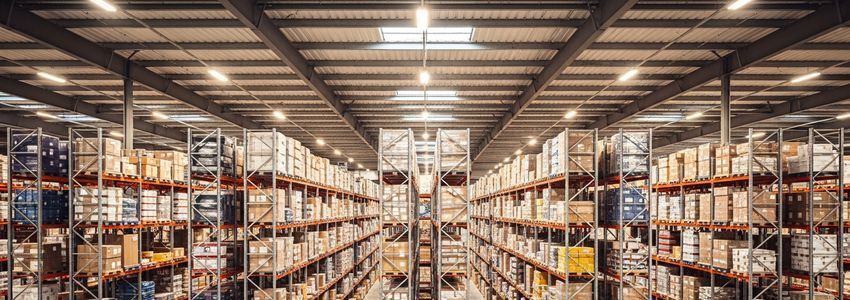
Equipment financing for shared logistics centers has become an essential growth tool as supply chains grow more complex and collaborative. From multi-tenant warehouses to third-party logistics (3PL) hubs, shared facilities require substantial capital for racking systems, automation technology, material handling equipment, and digital infrastructure. For operators and tenants alike, financing that capital strategically - rather than draining cash reserves - is the difference between staying competitive and falling behind.
The modern warehousing landscape has changed dramatically. Same-day delivery expectations, inventory-on-demand models, and the rapid growth of e-commerce have pushed shared logistics centers to invest in equipment at an unprecedented rate. Yet most operators cannot afford to purchase every piece of equipment outright. Equipment financing bridges that gap, enabling centers to acquire what they need now, preserve working capital, and pay over time as the equipment generates revenue.
In This Article
- What Is Equipment Financing for Shared Logistics Centers?
- Types of Equipment You Can Finance
- How Equipment Financing Works
- Key Benefits for Logistics Operators
- Who Qualifies for Logistics Equipment Financing
- Comparing Financing vs. Leasing vs. Outright Purchase
- How Crestmont Capital Helps Logistics Centers
- Real-World Scenarios
- Frequently Asked Questions
- How to Get Started
What Is Equipment Financing for Shared Logistics Centers?
Equipment financing is a category of business lending specifically designed to fund the acquisition of physical assets. For shared logistics centers, this includes everything from warehouse racking and conveyor systems to forklifts, automated sorters, dock equipment, inventory management systems, and climate control units. Unlike a general-purpose working capital loan, equipment financing typically uses the equipment itself as collateral, which makes approval easier and interest rates more competitive.
Shared logistics centers operate under a unique financial model. Multiple tenants or clients may share space, overhead, and in some cases, equipment. The center itself must maintain infrastructure-grade equipment to serve all tenants reliably. This creates a recurring need for capital investment that does not fit neatly into a single-purchase model. Equipment financing allows the center to treat large capital expenditures as predictable monthly operating expenses, aligning costs with the revenue generated by those same assets.
There are two primary structures for logistics equipment financing. The first is a traditional equipment loan, where the business borrows the full cost of the equipment, makes fixed monthly payments over a set term (typically 24 to 84 months), and owns the equipment outright at the end. The second is equipment leasing, where the business makes payments to use the equipment and can either purchase it at end of term, return it, or upgrade to newer equipment. Both structures have a place in a logistics center's financing strategy depending on the type of equipment and expected useful life.
Industry Insight: According to the Equipment Leasing and Finance Association (ELFA), more than 80% of U.S. businesses use some form of equipment financing. In the logistics and warehousing sector, automation investments are projected to reach $30 billion by 2026 - making access to equipment financing more critical than ever.
Types of Equipment You Can Finance at a Shared Logistics Center
One of the most practical aspects of equipment financing for shared logistics centers is its broad applicability. If it has a serial number, a manufacturer, and a useful life of more than one year, it can almost certainly be financed. Logistics centers routinely finance the following categories of equipment.
Material Handling Equipment
This category includes forklifts, pallet jacks, reach trucks, order pickers, and tuggers. Modern logistics centers may operate fleets of 10 to 50+ units depending on scale. Financing these assets rather than purchasing allows the center to acquire a full fleet at once and align payments with the revenue the fleet generates.
Racking and Storage Systems
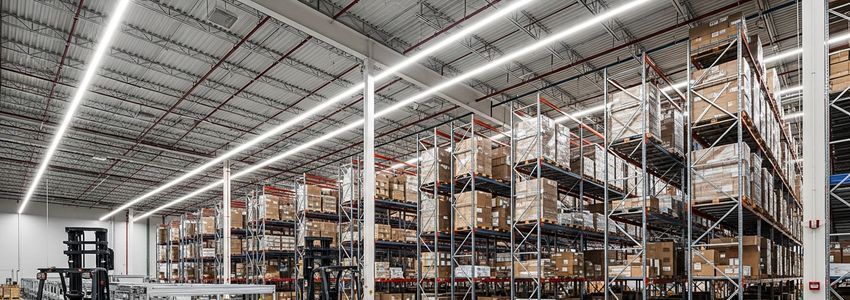
Selective pallet racking, drive-in racking, push-back systems, and mezzanine structures represent significant capital outlays. A mid-size shared logistics center may spend $500,000 to $2 million outfitting its racking system. Equipment financing spreads that cost over 3 to 7 years without depleting working capital reserves.
Conveyor and Sorting Systems
High-throughput facilities use powered conveyors, automated sorters, and pick-and-pack systems. These assets are capital-intensive and have long useful lives, making them ideal candidates for equipment loans or finance leases.
Dock Equipment
Loading dock levelers, dock seals, vehicle restraints, and dock management systems are essential for efficient operations. These assets are often overlooked in capital planning but represent meaningful aggregate cost that benefits from financing.
Warehouse Management Technology
WMS platforms, barcode scanning systems, RFID infrastructure, voice-directed picking systems, and autonomous mobile robots (AMRs) all qualify for equipment financing. Technology assets may have shorter useful lives (3-5 years), making leasing with upgrade options particularly attractive.
Climate Control and Environmental Systems
Cold storage facilities and temperature-controlled zones require refrigeration units, HVAC upgrades, and environmental monitoring equipment. These assets are expensive and essential, making financing a smart strategy for managing cash flow.
By the Numbers
Shared Logistics Center Financing - Key Statistics
$30B
Projected logistics automation investment by 2026 (ELFA)
80%+
U.S. businesses use equipment financing for capital assets
$2M+
Typical racking and handling investment at mid-size logistics facilities
24-84
Month terms available for warehouse equipment loans
How Equipment Financing Works for Logistics Centers
The process of securing equipment financing for a shared logistics center is more straightforward than many operators assume. Here is the typical flow from application to funding.
Step 1 - Identify the equipment and obtain quotes. Before applying, know exactly what you need to finance. Get quotes from vendors and know the total cost. Having a clear scope of equipment speeds the approval process.
Step 2 - Submit a financing application. Applications typically require 2-3 years of business tax returns or financials, recent bank statements, a description of the equipment, and vendor quotes. Most lenders can process applications in 24-72 hours.
Step 3 - Review and accept the offer. The lender provides terms: loan amount, interest rate, monthly payment, and term length. Review total cost of financing, not just monthly payment, before accepting.
Step 4 - Lender pays the vendor directly. Upon approval and signed documents, the lender typically pays the equipment vendor directly. The logistics center takes delivery of the equipment and begins making payments on the agreed schedule.
Step 5 - Equipment goes to work. From day one, the financed equipment generates revenue for your facility - offsetting or exceeding the monthly payment. This is the core logic of equipment financing: assets pay for themselves.
Ready to Finance Your Logistics Equipment?
Get fast, flexible equipment financing from the #1 business lender in the U.S. Apply in minutes - no obligation.
Apply Now →Key Benefits of Equipment Financing for Logistics Operators
Why do the most sophisticated shared logistics operators choose to finance their equipment rather than buy outright? The answer comes down to six strategic advantages.
Preserve Working Capital
A warehouse racking system might cost $800,000. Purchasing outright depletes cash reserves and eliminates the cushion you need for payroll, insurance, lease obligations, and unexpected expenses. Financing that same system at $12,000 per month preserves your liquidity while still acquiring the asset.
Acquire State-of-the-Art Equipment Immediately
Logistics is increasingly driven by speed and technology. Centers that delay equipment upgrades because they are "saving up" often lose tenants to better-equipped competitors. Financing lets you acquire the best equipment now and pay for it as it earns revenue.
Tax Efficiency
Section 179 of the IRS tax code allows businesses to deduct the full purchase price of qualifying equipment in the year it is placed in service. Equipment financing preserves this deduction while still spreading the cash outlay. Consult your tax advisor for specifics applicable to your situation.
Fixed, Predictable Payments
Equipment loans provide fixed monthly payments, making it easy to model cash flow and plan budgets. Unlike variable-rate products, you know exactly what each asset costs per month throughout the financing term.
Build Business Credit
Responsibly managed equipment financing builds your business's credit profile. A strong credit history leads to better rates and larger credit lines in the future - an important strategic advantage for capital-intensive logistics operations.
Flexibility to Upgrade
Equipment leasing with end-of-term options allows logistics centers to return aging technology and upgrade to newer systems. For fast-evolving assets like warehouse management systems and autonomous mobile robots, the ability to upgrade is especially valuable.
Strategic Tip: Many shared logistics operators use a blend of equipment loans (for long-lived assets like racking and dock systems) and operating leases (for technology that evolves quickly). This hybrid approach maximizes both cost efficiency and operational flexibility.
Who Qualifies for Logistics Equipment Financing
Equipment financing for shared logistics centers is accessible to a wide range of businesses, including newer operations that may not qualify for traditional bank loans. Here are the typical qualification criteria.
Business Age
Most equipment lenders prefer businesses with at least 2 years of operating history. However, specialized logistics lenders and alternative financing sources can work with companies as young as 6-12 months, especially if the principals have relevant industry experience or strong personal credit.
Credit Profile
Equipment loans generally require a business credit score of 600+ or a personal credit score of 620+ from the business owners. Strong credit leads to better rates. Even businesses with challenged credit may qualify since the asset itself serves as collateral - reducing lender risk significantly versus unsecured loans.
Revenue and Cash Flow
Lenders want to see that the business generates enough revenue to support monthly payments. Most equipment lenders look for monthly revenue of at least 1.25-1.5x the proposed monthly payment. For a $500,000 equipment loan, that might mean $8,000-$10,000 in monthly revenue before the new equipment generates additional revenue.
Equipment Value and Type
Lenders will review the vendor quote or invoice. New equipment from established manufacturers is easiest to finance. Used equipment can also be financed, though often at slightly higher rates and shorter terms.
Down Payment
Many equipment financing programs are available with little or no money down. Some lenders require 10-20% down for higher-risk situations. Having a modest down payment improves your terms and approval odds.
Comparing Equipment Financing vs. Leasing vs. Outright Purchase
| Factor | Equipment Loan | Equipment Lease | Outright Purchase |
|---|---|---|---|
| Ownership | Own at end of term | Option to buy, return, or upgrade | Own immediately |
| Cash Required | Low (often 0-20% down) | Very low (first/last payment) | Full purchase price upfront |
| Monthly Payment | Moderate to high | Lower than loan | None |
| Best for | Long-lived assets (racking, dock systems) | Tech assets that evolve quickly | Surplus cash, simple assets |
| Tax Treatment | Section 179 eligible; depreciation | Payments may be fully deductible | Section 179 eligible; depreciation |
| Flexibility | Fixed term; own the asset | High - upgrade or return at term end | Full ownership; sell or keep |
How Crestmont Capital Helps Shared Logistics Centers
Crestmont Capital is the #1 rated business lender in the United States, with deep expertise in financing logistics and warehousing operations. We understand that shared logistics centers operate on tight margins, long-term tenant contracts, and capital-intensive infrastructure requirements. Our financing solutions are designed specifically for the realities of modern logistics operations.
Through our equipment financing programs, logistics centers can access the capital needed to acquire racking systems, material handling equipment, conveyors, dock systems, and technology - with fast approvals, flexible terms, and minimal disruption to operations. Our equipment leasing solutions add the flexibility to upgrade assets as technology evolves.
For centers needing broader capital, our working capital loans provide fast access to funds without the restrictions of asset-based programs. We also offer business lines of credit that give logistics centers a revolving funding source for ongoing equipment and operational needs. Learn more about our transportation and logistics business loans or start with a quick application at offers.crestmontcapital.com/apply-now.
Finance Your Logistics Center Equipment Today
Crestmont Capital is the #1 business lender in the U.S. Equipment loans and leases with fast approvals - apply in minutes.
Get Funded Now →Real-World Scenarios: Equipment Financing in Action
Understanding how equipment financing works in practice helps logistics operators evaluate whether it is the right approach for their situation.
Scenario 1: 3PL Hub Upgrading a Forklift Fleet
A third-party logistics provider operates a 200,000 square foot shared center with 12 tenants. Their fleet of 18 forklifts is aging out of service, with mounting maintenance costs. The total replacement cost for a new fleet is $1.1 million. Rather than depleting cash reserves, the operator secures an equipment loan for the full fleet over 60 months. Monthly payments of approximately $21,000 are easily covered by the forklift utilization fees charged to tenants. The operation preserves over $1 million in working capital.
Scenario 2: Cold Storage Facility Adding Temperature Zones
A shared logistics center serving food and pharmaceutical clients needs to add two temperature-controlled zones to meet new tenant requirements. The refrigeration units, insulated panels, and monitoring systems total $650,000. The operator finances the equipment over 84 months, locking in a fixed monthly payment while immediately meeting tenant contract requirements. The new temperature zones generate $18,000 per month in additional revenue, more than covering the financing cost from day one.
Scenario 3: Startup 3PL Operator Equipping First Facility
A startup logistics company has secured its first major tenant contract and needs to equip a 75,000 square foot facility with racking, conveyors, and material handling equipment totaling $800,000. With 18 months of operating history and a strong principals' credit profile, they qualify for equipment financing with 10% down and a 60-month term. The tenant contract covers payments by a factor of 2:1 from month one.
Scenario 4: Established Operator Upgrading WMS Technology
A regional logistics center with 8 years of operations has secured a large e-commerce fulfillment contract that requires real-time inventory visibility and automated pick confirmation. The WMS upgrade, hardware, and integration totals $350,000. The operator chooses a 36-month finance lease with an upgrade clause, allowing them to refresh the technology at term end.
Scenario 5: Multi-Location Network Standardizing Equipment
A national shared logistics network is standardizing equipment across six locations. The total investment across all sites is $4.2 million. Using equipment financing structures at each location, the network preserves cash flow while completing the standardization program over 18 months. Standardized equipment reduces maintenance costs, training time, and parts inventory.
Scenario 6: Tenant-Funded Equipment Financing
Some shared logistics centers work with tenants to co-fund or co-finance specialized equipment. A pharmaceutical client needs specific storage and handling equipment that will primarily serve their inventory. The logistics center finances the equipment using a tenant-guarantee structure, where the tenant's long-term contract supports the financing application. Both parties benefit.
Expert Tip: When modeling whether to finance equipment, compare the total monthly financing cost against the incremental revenue the equipment enables - not just its operational cost savings. Well-selected logistics equipment often pays for itself multiple times over within the financing term.
See How Much You Can Finance
Equipment loans from $25,000 to $5 million+ with same-day pre-approvals. Speak with a logistics financing specialist today.
Apply Now →Frequently Asked Questions
What types of equipment can shared logistics centers finance?
Shared logistics centers can finance virtually all capital equipment including forklifts, reach trucks, pallet jacks, warehouse racking systems, conveyor belts, automated sorters, dock levelers, WMS technology, RFID systems, autonomous mobile robots, climate control equipment, and cold storage units. If the asset has a serial number and a useful life over one year, it can typically be financed.
How much can a logistics center borrow for equipment financing?
Equipment financing amounts vary widely based on the value of the equipment, business financials, and creditworthiness. Most logistics equipment loans range from $25,000 to $5 million or more. Large-scale automation systems, multi-site forklift fleets, or full facility fit-outs may require funding in excess of $5 million through specialized commercial equipment financing programs.
What credit score is required for logistics equipment financing?
Most equipment lenders prefer a business credit score of 600 or above, or a personal credit score of 620 or better. Because the equipment serves as collateral, credit requirements are generally more flexible than for unsecured loans.
What is the difference between an equipment loan and an equipment lease?
An equipment loan provides funds to purchase the equipment outright - you own the asset at the end of the term. An equipment lease is a rental arrangement where you pay to use the equipment, then choose to purchase, return, or upgrade at term end.
How long does equipment financing approval take for logistics companies?
Most equipment financing applications for logistics centers are processed within 24-72 business hours. For straightforward applications under $250,000, same-day or next-day approvals are common. Larger applications may take 3-5 business days.
Can a startup shared logistics center qualify for equipment financing?
Yes, startup logistics centers can qualify for equipment financing. Lenders may require personal guarantees, a larger down payment, and look heavily at principals' credit and industry experience. Having a signed tenant or client contract helps significantly.
Are there interest rate advantages to equipment financing compared to other loans?
Yes - equipment loans typically carry lower interest rates than unsecured business loans because the equipment serves as collateral. For a well-qualified logistics center, equipment loan rates can range from 6% to 15% annually.
Can I finance used or refurbished warehouse equipment?
Yes, many lenders finance used and refurbished logistics equipment from reputable manufacturers in good operating condition. Used equipment may come with slightly shorter terms and higher rates.
What documents are needed to apply for logistics equipment financing?
Typical documentation includes: application, equipment vendor invoice or quote, 2-3 years of business tax returns or financials, 3-6 months of bank statements, and a description of how the equipment will be used.
Is a personal guarantee required for logistics equipment financing?
In most cases, yes - lenders require a personal guarantee from all owners holding 20% or more of the business. Established businesses with strong credit and extensive operating history may qualify without a personal guarantee in some cases.
How does equipment financing affect my balance sheet?
An equipment loan appears on the balance sheet as both a fixed asset and a liability. As you make payments, both the asset (depreciation) and the liability (principal reduction) decrease. Consult your accountant regarding specific treatment under ASC 842 for leases.
Can I finance equipment for multiple warehouse locations under one application?
Yes, many lenders offer master lease programs or blanket equipment financing facilities for multi-location businesses to finance equipment across multiple sites under a single credit facility.
What happens at the end of an equipment lease for logistics equipment?
At term end you can purchase the equipment (at fair market value or pre-agreed residual value), return it, or extend the lease. For technology assets, upgrading to newer equipment is often the best path. For long-lived physical assets, purchasing or extending is common.
How does equipment financing help with cash flow management at logistics centers?
Equipment financing converts large capital expenditures into predictable monthly payments, maintaining liquidity for operations and enabling precise cash flow modeling. This allows the business to invest in growth rather than tying up capital in physical assets.
What are the typical interest rates for warehouse equipment financing in 2026?
Warehouse and logistics equipment financing rates in 2026 vary based on credit profile, loan term, equipment type, and lender. Well-qualified borrowers can expect rates in the 6-12% annual range. Businesses with moderate credit may see rates from 12-22%. The best way to find your actual rate is to apply - most lenders provide quotes without impacting your credit score.
How to Get Started
Complete our quick application at offers.crestmontcapital.com/apply-now. Have your vendor quote ready and the process takes just a few minutes.
A Crestmont Capital advisor will review your equipment needs, financials, and business goals to structure the ideal financing solution for your shared logistics operation.
Receive your equipment financing approval, often within 24-72 hours. We pay the vendor directly so you can take delivery immediately and put your new equipment to work.
Conclusion
Equipment financing for shared logistics centers is not just a convenience - it is a strategic imperative in today's fast-moving warehousing environment. The centers that grow, retain tenants, and outperform competitors are those that invest in their equipment continuously rather than waiting until cash reserves accumulate. Financing makes that continuous investment possible while keeping working capital available for operations and growth.
Whether you are a startup 3PL operator equipping your first facility, an established regional hub upgrading a forklift fleet, or a national network standardizing equipment across dozens of locations, the right equipment financing strategy can transform your capital structure - and your competitive position. Crestmont Capital stands ready to help with fast, flexible solutions purpose-built for the logistics sector.
Ready to take the next step? Apply today at offers.crestmontcapital.com/apply-now or contact our team directly.
Disclaimer: The information provided in this article is for general educational purposes only and is not financial, legal, or tax advice. Funding terms, qualifications, and product availability may vary and are subject to change without notice. Crestmont Capital does not guarantee approval, rates, or specific outcomes. For personalized information about your business funding options, contact our team directly.