Securing the right physical space at the right time is a critical challenge for agile businesses. Whether for a seasonal inventory surge, a special project, or a market-testing pop-up shop, short-term facility rentals offer immense strategic value. A business line of credit provides the ideal financial tool to fund these opportunities, offering on-demand access to capital without the rigid structure of traditional loans. This approach empowers companies to act decisively, manage cash flow effectively, and seize growth opportunities as they arise.
In This Article
- What Are Credit Lines for Short-Term Facility Rentals?
- Key Benefits of Using a Line of Credit for Space Rentals
- How a Business Line of Credit Works for Facility Costs
- Types of Short-Term Facilities Businesses Finance with Credit Lines
- How to Qualify for a Business Credit Line
- How Crestmont Capital Helps with Facility Rental Financing
- Credit Lines vs. Other Financing Options for Facility Rentals
- Real-World Business Scenarios
- Frequently Asked Questions
- How to Get Started
- Conclusion
What Are Credit Lines for Short-Term Facility Rentals?
A business line of credit for facility rentals is a flexible financing solution that provides a business with a set amount of approved capital, known as a credit limit. Unlike a traditional term loan that disburses a lump sum of cash once, a line of credit functions as a revolving credit account. This means a business can draw funds from the account as needed, up to the established limit, to cover the costs associated with renting temporary commercial space. These costs can include security deposits, first and last month's rent, utility setup fees, insurance, and even minor modifications or furnishings for the space.
The key feature is its "revolving" nature. As the business repays the funds it has drawn, the available credit is replenished. This creates a standing financial resource that can be used repeatedly without the need to reapply for a new loan each time a need arises. For companies whose space requirements fluctuate due to seasonal demand, project-based work, or market expansion tests, this on-demand access to capital is invaluable. It directly addresses the unpredictable nature of short-term opportunities.
For example, an e-commerce company might need to rent a small warehouse for three months leading up to the holiday season. Instead of tying up its operational cash flow to pay the upfront rental costs, it can draw from its business line of credit. Once the holiday season is over and the revenue has been collected, the company can repay the drawn amount, restoring its credit line to its full limit for the next opportunity. This financial agility separates a line of credit from other, more rigid forms of small business financing.
This funding tool is specifically designed for short-term, recurring, or unexpected expenses rather than large, long-term capital investments like purchasing a building. The flexibility aligns perfectly with the temporary nature of short-term facility rentals, making it a highly strategic choice for businesses focused on growth and operational efficiency. It bridges the gap between immediate operational needs and long-term financial stability, allowing businesses to act quickly without compromising their core capital.
Key Benefits of Using a Line of Credit for Space Rentals
Employing a business line of credit to finance short-term facility rentals offers a distinct set of advantages that align with the goals of dynamic and growing companies. These benefits center around flexibility, cost-efficiency, and strategic agility, providing a powerful alternative to using operational cash or traditional loans.
Unmatched Financial Flexibility
The primary benefit is flexibility. Business needs are rarely static, and the need for temporary space can arise unexpectedly. A pre-approved line of credit acts as a financial safety net, ready to be deployed the moment an opportunity presents itself. A retail business might find a perfect pop-up location available for only two months, or a contractor might win a bid that requires a local staging area for six months. With a line of credit, the funding is already in place, allowing business owners to say "yes" to these opportunities without delay.
Improved Cash Flow Management
Renting a facility, even for a short term, requires a significant upfront cash outlay for deposits and initial rent payments. Paying for these expenses out of daily operating cash can strain a business's finances, potentially delaying payroll, inventory purchases, or marketing efforts. By using a line of credit, a business preserves its working capital for core operations. This separation of funding ensures that the day-to-day financial health of the company remains robust while still enabling strategic expansion and operational adjustments.
Cost-Effective Interest Payments
With a line of credit, interest is only charged on the amount of money that is actually drawn, not on the total credit limit. If a business has a $100,000 line of credit but only needs $15,000 to secure a temporary warehouse, it only pays interest on that $15,000. This is a far more cost-effective model compared to a term loan, where the business would receive a lump sum and begin accruing interest on the entire amount immediately, regardless of whether it was all needed at once.
Speed and Accessibility
Once a business line of credit is established, accessing the funds is typically fast and straightforward. This speed is critical when dealing with short-term rental markets, where desirable spaces can be leased quickly. The ability to make a deposit and sign a lease within a day or two can be the difference between securing an ideal location and losing it to a competitor. The lengthy underwriting process of a traditional loan is simply too slow for these time-sensitive scenarios.
Supports Seasonal and Cyclical Business Models
Many businesses, from retailers and e-commerce stores to agricultural and tourism companies, experience significant seasonal peaks. A line of credit is perfectly suited for this model. A company can draw funds to rent extra storage space or a seasonal retail location before its peak season, then use the increased revenue generated during that season to repay the line of credit. The credit is then fully available for the same purpose the following year, creating a sustainable cycle of growth.
Builds a Stronger Business Credit Profile
Responsibly using and repaying a business line of credit can have a positive impact on a company's credit history. Consistent, on-time payments demonstrate financial discipline to lenders and credit bureaus. Over time, this can help the business qualify for larger credit lines, better terms on future loans, and more favorable relationships with suppliers and vendors, strengthening the company's overall financial foundation.
Key Tip: Establish a business line of credit before you have an immediate, urgent need. Having the capital approved and ready allows you to negotiate facility rentals from a position of strength and act instantly when the perfect opportunity arises.
How a Business Line of Credit Works for Facility Costs
Understanding the mechanics of a business line of credit is essential for leveraging it effectively for facility rental expenses. The process is designed for simplicity and speed, contrasting sharply with the more cumbersome procedures of other financing types. It can be broken down into a few key stages: application and approval, drawing funds, and repayment.
1. Application and Approval
The first step is to apply for the line of credit with a lender like Crestmont Capital. This process typically involves submitting financial documents, such as business bank statements, profit and loss statements, and tax returns. The lender evaluates the business's financial health, including its revenue, cash flow, time in business, and the owner's personal credit score. Based on this assessment, the lender approves a specific credit limit-for example, $50,000, $150,000, or more. This limit represents the maximum amount of money the business can borrow at any one time. Unlike a loan, no funds are disbursed at this stage, and no interest accrues. The line of credit is simply established and ready for use.
2. Identifying the Need and Drawing Funds
Once the line is active, the business can use it whenever a need for a short-term facility arises. Let's say a manufacturing firm needs to rent a 5,000-square-foot space for a special four-month production run. The lease requires a $5,000 security deposit and the first month's rent of $5,000, for a total upfront cost of $10,000. Instead of depleting its operating account, the business owner can request a $10,000 draw from their approved line of credit. The funds are typically transferred to the business's bank account within one to two business days, allowing them to secure the lease immediately.
3. Usage of Funds
The drawn funds can be used to cover all costs associated with the rental. This includes:
- Security deposits
- First and last month's rent payments
- Utility setup and deposits
- Liability insurance premiums required by the landlord
- Costs for moving equipment or inventory into the space
- Minor, non-permanent modifications like temporary partitions or shelving
The business can continue to make subsequent draws as needed for the monthly rent payments, as long as the total outstanding balance does not exceed the credit limit.
4. Repayment and Replenishment
After drawing funds, the business begins to make payments. Repayment structures can vary, but they often involve regular payments (weekly or monthly) of principal and interest. The key feature is that as the principal is repaid, the available credit is replenished. Continuing the example above, if the business has a $50,000 limit and drew $10,000, its available credit becomes $40,000. If it then repays $2,000 of the principal, its outstanding balance drops to $8,000, and its available credit increases to $42,000. This revolving feature means the line of credit remains a valuable asset long after the initial need is met. Once the four-month production run is complete and the full $10,000 is repaid, the entire $50,000 credit limit is available again for the next project or opportunity.
Ready to Secure Your Flexible Funding?
Get a business line of credit in place to seize facility rental opportunities without delay. See what your business qualifies for in minutes.
Apply Now →Types of Short-Term Facilities Businesses Finance with Credit Lines
The versatility of a business line of credit makes it suitable for financing a wide array of short-term facility rentals. Businesses across various industries leverage this funding to gain a competitive edge, manage operations more efficiently, and explore new markets. Here are some of the most common types of temporary spaces financed with this method.
Seasonal Warehouses and Storage
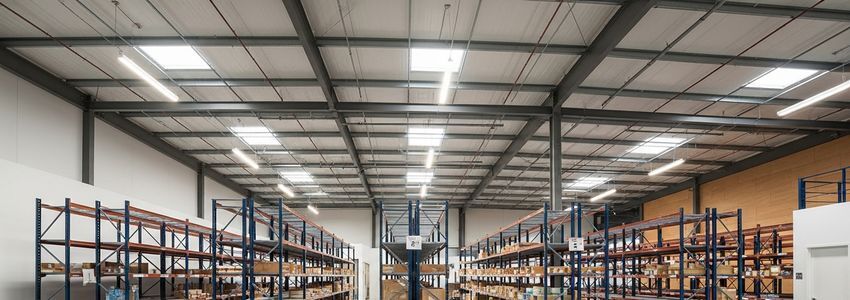
E-commerce businesses, retailers, and distributors often face significant inventory fluctuations. A line of credit is ideal for renting additional warehouse space during peak seasons, such as the months leading up to the holidays or a summer sales push. This prevents their primary facilities from becoming overcrowded and inefficient, ensuring smooth order fulfillment when demand is highest.
Pop-Up Retail Shops
For online brands looking to test a physical presence or established retailers wanting to enter a new neighborhood, a pop-up shop is a low-risk strategy. A line of credit can cover the short-term lease (often 1-3 months) on a high-traffic retail space, plus the costs of temporary fixtures and initial inventory. This allows the business to gauge market response without committing to a long-term, expensive lease.
Project-Specific Office or Workspace
Consulting firms, construction companies, and creative agencies often take on projects that require a temporary physical base of operations. A line of credit can fund a short-term lease on a project office near a client's site, a staging area for a construction project, or a studio space for a specific film or design contract. This keeps project-related overhead separate and ensures the team has the resources it needs to succeed.
Event Venues and Conference Spaces
Companies hosting product launches, corporate training sessions, industry conferences, or client appreciation events need to rent suitable venues. A line of credit provides the necessary capital to secure a deposit on a hotel ballroom, conference center, or unique event space well in advance, which is often required to reserve desirable locations and dates.
Ghost Kitchens or Commercial Kitchens
The food and beverage industry increasingly relies on flexible production spaces. A growing catering company, a food truck business needing a commissary kitchen, or a restaurant testing a delivery-only concept can use a line of credit to rent space in a shared commercial kitchen. This provides access to certified and equipped facilities on a short-term or as-needed basis, dramatically lowering the barrier to entry and expansion.
Co-working and Flexible Office Spaces
As businesses embrace remote and hybrid work models, the need for flexible meeting and collaboration space is rising. A company might use a line of credit to secure a block of hot desks or a private office in a co-working facility for a specific team or project. This provides a professional environment without the commitment and cost of a traditional office lease, which is a key driver in the flexible workspace market. According to a report highlighted by Forbes, the demand for such flexible solutions is a direct response to evolving workforce expectations.
Film and Photography Locations
Production companies frequently need to rent specific locations-from residential homes to industrial lofts-for film, television, or commercial shoots. Lease agreements for these locations are almost always short-term. A line of credit offers the quick, liquid capital needed to pay location fees and deposits on tight production schedules.
By the Numbers
Short-Term Facility Rentals - Key Statistics
30%
By 2030, flexible workspace is projected to comprise 30% of all commercial office space, demonstrating a massive shift away from long-term leases. (Source: JLL)
$8.6 Billion
The pop-up retail market in the U.S. has grown significantly, valued in the billions as brands seek flexible, high-impact ways to engage with customers. (Source: PopUp Republic)
82%
A U.S. Bank study found that 82% of business failures are due to poor cash flow management, a problem directly addressed by using credit lines for large, temporary expenses. (Source: U.S. Bank)
1.2 Billion Sq. Ft.
Demand for industrial and warehouse space remains high, with over a billion square feet absorbed in recent years, driven by e-commerce's need for flexible fulfillment centers. (Source: Bloomberg)
How to Qualify for a Business Credit Line
Qualifying for a business line of credit involves a comprehensive assessment of your company's financial stability and creditworthiness. While specific requirements vary by lender, most focus on a core set of criteria that paint a picture of your ability to manage and repay debt. At Crestmont Capital, we streamline this process, but understanding these key factors can help you prepare a stronger application.
1. Time in Business
Lenders prefer to work with established businesses that have a proven track record. Most financial institutions, including alternative lenders, typically require a business to be operational for a minimum of six months to one year. A longer history can often lead to higher credit limits and more favorable terms, as it demonstrates stability and a history of navigating market cycles.
2. Annual Revenue
Consistent revenue is a primary indicator of a business's health. Lenders will set a minimum annual or monthly revenue threshold to ensure your business generates enough income to support its operations and handle repayment. This figure can range from $100,000 to $250,000 or more in annual revenue, depending on the lender and the size of the credit line requested. You will typically need to provide recent business bank statements or tax returns to verify your revenue figures.
3. Credit Score (Personal and Business)
Your credit history plays a significant role. Lenders will often look at both the business owner's personal credit score (FICO) and the business's credit profile (if one is established). A strong personal credit score (generally 600 or higher) shows a history of responsible debt management. While some lenders focus more heavily on business cash flow, a good credit score is almost always a positive factor that can unlock better rates and terms. For more details on this financial tool, you can explore what a business line of credit is in our comprehensive guide.
4. Cash Flow and Bank Statements
Beyond top-line revenue, lenders are keenly interested in your business's cash flow. They will analyze your bank statements to see the consistency of your deposits, your average daily balance, and whether you have a history of non-sufficient funds (NSF) events or negative balance days. Healthy, consistent cash flow is one of the most compelling indicators that your business can comfortably manage new payment obligations.
5. Industry Type
While lenders work with a wide range of industries, some may be considered higher risk than others. A business in a stable, established industry like healthcare or manufacturing might be viewed more favorably than one in a highly volatile or speculative sector. However, at Crestmont Capital, we have experience funding businesses across nearly every industry and evaluate each application on its individual merits.
Application Tip: Before applying, gather your key documents: the last 3-6 months of business bank statements, your most recent business tax return, and your year-to-date profit and loss statement. Having these ready will significantly speed up the approval process.
How Crestmont Capital Helps with Facility Rental Financing
As the #1 rated business lender in the country, Crestmont Capital specializes in providing fast, flexible, and reliable financing solutions tailored to the real-world needs of growing businesses. When it comes to securing a business line of credit for facility rentals, our process and products are designed to give you a distinct competitive advantage.
We understand that opportunities in the short-term rental market are time-sensitive. A prime pop-up location or a critically needed warehouse space will not stay available for long. That's why our application and approval process is built for speed. Businesses can often receive a decision and access to funds in as little as 24 hours, a stark contrast to the weeks or months traditional banks can take. This velocity empowers our clients to act with confidence and secure the space they need before a competitor does.
Crestmont Capital offers a range of commercial lines of credit with limits that can accommodate businesses of all sizes, from small enterprises needing $25,000 to cover a deposit to larger corporations requiring $500,000 or more for a major project. Our funding advisors work closely with you to understand your specific needs and structure a credit line that aligns with your revenue, cash flow, and strategic goals. We pride ourselves on a high approval rate, looking beyond just a single credit score to assess the overall health and potential of your business.
Our commitment extends beyond just providing capital. We serve as a long-term financial partner. Our team offers expert guidance to help you leverage your line of credit most effectively, ensuring you have the right financial tools to manage seasonal peaks, test new markets, and scale your operations sustainably. With Crestmont Capital, you gain more than just a credit line; you gain a dedicated resource committed to your business's success.
Experience the Crestmont Capital Difference
Partner with the nation's top-rated business lender for fast, flexible financing. Discover why thousands of businesses trust us for their growth capital.
Get Funded Now →Credit Lines vs. Other Financing Options for Facility Rentals
When you need to finance a short-term facility rental, a business line of credit is a powerful option, but it's not the only one. Understanding how it compares to other common financing tools like traditional term loans and SBA loans is crucial for making the best financial decision for your specific situation. The ideal choice depends on factors like your timeline, the nature of the expense, and your long-term financial strategy.
A term loan provides a lump sum of capital upfront with a fixed repayment schedule over a set period. This can be useful for a single, large, one-time expense. However, for the fluctuating and often recurring costs of facility rentals, its rigidity can be a drawback. You pay interest on the entire loan amount from day one, even if you only need a portion of it immediately. Furthermore, if another rental need arises later, you must go through the entire application process again.
SBA loans are backed by the U.S. Small Business Administration and often come with very favorable interest rates and long repayment terms. They are an excellent choice for major, long-term investments like purchasing a building or making significant renovations. Their primary disadvantage for short-term needs is the notoriously slow and document-intensive application process, which can take several months. This timeline makes them impractical for seizing fast-moving rental opportunities.
The table below provides a clear, side-by-side comparison of these three options in the context of financing short-term facility rentals.
| Feature | Business Line of Credit | Traditional Term Loan | SBA Loan |
|---|---|---|---|
| Funding Structure | Revolving credit; draw funds as needed up to a limit. | One-time lump sum disbursement. | One-time lump sum disbursement. |
| Best Use Case | Recurring, unpredictable, or short-term expenses like deposits, monthly rent, and seasonal needs. | A single, large, planned expense where the exact cost is known upfront. | Major long-term investments like buying real estate, large equipment purchases, or business acquisition. |
| Funding Speed | Very fast; typically 1-3 business days once approved. | Moderate; can take several days to a few weeks. | Very slow; often takes 30-90 days or more. |
| Interest Calculation | Pay interest only on the amount you draw. | Pay interest on the entire loan amount from the start. | Pay interest on the entire loan amount from the start. |
| Flexibility | High. Use, repay, and reuse funds as needed without reapplying. | Low. Once funds are used and repaid, the loan is closed. A new need requires a new application. | Low. Funds are typically earmarked for a specific purpose detailed in the loan agreement. |
| Typical Repayment Term | Short-term; typically 6-24 months per draw. | Medium-term; typically 2-7 years. | Long-term; often 10-25 years. |
For the specific challenge of financing short-term facility rentals, the business line of credit emerges as the superior tool due to its alignment with the nature of the expense. Its speed, flexibility, and cost-effective interest structure provide a strategic advantage that other financing options cannot match. For ongoing, operational funding needs, many businesses also find value in working capital loans, which can complement a line of credit strategy.
Real-World Business Scenarios
To illustrate the practical power of a business line of credit for facility rentals, consider these real-world scenarios across different industries.
Scenario 1: The E-commerce Retailer
Business: An online apparel brand that experiences a massive sales surge from October to December.
Challenge: Their primary fulfillment center is at capacity by September. They need an additional 10,000 square feet of warehouse space for four months to handle incoming holiday inventory and manage returns in January. The upfront cost for deposit and first month's rent is $20,000.
Solution: The business uses its pre-approved $75,000 line of credit. They draw $20,000 to secure the lease instantly. They then make smaller draws each month to cover the rent. This preserves their cash for a large holiday marketing campaign. By February, the extra inventory is sold, the lease is terminated, and they use the robust holiday profits to pay off the line of credit in full, restoring the entire $75,000 for the next year's peak season.
Scenario 2: The Event Planning Company
Business: A corporate event planning firm that just landed a major contract to organize a three-day tech conference.
Challenge: The ideal conference venue requires a 50% deposit of $40,000 to reserve the dates, but the client's first payment to the event planner isn't due for another 60 days. The planner needs to secure the venue now or risk losing it.
Solution: The firm draws $40,000 from its $100,000 line of credit to pay the venue deposit immediately. This bridges the cash flow gap between their expense and their revenue. Once the client's payment arrives, they repay the line of credit. The remaining credit limit stays available for other vendor deposits, such as catering and A/V equipment, throughout the event planning cycle.
Scenario 3: The Construction Contractor
Business: A general contractor wins a lucrative 9-month contract to build a commercial complex in a neighboring state.
Challenge: They need a secure, local yard to store heavy equipment, building materials, and a temporary on-site office trailer. Renting a suitable 2-acre industrial lot costs $4,000 per month, with a $8,000 deposit required.
Solution: The contractor uses their business line of credit to draw the $12,000 needed for the deposit and first month's rent. This avoids tying up capital that is needed for material purchases and subcontractor payments. They incorporate the monthly rental cost into their project draws from the client, systematically repaying the line of credit as the project progresses. This keeps project-specific overhead financially contained and manageable.
Scenario 4: The Artisan Food Producer
Business: A small-batch specialty sauce company gets an unexpected opportunity to be featured in a regional grocery chain's "local producers" promotion.
Challenge: The opportunity requires a massive increase in production for two months, far exceeding the capacity of their current small kitchen. They need temporary access to a larger, certified commercial kitchen. The kitchen charges $5,000 per month, with a full two-month payment required upfront.
Solution: The company uses its $25,000 line of credit to draw the $10,000 needed to secure the kitchen time. This allows them to fulfill the large grocery order without delay. The revenue from the successful promotion easily covers the cost of the kitchen rental and the interest on the draw, and they repay the line of credit quickly, turning a potential logistical nightmare into a profitable growth opportunity.
Frequently Asked Questions
What is a business line of credit for facility rentals?
How is this different from a regular business loan?
What is the typical credit limit I can expect?
Can I use the funds for things other than rent?
How quickly can I get approved and access funds?
What are the minimum qualifications for a business line of credit?
Is a business line of credit secured or unsecured?
How does repayment work?
Will using a line of credit affect my credit score?
Can I use a line of credit to rent a pop-up shop?
What if I don't use the full credit limit?
Are interest rates fixed or variable?
Can a startup with less than one year in business qualify?
What documents do I need to apply?
Is a line of credit a good option for seasonal inventory storage?
Have More Questions?
Our funding experts are ready to provide clear answers and guide you to the best financing solution for your business needs.
Speak with an Expert →How to Get Started
Securing a business line of credit with Crestmont Capital is a straightforward process designed to get you the capital you need with minimal friction. Follow these simple steps to get your flexible funding in place.
Submit a Simple Application
Complete our secure online application in just a few minutes. It's designed to be quick and easy, requiring only basic information about your business to get the process started.
Consult with a Funding Advisor
A dedicated funding advisor will contact you to discuss your specific needs, review your financial documents (like bank statements), and identify the best possible credit line options for your business.
Receive Approval and Access Funds
Once you receive your approval and accept the terms, your line of credit will be activated. You can then make your first draw and have the capital deposited directly into your business bank account, ready to secure your facility rental.
Conclusion
In a competitive business environment, the ability to adapt and act quickly is paramount. Short-term facility rentals provide the physical flexibility needed to scale, test, and operate efficiently, but they require a funding solution that is equally agile. A business line of credit for facility rentals stands out as the ideal financial tool for this purpose. It replaces financial uncertainty with a reliable, on-demand source of capital, empowering business owners to make strategic decisions without jeopardizing their operational cash flow.
By offering unmatched flexibility, cost-effective interest structures, and rapid access to funds, a line of credit allows businesses to confidently secure seasonal warehouses, launch pop-up shops, and manage project-specific spaces. This strategic use of capital not only solves an immediate logistical need but also builds a foundation for sustainable growth. To prepare your business for its next opportunity, establishing a line of credit with a trusted partner like Crestmont Capital is a proactive step toward ensuring you always have the resources to succeed.
Disclaimer: The information provided in this article is for general educational purposes only and is not financial, legal, or tax advice. Funding terms, qualifications, and product availability may vary and are subject to change without notice. Crestmont Capital does not guarantee approval, rates, or specific outcomes. For personalized information about your business funding options, contact our team directly.

Allan Garfinkle
Allan Garfinkle is the Chief Revenue Officer at Crestmont Capital, where he has spent more than a decade leading revenue strategy, business development, and operational growth. With 28 years of experience building and advising startups and small businesses, Allan has helped more than 10,000 business owners navigate financing decisions, growth opportunities, and changing economic conditions. He earned a Bachelor of Science in Economics and an MBA with a concentration in Finance from Northeastern University, as well as a Juris Doctor from New England Law, where his studies focused on contracts and business law. His writing draws on extensive practical experience in small-business lending, equipment financing, business credit, and commercial finance.