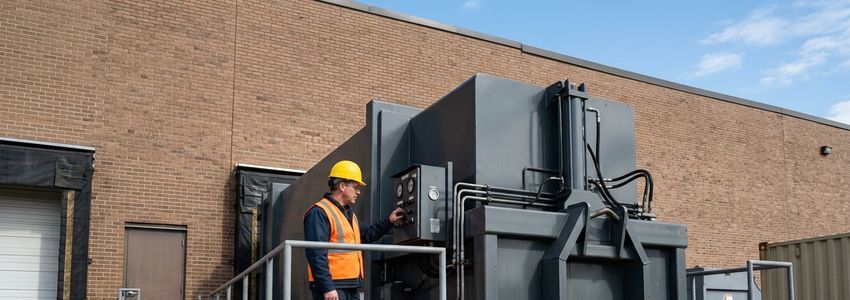
When a commercial trash compactor fails at a restaurant, grocery store, distribution center, or apartment complex, waste piles up fast and the problem cannot wait for a slow financing process. A commercial trash compactor replacement financing plan gives business owners a way to get a new unit ordered, delivered, and installed within days instead of the weeks a bank loan typically requires. This guide walks through how emergency compactor financing works, what a replacement actually costs, and how to move from a jammed or dead unit to a working system without draining cash reserves.
In This Article
What Is Commercial Trash Compactor Replacement Financing?
Commercial trash compactor replacement financing is a category of business funding designed specifically to move fast when a compactor unit breaks down beyond repair. Unlike a standard equipment purchase planned months in advance, this financing is structured around urgency: minimal paperwork, quick underwriting decisions, and funding timelines measured in days rather than weeks.
Trash compactors are not optional equipment for most businesses that rely on them. A restaurant generating hundreds of pounds of food waste daily, a grocery store managing cardboard and produce waste, or a 200-unit apartment complex handling resident trash cannot simply let waste accumulate while they wait on a loan decision. Health code violations, pest infestations, foul odors, and overflowing dumpsters can shut down operations or trigger fines within days of a compactor failure.
A commercial trash compactor typically costs between $8,000 and $35,000 depending on size, type, and capacity, with heavy-duty vertical and self-contained units for high-volume operations often running higher. Financing spreads that cost into manageable monthly payments while the business keeps operating without an interruption to waste removal.
Key Benefits of Emergency Compactor Financing
- Speed: Many alternative lenders can approve and fund a compactor replacement within 24 to 72 hours, compared to weeks for a traditional bank loan.
- Preserved cash flow: Instead of paying $15,000 or more upfront, a business spreads the cost across 24 to 60 monthly payments, keeping working capital available for payroll, inventory, and rent.
- Minimal documentation: Most equipment financing applications require only basic business information, a few months of bank statements, and a quote from the compactor vendor or installer.
- Avoids code violations and fines: Health departments and municipal waste ordinances often require functioning waste management systems. Fast financing prevents an equipment failure from becoming a compliance citation.
- Flexible for all credit profiles: Because the compactor itself typically serves as collateral, approval is often possible even for businesses with less-than-perfect credit or a short time in business.
- Protects reputation: Overflowing dumpsters, foul odors, and pest activity from a failed compactor can quickly damage a restaurant or retail business's reputation with customers and neighboring tenants.
Compactor Down? Don't Wait on Waste.
Get fast, flexible financing to replace your commercial trash compactor before it becomes a bigger problem. No obligation to apply.
Apply Now →How It Works
Emergency compactor financing follows a straightforward process built for speed. Here is what to expect from application to installation.
Step 1: Get a Quote
Contact a compactor dealer or waste equipment vendor to get pricing on a replacement unit that matches your volume needs. Many vendors keep common sizes in stock and can quote same-day.
Step 2: Apply for Financing
Complete a short application with a lender specializing in equipment financing. Most applications take under 10 minutes and require basic business details, an EIN, and recent bank statements.
Step 3: Underwriting Review
The lender reviews your business's cash flow, time in business, and credit profile. Because the compactor serves as collateral, underwriting can move quickly, often same-day or next-day.
Step 4: Approval and Terms
Once approved, you receive a financing offer outlining the loan amount, term length (typically 24 to 60 months), and monthly payment. Review the terms and sign electronically.
Step 5: Funding and Delivery
The lender pays the vendor directly, and the vendor schedules delivery and installation. Many businesses have a working replacement compactor within a few business days of approval.
Types of Financing Available
Not every trash compactor financing structure works the same way. Here are the most common options business owners use to fund a replacement unit.
Equipment Finance Agreement (EFA)
An EFA functions like a traditional equipment loan. You borrow the purchase amount and make fixed monthly payments over a set term. You own the compactor from day one, and once the loan is paid off, it is yours free and clear.
Equipment Leasing
Leasing structures often carry lower monthly payments than a loan because you are paying for the use of the equipment rather than financing the full purchase price. At the end of the term, you may have the option to purchase the unit, return it, or upgrade to a newer model.
Working Capital Loan
For businesses that need to cover the compactor replacement alongside other urgent costs, such as emergency cleanup or temporary waste hauling fees, a general working capital loan can provide flexible funds not tied exclusively to the equipment purchase.
Business Line of Credit
A revolving line of credit lets a business draw funds as needed, which can be useful if the compactor failure is one of several unexpected costs hitting at once, such as temporary dumpster rental fees while waiting for the new unit.
Used Equipment Financing
For businesses looking to control costs, used equipment financing can fund a certified pre-owned compactor at a lower price point than new, while still spreading the cost over time.
Key Stat: The U.S. generates over 292 million tons of municipal solid waste annually, and commercial and industrial properties account for a substantial share of that volume, according to Census Bureau data on business operations. Reliable on-site waste equipment is not optional infrastructure for high-volume operations.
By the Numbers
Commercial Trash Compactor Financing — Key Statistics
$8K-$35K
Typical cost range for a new commercial trash compactor
24-72 Hrs
Typical funding time with alternative equipment lenders
24-60 Mo
Common financing term length for equipment loans
80%+
Share of U.S. businesses that use financing to acquire equipment
Who This Financing Is Best For
Commercial trash compactor replacement financing serves a wide range of businesses that generate significant waste volume as part of daily operations.
- Restaurants and food service businesses: High volumes of food waste and packaging make a working compactor essential for health code compliance and pest control.
- Grocery stores and supermarkets: Cardboard, produce waste, and packaging require consistent processing to avoid loading dock backups.
- Multi-family apartment complexes and property managers: Resident waste needs a reliable outlet, and a failed compactor can generate tenant complaints quickly.
- Distribution centers and warehouses: Cardboard and packaging waste from high shipping volumes require industrial-grade compaction equipment.
- Retail stores and shopping centers: Consistent waste processing keeps loading areas clear and prevents unsightly overflow visible to customers.
- Hotels and hospitality businesses: High guest turnover generates substantial daily waste that needs efficient on-site processing.
Comparing Your Options
Business owners facing a compactor failure typically weigh three paths: emergency equipment financing, paying cash, or renting a temporary unit while saving up. Here is how they compare.
| Factor | Emergency Financing | Paying Cash | Temporary Rental |
|---|---|---|---|
| Upfront Cost | Low to none | $8,000-$35,000+ | Ongoing rental fees |
| Cash Flow Impact | Minimal - predictable monthly payment | Significant one-time hit | Ongoing drain with no equity built |
| Time to Resolution | 1-5 business days | Immediate, if funds available | Fast, but not a permanent fix |
| Ownership | Yes, at end of term (loan structures) | Immediate ownership | No ownership ever |
| Best For | Businesses that want to preserve cash and own the equipment | Businesses with excess cash reserves | Very short-term bridge only |
How Crestmont Capital Helps
Crestmont Capital is a U.S. business lender rated #1 in the country, specializing in fast equipment financing solutions for businesses that cannot afford to wait. When a trash compactor fails, our streamlined application process is built to move at the speed your business needs.
Through our equipment financing programs, businesses can secure competitive rates and flexible terms without the extensive documentation traditional banks require. We understand that a restaurant, grocery store, or property management company cannot simply wait weeks for a decision while waste accumulates.
Our team has extensive experience with restaurant equipment financing and commercial kitchen equipment financing, two of the industries most affected by compactor downtime. We also work closely with property managers, retailers, and distribution businesses facing similar equipment emergencies.
If your compactor failure is part of a larger equipment breakdown situation, our guide on financing for replacing a failed piece of critical equipment covers additional financing strategies. Businesses dealing with multiple simultaneous equipment failures, such as a compactor alongside a walk-in cooler, may also benefit from reviewing our guide on emergency refrigeration equipment replacement financing.
Get Your Replacement Compactor Funded Fast
Crestmont Capital offers fast approvals and flexible terms so your business does not sit with a broken compactor. No obligation to apply.
Apply Now →Real-World Scenarios
Scenario 1: The Restaurant Facing a Weekend Compactor Failure
A busy restaurant in Phoenix discovered its trash compactor stopped operating on a Friday afternoon, right before the weekend's peak service. With food waste and packaging piling up fast, the owner applied for equipment financing online, got approved within hours, and had a new self-contained compactor delivered and installed by Tuesday. The $18,000 unit was financed over 48 months with a manageable monthly payment that fit easily into the restaurant's operating budget.
Scenario 2: The Apartment Complex Manager Avoiding Tenant Complaints
A 340-unit apartment complex in Atlanta had its aging vertical trash compactor break down, leaving residents without a way to dispose of household waste. The property management company used equipment financing to replace the unit within four days, avoiding a wave of tenant complaints and a potential health code issue with the local housing authority.
Scenario 3: The Grocery Store Preventing a Loading Dock Backup
A regional grocery chain location in Ohio experienced a compactor breakdown that caused cardboard and produce waste to back up at the loading dock, blocking delivery trucks. Store management secured financing for a replacement unit in under 48 hours, restoring normal operations before the backup affected weekend deliveries.
Scenario 4: The Distribution Center Managing High-Volume Packaging Waste
A mid-size distribution center in Texas processes hundreds of shipments daily and relies heavily on its industrial compactor to manage cardboard waste. When the unit's hydraulic system failed, the company financed a heavy-duty replacement to avoid a costly disruption to its receiving operations, spreading the $28,000 cost over 60 months.
Scenario 5: The Hotel Avoiding Guest-Facing Issues
A hotel in Orlando faced a compactor failure that risked visible waste overflow near guest parking areas during a busy tourist season. Hotel management used a working capital loan to fund both a replacement compactor and a temporary hauling service for the gap period, protecting the guest experience during peak occupancy.
Pro Tip: Before financing a replacement, get quotes from at least two vendors and confirm whether your business needs a stationary, self-contained, or vertical compactor. Sizing the wrong unit can lead to overflow issues even after replacement.
Frequently Asked Questions
What is commercial trash compactor replacement financing?
Commercial trash compactor replacement financing is a type of equipment funding that helps businesses quickly replace a broken or failed trash compactor. It is structured for speed, with fast approvals and funding often available within days rather than the weeks a traditional bank loan requires.
How much does a commercial trash compactor cost?
Commercial trash compactor prices typically range from $8,000 to $35,000 depending on size, type, and capacity. Small stationary units for lower-volume businesses fall on the lower end, while heavy-duty vertical or self-contained units for high-volume operations like distribution centers can cost more.
How fast can I get financing to replace a broken compactor?
Alternative equipment lenders can often approve and fund a compactor replacement within 24 to 72 hours after application. Traditional banks typically take one to several weeks, which is often too slow for a business facing an active waste management emergency.
What credit score do I need to qualify?
Requirements vary by lender. Traditional banks typically look for credit scores of 650 or higher, while alternative equipment lenders may approve applicants with scores as low as 550 to 600, especially when the compactor serves as collateral for the loan.
Can I finance a used trash compactor?
Yes, many lenders offer used equipment financing for certified pre-owned compactors. This can lower the total cost compared to a new unit, though rates may be slightly higher due to the reduced collateral value of used equipment.
What documents do I need to apply?
Most alternative lenders require a completed application, three to six months of business bank statements, and a quote or invoice from the compactor vendor. Traditional banks may require additional documentation such as tax returns and financial statements.
Is it better to lease or finance a trash compactor?
Leasing typically offers lower monthly payments and flexibility to upgrade equipment at the end of the term, but you do not build equity. Financing through a loan or equipment finance agreement results in ownership once the term is complete, which may be preferable for businesses planning to use the same unit for many years.
Can a new business qualify for compactor financing?
Yes, though newer businesses may face more scrutiny on personal credit and may need to provide a personal guarantee. Some equipment lenders specialize in funding for businesses with less than a year or two of operating history.
What happens if I do not replace a failed compactor quickly?
Delayed waste processing can lead to overflowing dumpsters, foul odors, pest infestations, and potential health code violations. For restaurants, grocery stores, and multi-family properties, this can also damage customer or tenant relationships and result in municipal fines.
Do I need a down payment for equipment financing?
Many equipment lenders offer financing with little to no down payment for well-qualified borrowers. Some may require 10 to 20 percent down for applicants with lower credit scores or limited business history.
How long are financing terms for a trash compactor?
Typical financing terms range from 24 to 60 months. Shorter terms mean higher monthly payments but less total interest paid, while longer terms reduce monthly costs but increase the total cost of financing over time.
Can I finance a temporary rental unit while waiting for a permanent replacement?
Some working capital loans or lines of credit can cover both a temporary rental and the eventual purchase of a permanent replacement unit, giving businesses flexibility to manage the gap period without disrupting operations.
Will financing a compactor affect my personal credit?
It depends on the loan structure. Business equipment loans set up under your business's EIN without a personal guarantee typically do not appear on personal credit reports. However, many lenders require a personal guarantee, especially for newer businesses, which can affect personal credit.
What size compactor does my business need?
Compactor sizing depends on your waste volume, pickup frequency, and available space. A restaurant may need a smaller self-contained unit, while a distribution center or large apartment complex typically requires a larger vertical or stationary unit. A waste equipment vendor can help calculate the right capacity.
How does Crestmont Capital's application process work?
The process starts with a short online application that takes just a few minutes. Our underwriting team reviews your business information and typically provides a decision quickly. Once approved, we coordinate payment directly with your chosen equipment vendor so you can move forward with delivery and installation.
Don't Let a Broken Compactor Slow Your Business Down
Apply today and see how fast Crestmont Capital can get your replacement compactor funded.
Apply Now →How to Get Started
Contact a compactor dealer to get pricing on a replacement unit sized correctly for your waste volume.
Complete a short application at offers.crestmontcapital.com/apply-now. It takes just a few minutes.
A financing specialist will present your approved terms, including rate, term length, and monthly payment.
Accept your terms, sign electronically, and we coordinate payment directly with your vendor for fast delivery.
Conclusion
A failed trash compactor is not a problem most businesses can afford to sit with for long. Commercial trash compactor replacement financing gives restaurants, grocery stores, property managers, and distribution centers a fast, practical path to getting a new unit installed without draining cash reserves or waiting weeks on a traditional loan.
Whether you need a small self-contained unit for a single restaurant location or a heavy-duty vertical compactor for a large distribution facility, the right financing structure keeps your waste management operations running smoothly. According to the U.S. Small Business Administration, access to fast, flexible capital is one of the most important factors in helping small businesses respond to unplanned operational disruptions.
Crestmont Capital specializes in equipment financing built for speed, helping businesses of every size move from equipment emergency to full operation in days. Apply today and see what your business qualifies for.
Disclaimer: The information provided in this article is for general educational purposes only and is not financial, legal, or tax advice. Funding terms, qualifications, and product availability may vary and are subject to change without notice. Crestmont Capital does not guarantee approval, rates, or specific outcomes. For personalized information about your business funding options, contact our team directly.