
 (800) 949-0401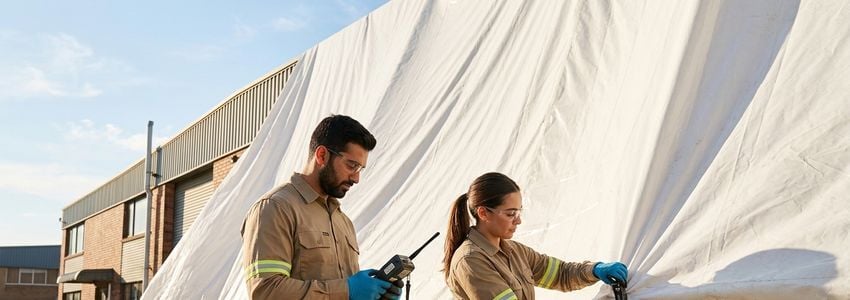
Commercial Fumigation and Pest Tenting Equipment Financing: The Complete Guide for Pest Control Companies
Commercial fumigation equipment financing gives pest control companies a practical way to acquire fumigation tents, tenting rigs, aeration fans, gas monitoring equipment, and structural sealing tools without draining cash reserves. Whether you are replacing an aging tarp fleet, adding a second fumigation crew, or bidding on a large commercial structural fumigation contract for the first time, the right financing structure can be the difference between winning the job and watching it go to a competitor with newer equipment.
Pest control is a capital-intensive business once you move beyond routine residential spraying. A single commercial-grade fumigation tent large enough to cover a warehouse or multi-unit apartment building can run into the tens of thousands of dollars, and a full tenting operation also requires tarps, clips, seals, sand snakes or tape, fumigant delivery systems, gas detection monitors, and a properly equipped service vehicle to haul it all. Commercial fumigation equipment financing spreads that cost over time so operators can take on bigger jobs immediately instead of waiting years to save up for the gear.
In This Article
What Is Commercial Fumigation Equipment Financing?
Commercial fumigation equipment financing is a funding arrangement that lets a pest control company purchase or lease the specialized gear needed for structural fumigation, whole-building tenting, and large-scale pest eradication work, then pay it off over a set term instead of paying the full price upfront. It functions similarly to other forms of equipment financing: the equipment itself typically secures the loan or lease, which usually makes approval faster and terms more favorable than an unsecured business loan.
This type of financing is distinct from general working capital because it is tied directly to a physical asset. Lenders can extend more favorable terms because the fumigation tent, tenting truck, or gas monitoring system has resale value and serves as collateral. For a pest control company, that translates into the ability to acquire equipment that would otherwise take years of retained earnings to afford outright.
Fumigation and pest tenting work covers a wide range of jobs, from termite tenting on single-family homes to full-building fumigation for grain storage facilities, food processing plants, and multi-family housing complexes. Each tier of work requires a different scale of equipment, and financing makes it possible to move up-market without a multi-year savings runway.
Key Stat: The commercial pest control category alone generates roughly 19,000 monthly searches nationally, reflecting steady, recurring demand for structural fumigation, termite tenting, and related pest management services across commercial and residential properties. Access to capital remains one of the most commonly cited growth barriers among small businesses, according to U.S. Small Business Administration data.
Key Benefits of Financing Fumigation and Pest Tenting Equipment
- Preserve working capital. Keep cash on hand for payroll, chemical inventory, insurance, and marketing instead of tying it up in a single large equipment purchase.
- Take on bigger contracts sooner. Commercial-grade tents and tenting rigs let you bid on warehouse, apartment complex, and food-processing fumigation jobs that smaller residential tarps cannot handle.
- Predictable monthly payments. Fixed payment schedules make it easier to budget against contract revenue and plan crew expansion.
- Access to newer, safer equipment. Modern gas monitoring systems and aeration fans improve technician safety and reduce fumigant exposure liability compared to aging equipment.
- Potential tax advantages. Many equipment financing structures allow businesses to deduct financed equipment costs; consult your accountant for specifics relevant to your situation.
- Faster approval than traditional bank loans. Because the equipment secures the financing, approval timelines are often measured in days, not weeks.
- Flexible structures for seasonal cash flow. Pest control demand often spikes seasonally (termite swarm season, warm-weather infestations), and financing terms can be structured around that cyclicality.
Ready to Expand Your Fumigation Fleet?
Get fast, flexible financing from the #1 business lender in the U.S. No obligation, apply in minutes.
Apply Now →How Commercial Fumigation Equipment Financing Works
The process for financing fumigation and pest tenting equipment follows a fairly consistent path across most lenders, though timelines and requirements vary. Understanding each step helps you prepare a strong application and avoid delays.
- Identify the equipment and total cost. Get a written quote from your equipment vendor for the fumigation tents, tenting rig, aeration fans, gas monitors, sealing tools, or service vehicle you need.
- Submit a financing application. Most lenders require basic business information, time in business, revenue figures, and recent bank statements. Many applications can be completed online in minutes.
- Underwriting review. The lender reviews your business's cash flow, credit profile, and the equipment being financed. Because the equipment serves as collateral, underwriting can move faster than an unsecured loan.
- Approval and terms. If approved, you receive a term sheet outlining the financed amount, payment schedule, interest rate or factor rate, and any down payment requirement.
- Equipment purchase and funding. Once you accept terms, the lender typically pays the vendor directly (in the case of equipment financing) or funds your account (in the case of a working capital loan used to purchase equipment outright).
- Repayment. You make fixed payments over the agreed term, generally ranging from 24 to 72 months depending on equipment type and lifespan.
Total time from application to funding can range from as little as 24 to 48 hours for straightforward applications to a week or more for larger equipment packages requiring additional documentation. Faster funding cycles matter in a fragmented services industry; U.S. Census Bureau data consistently shows that most pest control and building-services firms operate as small, independently owned businesses that depend on efficient access to capital to compete for larger contracts.
Types of Fumigation and Pest Tenting Equipment You Can Finance
Commercial fumigation equipment financing is not limited to tents alone. A complete tenting operation typically includes several categories of equipment, and most lenders will finance any combination of the following as part of a single package or across multiple applications:
- Fumigation tents and tarps in various sizes, from single-family residential tarps to large commercial tents capable of covering warehouses, multi-unit buildings, or grain elevators.
- Tenting rigs and delivery vehicles equipped to transport, deploy, and store large tarps, including flatbed trucks or box trucks with specialized racking.
- Sand snakes, clips, and sealing systems used to secure tent edges and maintain a gas-tight seal during fumigation.
- Fumigant delivery and dosing systems for accurately measuring and releasing fumigant gas into a sealed structure.
- Gas monitoring and detection equipment required for technician safety and regulatory compliance during and after fumigation.
- Aeration and ventilation fans used to clear fumigant gas from a structure safely before it is reopened to occupants.
- Structural sealing tools for pre-treatment prep work, including caulking equipment and access-point sealing materials.
- Heat treatment equipment for companies offering thermal remediation as an alternative or complement to chemical fumigation.
- Storage trailers and warehousing equipment for safely storing tarps, chemicals, and gear between jobs.
Because fumigation work often overlaps with broader pest control services, many operators also finance general pest control equipment such as sprayers, bait station systems, and service vehicles alongside their tenting gear in a single financing package.
By the Numbers
Pest Control & Fumigation Industry Snapshot
19K+
Monthly searches for "commercial pest control" nationally
24-72
Typical equipment financing term length, in months
24-48 hrs
Common turnaround for equipment financing approval
33M+
Small businesses in the U.S. per the SBA, many facing capital access as a top growth barrier
Who This Financing Is Best For
Commercial fumigation equipment financing tends to make the most sense for a specific set of pest control operators:
- Established pest control companies expanding into structural fumigation for the first time, where the upfront tarp and rig investment would otherwise be prohibitive.
- Termite and wood-destroying insect specialists who need to replace aging tenting equipment or add capacity during seasonal swarm periods.
- Companies bidding on large commercial contracts such as warehouse, food-processing, or multi-family housing fumigation, where the equipment scale required exceeds what a residential-focused operation currently owns.
- Franchise or multi-location pest control operators looking to standardize equipment across branches without a large one-time capital outlay.
- Newer pest control businesses with limited operating history that may not yet qualify for large unsecured lines of credit but can qualify for equipment-secured financing.
If your business already has strong cash reserves and prefers to avoid any financing cost, an outright equipment purchase may make more sense. But for most operators looking to move quickly on a growth opportunity, spreading the cost of fumigation equipment over its useful life is the more capital-efficient choice. Industry coverage from outlets like Forbes has repeatedly noted that small business owners who finance growth-stage equipment rather than delaying purchases tend to capture market opportunities faster than competitors waiting to self-fund.
Comparing Your Financing Options
Pest control companies generally have four realistic paths to fund fumigation and tenting equipment. Each has trade-offs worth understanding before you apply.
| Option | Best For | Typical Term | Collateral |
|---|---|---|---|
| Equipment Financing | Purchasing tents, rigs, monitors outright | 24-72 months | The equipment itself |
| Equipment Leasing | Companies that want to upgrade equipment regularly | 24-60 months | Leased equipment (lender-owned) |
| Unsecured Working Capital Loan | Bundling equipment with other operating costs | 3-24 months | None (unsecured) |
| SBA Loan | Larger, lower-cost long-term financing | Up to 10+ years for equipment | Varies by SBA program |
Equipment financing and leasing both tie repayment directly to the asset being acquired, which typically results in faster approvals. A working capital loan offers more flexibility if you need to cover equipment plus additional startup costs like chemical inventory or crew training. SBA-backed options can offer the lowest overall cost of capital for well-qualified businesses, though they typically involve a longer approval process.
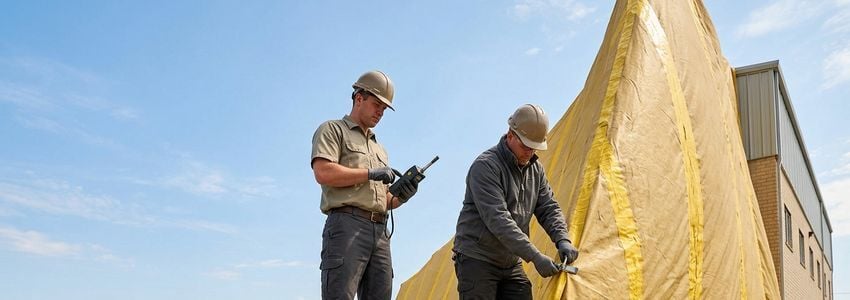
How Crestmont Capital Helps Pest Control Companies
Crestmont Capital works with pest control and fumigation companies across the country to structure financing around the specific equipment and cash flow realities of the industry. Rather than a one-size-fits-all loan product, Crestmont offers several paths depending on what your business needs:
- Our equipment financing programs are built specifically for acquiring fumigation tents, tenting rigs, gas monitoring systems, and related gear, with terms structured around the useful life of the equipment.
- For companies that prefer to upgrade tenting equipment on a regular cycle rather than own it long-term, our equipment leasing options provide lower upfront costs and predictable payments.
- If you need to combine equipment purchases with additional operating cash for chemical inventory, crew hiring, or marketing a new service line, our unsecured working capital loans offer flexibility without tying financing strictly to one asset.
- Established companies pursuing a larger, lower-cost capital solution may also want to explore our SBA loan programs, which can be used toward equipment and broader business expansion.
Crestmont Capital has also helped pest control operators finance related equipment and fleet needs. If your growth plans include adding service vehicles alongside fumigation gear, our earlier guide on pest control fleet financing walks through vehicle-specific financing structures. And if your business is dealing with an active infestation situation requiring immediate remediation capital rather than planned equipment growth, our guide to financing an urgent pest infestation remediation project covers that scenario in detail.
Because Crestmont Capital is rated the #1 business lender in the country, pest control companies working with us benefit from streamlined applications, fast decisions, and a team that understands the operational realities of the pest management industry, from seasonal demand swings to the specialized nature of fumigation equipment.
Get Pre-Qualified for Fumigation Equipment Financing
Fast decisions, flexible terms, and a lender that understands the pest control industry. See your options today.
Apply Now →Real-World Scenarios
Scenario 1: Expanding from residential to commercial fumigation. A residential-focused termite control company lands its first commercial bid, a three-story apartment complex requiring full-building tenting. The owner uses equipment financing to purchase two large commercial tents, a delivery rig, and gas monitoring equipment, paying off the equipment over 48 months while collecting revenue from the new contract and similar jobs it opens the door to.
Scenario 2: Replacing aging tarps before swarm season. A termite specialist's tarp inventory is showing wear after eight seasons of heavy use, creating seal integrity concerns. Rather than delay replacement until cash reserves rebuild, the company finances a full tarp and sealing-system replacement ahead of peak swarm season, avoiding lost bookings during the busiest months of the year.
Scenario 3: Adding a second fumigation crew. A growing pest control company wins enough recurring commercial fumigation work to justify a second dedicated crew. Equipment leasing lets the company outfit the new crew with a full set of tents, rigs, and monitoring equipment without a large upfront cash outlay, while the added crew's revenue covers the new lease payment.
Scenario 4: Bidding on a food-processing facility contract. A pest control company is invited to bid on a recurring fumigation contract for a food-processing plant, but the facility's size requires industrial-grade tenting equipment the company does not currently own. Financing allows the company to acquire the necessary equipment in advance of contract award, strengthening its bid with proof of capability.
Scenario 5: Consolidating multi-location equipment standards. A three-location pest control franchise group wants every branch running the same fumigation tent brand and gas monitoring system for consistency and liability management. Financing spreads the cost of standardizing equipment across all locations over a single manageable payment schedule instead of a large simultaneous capital outlay.
Pro Tip: Get equipment quotes locked in before applying for financing. Lenders move faster when they can review a specific vendor quote rather than a general funding request, and it also lets you compare financed monthly costs directly against your expected contract revenue.
Frequently Asked Questions
Win More Commercial Fumigation Contracts
Equip your crew with the tents, rigs, and monitoring gear needed to bid on bigger jobs. Apply in minutes.
Apply Now →Next Steps
Contact your equipment supplier for a written quote on the fumigation tents, rig, or monitoring equipment you need.
Recent bank statements and revenue figures help speed up underwriting review.
Apply online with Crestmont Capital in minutes to get matched with the right financing structure.
Once approved, review your term sheet, accept, and put your new equipment to work on your next contract.
Conclusion
Commercial fumigation equipment financing gives pest control companies a clear path to the tents, tenting rigs, gas monitoring systems, and related gear needed to compete for larger, more profitable structural fumigation contracts. Rather than waiting years to self-fund a major equipment purchase, financing lets you move on growth opportunities as they arise, whether that means replacing aging tarps before swarm season, adding a second crew, or bidding on a large commercial fumigation job for the first time. With the right financing partner, expanding your fumigation capabilities can become a straightforward, budget-friendly decision rather than a multi-year savings goal.
Disclaimer: The information provided in this article is for general educational purposes only and is not financial, legal, or tax advice. Funding terms, qualifications, and product availability may vary and are subject to change without notice. Crestmont Capital does not guarantee approval, rates, or specific outcomes. For personalized information about your business funding options, contact our team directly.








