
 (800) 949-0401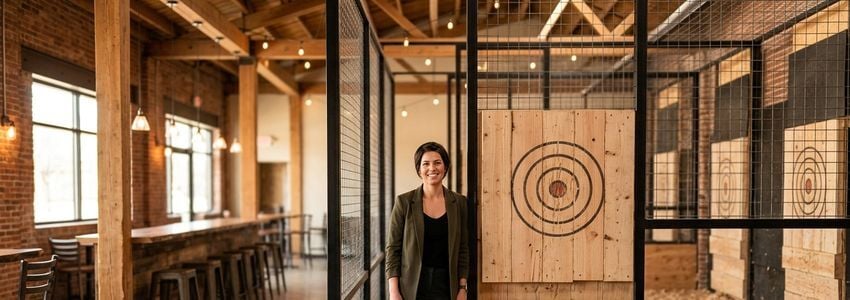
Commercial Ax Throwing Target Financing: The Complete Guide for Business Owners
Axe throwing has grown from a novelty bar game into a standalone entertainment category, with more than 500 dedicated venues now operating across all 50 states. Whether you are opening a new lanes-and-targets facility or replacing worn-out boards at an existing location, axe throwing equipment financing gives you a way to fund targets, lane systems, safety barriers, and scoring technology without draining your cash reserves. This guide breaks down exactly how commercial ax throwing target financing works, what it costs, and how to choose the right funding path for your venue.
In This Article
What Is Axe Throwing Equipment Financing?
Axe throwing equipment financing is a type of commercial equipment loan or lease specifically structured to help venue owners purchase or upgrade the physical infrastructure of an axe throwing business. Unlike a general working capital loan, this financing is tied directly to tangible, revenue-generating assets: throwing lanes, target boards, protective cage systems, and the axes themselves.
Because the equipment serves as collateral, lenders are often willing to approve axe throwing equipment financing with less emphasis on time in business or a large real estate down payment than a traditional bank loan would require. This makes it one of the more accessible funding paths for a niche entertainment concept that many conventional lenders don't fully understand.
The category typically covers everything from a single replacement target board to a full 12-lane buildout, and can be structured as either an equipment loan (you own the assets, they are collateral) or an equipment lease (you make payments for use, with an option to buy at the end of term).
Key Benefits of Financing Your Axe Throwing Equipment
- Preserve cash flow. Spreading a $25,000 to $150,000+ buildout cost over 24 to 60 months keeps working capital available for staffing, marketing, and daily operations.
- Faster approval than commercial real estate loans. Because equipment-backed financing uses the assets as collateral, underwriting moves faster and requires less documentation than a full commercial mortgage.
- Match payments to revenue. Monthly payments can be structured so that new lanes start paying for themselves through booking revenue before the loan term matures.
- Access to newer safety technology. Financing makes it easier to upgrade to self-healing target boards and electronic scoring systems that reduce liability and improve the guest experience.
- Tax advantages. Equipment loans and leases may qualify for accelerated depreciation treatment; consult your accountant for specifics relevant to your situation.
- Build business credit. On-time payments on an equipment loan help establish a payment history that supports future financing as you expand to additional locations.
Ready to Build Out Your Axe Throwing Venue?
Get fast, flexible equipment financing from the #1 business lender in the U.S. No obligation, apply in minutes.
Apply Now →How Axe Throwing Equipment Financing Works
The process for financing axe throwing lanes, targets, and related equipment follows a similar structure to other commercial equipment financing, with a few industry-specific wrinkles worth understanding before you apply.
- Get a vendor quote. Contact a lane and target manufacturer (or your build-out contractor) for an itemized quote covering targets, backstops, side paneling, safety netting, and scoring hardware.
- Choose loan vs. lease. Decide whether you want to own the equipment outright (loan) or make lower monthly payments with a purchase option at term end (lease).
- Submit your application. Most lenders ask for basic business information, the equipment quote, and recent bank statements. Time in business and personal credit affect your rate but are not always disqualifying factors for equipment-backed financing.
- Underwriting and approval. Because the targets and lane systems act as collateral, approval decisions on smaller amounts can come back within 24 to 72 hours.
- Funding and installation. Once approved, funds are typically sent directly to the equipment vendor or contractor, or disbursed to you to pay the installer.
- Repayment. You make fixed monthly payments over the agreed term, generally 24 to 72 months depending on the loan amount and equipment lifespan.
Types of Equipment You Can Finance
Axe throwing equipment financing isn't limited to just the wooden target boards. Lenders who understand the entertainment and recreation space will typically extend financing to cover the full scope of a venue build-out or upgrade:
- Target boards and backstops, including traditional pine boards and newer self-healing polymer targets that reduce splitting and replacement frequency
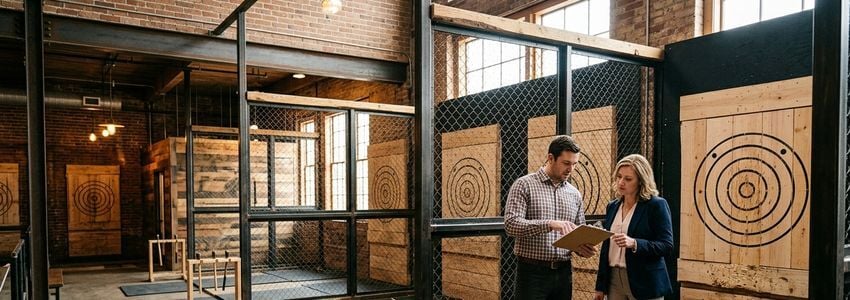
- Lane framing, dividers, and safety cages that separate throwers from spectators and other lanes
- Axes and throwing hatchets, including bulk sets for high-turnover commercial use
- Electronic scoring and target-tracking systems that use sensors or cameras to automatically log scores and run tournament brackets
- Safety fencing and protective netting required for insurance compliance and liability reduction
- Point-of-sale and booking software hardware, including tablets and kiosks for walk-in and online reservations
- Bar and food service equipment, for venues that combine axe throwing with a full bar or snack service
- Security cameras and access control systems to monitor lanes and manage liability
Most lenders will finance new and used equipment alike, though used equipment may require a shorter term or an appraisal to confirm remaining useful life.
By the Numbers
Axe Throwing Industry & Equipment Financing Snapshot
500+
Dedicated axe throwing venues operating across the U.S.
$7,500
Approx. build-out cost per lane, including targets and safety gear
$1.2T
Projected global value of live/immersive entertainment by 2030
10 yrs
Maximum repayment term available through SBA 7(a) equipment financing
Key Stat: According to the Forbes coverage of the experience economy, consumers are increasingly prioritizing participatory, shared experiences over material purchases, a shift that has fueled steady demand for venues like axe throwing lanes even as broader retail spending has softened.
Who Axe Throwing Equipment Financing Is Best For
This type of financing makes the most sense for a specific set of business situations. Consider it strongly if you fall into one of these categories:
- New venue owners opening their first axe throwing location who need to fund lanes, targets, and safety infrastructure without depleting startup capital reserved for lease deposits, staffing, and marketing
- Existing operators expanding to add additional lanes or a second location and needing to replicate proven equipment specs quickly
- Venues replacing worn target boards that have exceeded their useful throwing life, typically after heavy daily use over 2 to 4 years
- Entertainment centers adding axe throwing as a new attraction alongside existing offerings like bowling, arcade games, or escape rooms
- Bar and restaurant owners converting unused floor space into a throwing lane area to boost per-visit revenue and dwell time
It's generally not the right fit if you're looking to fund non-equipment costs like lease buildout permits, signage, or marketing campaigns in isolation; for those needs, a working capital loan or business line of credit is typically a better match, and can often be paired alongside equipment financing.
Financing Options Compared
Axe throwing venue owners typically choose between a handful of financing structures. Here's how they stack up:
| Option | Best For | Typical Term | Ownership |
|---|---|---|---|
| Equipment Loan | Owning lanes/targets outright, building equity | 24-72 months | You own from day one |
| Equipment Lease | Lower monthly payments, easier upgrades later | 24-60 months | Option to buy at term end |
| SBA 7(a) Loan | Larger buildouts combined with working capital | Up to 10 years | You own from day one |
| Business Line of Credit | Smaller replacement purchases, flexible draws | Revolving | You own once drawn |
How Crestmont Capital Helps Axe Throwing Venue Owners
Crestmont Capital works with entertainment and recreation business owners to structure equipment financing around the realities of running a throwing lane business, not a generic loan template. We understand that a target board isn't the same collateral class as an office copier, and we underwrite accordingly.
For venues that want lower monthly payments while equipment ages and gets replaced on a regular cycle, our equipment leasing programs let you upgrade to newer self-healing targets and scoring systems without a large upfront capital outlay. If you're outfitting a location with previously-owned lane systems from a closing venue, our used equipment financing program can fund that purchase too.
Many axe throwing operators also carry seasonal fluctuations in booking volume, especially around holidays and corporate event season. Pairing your equipment financing with a business line of credit gives you a cash cushion for slower months without touching the funds earmarked for your lane build-out.
If you've already read our guide to axe throwing business loans, this article picks up where that one leaves off, focused specifically on financing the physical lanes, targets, and safety equipment rather than general working capital. Operators comparing axe throwing to other lane-based bar attractions may also find our darts bar equipment financing guide useful, since many venues run both formats side by side.
Finance Your Next Lane Upgrade Today
Crestmont Capital structures equipment financing around your booking revenue, not a generic template. Apply in minutes.
Get Started →Real-World Scenarios
Scenario 1: New Venue, Six-Lane Build-Out
A first-time entrepreneur signs a lease for a 4,000-square-foot retail space and plans a six-lane axe throwing facility. With build-out costs of roughly $7,500 per lane for targets, cages, and safety gear, total equipment costs land around $45,000. Rather than pulling from a $60,000 SBA startup loan meant to cover lease deposits, buildout, and initial marketing, the owner finances the lane equipment separately, preserving the SBA funds for everything else.
Scenario 2: Replacing Worn Target Boards
An axe throwing venue that opened four years ago has target boards showing heavy splitting from daily commercial use. Rather than closing lanes for weeks to save up cash, the owner finances a full set of eight self-healing polymer targets, paying it off over 36 months using revenue from the very lanes being upgraded.
Scenario 3: Bar Owner Adding a Throwing Attraction
A neighborhood bar with underused back-room space wants to add three axe throwing lanes to increase per-visit spend and slow-night traffic. Financing covers the target boards, safety cage installation, and a scoring app tablet system, while the owner's existing cash reserves stay untouched for inventory and payroll.
Scenario 4: Entertainment Center Expansion
A family entertainment center that already offers arcade games and mini bowling wants to add an axe throwing section to compete with a newer venue down the street. Equipment financing covers ten lanes' worth of targets and electronic scoring hardware, structured over 60 months to match the center's existing debt service schedule.
Common Mistakes to Avoid
Pro Tip: Get an itemized equipment quote before applying. Lenders move faster on axe throwing equipment financing when they can see exactly what's being purchased (targets, cages, scoring tech) rather than a lump-sum "buildout" figure.
- Underestimating safety equipment costs. Netting, cages, and dividers often add 20-30% on top of the target boards themselves. Budget for the full safety package, not just the throwing surface.
- Skipping the insurance conversation. Many insurers require specific safety equipment standards before issuing a policy. Confirm your financed equipment meets those requirements before you commit to a purchase.
- Financing equipment and real estate improvements as one lump sum. Mixing lane equipment with leasehold improvements like flooring or electrical work can complicate collateral valuation and slow approval. Keep them as separate financing lines where possible.
- Not comparing loan vs. lease total cost. A lease may have a lower monthly payment but a higher total cost over the life of the agreement if you plan to keep the equipment long-term. Run the numbers both ways.
Frequently Asked Questions
Turn Your Axe Throwing Vision Into a Funded Venue
From new lane build-outs to target replacements, Crestmont Capital can help you finance the equipment your venue needs. Apply in minutes, no obligation.
Apply Now →Next Steps
Contact your target and lane vendor for a full breakdown of targets, cages, netting, and scoring tech.
Weigh long-term ownership against lower monthly payments based on your growth plans.
Submit your equipment quote and basic business information for a fast approval decision.
Once funded, your vendor installs the equipment and your venue is ready for throwers.
Conclusion
Axe throwing equipment financing gives venue owners a practical way to fund targets, lane systems, and safety infrastructure without tying up the cash needed to run day-to-day operations. Whether you're opening your first six-lane facility, replacing worn target boards, or adding throwing lanes to an existing entertainment center, matching the right financing structure, loan or lease, term length, and lender, to your specific equipment needs makes the difference between a smooth build-out and a cash-strapped launch. Crestmont Capital works specifically with entertainment and recreation operators to structure financing around the realities of running a throwing lane venue.
Disclaimer: The information provided in this article is for general educational purposes only and is not financial, legal, or tax advice. Funding terms, qualifications, and product availability may vary and are subject to change without notice. Crestmont Capital does not guarantee approval, rates, or specific outcomes. For personalized information about your business funding options, contact our team directly.








