
 (800) 949-0401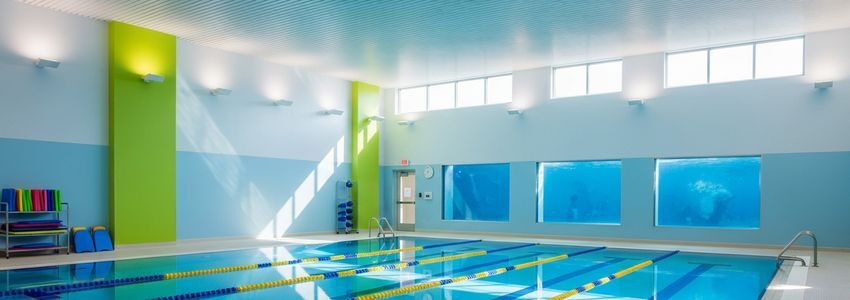
Big Blue Swim School Franchise Loan: The Complete Financing Guide for Big Blue Swim School Franchise Owners
Big Blue Swim School has carved out a distinctive position in the children's swim education market since its founding in Chicago in 2009 by competitive swimmer Chris DeJong. With a proprietary curriculum, technology-forward facilities, and a recurring membership model that generates consistent revenue, Big Blue has grown to more than 150 locations across the United States and continues to attract investors looking for a purpose-driven franchise opportunity. But with a total investment ranging from approximately $1.8 million to $4.2 million, securing the right financing is not just helpful - it is essential for nearly every prospective franchisee.
In This Article
- What Is Big Blue Swim School?
- Big Blue Swim School Investment Breakdown
- Why Financing Is Necessary for This Franchise
- Types of Financing Available
- How to Qualify for Franchise Financing
- How Crestmont Capital Helps Franchise Investors
- Real-World Financing Scenarios
- Financing Options Comparison Table
- Step-by-Step Application Process
- Frequently Asked Questions
- Next Steps
- Conclusion
What Is Big Blue Swim School?
Big Blue Swim School is a children's swim lesson franchise built around a research-backed approach to aquatic education. The company's proprietary TERI curriculum - which stands for Technique, Endurance, Racing, and Instruction - guides every student from beginner water introduction through advanced swimming skills. Unlike traditional swim programs that run in crowded public pools, Big Blue limits class sizes to a maximum of four students per instructor, ensuring each child receives focused, personalized attention during every lesson.
The facilities themselves are a significant differentiator in the swim school market. Each Big Blue Swim School location features heated pools designed specifically for children, underwater cameras that allow parents to watch their child's progress from a comfortable observation area, and a welcoming environment that prioritizes the child's comfort. This premium experience commands premium pricing and drives strong customer retention, which is why established locations routinely generate between $1 million and $2.5 million in annual revenue.
Franchisees benefit from a recurring membership model where families pay weekly for ongoing lessons rather than signing up for individual sessions. This structure creates a predictable, subscription-like revenue stream that makes Big Blue Swim School an attractive investment from a cash flow perspective. According to industry data tracked by the U.S. Small Business Administration, franchise businesses with recurring membership models typically demonstrate lower failure rates than traditional retail franchises.
The broader children's fitness and activity market continues to show resilience even through economic cycles. Parents consistently prioritize spending on education and safety-related activities for their children, and swimming holds a unique status as both a recreational skill and a critical life-safety competency. Research published through outlets like Forbes has highlighted that children's enrichment franchises often outperform general retail concepts in terms of customer loyalty and repeat business.
Big Blue Swim School Investment Breakdown
Understanding the full scope of a Big Blue Swim School investment is the first step toward building a realistic financing plan. The total investment range of approximately $1.8 million to $4.2 million reflects the reality that these are purpose-built aquatic facilities requiring significant real estate, construction, and equipment expenditures. Breaking down these costs into their major categories helps prospective franchisees understand where their capital needs to go.
Initial Franchise Fee: The upfront franchise fee for a Big Blue Swim School location is approximately $60,000. This fee grants you the right to operate under the Big Blue brand, access the TERI curriculum, receive initial training and support, and benefit from the company's established systems and supplier relationships. While this is a substantial payment, it represents a relatively small percentage of the total investment.
Real Estate and Facility Build-Out: This is by far the largest cost component, typically ranging from $1.5 million to $3 million or more. Big Blue Swim School locations require purpose-built or heavily renovated facilities that can accommodate indoor pools, observation areas, locker rooms, reception spaces, and mechanical systems. Whether you are constructing from the ground up, taking over a shell space, or converting an existing building, the build-out costs are substantial and require careful financial planning.
Pool Equipment and Technology: Heated commercial pools, filtration systems, underwater camera systems, HVAC equipment designed for aquatic environments, and lane equipment represent another significant capital investment. These specialized systems can cost hundreds of thousands of dollars and typically require financing structures that account for their long useful lives.
Working Capital and Pre-Opening Costs: Staffing, training, marketing, supplies, insurance, permits, and the operational funds needed to sustain the business through the ramp-up phase before membership revenue reaches breakeven typically add another $200,000 to $500,000 or more to the total investment. Most lenders and franchise experts recommend holding at least six months of operating expenses in reserve when opening a location of this scale.
Royalties and Ongoing Fees: Once open, franchisees pay a royalty of 6% of gross revenue to Big Blue Swim School. This is an important consideration when projecting cash flow and determining how much debt service a location can realistically support during its growth phase.
- Initial Franchise Fee: ~$60,000
- Facility Build-Out and Real Estate: $1.5M - $3M+
- Pool Equipment and Technology: $200,000 - $600,000
- Working Capital and Pre-Opening Expenses: $200,000 - $500,000+
- Total Estimated Investment: $1.8M - $4.2M
- Royalty Rate: 6% of gross revenue
- Revenue Potential (Established Locations): $1M - $2.5M+ annually
Why Financing Is Necessary for This Franchise
The scale of a Big Blue Swim School investment places it firmly in the category of capital-intensive franchises where financing is not optional - it is a structural necessity for virtually all investors. Even high-net-worth individuals who could theoretically write a check for the full amount often choose financing to preserve liquidity, maintain diversified investments, and leverage the tax advantages associated with business debt.
The reality of the $1.8 million to $4.2 million total investment range means that most franchisees need to finance a substantial portion of their startup costs. Industry standards for franchise financing typically suggest investors contribute 20% to 30% of the total project cost as equity, with the remainder funded through loans. At the lower end of the investment range, that means bringing approximately $360,000 to $540,000 in liquid capital, while a larger facility build could require $840,000 or more in owner equity.
Understanding how to structure financing strategically is crucial. The right combination of loan types can minimize interest costs, optimize cash flow during the ramp-up period, and align repayment schedules with realistic revenue projections. Many franchisees make the mistake of pursuing only one type of financing when a blended approach - combining SBA loans, equipment financing, and a business line of credit - would better serve their needs.
Ready to Explore Your Financing Options?
Our franchise financing specialists can help you build a funding strategy that fits your Big Blue Swim School investment. Get started today.
Apply Now - No ObligationTypes of Financing Available for Big Blue Swim School
Franchise investors pursuing a Big Blue Swim School location have access to several distinct financing products. Each serves a different purpose, and the most successful franchise financing strategies typically blend multiple options to address the different capital needs of the project.
SBA Loans: The Foundation of Franchise Financing
Small Business Administration loan programs - particularly the SBA 7(a) and SBA 504 loan programs - are the most commonly used and most favorable financing tools for franchise investments of this scale. SBA loans offer longer repayment terms (up to 25 years for real estate and 10 years for working capital), lower down payment requirements, and interest rate caps that keep borrowing costs manageable.
The SBA 7(a) program can fund up to $5 million for a single loan, making it well-suited for the full scope of a Big Blue Swim School investment. Borrowers typically need a credit score of 680 or higher, a down payment of 10% to 20%, and a strong personal financial statement. The SBA maintains a Franchise Registry that simplifies the loan approval process for approved franchise brands, and working with an SBA-preferred lender can significantly accelerate the timeline from application to funding.
The SBA 504 program is particularly well-suited for the real estate and construction components of a Big Blue Swim School build-out. This program provides long-term, fixed-rate financing at below-market rates for major fixed assets, with the SBA backing 40% of the loan, a bank contributing 50%, and the borrower providing 10% down. For large facility projects, the 504 program can save franchisees hundreds of thousands of dollars in interest costs over the life of the loan.
Commercial Real Estate Financing
For franchisees who plan to purchase rather than lease the property for their location, commercial real estate loans are a core component of the financing stack. Commercial real estate loans typically offer terms of 15 to 25 years, interest rates that are often lower than general business loans, and loan-to-value ratios of 65% to 80%.
Many Big Blue Swim School investors work with real estate developers or negotiate long-term leases with build-to-suit provisions, which shifts some of the real estate capital requirement to the developer while preserving the franchisee's borrowing capacity for equipment and working capital. Understanding your real estate strategy is a critical decision that affects your entire financing structure.
Equipment Financing
The specialized pool equipment, HVAC systems, underwater camera installations, and other physical assets required to operate a Big Blue Swim School location are ideally suited for equipment financing. Equipment loans use the equipment itself as collateral, which typically results in more favorable terms than unsecured financing and allows franchisees to preserve their SBA loan capacity for real estate and working capital.
Equipment financing for commercial aquatic equipment can typically be structured over terms of five to seven years, with payments aligned to the expected useful life of the assets. Down payment requirements are often lower than traditional business loans - frequently 10% to 20% of the equipment cost - and the application and approval process is generally faster than SBA lending.
Business Line of Credit
A business line of credit serves a fundamentally different purpose than term loans. Rather than providing a lump sum for a specific purchase, a line of credit gives franchisees flexible access to capital they can draw on and repay repeatedly. This is particularly valuable during the pre-opening phase when expenses are irregular, and during the ramp-up period when cash flow may not yet cover all operating costs.
For Big Blue Swim School franchisees, a line of credit ranging from $100,000 to $500,000 can serve as a financial buffer that prevents cash flow gaps from creating operational problems. Lines of credit are also useful for managing seasonal variations in membership enrollment and for funding targeted marketing campaigns or facility improvements as the business grows.
Long-Term Business Loans
Long-term business loans outside the SBA program can fill gaps in a franchise financing stack or serve as alternatives for borrowers who may not qualify for SBA products. These loans typically offer terms of three to ten years, fixed or variable interest rates, and faster approval timelines than government-backed programs.
The most successful Big Blue Swim School franchise investors typically use a combination of an SBA 7(a) or 504 loan for real estate and working capital, equipment financing for pool and facility assets, and a business line of credit for operational flexibility. This blended approach minimizes interest costs while maximizing the capital available at each stage of the project.
Big Blue Swim School Franchise Financing at a Glance
How to Qualify for Big Blue Swim School Franchise Financing
Qualifying for franchise financing at the scale required by a Big Blue Swim School investment requires preparation across several dimensions. Lenders evaluate franchise loan applications differently from standard small business loans because the established brand, proven systems, and available performance data of a franchise make the investment more predictable - and in many cases more fundable. Understanding what lenders look for helps you position your application for the best possible outcome.
Credit Profile Requirements
For SBA loans, most lenders look for a personal credit score of at least 680, with 700 or above significantly improving your chances of approval and favorable terms. Your credit history matters as much as your score - lenders want to see a track record of responsible debt management with no recent bankruptcies, foreclosures, or pattern of late payments. If your credit needs improvement before applying, working with a financial advisor for six to twelve months before pursuing franchise financing can make a meaningful difference in the terms you receive.
Liquid Capital and Net Worth
Most lenders require franchisees to contribute 10% to 30% of the total project cost from their own liquid assets. For a Big Blue Swim School location, this typically means having $360,000 to $1.26 million in liquid capital available. Lenders also evaluate your total net worth, as it provides additional assurance that you have the financial resources to weather the ramp-up period. According to guidance from the SBA's lending programs, demonstrating strong personal financial resources is one of the most important factors in franchise loan approval.
Relevant Experience
Prior business ownership, management experience, or relevant industry background strengthens your loan application significantly. Lenders are more comfortable funding large franchise investments when the borrower can demonstrate they have managed people, operations, budgets, and customer relationships. Experience in fitness, education, childcare, hospitality, or retail management is particularly relevant for a Big Blue Swim School application, though it is not a strict requirement.
Business Plan and Financial Projections
A detailed, realistic business plan is required for any SBA loan and is highly beneficial for other financing products as well. Your business plan should include market analysis for your target territory, detailed revenue projections based on Big Blue's actual performance data, a complete build-out cost breakdown, a staffing plan, a marketing strategy, and at least three years of projected financial statements including income statements, balance sheets, and cash flow projections.
Franchise Disclosure Document Review
Lenders who work with franchise borrowers regularly will want to review the Franchise Disclosure Document (FDD) provided by Big Blue Swim School. The FDD contains critical information about the franchise system, including Item 19 financial performance representations, which give lenders insight into the revenue and profitability expectations for your location. Reviewing the FDD carefully with a franchise attorney before applying for financing is strongly recommended.
Not Sure If You Qualify? Let Us Help.
Our team reviews your full financial picture and matches you with the financing options most likely to result in approval. Start your free consultation today.
Get a Free ConsultationHow Crestmont Capital Helps Big Blue Swim School Franchise Investors
Crestmont Capital has spent years developing expertise in franchise financing for capital-intensive concepts like Big Blue Swim School. Our team understands the unique financial structure of these investments - the combination of real estate, construction, specialized equipment, and working capital needs - and we know how to build financing packages that address each component effectively.
Unlike banks that may offer only one or two loan products, Crestmont Capital works with a broad network of lenders to source the best available terms for each component of your financing plan. We help franchisees navigate the SBA loan application process, structure equipment financing for pool systems and technology, and establish lines of credit that provide operational flexibility throughout the ramp-up period. Our goal is to ensure that financing complexity does not stand between a qualified investor and their franchise dream.
Our clients benefit from access to small business loan products across a range of risk profiles and credit situations. Whether you have an excellent credit profile and simply need the most competitive rates available, or you are working to overcome credit challenges that might complicate a traditional bank application, our team can identify the right path forward. We also serve clients who need fast business loans when timing is a critical factor in securing a specific franchise territory.
Crestmont Capital's approach to franchise financing is consultative rather than transactional. We take the time to understand your full financial picture, your timeline, and your long-term business objectives before recommending a financing strategy. This means you receive guidance that is specific to your situation, not a one-size-fits-all loan product pushed to close a deal quickly.
For investors in the Big Blue Swim School franchise system, we also have experience working alongside franchise development teams to ensure that financing timelines align with territory agreements, build-out schedules, and training requirements. Coordinating these moving parts is one of the most complex challenges franchise investors face, and having an experienced financing partner in your corner makes the entire process more manageable.
Real-World Financing Scenarios for Big Blue Swim School Investors
Understanding how financing works in theory is useful, but seeing how real investors approach the challenge of funding a Big Blue Swim School location brings the numbers to life. The following scenarios illustrate different investor profiles and the financing strategies best suited to each situation.
Scenario 1: The First-Time Franchisee with Strong Credit
A corporate executive with 20 years of management experience, a credit score of 740, and $600,000 in liquid assets wants to open a single Big Blue Swim School location in a suburban market. The projected total investment is $2.4 million, including a $1.8 million build-out, $400,000 in equipment, and $200,000 in working capital.
This investor is well-positioned for an SBA 7(a) loan covering approximately $1.9 million of the project, contributing $480,000 (20%) in equity and using $120,000 for pre-opening working capital. An equipment financing arrangement of $320,000 covers the pool systems and technology, with payments spread over five years. The result is a structured financing package with predictable monthly payments aligned to realistic revenue projections for the first two years of operation.
Scenario 2: The Multi-Unit Developer
An experienced franchise operator who owns three other franchise locations wants to add two Big Blue Swim School locations to their portfolio. Total investment for both locations is approximately $5.6 million. With existing cash flow from their current operations and a strong balance sheet, this investor qualifies for an SBA 504 loan for the real estate component of each location, combined with equipment financing and a revolving business line of credit to manage cash flow across all locations during the development period.
The 504 program's fixed-rate structure provides cost certainty that is particularly valuable when managing multiple simultaneous projects, and the line of credit gives this investor flexibility to address unexpected construction cost overruns or delays without disrupting their existing operations.
Scenario 3: The Investor with Less-than-Perfect Credit
A fitness industry entrepreneur with strong operational experience but a credit score of 640 due to a business setback several years ago wants to pursue a Big Blue Swim School franchise. Traditional bank financing and standard SBA loans may be challenging to obtain, but this investor is not without options.
Bad credit business loans and alternative financing structures can bridge the gap while this investor works to improve their credit profile. Equipment financing is often more accessible than general business loans because the equipment serves as collateral, reducing the lender's risk. Working with Crestmont Capital, this investor can identify a realistic path to financing that may involve a larger equity contribution in exchange for more flexible credit requirements.
Scenario 4: The Career Changer with Retirement Assets
A 52-year-old teacher with $450,000 in a 401(k) and a strong credit score wants to transition into franchise ownership. This investor is a candidate for a Rollover for Business Startups (ROBS) strategy, which allows the use of qualified retirement funds to invest in a franchise without early withdrawal penalties or taxes. Combined with an SBA loan, the ROBS structure can provide the equity contribution needed to fund a full Big Blue Swim School build-out while preserving the investor's other liquid assets.
Scenario 5: The Passive Investor / Owner-Operator Partnership
Two partners - one providing capital and serving as a silent investor, one providing management expertise as the day-to-day operator - want to open a Big Blue Swim School together. This structure can be attractive to lenders because it combines the financial strength of the capital partner with the operational experience of the managing partner. The partnership agreement and equity split will be scrutinized by lenders, so having clear legal documentation in place before applying for financing is essential.
If you are comparing swim school franchise opportunities, see our complete guide to Goldfish Swim School franchise financing for a side-by-side perspective on two of the leading children's swim lesson brands. And for a broader look at franchise financing across all industries, our complete franchise loan guide covers every major financing option available to franchise investors today.
Financing Options Comparison Table
| Financing Type | Best For | Loan Amount | Terms | Credit Req. |
|---|---|---|---|---|
| SBA 7(a) Loan | Working capital, build-out, full project | Up to $5M | 10-25 years | 680+ FICO |
| SBA 504 Loan | Real estate and major equipment | Up to $5M+ (SBA portion) | 10-25 years, fixed rate | 680+ FICO |
| Equipment Financing | Pools, HVAC, cameras, lane equipment | $50K - $1M+ | 3-7 years | 620+ FICO |
| Business Line of Credit | Working capital, seasonal cash flow | $25K - $500K | Revolving | 650+ FICO |
| Long-Term Business Loan | Gap financing, non-SBA projects | $100K - $2M | 3-10 years | 660+ FICO |
| Short-Term Business Loan | Bridge financing, pre-opening expenses | $25K - $500K | 3-24 months | 600+ FICO |
| Commercial Real Estate Loan | Property purchase for facility | $500K - $5M+ | 15-25 years | 680+ FICO |
Step-by-Step Application Process for Big Blue Swim School Financing
Navigating the financing application process for a capital-intensive franchise investment can feel overwhelming, especially for first-time franchisees. Breaking the process into clear steps makes it manageable and helps ensure that you do not miss critical requirements that could delay your funding timeline.
Step 1 - Financial Self-Assessment: Before approaching any lender, conduct an honest review of your current financial position. Pull your personal credit reports from all three bureaus, compile a complete list of your assets and liabilities, calculate your liquid capital, and identify any potential red flags in your financial history that you should address proactively or be prepared to explain to lenders.
Step 2 - FDD Review and Territory Selection: Work with Big Blue Swim School's franchise development team to receive the Franchise Disclosure Document and select your target territory. Review Item 19 (Financial Performance Representations) carefully and consult with a franchise attorney before signing any agreements. Your financing timeline must align with your territory agreement.
Step 3 - Build Your Business Plan: Develop a comprehensive business plan that includes your market analysis, financial projections, operational strategy, and management team overview. Lenders will scrutinize this document closely, so investing in professional assistance with financial modeling is worthwhile for an investment of this scale.
Step 4 - Consult with a Franchise Financing Specialist: Contact Crestmont Capital or another experienced franchise financing partner to discuss your specific situation before selecting your loan products. A specialist can help you understand which programs you qualify for, what terms are realistic given your financial profile, and how to structure your financing stack most effectively.
Step 5 - Gather Documentation: Collect the documentation lenders will require, including two to three years of personal tax returns, personal financial statements, business plans, FDD, cost estimates from contractors, and any other supporting materials. Having this documentation ready before applying significantly accelerates the process.
Step 6 - Submit Applications: With your financing specialist's guidance, submit loan applications to appropriate lenders. For SBA loans, working with an SBA Preferred Lender Program (PLP) lender gives you the fastest approval pathway. Equipment financing applications can often be submitted simultaneously with SBA applications.
Step 7 - Underwriting and Approval: SBA loans typically take 30 to 90 days from application to approval, while equipment financing can be approved in as little as a few days to a few weeks. Use this time to continue your franchise preparation - completing training requirements, finalizing your real estate and construction plans, and building your pre-opening marketing strategy.
Step 8 - Closing and Funding: Once approved, work with your attorneys and lenders to close the loans and receive your funds. Coordinate the timing carefully so that funds are available when construction and equipment vendors require payment.
For more details on the loan process and what to expect at each stage, see Crestmont Capital's guide to short-term business loans and long-term business loans, which cover the nuances of each financing type in depth.
Frequently Asked Questions About Big Blue Swim School Franchise Financing
What is the total cost to open a Big Blue Swim School franchise? +
What is the Big Blue Swim School franchise fee? +
What is the royalty rate for Big Blue Swim School franchisees? +
What SBA loan programs are best for Big Blue Swim School financing? +
How much liquid capital do I need to qualify for a Big Blue Swim School franchise loan? +
What credit score do I need to finance a Big Blue Swim School location? +
How long does it take to get a Big Blue Swim School franchise loan approved? +
Can I use my 401(k) or retirement savings to fund a Big Blue Swim School franchise? +
Does Big Blue Swim School have preferred lenders or financing partners? +
What is the revenue potential for a Big Blue Swim School franchise? +
Is Big Blue Swim School a good franchise investment? +
What is the TERI curriculum at Big Blue Swim School? +
Can I finance a Big Blue Swim School franchise with bad credit? +
How does Big Blue Swim School compare to other swim school franchises in terms of cost? +
What documentation do I need to apply for a Big Blue Swim School franchise loan? +
Next Steps: How to Move Forward with Big Blue Swim School Financing
Pull your credit reports, compile your asset and liability statement, and calculate your liquid capital. Identify any issues that need to be addressed before applying for financing. This self-assessment sets the foundation for everything that follows.
Contact Big Blue Swim School's franchise development team to begin the discovery process and request the Franchise Disclosure Document. Review Item 19 carefully with a franchise attorney to understand the financial performance of existing locations.
Schedule a consultation with our franchise financing specialists to discuss your financial profile, target investment, and financing options. We will help you understand which programs you qualify for and build a preliminary financing strategy tailored to your situation.
Work with a business plan professional or financial advisor to build the comprehensive business plan your loan applications will require. Include market analysis, three-year financial projections, operational strategy, and management team background.
With your documentation complete and your financing strategy defined, submit your loan applications. Your Crestmont Capital specialist will guide you through the submission process, manage lender communications, and help you navigate the underwriting phase efficiently.
Once approved, work with your legal team and lenders to close your financing. Coordinate funding timing with your contractor, equipment vendors, and franchisor requirements to ensure a smooth transition from financing to construction to opening day.
Conclusion
Big Blue Swim School represents one of the most compelling opportunities in the children's enrichment franchise sector. The combination of a purpose-built aquatic environment, a proprietary curriculum backed by research, a premium brand position, and a recurring membership revenue model creates a business with genuine competitive advantages and strong long-term economics. But with a total investment of $1.8 million to $4.2 million, the financing strategy is as important as the business strategy.
The investors who succeed with capital-intensive franchises like Big Blue Swim School are those who plan their financing carefully, work with specialists who understand both the franchise system and the lending landscape, and build a financing structure that matches their cash flow projections and risk tolerance. According to reporting from CNBC and financial analysts at Bloomberg, businesses with well-structured startup financing consistently outperform those that scramble for capital reactively, particularly during the critical ramp-up phase.
The children's fitness and swim education market is supported by long-term demographic trends and parental priorities that do not fluctuate with economic cycles the way discretionary consumer spending does. Data from the U.S. Census Bureau consistently shows that family formation and child-related spending remain among the most resilient categories in the consumer economy, reinforcing the fundamental demand that drives Big Blue Swim School's business model.
Crestmont Capital is ready to help you navigate every aspect of your Big Blue Swim School financing, from initial qualification assessment through loan closing and beyond. Our franchise financing specialists bring deep experience with capital-intensive concepts like Big Blue and can help you build a financing strategy that positions your location for long-term success. Reach out today to begin your financing conversation.
Start Your Big Blue Swim School Financing Today
Apply now and a Crestmont Capital franchise financing specialist will contact you within one business day to review your options.
Apply NowDisclaimer: The information provided in this article is for general educational purposes only and is not financial, legal, or tax advice. Funding terms, qualifications, and product availability may vary and are subject to change without notice. Crestmont Capital does not guarantee approval, rates, or specific outcomes. For personalized information about your business funding options, contact our team directly.








