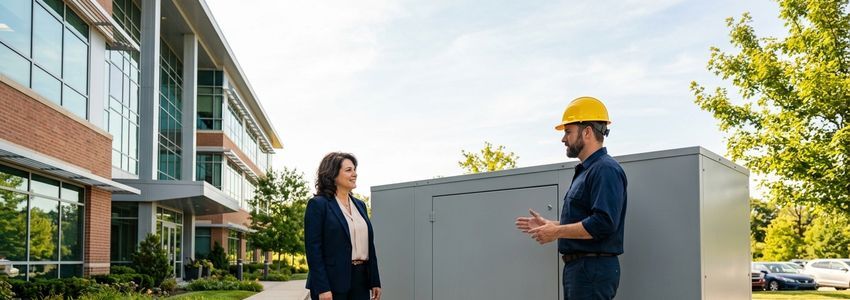
A single power outage can shut down a business faster than almost any other operational disruption. Refrigerated inventory spoils, point-of-sale systems go dark, servers crash mid-transaction, and employees stand around unable to do their jobs. For many business owners, the wake-up call comes the hard way: after a storm knocks out the grid for six, twelve, or even thirty-six hours and the cost of that downtime shows up on the next month's revenue report. That is when backup generator installation stops being a "someday" project and becomes an urgent priority, and it is also when most owners discover that a commercial-grade standby generator is not a small purchase.
Backup generator installation financing exists to solve exactly this problem. Instead of writing a check for $15,000 to $150,000 (or more, depending on the size of the facility and the generator's capacity) out of working capital, business owners can spread that cost over manageable monthly payments while the equipment starts protecting revenue immediately. This guide walks through what backup generator installation financing is, how it works, who qualifies, what it costs, and how to compare financing options so you can move forward with confidence the next time the power goes out.
In This Article
- What Is Backup Generator Installation Financing?
- Why Businesses Need Backup Power Now
- How Generator Installation Financing Works
- Types of Financing Options
- Who This Financing Is Best For
- Financing vs. Paying Cash
- How Crestmont Capital Helps
- Real-World Scenarios
- Frequently Asked Questions
- How to Get Started
What Is Backup Generator Installation Financing?
Backup generator installation financing is a business funding product designed specifically to cover the purchase, delivery, and installation of a commercial or industrial standby generator. Rather than draining cash reserves, a business owner uses a loan, lease, or equipment financing agreement to spread the total project cost across fixed monthly payments, often over a term of two to seven years.
The financed amount typically covers more than just the generator unit itself. A complete backup generator installation project usually includes the generator, an automatic transfer switch, a concrete pad or enclosure, fuel supply lines or a fuel tank, electrical wiring, permitting fees, and labor. Lenders who specialize in equipment financing understand this and will often finance the full turnkey cost rather than just the hardware.
Because a generator is a tangible, income-producing asset that protects revenue and reduces risk, it is one of the easier pieces of equipment to finance. Lenders can use the generator itself as collateral, which keeps approval requirements more flexible than an unsecured loan and often results in a faster approval timeline than a traditional bank loan.
Why Businesses Need Backup Power Now
Power outages are no longer a rare inconvenience. Aging infrastructure, more frequent extreme weather, and rising demand on the grid have combined to make blackouts longer and more common than they were even five years ago. According to reporting from the Associated Press, severe weather-driven blackouts have pushed more households and businesses toward backup power solutions as outages grow longer and utility crews take more time to restore service after major storms.
Key Stat: The U.S. Census Bureau reports that small businesses make up the overwhelming majority of American companies, and for most of them, even a few hours without power can mean lost sales, spoiled inventory, or a missed production run that cannot be made up.
For businesses in food service, healthcare, manufacturing, cold storage, data-dependent retail, and professional services, the financial exposure from a single extended outage can easily exceed the cost of the generator itself. A restaurant that loses a walk-in cooler full of inventory during a two-day outage, a dental office that has to reschedule a full day of patients, or a machine shop that misses a production deadline all face a version of the same math: the generator pays for itself the first time it is needed.
Beyond emergency protection, a properly installed backup generator can also reduce insurance premiums in some cases, support business continuity requirements for commercial leases or vendor contracts, and give business owners the peace of mind to keep operating through storm season without constant worry about the next outage.
Don't Let the Next Outage Catch You Unprepared
Get fast, flexible financing for your backup generator installation from the #1 business lender in the U.S. No obligation, apply in minutes.
Apply Now →How Generator Installation Financing Works
The process for financing a backup generator installation follows a similar path to financing any piece of essential business equipment, with a few extra steps because installation, not just the hardware, is part of the project.
Step 1: Get a project quote. Work with a generator dealer or electrical contractor to determine the correct generator size (measured in kilowatts) for your facility's load, along with a full installation quote covering the transfer switch, fuel system, pad, permitting, and labor.
Step 2: Apply for financing. Submit the equipment quote along with basic business financials. Many lenders that specialize in equipment financing can review an application and provide a decision within one to two business days.
Step 3: Get approved and review terms. Once approved, you will review the loan or lease terms, including the monthly payment, term length, and any down payment requirement. Equipment financing often requires a smaller down payment than a traditional bank loan, sometimes none at all.
Step 4: Funds are disbursed and installation begins. Depending on the lender, funds may go directly to the equipment vendor and installation contractor, or be disbursed to your business to pay invoices as installation milestones are completed.
Step 5: Repay over a fixed schedule. Monthly payments continue over the agreed term, typically two to seven years depending on the size of the project and the financing product used, while the generator protects your operations from day one.
Types of Financing Options for a Backup Generator Installation
Several financing products can be used to fund a backup generator installation, and the right choice depends on your business's cash flow, credit profile, and how quickly you need the equipment in place.
| Financing Option | Typical Term | Best For |
|---|---|---|
| Equipment Financing | 2 to 7 years | Businesses that want to own the generator outright and build equity in the asset |
| Equipment Leasing | 3 to 5 years | Businesses that prefer lower monthly payments and may upgrade equipment later |
| SBA Loan | Up to 10 years | Established businesses that qualify and can wait longer for approval in exchange for lower rates |
| Working Capital Loan | 3 months to 3 years | Businesses that need to bundle generator costs with other urgent expenses |
| Business Line of Credit | Revolving | Businesses that want flexible access to funds for the generator and future maintenance |
Equipment financing is the most common route because it is purpose-built for exactly this kind of purchase. The generator itself typically serves as collateral, which keeps rates competitive and approval flexible even for businesses without perfect credit. Equipment leasing can lower the monthly payment further, which helps businesses preserve cash flow, though the business does not build equity in the same way. An SBA loan can offer some of the lowest rates available but usually takes longer to fund, which may not be ideal for a business that needs the generator installed before the next storm season. A working capital loan or business line of credit gives more flexibility if the generator project is bundled with other facility upgrades or if the business wants a financing cushion beyond the generator itself.
By the Numbers
Backup Generator Installation and Power Outage Risk
12.8 Hrs
Average length of the longest outages reported by utility customers as of mid-2025
$10K-$50K+
Estimated turnkey cost range for a fully installed commercial backup generator
2-7 Yrs
Typical repayment term for equipment financing on a generator installation
1-2 Days
Typical approval timeline for equipment financing applications
Who This Financing Is Best For
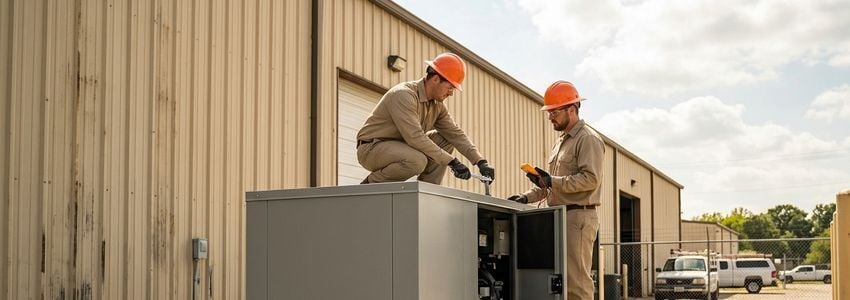
Backup generator installation financing makes the most sense for businesses that cannot afford operational downtime, even if that downtime only happens a few times a year. Common candidates include:
- Restaurants and food service businesses with walk-in coolers, freezers, and perishable inventory that spoils within hours of losing power
- Medical and dental practices that need to keep refrigerated medications, sterilization equipment, and patient records systems running
- Manufacturing and industrial facilities where a stalled production line can mean missed delivery deadlines and contract penalties
- Retail businesses that rely on point-of-sale systems, security systems, and refrigerated or frozen goods
- Warehouses and distribution centers that need continuous power for climate-controlled storage and automated systems
- Professional service firms like law offices, accounting firms, and financial services companies that depend on servers, phone systems, and internet connectivity
- Property managers and multi-tenant buildings where tenants expect uninterrupted power as part of their lease terms
Businesses in regions with frequent storms, wildfires, extreme heat, or an aging local grid should treat a backup generator as closer to essential infrastructure than a discretionary upgrade. Even businesses in more stable regions increasingly view a standby generator as a baseline cost of doing business, especially as insurance carriers and commercial landlords begin to ask about business continuity planning.
Financing vs. Paying Cash: Which Makes More Sense?
Paying cash for a backup generator installation avoids interest costs, but it also ties up a large amount of working capital in a single asset that may sit unused for months at a time until the next outage. That is capital that cannot be used for payroll, inventory, marketing, or taking advantage of a time-sensitive opportunity.
Financing spreads the cost across smaller monthly payments, which usually range from a few hundred to a few thousand dollars depending on the size of the system, while the generator begins protecting revenue and assets immediately. For most businesses, the math favors financing: the monthly payment is typically far smaller than the potential cost of even one significant outage, and the cash that would have gone toward a lump-sum purchase stays available for the rest of the business.
Pro Tip: If your business is financing equipment for the first time, ask whether the lender reports the account to business credit bureaus. Building a positive payment history on equipment financing can make future financing (for expansion, additional equipment, or working capital) easier to secure at better terms.
How Crestmont Capital Helps
Crestmont Capital works with business owners across the country to finance essential equipment, including backup generators, without the long wait times and rigid requirements of a traditional bank. Our equipment financing programs are built specifically for purchases like this: tangible, income-protecting assets that a lender can feel confident financing quickly.
We also offer commercial equipment financing and leasing for businesses that want to spread the cost of a generator (and any related electrical or facility work) over a longer term with a lower monthly payment. For businesses that would rather bundle the generator project with other operating needs, our unsecured working capital loans provide flexible funding that is not tied to a single piece of equipment.
If your business qualifies for government-backed financing, our team can also walk you through SBA loan options, which can offer longer repayment terms and lower rates for businesses that meet SBA eligibility requirements. We have also written a detailed guide on generator financing more broadly, and a guide to emergency business loans for businesses facing other unplanned costs, both of which may be useful as you plan your project.
Our application process is designed to move fast. Most business owners get a decision within one to two business days, and funds can be structured to pay your generator vendor and installation contractor directly, so your project stays on schedule.
Ready to Keep the Lights On, No Matter What?
Crestmont Capital helps business owners finance essential equipment like backup generators fast, with flexible terms built around your cash flow.
Apply Now →Real-World Scenarios
Scenario 1: The Restaurant Owner After a Summer Storm. A regional restaurant chain lost power for eighteen hours after a summer storm, losing an estimated $9,000 in spoiled inventory across two locations. The owner used equipment financing to install a 48kW standby generator at each location for a combined monthly payment under $600, well below what a single repeat incident would cost.
Scenario 2: The Dental Practice Protecting Patient Records. A dental office needed to protect sterilization equipment, refrigerated medications, and its patient management software from outages common in its area during wildfire season. Financing a 20kW generator let the practice avoid a $22,000 upfront cost while keeping appointments on schedule during the next planned utility shutoff.
Scenario 3: The Manufacturer Facing Contract Penalties. A small parts manufacturer risked contract penalties for missed shipments after two outages in one quarter halted production. The company financed a larger industrial generator through a five-year equipment loan, keeping the production line running and avoiding a six-figure penalty clause in its largest client contract.
Scenario 4: The Property Manager Meeting Tenant Expectations. A commercial property manager overseeing a multi-tenant office building needed to add backup power to remain competitive and meet tenant lease requirements around business continuity. Financing spread the installation cost across the building's operating budget without a large capital outlay in a single quarter.
Scenario 5: The Cold Storage Business Protecting Inventory. A regional cold storage and distribution company financed a large-capacity generator after a near-miss outage nearly ruined an entire truckload of client inventory. The financed monthly payment was less than one percent of the inventory value the generator now protects around the clock.
Frequently Asked Questions
What is backup generator installation financing?
Backup generator installation financing is a business loan, lease, or equipment financing agreement used to cover the purchase and installation of a commercial standby generator, including the unit, transfer switch, wiring, fuel system, permitting, and labor, spread across fixed monthly payments instead of a single upfront cost.
How much does it cost to install a backup generator for a business?
Turnkey costs for a fully installed commercial backup generator typically range from about $10,000 for a smaller unit to well over $100,000 for a large industrial system, depending on the generator's size, fuel type, and the complexity of the electrical and fuel infrastructure required.
How does equipment financing for a generator work?
A lender reviews a quote from your generator vendor or contractor along with basic business financials, then approves a loan or lease that is secured by the generator itself. Once approved, funds are disbursed to cover the purchase and installation, and the business repays the amount in fixed monthly payments over an agreed term.
What credit score is needed to finance a backup generator?
Requirements vary by lender, but many equipment financing programs will work with business owners who have fair to good personal credit, generally in the 600s or higher, especially because the generator itself serves as collateral for the loan.
Can a new business finance a backup generator?
Yes, in many cases. Because a generator is a tangible asset that can serve as collateral, some lenders are willing to work with newer businesses that may not qualify for unsecured financing, though time in business and revenue will still factor into approval terms.
What is the difference between financing and leasing a generator?
Financing (an equipment loan) is structured so the business owns the generator once the loan is paid off, building equity in the asset. Leasing typically results in lower monthly payments but the business may not own the equipment at the end of the term unless a buyout option is exercised.
How long does it take to get approved for generator financing?
Many equipment financing lenders can review an application and provide a decision within one to two business days, which is significantly faster than the multi-week timeline often associated with traditional bank loans.
Does an SBA loan cover generator installation?
SBA loans, including SBA 7(a) loans, can be used to finance equipment purchases such as a backup generator, but the application and funding process typically takes longer than dedicated equipment financing, which may not suit businesses that need the generator installed quickly.
What size generator does my business need?
Generator sizing depends on your facility's total electrical load, measured in kilowatts, and should be determined by a licensed electrician or generator dealer who can calculate the wattage needed to run your critical systems, refrigeration, HVAC, and equipment during an outage.
Can financing cover installation costs, not just the generator itself?
Yes. Most equipment financing programs designed for generator projects can cover the full turnkey cost, including the transfer switch, concrete pad, fuel supply lines, electrical wiring, permitting fees, and contractor labor, not just the price of the generator unit.
Is a backup generator a tax-deductible business expense?
Business owners should consult a qualified tax professional regarding the specific tax treatment of equipment purchases and financing arrangements, as rules and eligibility vary by business structure and situation.
What industries benefit most from backup generator financing?
Restaurants, healthcare and dental practices, manufacturing facilities, cold storage and warehousing operations, retail businesses, and any operation dependent on refrigeration, servers, or continuous production tend to see the fastest return on a backup power investment.
Can I finance a generator along with other facility upgrades?
Yes. Some business owners choose a working capital loan or business line of credit instead of (or alongside) equipment financing specifically because it allows the generator project to be bundled with other facility improvements or emergency preparedness costs.
What happens if my business already has some cash saved for a generator?
Many business owners choose to make a partial down payment to lower their monthly financing payment while still preserving most of their cash reserves for operations, payroll, or other priorities, rather than paying the full cost upfront.
How do I start the process of financing a backup generator installation?
Start by getting a detailed quote from a generator dealer or electrical contractor covering the full installation scope, then apply with a lender that offers equipment financing so you can compare monthly payment options before committing to a purchase.
Protect Your Business Before the Next Outage Hits
Get pre-qualified for backup generator financing in minutes and keep your business running when the grid goes down.
Apply Now →How to Get Started
Work with a licensed electrician or generator dealer to size the right system and quote the full installation.
Review equipment financing, leasing, and working capital options to find the best monthly payment for your cash flow.
Submit your application and quote for a decision, often within one to two business days.
Once funded, installation begins and your business gains reliable backup power protection.
Conclusion
Power outages are becoming longer and more frequent, and the businesses that plan ahead with a backup generator installation are the ones that keep serving customers, protecting inventory, and hitting deadlines while competitors scramble. Backup generator installation financing makes that protection achievable without tying up the working capital your business needs for day-to-day operations. Whether you choose equipment financing, leasing, an SBA loan, or a working capital loan, the right financing structure turns a large capital expense into a predictable monthly cost that pays for itself the first time the grid goes down.
If your business is ready to move forward with a backup generator installation, Crestmont Capital can help you find the financing structure that fits your budget and timeline.
Disclaimer: The information provided in this article is for general educational purposes only and is not financial, legal, or tax advice. Funding terms, qualifications, and product availability may vary and are subject to change without notice. Crestmont Capital does not guarantee approval, rates, or specific outcomes. For personalized information about your business funding options, contact our team directly.