ADAS calibration equipment financing gives auto body shops, collision repair centers, and independent mechanics a way to add advanced driver assistance system calibration capability without draining working capital. As more vehicles on the road carry forward-facing cameras, radar sensors, and lane-keep assist systems, shops that cannot calibrate these systems in-house are turning away revenue and sending customers to competitors.
This guide breaks down exactly how ADAS calibration equipment financing works, what it costs, who qualifies, and how to structure a deal that makes sense for a growing automotive repair business.
In This Article
What Is ADAS Calibration Equipment Financing?
ADAS calibration equipment financing is a business loan or equipment lease specifically structured to help auto repair, collision repair, and body shop owners purchase the tools required to recalibrate advanced driver assistance systems. These systems include forward-facing cameras, radar modules, lane-departure sensors, blind-spot monitors, and parking-assist sensors found on the vast majority of vehicles built since 2018.
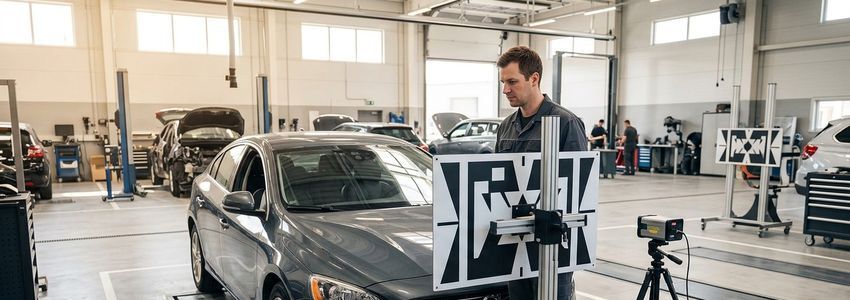
Calibration equipment itself typically includes a static calibration frame or target board system, a dynamic calibration-capable scan tool, laser alignment tools, and sometimes a dedicated calibration bay with proper floor leveling and lighting. A complete setup can range from roughly $15,000 for an entry-level static calibration kit to well over $75,000 for a full OEM-level static and dynamic calibration center with multiple target boards and bay infrastructure.
Financing spreads that cost over monthly payments, usually 24 to 84 months, so a shop can start generating calibration revenue immediately instead of waiting to save up the full purchase price.
Key Stat: According to industry estimates, more than 90 percent of new vehicles sold in the United States now include at least one ADAS feature that requires calibration after a windshield replacement, bumper repair, or alignment, making in-house calibration one of the fastest-growing revenue opportunities for collision and repair shops.
Key Benefits of Financing ADAS Calibration Equipment
- Preserve working capital: Keep cash on hand for payroll, parts inventory, and day-to-day operations instead of tying it up in a single large equipment purchase.
- Capture lost revenue: Stop subcontracting calibrations to a third party or dealership and keep that margin in-house.
- Faster turnaround for customers: Same-day calibration after glass replacement or collision repair improves customer satisfaction and reduces comebacks.
- Tax advantages: Many equipment financing structures allow the equipment to be treated as a business asset on your books, and your accountant can advise on depreciation strategy for your specific situation.
- Stay current with OEM requirements: Vehicle manufacturers update calibration specifications frequently; financing makes it easier to upgrade software and hardware without a large lump-sum hit.
- Build a competitive edge: Shops advertising in-house ADAS calibration capability often win more collision repair referrals from insurance networks and body shops that lack the equipment.
How ADAS Calibration Equipment Financing Works
The process is similar to financing any other piece of commercial equipment, with a few automotive-industry-specific considerations layered in.
Quick Guide
How ADAS Calibration Equipment Financing Works — At a Glance
Collect a quote from your calibration equipment supplier for the static target system, scan tool, and any bay build-out.
Provide basic business information, time in business, and recent bank statements. Most lenders can pre-qualify within a day.
Compare term length, monthly payment, and any end-of-term buyout or ownership structure before signing.
The lender pays the equipment vendor directly, and your shop takes delivery and begins installation and calibration certification.
Pay a predictable monthly amount while the equipment generates calibration revenue from day one.
Underwriting typically looks at time in business, personal and business credit, and recent bank deposits rather than requiring years of audited financials. Most shops that have been operating for at least six months to a year with reasonable cash flow can qualify for some level of financing, even if personal credit is not perfect.
Ready to Add ADAS Calibration In-House?
Get fast, flexible equipment financing from the #1 business lender in the U.S. No obligation — apply in minutes.
Apply Now →Types of ADAS Calibration Equipment You Can Finance
Lenders will typically finance any legitimate, revenue-generating business equipment, which covers the full range of ADAS calibration tools on the market today.
- Static calibration systems: Target boards, frames, and floor-mounted fixtures that position calibration targets at precise OEM-specified distances and angles in front of the vehicle.
- Dynamic calibration scan tools: Tablet or laptop-based diagnostic scanners that guide a technician through a road-test calibration procedure for systems that calibrate while driving.
- Laser alignment and measuring tools: Used to confirm the vehicle is level, the wheels are properly aligned, and the target boards are positioned to OEM tolerance before calibration begins.
- OEM-specific calibration licenses and software subscriptions: Many manufacturers require specific software access, which can sometimes be bundled into a financing agreement alongside the physical equipment.
- Calibration bay build-out: Floor leveling, specific lighting requirements, and clear-space flooring markings needed to meet OEM calibration bay specifications.
- Lighting and environmental control equipment: Many calibration procedures require controlled lighting conditions, which may mean adding dedicated lighting fixtures to an existing bay.
ADAS Calibration Equipment Cost Breakdown
Understanding where the money actually goes when you invest in ADAS calibration equipment helps you evaluate vendor quotes and financing proposals with more confidence. Pricing varies by brand and configuration, but most complete setups break down into a handful of predictable cost categories.
| Component | Typical Cost Range | Notes |
|---|---|---|
| Static target board system | $8,000 - $35,000 | Varies by number of OEM brands supported |
| Dynamic calibration scan tool | $3,000 - $12,000 | Tablet or laptop-based, often subscription-tied |
| Laser alignment and measuring tools | $1,500 - $6,000 | Needed to position targets to OEM tolerance |
| Bay floor leveling and build-out | $2,000 - $15,000 | Depends on existing bay condition |
| Software licensing and training | $1,000 - $5,000 | Initial setup; annual renewal billed separately |
Shops aiming for broad OEM coverage, meaning the ability to calibrate vehicles from most major manufacturers, should expect to land toward the higher end of these ranges. Shops focused on a narrower set of high-volume brands in their local market can often start with a smaller, less expensive configuration and expand coverage later as demand grows.
Who Should Finance ADAS Calibration Equipment
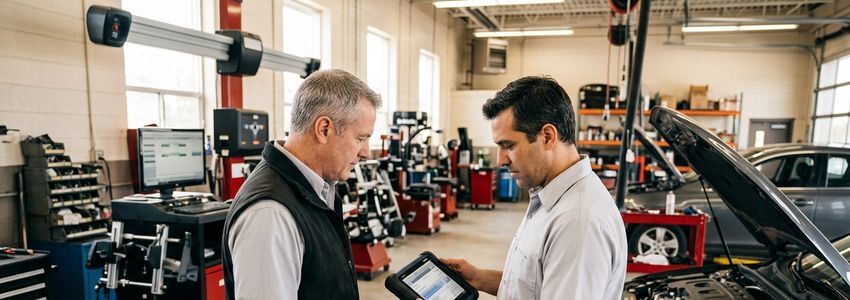
ADAS calibration equipment financing makes sense for a wide range of automotive businesses, not just large multi-location collision repair chains.
- Independent auto body and collision repair shops that currently sublet calibration work to a dealership or mobile calibration service and want to keep that revenue in-house.
- Auto glass replacement businesses that need to calibrate forward-facing cameras after every windshield replacement on a growing share of vehicles.
- Independent general repair and tire shops that perform alignments and want to offer calibration as a value-added service alongside alignment work.
- Mobile calibration service providers who need portable static and dynamic calibration equipment that can travel to multiple shop locations.
- Multi-location collision repair groups standardizing calibration capability across several bays or locations at once.
- New shop owners building out a collision center from the ground up who want calibration capability included from day one rather than added later.
Pro Tip: Shops that advertise in-house ADAS calibration on their website and signage often see increased referral volume from insurance adjusters and other body shops that lack the equipment, turning the investment into a lead-generation tool as well as a cost center solution.
Financing vs. Leasing vs. Paying Cash for Calibration Equipment
Shop owners generally have three paths to acquiring ADAS calibration equipment, and each comes with tradeoffs worth understanding before committing.
| Acquisition Method | Upfront Cost | Ownership | Best For |
|---|---|---|---|
| Equipment Financing | Low to none (often $0-10% down) | You own it from day one or at end of term | Shops wanting to build equity and preserve cash flow |
| Equipment Leasing | Low, often lowest monthly payment | Lender owns it; option to buy at end of term | Shops planning to upgrade equipment every few years |
| Paying Cash | Full purchase price upfront | Immediate full ownership | Shops with significant cash reserves and no urgency |
Because ADAS calibration technology and OEM requirements evolve quickly, many shop owners prefer a lease or financing structure with a shorter term so they are not locked into aging equipment for a decade. Others prefer ownership from the start because calibration frames and target boards have a long useful life even as software and scan tool components get updated separately.
Paying cash outright can feel appealing to shop owners who want to avoid interest costs entirely, but it comes with real opportunity cost. Tying up $30,000 or more in a single equipment purchase means that capital is no longer available for payroll, parts inventory, marketing, or an unexpected repair to another piece of shop equipment. For most growing auto body and collision repair businesses, a financing or leasing structure that matches monthly payments against monthly calibration revenue is the more sustainable path, since the equipment effectively pays for itself through the jobs it enables rather than requiring a large cash reserve to be set aside in advance.
How Crestmont Capital Helps Auto Repair and Collision Shops Finance ADAS Calibration Equipment
Crestmont Capital works with auto body shops, collision repair centers, glass replacement businesses, and independent repair shops across the country to structure equipment financing that fits the realities of automotive repair cash flow. Many shops run seasonal fluctuations tied to weather-related collision volume, and a rigid, one-size-fits-all loan structure does not always make sense.
Because ADAS calibration systems often represent a mix of new technology and specialized components, Crestmont also helps shops structure financing for used equipment when purchasing a refurbished static calibration frame or previously owned dynamic calibration scan tool, which can meaningfully reduce the total investment for a shop just getting started with calibration services.
For shops that already have some equipment in place but need to add a second calibration bay, upgrade target board software, or add a dynamic calibration-capable scan tool, an equipment line of credit can provide ongoing access to capital without reapplying for a new loan every time a new tool is needed. Shops managing day-to-day cash flow gaps between insurance payouts and vendor bills sometimes also pair equipment financing with a business line of credit for added flexibility.
Shops expanding beyond ADAS calibration into a broader equipment upgrade, such as adding a new paint booth or a frame measuring system, often bundle multiple pieces of equipment into a single financing package to simplify payments and reduce total paperwork.
Crestmont Capital's application process is built around speed and simplicity, recognizing that shop owners do not have time to navigate lengthy paperwork while also running day-to-day operations. A straightforward application, paired with recent bank statements and an equipment vendor quote, is typically enough to get a financing decision moving, with funding often completing in a matter of days rather than weeks once terms are accepted.
Stop Losing Calibration Revenue to Dealerships
See how much equipment financing could put in-house ADAS calibration within reach. Apply in minutes, no obligation.
Apply Now →Real-World Scenarios
Scenario 1: The Collision Shop Subletting Calibration Work
A mid-sized collision repair shop completing 60 vehicles a month had been sending every ADAS-equipped vehicle to a nearby dealership for post-repair calibration, paying a sublet fee and waiting two to three days for the vehicle to return. After financing a static and dynamic calibration package, the shop brought the entire calibration process in-house, cutting turnaround time to same-day in most cases and keeping the calibration fee as revenue instead of paying it out to a third party.
Scenario 2: The Auto Glass Replacement Business
An auto glass replacement company had been referring every vehicle with a forward-facing camera to a separate calibration specialist after windshield installation, creating friction for customers and risking lost business to competitors offering one-stop service. Financing a static calibration target system allowed the business to complete the glass replacement and camera recalibration in a single visit.
Scenario 3: The Growing Multi-Bay Shop
A shop expanding from one location to two wanted consistent calibration capability at both sites without doubling its upfront cash outlay. An equipment line of credit allowed the owner to finance a second calibration setup for the new location while keeping the original loan structure intact at the first shop.
Scenario 4: The Independent Tire and Alignment Shop
A tire and alignment shop already performing wheel alignments recognized that many of those same vehicles also needed ADAS recalibration after the alignment was completed. Financing a static calibration system let the shop add a complementary, higher-margin service using the same bay and the same customer visit.
Scenario 5: The Startup Collision Center
A new collision center owner building out a shop from scratch included ADAS calibration equipment in the initial equipment financing package alongside a paint booth and frame machine, rather than treating calibration as a future add-on. This allowed the shop to market full-service ADAS-aware collision repair from its opening day.
By the Numbers
ADAS Calibration Equipment Financing — Key Statistics
90%+
Of new vehicles sold today include at least one ADAS feature requiring calibration
$15K-$75K+
Typical price range for a complete calibration equipment setup
24-84 Mo
Typical financing term range for equipment of this type
24-48 Hrs
Typical time to get a financing decision for qualified applicants
Common Challenges When Adding ADAS Calibration Capability
Shops considering ADAS calibration equipment for the first time often run into a handful of recurring questions and obstacles. Understanding these up front can help you plan a smoother rollout.
OEM brand coverage decisions. No single calibration system covers every vehicle manufacturer out of the box. Shops need to evaluate which brands make up the bulk of their local customer base and prioritize target board and software coverage accordingly, then expand coverage over time as volume and budget allow.
Bay space and floor requirements. Static calibration procedures require a level floor, adequate clear space in front of and behind the vehicle, and controlled lighting. Shops with tight floor plans sometimes need to reconfigure an existing bay or build a dedicated calibration area, which adds to the overall project cost but is often financeable alongside the equipment itself.
Technician training and certification. Calibration procedures must be performed correctly to OEM specification, both for safety reasons and to avoid comebacks or liability exposure. Most shops budget for initial technician certification training as part of the rollout, and many equipment vendors include at least basic training in the purchase package.
Software subscription management. Dynamic calibration scan tools typically require ongoing software subscriptions to stay current with the latest vehicle coverage. Shops should factor this recurring cost into their monthly budget separately from the equipment financing payment itself.
Insurance and documentation requirements. Many insurance carriers now require documented proof of calibration completion, including pre- and post-scan reports, before paying a collision repair claim. Shops bringing calibration in-house should confirm their chosen scan tool and software generate the documentation format insurers expect.
Frequently Asked Questions
What is ADAS calibration equipment?
ADAS calibration equipment includes static target frames, dynamic calibration scan tools, laser alignment devices, and related software used to recalibrate a vehicle's advanced driver assistance systems, such as forward cameras, radar sensors, and lane-keep assist, after a windshield replacement, collision repair, or wheel alignment.
How much does ADAS calibration equipment cost?
A basic static calibration kit can start around $15,000, while a full static and dynamic calibration center with multiple OEM-specific target boards and bay infrastructure can exceed $75,000. Costs vary based on brand coverage, software subscriptions, and bay build-out requirements.
Can I finance ADAS calibration equipment with bad credit?
Many equipment financing programs focus more heavily on business cash flow and time in business than on a perfect personal credit score. Shops with less-than-perfect credit can often still qualify, though terms and down payment requirements may vary based on the full financial picture.
How long does it take to get approved for ADAS calibration equipment financing?
Many applicants receive a financing decision within 24 to 48 hours after submitting basic business and financial information. Full funding timelines depend on equipment vendor lead times and documentation requirements.
Do I need a down payment to finance ADAS calibration equipment?
Down payment requirements vary by lender and applicant qualifications. Some financing structures require little to no money down, while others may require 10 to 20 percent depending on credit profile and equipment type.
Is leasing or financing better for ADAS calibration equipment?
Financing is generally a better fit for shops that want to build equity in equipment with a long useful life, like a calibration frame. Leasing may make more sense for shops anticipating frequent technology upgrades, since newer calibration software and hardware are released regularly.
What vehicles require ADAS calibration?
Most vehicles manufactured after roughly 2018 include at least one ADAS feature, such as forward collision warning, automatic emergency braking, or lane-keep assist, that requires calibration after certain repairs. The specific requirement varies by make, model, and the system installed.
What is the difference between static and dynamic calibration?
Static calibration is performed with the vehicle stationary in a bay using precisely positioned target boards. Dynamic calibration requires driving the vehicle under specific conditions while a scan tool monitors the calibration process. Many vehicles require both procedures to complete a full calibration.
Can I finance used ADAS calibration equipment?
Yes, many lenders finance used or refurbished calibration equipment, which can lower the total investment for shops entering the calibration market for the first time. Lenders will generally want to confirm the equipment is in working order and has reasonable remaining useful life.
Does ADAS calibration equipment financing cover software subscriptions?
Some financing packages can include initial software licensing or subscription costs bundled with the hardware purchase, though ongoing annual subscription renewals are typically billed separately by the software provider rather than financed long-term.
How much revenue can in-house ADAS calibration generate?
Calibration fees vary by region, vehicle make, and procedure complexity, but shops that previously sublet calibration work often find the equipment pays for itself over time by retaining the fee in-house instead of paying it to a third-party calibration provider or dealership.
Do I need special training to operate ADAS calibration equipment?
Most equipment manufacturers and software providers offer training and certification programs for technicians. Many shops budget for initial technician training alongside the equipment purchase to ensure procedures are performed correctly and consistently.
Can a startup auto body shop qualify for ADAS calibration equipment financing?
Newer businesses may face additional documentation requirements or a larger down payment, but many lenders will still work with newer shops, especially when the owner has relevant industry experience or strong personal credit.
What documents do I need to apply for ADAS calibration equipment financing?
Typical documentation includes a completed application, several months of recent business bank statements, a copy of the equipment vendor quote, and basic business identification information. Additional financials may be requested for larger equipment packages.
Can I bundle ADAS calibration equipment with other shop equipment in one financing package?
Yes, many shops combine ADAS calibration equipment with other purchases, such as a paint booth, frame measuring system, or alignment rack, into a single financing agreement to simplify payments and reduce paperwork for a larger shop build-out or upgrade project.
Turn Calibration Into a Revenue Center, Not a Sublet Expense
Apply today and see your financing options for ADAS calibration equipment in minutes.
Apply Now →Next Steps
- Get a vendor quote for the static and/or dynamic calibration equipment your shop needs, including any required bay modifications.
- Review your recent cash flow and estimate how many calibration jobs per month would be needed to comfortably cover a monthly payment.
- Apply for pre-qualification to see your estimated rate and term options without a hard credit inquiry in many cases.
- Compare financing structures side by side, including term length, down payment, and ownership terms.
- Finalize your application and schedule installation so your shop can begin offering in-house ADAS calibration as soon as possible.
Conclusion
ADAS calibration equipment financing has become one of the most practical ways for auto body shops, collision repair centers, and independent repair facilities to capture a fast-growing service category without a large upfront cash outlay. As the share of vehicles requiring calibration after routine repairs continues to climb, shops that invest in this capability position themselves to retain revenue that would otherwise go to a dealership or third-party calibration provider, while also improving turnaround time and customer satisfaction. Whether through equipment financing, leasing, or an equipment line of credit, there are flexible paths to bring ADAS calibration in-house on a timeline that fits your shop's cash flow.
Disclaimer: The information provided in this article is for general educational purposes only and is not financial, legal, or tax advice. Funding terms, qualifications, and product availability may vary and are subject to change without notice. Crestmont Capital does not guarantee approval, rates, or specific outcomes. For personalized information about your business funding options, contact our team directly.