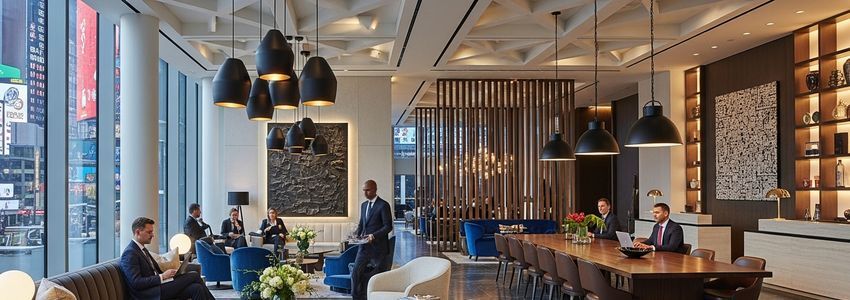
Embarking on the journey to own a W Hotels franchise is a monumental step into the world of luxury hospitality. As a flagship lifestyle brand under the Marriott International umbrella, W Hotels represent the pinnacle of modern, design-led luxury. This venture, while incredibly rewarding, demands substantial capital investment. This comprehensive guide is designed to illuminate the entire financing process, from understanding the initial costs and brand requirements to exploring the diverse loan options available. We will delve into how Crestmont Capital specializes in securing the necessary funding, ensuring your vision for a vibrant, trendsetting W Hotel becomes a tangible reality.
In This Article
- What is W Hotels? A Beacon of Modern Luxury
- W Hotels Franchise Costs and Fees: A Financial Overview
- Why Entrepreneurs Choose W Hotels for Their Portfolio
- W Hotels Franchise Financing Options: Your Path to Funding
- How Crestmont Capital Empowers W Hotels Franchise Owners
- Decoding W Hotels Franchise Requirements
- Real-World Financing Scenarios for W Hotels
- Step-by-Step Guide to Securing Your W Hotels Franchise Loan
- Tips for Maximizing Your Loan Approval Odds
- Frequently Asked Questions (FAQ)
What is W Hotels? A Beacon of Modern Luxury
Before diving into the financials, it is crucial to understand the brand you are investing in. W Hotels is not just another luxury hotel chain; it is a global lifestyle brand that has redefined the hospitality landscape. Born in New York City in 1998, W Hotels broke the mold of traditional luxury by infusing it with a bold, vibrant energy centered around its core pillars: music, design, fashion, and fuel (its unique take on wellness and culinary experiences).
As part of the prestigious Marriott International portfolio, W Hotels benefits from an unparalleled global distribution system, a massive loyalty program in Marriott Bonvoy, and world-class operational support. Each W Hotel is a destination in itself, often located in the heart of the world's most exciting cities and exotic resorts. They attract a discerning clientele of trendsetters, tastemakers, and affluent travelers who seek more than just a place to stay; they seek an immersive experience.
The brand's aesthetic is iconic, characterized by cutting-edge design, vibrant "Living Room" lobbies that transform into social hubs by night, signature WET Decks (pools), and stylish bars and restaurants. Investing in a W Hotels franchise means becoming a curator of this unique, high-energy luxury experience, a prospect that is as demanding as it is prestigious.
W Hotels Franchise Costs and Fees: A Financial Overview
Acquiring or developing a W Hotel is a significant financial undertaking reserved for well-capitalized investors and investment groups. The costs are substantial due to the brand's luxury positioning, high design standards, and typical location in prime real estate markets. While the exact figures are detailed in the Franchise Disclosure Document (FDD), which you must review thoroughly, here is a general breakdown of the expected investment.
Total Initial Investment
The total estimated initial investment for a new W Hotel can range dramatically based on location, land costs, construction scope, and market conditions. Generally, you can expect the total project cost to fall between $15 million and $50 million, and often much higher for flagship properties in major metropolitan areas. This comprehensive figure typically includes:
- Real Estate and Land Acquisition: The cost of purchasing the land or an existing property for conversion.
- Construction and Development: The "hard costs" of building the hotel from the ground up or executing a major renovation and conversion.
- Furniture, Fixtures, and Equipment (FF&E): All the interior elements that bring the W brand to life, from custom lobby furniture and high-end guest room amenities to kitchen equipment and technology systems.
- Architectural and Design Fees: Fees for architects, interior designers, and engineers who must adhere to W's strict brand standards.
- Pre-Opening Expenses: Costs for marketing, staff recruitment and training, initial inventory, and establishing operational accounts before the first guest checks in.
- Working Capital: A reserve of funds to cover operational expenses for the first several months until the hotel achieves stable cash flow.
Key Franchise Fees
Beyond the initial project cost, franchisees are responsible for several ongoing fees paid to Marriott International for the right to operate under the W Hotels banner.
- Initial Franchise Fee: This is a one-time fee paid upon signing the franchise agreement. For a premium brand like W Hotels, this fee is typically in the range of $75,000 to $150,000, plus a potential per-room charge.
- Ongoing Royalty Fee: This is a recurring fee, usually calculated as a percentage of the hotel's gross rooms revenue. For W Hotels, this fee generally falls between 5% and 6%.
- Marketing and Advertising Fee: Franchisees contribute to national and global marketing campaigns that promote the W brand. This fee is also a percentage of gross rooms revenue, typically ranging from 2% to 3%.
- Reservation System Fee: A fee is charged for using Marriott's powerful central reservation system (CRS), which drives a significant portion of bookings. This can be a percentage of revenue or a flat fee per reservation.
- Loyalty Program Fee: A fee associated with participation in the Marriott Bonvoy program, covering the costs of member benefits and program administration.
Why Entrepreneurs Choose W Hotels for Their Portfolio
Despite the high barrier to entry, sophisticated investors are drawn to the W Hotels brand for several compelling reasons. This is not just an investment in a building; it's an investment in a globally recognized symbol of modern luxury with a proven track record of performance.
Unmatched Brand Recognition and Power
W Hotels is a household name among affluent, modern travelers. This brand equity translates directly into pricing power and demand. Being part of the Marriott family further amplifies this, providing access to over 180 million Marriott Bonvoy members worldwide. This built-in customer base significantly de-risks the investment and accelerates the path to profitability.
High Revenue Per Available Room (RevPAR)
Luxury and lifestyle brands like W consistently command higher average daily rates (ADR) and occupancy levels than their mid-scale or economy counterparts. This results in a superior RevPAR, which is the key performance metric in the hotel industry. Investors are willing to pay a premium for assets that generate top-tier revenue streams.
A Coveted Target Demographic
The W brand attracts a highly desirable demographic: affluent millennials and Gen Z travelers, business executives, and global jet-setters who have high disposable incomes and a penchant for experiential travel. This audience is less price-sensitive and more likely to spend on ancillary services like food and beverage, spa treatments, and events, boosting the hotel's overall profitability.
Dominance in the Urban Luxury Segment
W Hotels has carved out a unique and defensible niche in the competitive urban luxury market. Its focus on creating a vibrant social scene sets it apart from more traditional, staid luxury brands. For an investor looking to capture the lucrative "bleisure" (business + leisure) market in a major city, a W Hotel is an incredibly powerful asset.
Ready to Finance Your W Hotels Vision?
The journey to owning a W Hotel starts with a solid financial foundation. Let Crestmont Capital help you build it. We specialize in high-value franchise and hospitality financing.
Apply for W Hotels Franchise FinancingW Hotels Franchise Financing Options: Your Path to Funding
Financing a multi-million dollar hotel project is a complex process that typically involves a combination of debt, equity, and sometimes alternative financing structures. As a prospective W Hotels owner, you need a financing partner who understands the nuances of the hospitality industry. Here are the primary loan options to consider.
SBA Loans (7a and 504)
While often associated with smaller businesses, the Small Business Administration (SBA) loan programs can be instrumental in hotel financing, particularly the SBA 504 loan. The SBA 504 loan is specifically designed for acquiring major fixed assets like real estate and equipment.
For a hotel project, the 504 structure is ideal. It typically involves three parts:
- A senior lien loan from a conventional lender (like a bank) for 50% of the project cost.
- A junior lien loan from a Certified Development Company (CDC) backed by the SBA for up to 40% of the project cost.
- An equity injection from you, the borrower, for as little as 10% (though 15-20% is more common for a hotel).
The key benefits of an SBA 504 loan include a lower down payment requirement compared to conventional loans, a long repayment term (up to 25 years) for the real estate portion, and a fixed interest rate on the SBA's portion. This can significantly improve a project's cash flow and overall financial viability. For more information on government-backed programs, the official SBA.gov website is an excellent resource.
Conventional Bank Loans
Traditional commercial real estate loans from national or regional banks are the most common source of financing for large hotel projects. These loans are highly competitive, and lenders will scrutinize every aspect of your application, including your financial history, hospitality experience, and the project's feasibility study.
Key features of conventional loans include:
- Loan-to-Cost (LTC) Ratios: Banks will typically finance 60-75% of the total project cost, requiring a significant equity contribution of 25-40% from you.
- Variable or Fixed Rates: Interest rates can be fixed for a period or float based on a benchmark index like the Prime Rate.
- Term Lengths: These are often structured as long-term business loans, with amortization periods of 20-25 years and a balloon payment due after 5, 7, or 10 years.
Securing a conventional loan requires a stellar credit profile and a robust business plan that proves the hotel's potential for strong, stable cash flow.
Equipment Financing
A hotel is filled with expensive equipment, from the HVAC systems and kitchen appliances to the guest room furniture and IT infrastructure. Instead of using your primary construction loan to cover these costs, you can use specialized equipment financing. This type of loan uses the equipment itself as collateral, which can free up capital for other aspects of the project. It's an excellent tool for managing the FF&E budget during new construction or a major renovation.
Alternative and Private Lending
For unique situations, such as acquiring a property quickly or financing a project that doesn't fit the rigid criteria of a traditional bank, alternative lenders and private debt funds can be a solution. These lenders often offer more flexibility and faster closing times, but usually at a higher interest rate. They can be useful for bridge loans (short-term financing to "bridge" a gap until long-term funding is secured) or mezzanine debt (a hybrid of debt and equity financing).
How Crestmont Capital Empowers W Hotels Franchise Owners
Navigating the complex world of hospitality financing requires a specialist. Crestmont Capital is not just a lender; we are your strategic financing partner. We understand the unique capital demands of a premium franchise like W Hotels and have the expertise and network to structure the optimal funding package for your project.
Here’s how we make a difference:
- Access to a Diverse Lender Network: We work with a wide range of lenders, including SBA-preferred banks, national conventional lenders, and private capital sources. We match your project with the lender whose appetite and terms are the best fit, saving you the time and effort of shopping around.
- Expertise in High-Value Franchise Loans: We speak the language of franchising. We know what lenders look for in a franchise application and can help you prepare a loan package that highlights the strengths of your project and the power of the W Hotels brand. Our experience is detailed in our guide to franchise business loans.
- Flexible and Scalable Solutions: Whether you need a multi-million dollar construction loan, financing for a property improvement plan (PIP), or a line of credit for working capital, we can help. We facilitate loan amounts from $50,000 to over $5 million, with flexible terms designed to support your hotel's long-term success.
- Streamlined and Efficient Process: We leverage technology and our industry relationships to expedite the application and approval process. Our goal is to get you from application to funding as quickly and smoothly as possible, so you can focus on building and operating your hotel.
W Hotels Franchise Investment Snapshot
Total Initial Investment
$15M - $50M+
Includes land, construction, FF&E, and pre-opening costs.
Initial Franchise Fee
$75k - $150k
One-time fee to secure the rights to the brand.
Ongoing Royalty Fee
5% - 6%
Percentage of gross rooms revenue.
Marketing & Ad Fee
2% - 3%
Contribution to global brand promotion.
Decoding W Hotels Franchise Requirements
Marriott International maintains exceptionally high standards for its W Hotels franchisees. They are seeking experienced, well-capitalized partners who can successfully execute the brand's vision and operate a world-class luxury hotel. While specific requirements are confidential, prospective owners should be prepared to meet the following criteria:
Substantial Net Worth and Liquidity
This is the most significant financial hurdle. Lenders and Marriott will require you to have a substantial personal net worth, often in the tens of millions of dollars. More importantly, you must have significant liquid capital (cash, stocks, and other easily convertible assets) available for the equity injection and to cover any unforeseen costs. Expect to need a minimum of $5 million to $10 million in liquid capital, with requirements increasing based on the project's total cost.
Proven Hospitality and Management Experience
Marriott rarely awards W Hotel franchises to individuals without a proven track record in the hospitality industry. They look for candidates with experience in developing, owning, or operating upscale or luxury hotels. You will need to demonstrate a deep understanding of hotel operations, marketing, and financial management. Often, franchisees are required to partner with a Marriott-approved third-party management company to run the day-to-day operations.
Excellent Credit History
Both your personal and business credit history must be impeccable. Lenders will be looking for a personal credit score well above 720, with no history of bankruptcies, foreclosures, or significant delinquencies. A strong credit profile demonstrates financial responsibility and reduces the perceived risk for lenders.
A Viable Site and Market
You cannot simply decide to build a W Hotel anywhere. The proposed location must align with the brand's strategic growth plans. It needs to be in a major urban center or a premier resort destination with strong demand drivers for luxury travel. Marriott will conduct its own extensive market analysis to approve any proposed site.
Real-World Financing Scenarios for W Hotels
To better understand how financing works in practice, let's explore three common scenarios for a W Hotels franchisee.
Scenario 1: New Ground-Up Construction
An investment group plans to build a new 150-room W Hotel in a booming downtown district. The total project cost is estimated at $40 million.
- Equity: The group contributes $12 million (30%) of their own capital.
- Financing Need: $28 million.
- Potential Structure: They secure an SBA 504 loan. A conventional bank provides a $20 million senior loan (50%), a CDC provides a $12 million SBA-backed loan (30%), and the group's equity covers the remaining 20% ($8 million). The remaining $4 million of their equity is used for additional working capital and contingency. They may also use a separate equipment financing lease for the $3 million FF&E package to preserve cash.
Scenario 2: Acquisition and Rebranding
An experienced hotelier identifies an underperforming independent boutique hotel in a prime location and plans to acquire it for $25 million and convert it into a W Hotel. The required Property Improvement Plan (PIP) to bring it up to W standards will cost an additional $10 million.
- Total Project Cost: $35 million.
- Equity: The hotelier injects $10.5 million (30%).
- Financing Need: $24.5 million.
- Potential Structure: They secure a conventional commercial real estate loan that covers both the acquisition and the renovation costs. The loan is structured with an initial interest-only period during the renovation to ease cash flow pressure before the hotel reopens as a W.
Scenario 3: Major Renovation of an Existing W Hotel
The owner of a 10-year-old W Hotel needs to complete a mandated brand refresh to update guest rooms, the lobby, and the pool area. The total cost of the renovation is $8 million.
- Equity: The owner uses $2 million from the hotel's capital reserves.
- Financing Need: $6 million.
- Potential Structure: The owner works with a lender like Crestmont Capital to secure a small business loan or a capital improvement loan. Because they have a proven operating history, the process is streamlined. They might also use equipment financing specifically for the new guest room FF&E, securing a $2.5 million loan against those assets.
See What You Qualify For
Don't let financing be a roadblock. Discover your funding potential with our simple and secure pre-qualification process. Get started in minutes.
Get Pre-Qualified TodayStep-by-Step Guide to Securing Your W Hotels Franchise Loan
Securing financing for a W Hotel is a marathon, not a sprint. Follow these steps to position yourself for success.
- Initial Consultation and Approval from Marriott: Your first step is to engage with the W Hotels development team. You must be approved as a franchisee candidate before you can seriously pursue financing.
- Develop a Comprehensive Business Plan: This is the cornerstone of your loan application. It must include detailed financial projections (pro forma), a market analysis, a feasibility study from a reputable firm, your management plan, and a detailed breakdown of project costs and uses of funds. As noted by Forbes, a strong business plan is critical for lenders.
- Gather All Financial Documentation: Prepare a complete package of personal and business financial documents. This includes multiple years of tax returns, personal financial statements, bank statements, and a detailed schedule of real estate and other assets.
- Consult with a Financing Advisor like Crestmont Capital: Before approaching banks, work with a specialist. We can review your business plan, advise on the best loan structure, and connect you with the right lenders from our network.
- Submit Loan Applications: With our guidance, you will submit a polished and comprehensive loan package to a curated list of lenders who are most likely to fund your project.
- Underwriting and Due Diligence: The lender will conduct a thorough underwriting process. This involves a deep dive into your finances, a third-party appraisal of the property, an environmental review, and an analysis of your feasibility study. Be prepared to answer many questions and provide additional documentation.
- Receive a Letter of Intent (LOI) or Term Sheet: If the lender is interested, they will issue a term sheet outlining the proposed loan amount, interest rate, term, and other conditions.
- Loan Closing and Funding: Once you accept the term sheet and all conditions are met, you will proceed to the loan closing. This is a legal process where all documents are signed, and the funds are disbursed according to a pre-arranged draw schedule, especially for construction projects.
Tips for Maximizing Your Loan Approval Odds
Lenders are looking for ways to say "yes," but you need to make it easy for them. Here are some pro tips to strengthen your application.
- Contribute More Equity: While some loans allow for lower down payments, a larger equity injection (30% or more) significantly reduces the lender's risk and demonstrates your commitment to the project. This is one of the strongest signals you can send.
- Create Flawless Financial Projections: Your pro forma should be realistic and well-supported by data from industry sources and your feasibility study. Show conservative, moderate, and optimistic scenarios to demonstrate you have considered all possibilities.
- Highlight Your Management Team: If you have a strong management team or have partnered with a top-tier, Marriott-approved operator, make this a central point of your application. The team's experience is just as important as your own.
- Address Potential Weaknesses Head-On: If you have a blemish on your credit or a gap in your experience, address it proactively in your business plan. Explain the circumstances and the steps you have taken to mitigate it. Honesty builds trust with lenders.
- Be Organized and Responsive: During the underwriting process, respond to requests for information promptly and with well-organized documentation. A professional and responsive borrower is seen as a lower risk.
Have Questions? We Have Answers.
Financing a luxury hotel can be complex. Our team of experienced financing experts is here to provide clarity and guide you every step of the way.
Speak with a Financing ExpertFrequently Asked Questions (FAQ)
1. What is the total investment required to open a W Hotel?
The total initial investment is substantial, typically ranging from $15 million to over $50 million. This wide range depends on factors like the location (urban center vs. resort), whether it's a new build or a conversion, land costs, and the size of the hotel.
2. How much liquid capital do I need to be considered for a W Hotels franchise?
While Marriott does not publicly state a number, industry experts suggest you will need a minimum of $5 million to $10 million in liquid capital. This is necessary for the significant equity injection required by lenders and to cover working capital needs.
3. Can I use an SBA loan to finance a W Hotel?
Yes, but with limitations. The SBA has a maximum loan amount (currently around $5 million per project for the SBA's portion). An SBA 504 loan is an excellent tool to finance a portion of the project, often combined with a larger conventional loan to cover the full cost. It's ideal for reducing the required down payment.
4. What kind of experience do I need to become a W Hotels franchisee?
Marriott seeks franchisees with significant experience in the hospitality industry, specifically in developing, owning, or operating upscale or luxury hotels. If you lack direct operational experience, you will likely be required to hire a Marriott-approved third-party management company.
5. What is a Property Improvement Plan (PIP) and how is it financed?
A PIP is a list of mandatory renovations and upgrades required by the franchisor (Marriott) when you acquire an existing hotel to convert it to one of their brands, or when an existing franchise needs a refresh. PIP costs can be financed through a conventional renovation loan, an SBA loan, or as part of a larger acquisition loan.
6. How long does it take to secure financing for a hotel project?
The timeline for securing financing for a project of this scale is lengthy. From initial application to closing, you should expect the process to take anywhere from 3 to 9 months, or even longer, due to the extensive due diligence, appraisals, and legal work involved.
7. What is the typical loan-to-cost (LTC) ratio for a hotel construction loan?
For conventional loans, the LTC is typically between 60% and 75%. This means the lender will finance that percentage of the total project cost, and you will be responsible for providing the remaining 25% to 40% as an equity injection.
8. What is included in the ongoing royalty and marketing fees?
The royalty fee (5-6% of gross rooms revenue) is the payment for using the W Hotels brand name, systems, and support. The marketing fee (2-3%) contributes to the global advertising fund that runs campaigns to promote the W brand worldwide, driving customers to your property.
9. Can I get financing for a W Hotel with bad credit?
It is extremely unlikely. A multi-million dollar hotel loan is considered a high-risk investment for lenders. They require pristine personal and business credit (typically 720+) to even consider an application. While Crestmont Capital does offer bad credit business loans for other purposes, they are generally not suitable for a project of this magnitude.
10. What is a feasibility study and why is it so important?
A feasibility study is an in-depth analysis of your proposed hotel project conducted by a third-party hospitality consulting firm. It evaluates market conditions, competitor hotels, demand generators, and provides detailed financial projections. Lenders rely heavily on this unbiased report to validate your business plan and assess the project's viability.
11. Does Crestmont Capital lend money directly?
Crestmont Capital acts as a strategic financing partner and marketplace. We connect qualified borrowers with our extensive network of lending partners, including banks, SBA lenders, and private capital providers, to find the best possible loan terms and structure for your specific needs.
12. What role does the Franchise Disclosure Document (FDD) play?
The FDD is a legal document that franchisors are required to provide to prospective franchisees. It contains 23 specific items of information about the franchise, its officers, and other franchisees. It details all costs and fees, legal obligations, and other critical information. You must review it carefully with an attorney before signing any agreement.
13. Can I finance 100% of a W Hotel project?
No, 100% financing for a hotel project of this scale is virtually nonexistent. All lenders will require a significant equity contribution from you, typically in the range of 25% to 40% of the total project cost, to ensure you have "skin in the game" and to mitigate their risk.
14. What are the main differences between an SBA 7(a) and an SBA 504 loan for a hotel?
The SBA 7(a) loan is more versatile and can be used for a wider range of business purposes, including working capital and inventory. The SBA 504 loan is specifically for major fixed assets like real estate and long-term equipment. For a large construction or acquisition project like a hotel, the 504 program's structure with its long-term, fixed-rate debt is often a better fit.
15. How does the Marriott Bonvoy program benefit me as a franchisee?
The Marriott Bonvoy loyalty program is a massive competitive advantage. It gives you immediate access to a global base of over 180 million loyal travelers who are incentivized to book directly with Marriott-branded hotels like yours. This significantly reduces your marketing costs and provides a consistent stream of high-value guests.
The Final Word on Financing Your W Hotel
Owning a W Hotels franchise is a landmark achievement for any hospitality investor. It places you at the forefront of the luxury lifestyle hotel segment, backed by the formidable power of Marriott International. However, the path to opening your doors is paved with complex financial hurdles that demand expert navigation.
The capital requirements are immense, the underwriting process is rigorous, and the stakes are high. Success hinges on a meticulously prepared business plan, substantial personal equity, and, most importantly, the right financing partner. By understanding the costs, meeting the stringent requirements, and leveraging specialized funding options like SBA 504 and conventional commercial loans, you can turn this ambitious vision into a thriving reality.
At Crestmont Capital, we specialize in demystifying this process. We bring the expertise, industry connections, and dedication needed to structure a financing package that aligns with your goals. Contact us today to begin the conversation about funding your W Hotels legacy.
Disclaimer: The information provided in this article is for general educational purposes only and does not constitute financial, legal, or investment advice. Franchise costs, fees, and financing terms vary and are subject to change. Always consult with a qualified financial advisor, legal professional, and review the Franchise Disclosure Document (FDD) before making any investment decisions. Crestmont Capital is not affiliated with W Hotels, Marriott International, or any franchise brand mentioned herein.

Allan Garfinkle
Allan Garfinkle is the Chief Revenue Officer at Crestmont Capital, where he has spent more than a decade leading revenue strategy, business development, and operational growth. With 28 years of experience building and advising startups and small businesses, Allan has helped more than 10,000 business owners navigate financing decisions, growth opportunities, and changing economic conditions. He earned a Bachelor of Science in Economics and an MBA with a concentration in Finance from Northeastern University, as well as a Juris Doctor from New England Law, where his studies focused on contracts and business law. His writing draws on extensive practical experience in small-business lending, equipment financing, business credit, and commercial finance.