Vinyl record pressing plant equipment financing is how independent labels, pressing startups, and growing manufacturers acquire the presses, extruders, and plating systems needed to meet surging demand without draining cash reserves. With vinyl sales climbing for eighteen straight years and backlogs stretching months at many plants, the equipment bottleneck has become the single biggest obstacle standing between pressing plant owners and the orders piling up in their inbox.
Whether you are opening your first pressing facility, adding a second or third press to an existing operation, or upgrading aging machinery to modern automated systems, understanding how vinyl record pressing plant equipment financing works can mean the difference between capturing the current vinyl boom and watching competitors capture it instead. This guide covers everything from equipment types and costs to qualification requirements, financing structures, and how to choose the right lender for your pressing operation.
In This Article
What Is Vinyl Record Pressing Plant Equipment Financing?
Vinyl record pressing plant equipment financing is a category of commercial equipment financing designed specifically to help pressing plant owners acquire hydraulic and automated record presses, extruders, plating and stamper systems, boilers and chillers, jacket and sleeve packaging lines, and quality control tools without paying the full purchase price upfront. Instead of writing a check for $60,000 to $250,000 or more, a business spreads that cost across monthly payments tied to the equipment's useful life.
This type of financing typically comes in two structures: an equipment loan, where you own the machine outright once the loan is repaid and the equipment itself serves as collateral, or an equipment lease, where you pay to use the equipment for a set term with an option to purchase, renew, or return it at the end. Both structures exist because pressing equipment is expensive, has a long useful life (often 15-25 years for a well-maintained press), and holds resale value that lenders recognize as security.
Unlike a general business loan, equipment financing is secured by the asset being purchased. That collateral reduces the lender's risk, which typically translates into better rates, longer terms, and more accessible approval standards than unsecured working capital products. For an industry defined by high machine costs and long lead times, that distinction matters enormously.
Key Stat: U.S. vinyl record revenue reached $1.4 billion in 2024, the eighteenth consecutive year of growth and the format's highest revenue total since 1984, according to Forbes coverage of RIAA data. Vinyl now accounts for roughly 71% of all physical music format revenue.
Key Benefits of Financing Your Pressing Equipment
Financing pressing equipment rather than paying cash offers several strategic advantages for plant owners at every stage of growth.
- Preserve working capital. A single automated press can cost $150,000 or more. Financing keeps that cash in your business for raw vinyl compound, staffing, marketing, and unexpected repairs rather than locking it into one machine.
- Match payments to revenue. Monthly payments align with the cash flow generated by the new press capacity, so the equipment effectively pays for itself as new orders come in.
- Access newer, more efficient technology. Modern automated presses cut cycle times dramatically compared to decades-old hydraulic machines, and financing makes it possible to acquire that technology without a massive capital outlay.
- Potential tax advantages. Equipment purchased through financing may qualify for accelerated depreciation treatment. Consult your accountant about how this applies to your specific tax situation.
- Build business credit. Consistent, on-time payments on equipment financing help establish a stronger business credit profile, which improves terms on future financing needs.
- Faster equipment acquisition. With press lead times from manufacturers already running 6-18 months, having financing pre-arranged means you can place your order the moment a manufacturing slot opens up.
Ready to Expand Your Pressing Capacity?
Get fast, flexible equipment financing from the #1 business lender in the U.S. No obligation, apply in minutes.
Apply Now →How Vinyl Record Pressing Plant Equipment Financing Works
The process for financing pressing equipment follows a fairly consistent path across most lenders, whether you are financing a single used press or outfitting an entire new facility.
Step 1: Identify the Equipment and Get a Quote
Before applying, get a formal quote or invoice from your equipment vendor, whether that is a manufacturer like Newbilt, a refurbisher of vintage hydraulic presses, or a private seller of used equipment. Lenders need the exact make, model, price, and specifications to structure your financing.
Step 2: Submit Your Application and Financials
Most lenders request basic business information, time in business, revenue figures, and recent bank statements. Some require tax returns and a profit and loss statement, particularly for larger financing amounts. Startups and newer pressing operations may need to provide a business plan showing projected order volume and revenue.
Step 3: Underwriting and Approval
The lender evaluates your creditworthiness, the value and useful life of the equipment, and your business's ability to support the payment. Because the equipment itself secures the loan, approval standards are often more flexible than unsecured financing, especially for used or specialized machinery that has clear resale value.
Step 4: Funding and Equipment Purchase
Once approved, funds are typically disbursed directly to the equipment vendor, or in some cases to you for reimbursement if you have already made a deposit. Approval-to-funding timelines with alternative lenders often run a few business days to two weeks, considerably faster than traditional bank underwriting.
Step 5: Repayment
You make fixed monthly payments over the agreed term, typically ranging from three to seven years depending on the equipment type and lender. At the end of a loan term, you own the equipment outright. At the end of a lease term, your options depend on the lease structure you selected.
Equipment You Can Finance for a Vinyl Pressing Operation
Vinyl record pressing plant equipment financing is not limited to the press itself. Lenders that understand the manufacturing side of the music industry will finance the full range of equipment a pressing operation needs to run.
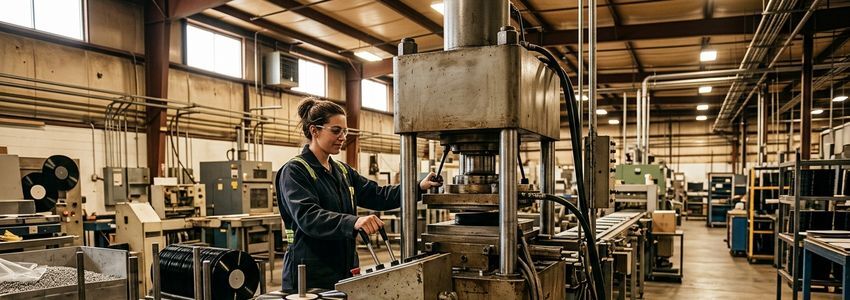
- Record presses: Hydraulic single-cavity presses, semi-automatic presses, and fully automated presses that can produce a finished record every 25-45 seconds.
- Extruders: Machines that heat and prepare the vinyl compound (biscuit) that is fed into the press.
- Plating and stampers: Electroplating equipment used to create the metal stampers from lacquer or DMM masters.
- Boilers and chillers: Steam boilers heat the press platens, while chiller systems cool the pressed record before ejection. Both are essential support infrastructure.
- Label applicators and center-hole punches: Equipment that applies paper labels and precision-punches the spindle hole.
- Quality control tools: Turntables, playback systems, and warp/flatness testing equipment used to verify finished product quality.
- Packaging and jacket-assembly equipment: Shrink wrap machines, jacket folding equipment, and automated sleeve-insertion systems for higher-volume operations.
- Facility infrastructure: HVAC systems, compressed air systems, and electrical upgrades needed to safely operate industrial pressing equipment.
New equipment financing and used equipment financing are both available. Given that a complete new production line can run roughly $200,000 to $250,000, many smaller and mid-size operations start with refurbished vintage presses, which can be financed at a lower entry cost while still requiring the same electroplating, boiler, and quality control infrastructure around them.
By the Numbers
The Vinyl Manufacturing Boom - Key Statistics
$1.4B
U.S. vinyl record revenue in 2024, an 18th straight year of growth
44M
Vinyl albums sold in 2024, outselling CDs for the third straight year
71%
Share of physical music revenue vinyl now represents
$200K+
Typical cost of a complete new pressing production line
Total Investment: What a Pressing Operation Actually Costs
Understanding the full cost picture helps you size the right financing request rather than underfunding your launch or expansion. Beyond the press itself, a realistic budget includes several categories of expense that plant owners frequently underestimate on their first pass.
Core Machinery
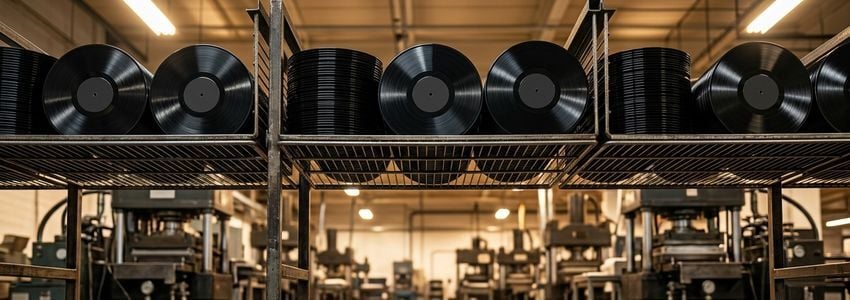
A single new automated press typically runs $60,000 to $195,000 depending on speed and automation level. A complete production line, including extruder, boiler, chiller, and plating equipment, commonly lands in the $200,000 to $250,000 range for a modern setup. Refurbished vintage hydraulic presses can be sourced for meaningfully less, though they often require additional maintenance investment and slower cycle times.
Facility and Utility Upgrades
Industrial pressing equipment draws significant electrical load and often requires three-phase power, dedicated steam generation, and climate control to manage the heat generated during pressing. Facility upgrades to support this infrastructure can add tens of thousands of dollars to a project, and many financing packages can bundle these costs alongside the core equipment purchase.
Tooling and Consumables Setup
Stampers, mother plates, and label dies represent ongoing per-release costs rather than one-time capital expenses, but a plant needs enough working capital on hand to cover the first several production runs before revenue starts flowing in. Factoring this into your financing conversation upfront prevents a cash crunch immediately after your equipment arrives.
Staffing and Training
Automated presses require less labor per unit of output than vintage hydraulic equipment, but operators still need training on press calibration, quality control, and routine maintenance. Some equipment manufacturers include training as part of the purchase; confirm this before finalizing your equipment selection.
Who This Financing Is Best For
Vinyl record pressing plant equipment financing serves a wide range of business profiles across the manufacturing side of the music industry.
Startup Pressing Plants
Entrepreneurs entering the pressing business for the first time face the largest upfront hurdle: acquiring a press, extruder, boiler, and plating system before a single record can be produced. Financing lets a new operator secure a full production line without exhausting startup capital needed for staffing, facility buildout, and working capital.
Existing Plants Adding Capacity
With many pressing plants reporting order backlogs of several months, established operators often need a second or third press to keep pace with demand. Financing allows capacity expansion without disrupting cash flow from existing operations.
Operations Upgrading From Vintage to Automated Equipment
Many plants still run refurbished hydraulic presses from the 1970s. Upgrading to semi-automatic or fully automated systems can cut cycle time from roughly 45-60 seconds per record to under 30 seconds, meaningfully increasing daily output. Financing spreads that upgrade cost over the productivity gains it generates.
Record Labels Vertically Integrating Into Manufacturing
Independent and mid-size labels increasingly want to control their own pressing timelines rather than compete for slots at third-party plants. Financing equipment lets a label bring manufacturing in-house without a single massive capital outlay.
Custom and Specialty Pressing Operations
Boutique operations specializing in colored vinyl, picture discs, or short-run limited editions often need additional specialized tooling, such as split-color injection systems, that general-purpose financing can cover alongside the core press.
Comparing Your Financing Options
Not every pressing plant owner will use the same financing structure. Understanding the differences helps you choose the option that fits your cash flow, credit profile, and long-term ownership goals.
| Option | Best For | Typical Term | Ownership |
|---|---|---|---|
| Equipment Loan | Businesses wanting to own equipment outright and build equity | 3-7 years | You own it once repaid |
| Equipment Lease | Businesses that want lower payments or plan to upgrade often | 2-5 years | Return, renew, or buy at term end |
| SBA 7(a) Loan | Established manufacturers wanting the lowest long-term rates | Up to 10 years for equipment | You own it once repaid |
| Business Line of Credit | Smaller tooling purchases or ongoing operational flexibility | Revolving | You own outright when purchased |
SBA-backed options like the SBA 7(a) loan can offer strong rates and long repayment terms for manufacturing equipment, though the application and underwriting process typically takes longer than alternative equipment financing. For pressing plant owners who need equipment sooner rather than in several weeks, private equipment financing often provides the speed needed to lock in a manufacturer's production slot.
How Crestmont Capital Helps Pressing Plant Owners
Crestmont Capital specializes in helping manufacturers and niche industrial operators, including vinyl record pressing plants, secure the equipment financing they need to grow. As a top-rated U.S. business lender, we understand that specialized manufacturing equipment does not always fit neatly into a traditional bank's underwriting box, and we structure financing accordingly.
- Fast pre-qualification: Most applicants receive a decision within 24-48 hours, far faster than traditional bank timelines.
- Financing for new and used equipment: Whether you are buying a brand-new automated press or a refurbished vintage hydraulic press, we structure financing around the actual equipment and its useful life.
- Flexible underwriting: We evaluate your full financial picture, including revenue trends and order backlogs, not just a credit score in isolation.
- Dedicated funding specialists: You work with an advisor who takes the time to understand the manufacturing side of the music industry and structures a plan around your growth timeline.
Explore our manufacturing equipment financing and factory equipment financing programs, or review our full equipment financing hub to see the range of options available for manufacturing operations of every size.
Don't Let a Backlog Cost You Business
Get pre-qualified for pressing equipment financing before your next manufacturing slot opens up. Fast decisions, flexible terms.
Get Pre-Qualified →Real-World Scenarios
Scenario 1: The First-Time Pressing Plant Owner
A former audio engineer with strong industry relationships decides to open an independent pressing plant to serve local and regional labels frustrated by long turnaround times at major plants. With $40,000 in personal savings but needing roughly $220,000 for a complete new production line including press, extruder, boiler, and plating equipment, she uses equipment financing to cover the balance. The press itself serves as collateral, and monthly payments are structured to align with the revenue projected from confirmed pre-orders from three regional labels.
Scenario 2: The Growing Plant Adding a Second Press
An existing pressing operation running a single automated press for two years has built a six-month order backlog and is turning away new clients. Rather than continuing to lose business, the owner finances a second automated press using the strong revenue history and existing equipment as supporting collateral. The new press pays for itself within 14 months based on incremental order volume the plant can now accept.
Scenario 3: The Upgrade From Vintage to Automated
A boutique pressing operation has run a refurbished 1970s hydraulic press for five years, producing roughly 400 records per day with two operators per shift. Financing a semi-automatic press allows the plant to cut labor requirements to one operator per shift while nearly doubling daily output, a productivity gain that offsets the new monthly payment within the first year.
Scenario 4: The Label Bringing Manufacturing In-House
A mid-size independent label tired of unpredictable turnaround times from third-party plants decides to finance its own press and supporting equipment. This move gives the label full control over release schedules for its roster of artists and creates a secondary revenue stream by pressing for smaller labels during downtime.
Pro Tip: Confirmed pre-orders or letters of intent from labels and distributors can meaningfully strengthen a financing application, especially for startup pressing operations without an established revenue history.
Frequently Asked Questions
Turn Backlog Into Revenue
Financing your next press or full production line has never been faster. See your options with no obligation.
Check Your Rate →Next Steps: Financing Your Pressing Equipment
Contact your equipment manufacturer or refurbisher for a formal quote on the press, extruder, or full production line you need.
Pull together recent bank statements, revenue figures, and any pre-orders or letters of intent that support your application.
Apply at offers.crestmontcapital.com/apply-now, it takes just minutes and a specialist will walk you through your options.
Conclusion
Vinyl record pressing plant equipment financing gives manufacturers, startups, and growing labels a practical path to acquiring the presses and production infrastructure needed to compete in a market that has grown for 18 consecutive years. Whether you need a single refurbished press to launch your first plant or a full automated production line to eliminate a months-long backlog, structured financing lets you match the cost of that equipment to the revenue it generates rather than draining working capital upfront. With demand for vinyl showing no signs of slowing, the businesses that secure financing and lock in equipment now will be best positioned to capture the orders piling up across the industry.
External resources: Forbes: Vinyl Sales Report | SBA Small Business Financing Guide | U.S. Census Bureau Annual Integrated Economic Survey
For related reading, see our guide on recording studio business loans for financing across other segments of the music production industry.
Disclaimer: The information provided in this article is for general educational purposes only and is not financial, legal, or tax advice. Funding terms, qualifications, and product availability may vary and are subject to change without notice. Crestmont Capital does not guarantee approval, rates, or specific outcomes. For personalized information about your business funding options, contact our team directly.