Tiki bar financing gives bar owners the capital they need to open, expand, or renovate a tropical-themed bar without draining their savings. Tiki bars are one of the most distinctive concepts in the hospitality industry: immersive decor, craft rum cocktails, custom mugs, and an escapist atmosphere that keeps guests coming back. That experience is exactly what makes them expensive to build. Between the themed buildout, the bar equipment, the liquor license, and the opening inventory, most tiki bar owners need outside funding at some point, and the right financing structure can be the difference between a smooth launch and a cash crunch.
This guide covers everything you need to know about tiki bar financing: what it is, which loan options work best for themed bar concepts, what it costs to open a tiki bar, who qualifies, and how to apply. Whether you are opening your first location or expanding an established tiki brand, you will find clear answers and practical next steps below.
In This Article
- What Is Tiki Bar Financing?
- Key Benefits of Tiki Bar Financing
- How Tiki Bar Financing Works
- Types of Tiki Bar Financing
- How Much Does It Cost to Open a Tiki Bar?
- Who Qualifies for Tiki Bar Financing?
- Comparing Your Financing Options
- How to Apply for Tiki Bar Financing
- Real-World Tiki Bar Financing Scenarios
- How Crestmont Capital Helps Tiki Bar Owners
- Frequently Asked Questions
- Next Steps
What Is Tiki Bar Financing?
Tiki bar financing is not a single loan product. It is an umbrella term for the business funding solutions that tiki bar and tropical-themed bar owners use to cover the costs of launching, operating, and growing their concepts. Depending on your needs, tiki bar financing might take the form of a term loan for a full buildout, an equipment financing agreement for your back bar and refrigeration, a business line of credit for ongoing inventory purchases, or a working capital loan that carries you through your first few seasons.
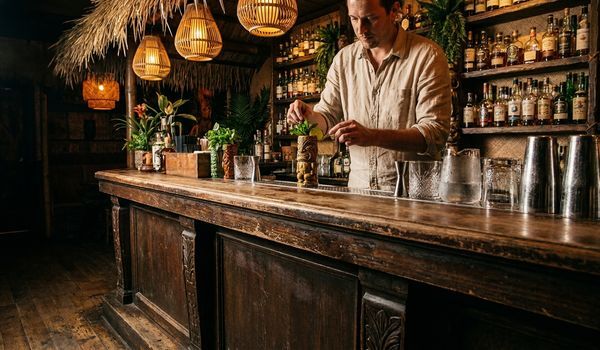
What makes tiki bar financing slightly different from generic bar financing is the cost profile of the concept itself. A tiki bar is an experience business. Guests are not just paying for drinks; they are paying for an environment. That environment requires carved wood and bamboo finishes, thatch and nautical details, specialty lighting, custom glassware and mugs, water features or fire elements in some markets, and a deep rum and spirits library that most neighborhood bars never approach. Lenders who understand hospitality concepts recognize these as legitimate, revenue-driving business expenses, and many financing products can be structured specifically around them.
Owners typically use tiki bar financing for one of four purposes: opening a new location, renovating or re-theming an existing bar, expanding into a larger space or second concept, or smoothing out cash flow during seasonal ramps. Each purpose maps to a different type of funding, which is why understanding your options before you apply matters so much.
Key Benefits of Tiki Bar Financing
Using outside capital instead of personal savings changes the math of opening a bar in several important ways:
- Preserve your cash reserves. Bars live and die by their cash cushion. Financing the buildout and equipment lets you keep working capital on hand for payroll, inventory, and the unexpected expenses that always show up in the first year.
- Match payments to the life of the asset. A refrigeration system or draft tower will serve your bar for years. Spreading its cost over a multi-year term means the equipment effectively pays for itself out of the revenue it supports.
- Move faster on opportunities. Prime bar locations do not stay available long. With pre-qualified financing, you can sign a lease and start a buildout while other operators are still raising money.
- Build business credit. Successfully repaying financing establishes your bar's credit profile, which unlocks better terms on future funding as you grow.
- Handle seasonality. Many tiki bars operate in beach towns, resort markets, or tourist districts with strong high seasons and slow off seasons. Working capital financing smooths those cycles so you are not making painful cuts every winter.
- Fund the experience, not just the basics. The decor, glassware, and rum program are what make a tiki bar a tiki bar. Financing lets you do the concept justice instead of opening with a watered-down version of your vision.
How Tiki Bar Financing Works
The mechanics of bar financing are straightforward once you see the full sequence. Here is the process most owners follow from first estimate to funded account.
Step 1: Define Your Project and Your Number
Start with a realistic project budget. If you are opening a new tiki bar, that means your lease deposit, buildout, decor, equipment, initial inventory, licensing, and at least three to six months of operating reserves. If you are expanding or renovating, scope the specific work and get contractor bids. Lenders will ask what the money is for, and a clear, itemized answer signals that you are a serious operator.
Step 2: Match the Product to the Purpose
Different expenses call for different financing structures. Long-life assets like equipment belong on longer terms. Inventory and payroll belong on shorter, more flexible facilities. We break down each product type in the next section so you can match your needs correctly.
Step 3: Gather Your Documents
Most lenders want to see three to six months of business bank statements (or personal statements for a new venture), a government-issued ID, your lease or letter of intent, and basic information about your business entity. Larger requests may also call for tax returns, financial projections, or a business plan. Having these ready before you apply can cut days off the process.
Step 4: Apply and Get Underwritten
Online applications through lenders like Crestmont Capital take minutes. Underwriters then review your credit profile, cash flow, hospitality experience, and the strength of the concept. For bars, lenders pay close attention to location quality, your operating plan, and whether your projected revenue realistically covers the payment.
Step 5: Review Your Offer
If approved, you will receive an offer spelling out the amount, term, rate or factor, and payment schedule. Read it carefully. The cheapest-looking option is not always the best fit; a slightly higher cost with a payment structure that matches your seasonal revenue can be the smarter choice.
Step 6: Funding and Repayment
Depending on the product, funding can arrive in as little as 24 to 72 hours for term loans and working capital, or take several weeks for SBA-backed options. Repayment typically comes directly out of your business account on a daily, weekly, or monthly schedule, aligned with how your bar actually collects revenue.
Ready to Fund Your Tiki Bar Concept?
Get pre-qualified in minutes. No impact to your credit score, no obligation.
Apply Now - It Is FreeTypes of Tiki Bar Financing
There is no single best loan for every tiki bar. The right structure depends on what you are funding, how fast you need it, and how your revenue flows. Here are the main options owners use, with guidance on when each one fits.
Term Loans
A traditional term loan delivers a lump sum upfront that you repay over a fixed period, usually one to ten years. This is the workhorse for big, one-time projects: a full buildout, a major renovation, or the purchase of an existing bar. Term loans offer predictable payments and, for qualified borrowers, some of the lowest total costs available. If you know exactly how much your tiki bar project will cost, a term loan is often the cleanest way to fund it.
Equipment Financing
Bar equipment financing covers the physical assets your tiki bar runs on: draft systems, refrigeration, ice machines, glass washers, blenders for those frozen classics, POS systems, and even furniture and themed fixtures in many cases. Because the equipment itself serves as collateral, approvals are often easier and rates lower than unsecured options, and terms can run three to seven years to match the useful life of the gear. For many tiki bar owners, equipment financing is the single most useful tool in the stack, since buildout and equipment can represent a third or more of total startup costs. Crestmont Capital's equipment financing programs are built for exactly this kind of purchase.
Business Line of Credit
A business line of credit works like a credit card with a much higher limit and better pricing: you draw what you need, when you need it, and only pay for what you use. For tiki bars, lines of credit shine for ongoing needs like inventory restocking, small repairs, marketing pushes, and covering payroll during slow stretches. Once repaid, the credit becomes available again, which makes it a permanent financial safety net for your bar.
Working Capital Loans
Working capital loans are short-term facilities designed to cover operating expenses rather than assets. They fund quickly, often within days, and are commonly used for opening inventory, initial marketing, licensing fees, and bridging the gap between opening day and steady profitability. If your tiki bar is in a seasonal market, a working capital loan timed before the high season can fund the inventory ramp that makes the season pay off.
SBA Loans
Loans backed by the U.S. Small Business Administration offer some of the lowest rates and longest terms in small business lending, and bars and restaurants are eligible borrowers. The tradeoff is speed and paperwork: SBA loans can take weeks to months and require extensive documentation. For a large tiki bar project where timing is flexible, the SBA's loan programs are worth exploring. For time-sensitive deals, most owners pair faster private financing with a plan to refinance into an SBA loan later.
Revenue-Based Financing
With revenue-based financing, repayment flexes with your sales: you remit a fixed percentage of revenue, so payments rise in your busy months and shrink in slow ones. For tiki bars with strong seasonality, this structure can be easier on cash flow than a rigid monthly payment, though the total cost is often higher than a traditional term loan.
Commercial Real Estate Financing
If you are buying your building instead of leasing, commercial real estate financing becomes part of the conversation. Owning your space protects your tiki bar from rent spikes and lease non-renewals, which matters for a concept that invests heavily in permanent themed buildouts. These loans involve larger amounts, longer terms, and more underwriting, but they convert your biggest operating expense into equity.
How Much Does It Cost to Open a Tiki Bar?
The cost to open a bar varies enormously by market, size, and concept, but tiki bars consistently land on the higher end of the bar spectrum for one simple reason: the theme is the product. A generic neighborhood bar can open with paint and a few TVs. A tiki bar cannot. Guests expect to walk into another world, and building that world costs money.
Here is how bar startup costs typically break down for a tiki concept:
- Lease and deposits: First and last month plus security deposit, typically $10,000 to $50,000 depending on market and square footage.
- Themed buildout and decor: This is where tiki bars differ from every other concept. Carved tikis, bamboo cladding, thatch, rope and nautical rigging, vintage lighting, water or fire features, and custom millwork commonly run $75,000 to $300,000 or more. High-end immersive builds can exceed that.
- Bar equipment: Draft systems, refrigeration, ice machines (tiki programs go through staggering amounts of ice), glass washers, blenders, and back bar fittings typically total $40,000 to $120,000.
- Kitchen equipment: If you serve food, add $30,000 to $150,000 depending on the menu's ambition.
- Initial inventory: A serious tiki program needs a deep rum library, fresh juices, syrups, and specialty ingredients, plus custom mugs and glassware. Budget $15,000 to $40,000 to open properly stocked.
- Liquor license and permits: The wildcard. Depending on your state and municipality, a liquor license can cost a few hundred dollars or several hundred thousand dollars in quota-limited markets.
- Technology: POS system, sound system, security, and reservation or waitlist software, usually $5,000 to $25,000.
- Launch marketing: Grand opening events, PR, social media, and local advertising, typically $5,000 to $20,000.
- Working capital reserve: Three to six months of rent, payroll, and utilities set aside before opening, often $50,000 to $200,000.
All told, most tiki bar openings land between $250,000 and $750,000, with smaller takeover conversions sometimes coming in under $150,000 and flagship builds in major markets exceeding $1 million. The SBA's startup cost worksheet is a useful framework for building your own estimate line by line.
Tiki Bar Startup Costs: By the Numbers
$250K-$750K
Typical total cost to open a tiki bar
30%+
Share of budget that decor and buildout can consume
24-72 hrs
Funding speed for many term and working capital loans
3-6 months
Operating reserves most lenders want to see budgeted
Pro Tip: Start your liquor license application before you sign a lease or at the latest the day you sign it. In many states the license is the longest pole in the tent, and every month of delay is a month of rent paid on a bar that cannot open. Build the license timeline into your financing plan so your reserves cover the wait.
Who Qualifies for Tiki Bar Financing?
Bar financing is more accessible than many owners expect. While every lender weighs applications differently, most evaluate the same core factors.
Credit Profile
For the best rates and largest amounts, lenders generally look for personal credit scores of 650 or higher, with the strongest pricing reserved for 700 and above. That said, options exist across the credit spectrum. Equipment financing and revenue-based products are often available to owners with scores in the 550 to 650 range, because the collateral or the revenue stream itself reduces the lender's risk.
Time in Business and Experience
Existing bars with at least six to twelve months of operating history and verifiable revenue have the widest menu of options, since lenders can underwrite actual cash flow. New concepts are underwritten differently: lenders look at your hospitality resume, the strength of your business plan, your personal financial position, and how much of your own capital you are investing. A first-time owner with a decade of bar management experience and a detailed plan is a far stronger applicant than a first-time owner with neither.
Revenue and Cash Flow
For operating bars, most lenders want to see monthly revenue of at least $10,000 to $15,000 for smaller facilities, scaling up with the amount requested. Underwriters are essentially asking one question: does this bar generate enough cash to comfortably make the payment with room to spare?
Who Tiki Bar Financing Is Best For
In practice, the owners who benefit most from bar financing fall into four groups: experienced bartenders and managers opening their first concept, existing restaurant and bar owners adding a tiki brand or converting a space, established tiki bars funding a renovation or expansion, and seasonal operators who need capital to bridge slow months. If you recognize yourself in any of those, there is almost certainly a financing structure built for your situation.
Good to Know: You do not need perfect credit or decades of ownership to qualify. Many tiki bar owners are approved with credit scores in the low 600s when the rest of the file is strong: solid hospitality experience, a good location, a realistic plan, and some of their own money in the deal.
Comparing Your Financing Options
Choosing between financing products gets easier when you see them side by side. The table below compares the options tiki bar owners use most on the factors that matter: how much you can borrow, how fast you can get it, how long you have to repay, and what each product does best.
| Financing Type | Typical Amounts | Funding Speed | Repayment Term | Best Use |
|---|---|---|---|---|
| Term Loan | $25,000 - $500,000+ | 1 - 5 days | 1 - 10 years | Buildouts, renovations, bar purchases |
| Equipment Financing | $10,000 - $500,000 | 2 - 7 days | 3 - 7 years | Bar and kitchen equipment, fixtures |
| Line of Credit | $10,000 - $250,000 | 1 - 7 days | Revolving | Inventory, payroll, ongoing flexibility |
| Working Capital Loan | $10,000 - $250,000 | 24 - 72 hours | 3 - 18 months | Opening inventory, marketing, seasonal ramps |
| SBA Loan | $50,000 - $5,000,000 | 4 - 12 weeks | 7 - 25 years | Large projects, real estate, refinancing |
| Revenue-Based Financing | $10,000 - $500,000 | 1 - 3 days | Flexible, tied to sales | Seasonal bars, fast cash flow needs |
Many successful tiki bar owners combine two or three of these. A common stack for a new opening is a term loan for the buildout, equipment financing for the bar package, and a line of credit that stays in place after opening for inventory and surprises. Stacking products this way lets each dollar do its specific job instead of forcing one loan to cover everything at the wrong term.
How to Apply for Tiki Bar Financing
The application process is faster than most owners expect, especially if you prepare your documents before you start. Here is the walkthrough.
1. Assemble Your Paperwork
For most applications you will need: three to six months of business bank statements (personal statements for a brand-new venture), a voided business check or bank letter, your driver's license, your business entity documents, and your signed lease or letter of intent. Larger requests, and SBA loans in particular, add tax returns, a year-to-date profit and loss statement, a business plan with financial projections, and a source-and-use breakdown showing exactly where the money goes.
2. Know Your Numbers
Be ready to state your requested amount, what it funds, and how the investment produces revenue. "I need $280,000: $160,000 for buildout and decor, $70,000 for equipment, $25,000 for opening inventory, and $25,000 for three months of reserves" is an answer that gets approvals. "I need some money to open a bar" is not.
3. Submit the Application
Online applications through Crestmont Capital take about ten minutes. You will enter basic business information, upload your statements, and authorize a credit review. The initial check is a soft pull at most lenders, so shopping for terms does not damage your score.
4. Talk Through Your Options
A funding specialist will review your file and come back with options, often within hours. This is the moment to ask about payment schedules, prepayment policies, and how the product handles your slow season. A good lender will structure around your reality rather than handing you a generic offer.
5. Accept, Sign, and Get Funded
Once you accept an offer, contracts are signed electronically and funds are wired to your business account. From application to funded account, the whole process runs 24 to 72 hours for many products.
See What Your Tiki Bar Qualifies For
Ten-minute application. Options back within hours, not weeks.
Get My Free QuoteReal-World Tiki Bar Financing Scenarios
Every tiki bar is different, but most funding situations resemble one of these five scenarios. Use them to sanity-check your own plan.
Scenario 1: The Career Bartender Opening a First Concept
Marcus spent twelve years managing high-volume cocktail bars and built a loyal following. He found a 2,400-square-foot space in a walkable downtown district and budgeted $290,000 to open his tiki bar: $170,000 for the immersive buildout, $65,000 for equipment, $20,000 for opening inventory, and $35,000 in reserves. With a 680 credit score and $40,000 of his own savings invested, he paired a $200,000 term loan with $65,000 in equipment financing and a $25,000 line of credit. His payments are sized to be covered even at conservative revenue projections, and the line of credit gives him breathing room while the bar builds its reputation.
Scenario 2: The Restaurant Group Adding a Tiki Concept
A group operating three successful restaurants decided to convert an underperforming seafood spot into a tiki bar. Because the entity had three years of strong financials, it qualified for a $350,000 term loan at favorable pricing to fund the full re-theme: new bar, decor package, sound and lighting, and a refreshed kitchen. The group's track record turned a concept change that would have been difficult for a first-time owner into a straightforward approval.
Scenario 3: The Established Tiki Bar Renovating After Five Years
Dana's tiki bar was profitable but showing its age, and guests were starting to comment on worn thatch and dated seating. Rather than draining the operating account, she used $85,000 in equipment financing to replace the draft system, ice machines, and furniture, plus a $40,000 working capital loan to fund a two-week closure for the refresh and a relaunch marketing push. Revenue rose 22% in the quarter after reopening, comfortably covering the new payments.
Scenario 4: The Seasonal Beach-Market Tiki Bar
A tiki bar in a Gulf Coast resort town does 70% of its annual revenue between March and August. Each February, the owners draw on a $100,000 line of credit to rebuild inventory, rehire and train staff, and fund spring marketing. They repay the line through the high season and carry a zero balance all winter. The financing costs them a few thousand dollars a year and makes the season's profits possible.
Scenario 5: Buying an Existing Bar and Converting It
Two partners bought a struggling neighborhood bar for $180,000 with a plan to reopen it as a tiki concept. A $150,000 term loan covered most of the purchase price, their combined savings covered the rest, and a separate $120,000 equipment financing and working capital package funded the conversion and reopening. Because they bought an existing licensed premise, the liquor license transferred with the sale, saving them the longest delay most new bars face.
Did You Know: The experience economy keeps rewarding bars that offer something guests cannot replicate at home. Industry coverage on CNBC's small business desk has tracked how themed hospitality concepts command premium pricing and stronger repeat visits than generic venues, which is exactly the wager a tiki bar makes. A well-executed theme is not a luxury; it is the revenue engine.
How Crestmont Capital Helps Tiki Bar Owners
Crestmont Capital has funded small businesses across the United States since 2015, and hospitality concepts are a core specialty. As the top-rated business lender in the country, Crestmont understands that a tiki bar's decor budget is not decoration; it is the product itself, and underwrites it that way.
Here is what working with Crestmont looks like for a tiki bar owner:
- One application, multiple products. A single ten-minute application puts your file in front of specialists who structure term loans, equipment financing, business lines of credit, and working capital solutions into one coherent package.
- Speed that matches real estate reality. When your dream corner location comes available, you cannot wait eight weeks for a bank committee. Crestmont funds many deals in 24 to 72 hours.
- Hospitality-friendly underwriting. Seasonal revenue, buildout-heavy budgets, and first-time owners with deep industry resumes are normal here, not red flags.
- A human on the phone. You will work with a funding specialist who understands bar economics and can structure payments around your slow season.
Crestmont has also published detailed financing guides for neighboring bar concepts. If your plans involve a different theme, our speakeasy bar financing guide covers the prohibition-style niche, and our sports bar financing guide walks through that format's unique cost profile. The fundamentals in this guide apply across all of them.
Your Tiki Bar Deserves a Real Launch
Join thousands of business owners who chose Crestmont Capital for fast, flexible funding.
Apply Now - Get Funded FastNext Steps
If you are serious about opening or expanding a tiki bar, here is the sequence we recommend, condensed into five moves you can start this week.
Build your real budget
Itemize your buildout, equipment, inventory, licensing, and reserves using the cost ranges in this guide. Lenders approve specific plans, not rough guesses.
Check your credit position
Pull your credit reports, fix any errors, and note your scores. Knowing where you stand tells you which products to target first.
Gather your documents
Collect bank statements, entity documents, and your lease paperwork now. Organized applicants fund days faster.
Apply and compare your options
Submit one application with Crestmont Capital and review the structures you qualify for. Compare total cost, payment rhythm, and fit for your seasonality.
Fund, build, and open strong
Put the capital to work exactly as planned, protect your reserves, and give your tiki bar the launch its concept deserves.
The Bottom Line on Tiki Bar Financing
A great tiki bar is one of the most memorable concepts in hospitality, and one of the most capital-intensive to build correctly. Tiki bar financing exists to bridge that gap: it lets you fund the immersive buildout, the equipment package, the deep rum library, and the operating reserves your concept needs without emptying your personal accounts or opening undercapitalized.
The owners who succeed treat financing as a tool rather than a last resort. They match each expense to the right product, keep payments comfortable at conservative revenue levels, and protect their cash cushion through the critical first year. Whether you are a career bartender with a vision, a restaurant group adding a concept, or an established tiki bar ready to grow, the funding structures in this guide can get you there. When you are ready to see real numbers for your project, the Crestmont Capital team is ready to build them with you.
Frequently Asked Questions
What is tiki bar financing? +
Tiki bar financing is an umbrella term for the business funding products owners use to open, expand, renovate, or operate a tiki bar or tropical-themed bar. It is not a single loan. Depending on your project, it can include term loans, equipment financing, business lines of credit, working capital loans, SBA loans, or revenue-based financing, each matched to a specific expense like buildout, equipment, inventory, or seasonal cash flow.
How much does it cost to open a tiki bar? +
Most tiki bar openings cost between $250,000 and $750,000, driven by the immersive themed buildout that defines the concept. Smaller conversions of existing bars can come in near $150,000, while flagship builds in major markets can exceed $1 million. The largest line items are usually the decor and buildout, bar equipment, the liquor license, and three to six months of operating reserves.
Can I get tiki bar financing with bad credit? +
Yes, options exist across the credit spectrum. While the best pricing goes to borrowers with scores above 700, equipment financing and revenue-based products are frequently approved for owners with scores in the 550 to 650 range, because the equipment or the bar's revenue stream reduces the lender's risk. Expect higher costs at lower scores, and consider pairing financing with a strong down payment or a co-signer.
Do I need bar industry experience to qualify? +
Experience is not a strict requirement, but it materially improves your approval odds and terms, especially for a first-time concept. Lenders view a decade of bar management as a genuine asset. If you lack direct experience, strengthen your file by hiring an experienced general manager, partnering with a hospitality veteran, and presenting a detailed, conservative business plan.
How fast can I get tiki bar financing? +
Working capital loans and many term loans fund within 24 to 72 hours of approval. Equipment financing typically takes two to seven days, and lines of credit one to seven days. SBA loans are the slow lane at four to twelve weeks, which is why many owners use fast private funding to secure a location and open, then refinance into an SBA loan afterward.
What can tiki bar financing be used for? +
Virtually any legitimate business expense: lease deposits, themed buildout and decor, bar and kitchen equipment, opening inventory, liquor license and permit fees, furniture and fixtures, POS and sound systems, launch marketing, payroll during ramp-up, and working capital reserves. Lenders will ask for a breakdown, so map each dollar to a category before you apply.
Are SBA loans a good option for tiki bars? +
SBA loans offer some of the lowest rates and longest terms available, and bars are eligible borrowers. The tradeoff is a heavy documentation load and a timeline of weeks to months. They work best for large projects with flexible timing, such as buying a building or funding a flagship build, and as refinance vehicles for owners who opened with faster, more expensive capital.
What credit score do I need for bar financing? +
For premium rates and the largest amounts, aim for 700 or higher. Most mainstream approvals happen in the 650 to 700 range. Between 550 and 650, equipment financing and revenue-based products remain realistic, especially with strong revenue, a solid down payment, or substantial hospitality experience. Below 550, options narrow significantly and costs rise.
Can I finance the themed decor and buildout costs? +
Yes. Lenders who work with hospitality concepts understand that a tiki bar's decor is a revenue-producing asset, not a luxury. Buildout and decor costs are typically funded through term loans, while fixtures, furniture, and themed millwork can often be included in equipment financing packages. Be prepared to share contractor bids and a design plan for larger buildout requests.
What documents do I need to apply? +
For most applications: three to six months of bank statements, a government-issued ID, your business entity documents, and your lease or letter of intent. Larger requests add tax returns, a profit and loss statement, financial projections, and a business plan with a source-and-use breakdown. Having everything scanned and ready before you apply can cut days off your funding timeline.
Can I finance bar equipment for my tiki bar? +
Absolutely, and you should. Equipment financing covers draft systems, refrigeration, ice machines, glass washers, blenders, POS systems, and often furniture and fixtures, with the equipment itself serving as collateral. That structure usually means easier approvals, lower rates, and terms of three to seven years that match the equipment's useful life, keeping your cash free for operations.
How much can I borrow to open a tiki bar? +
Most tiki bar owners borrow between $100,000 and $500,000 across one or more products, matching the $250,000 to $750,000 typical cost of opening. Your approval amount depends on credit, revenue or projections, experience, and how much of your own capital you are contributing. Stacking a term loan, equipment financing, and a line of credit is a common way to reach the full project budget.
Will applying for financing hurt my credit score? +
Initial applications at most modern lenders, including Crestmont Capital, use a soft credit pull that does not affect your score, so you can see your options without damage. A hard inquiry typically happens only when you accept an offer and proceed to contracts, which may trim a few points temporarily. That small dip is usually far outweighed by the credit-building benefit of successful repayment.
Can I get financing to buy an existing tiki bar? +
Yes. Acquiring an existing bar is a common and often attractive path, since the purchase comes with an operating history, an existing customer base, and frequently a transferable liquor license. Term loans and SBA loans are the usual structures for acquisitions. Lenders will underwrite both you and the business being purchased, so expect to provide the seller's financials alongside your own.
What repayment terms are typical for bar loans? +
Terms range widely by product: three to eighteen months for working capital, three to seven years for equipment financing, one to ten years for term loans, and seven to twenty-five years for SBA products. Payments may be daily, weekly, or monthly depending on the structure. The right term matches the life of what you are funding and the rhythm of your bar's cash flow.
Disclaimer: The information provided in this article is for general educational purposes only and is not financial, legal, or tax advice. Funding terms, qualifications, and product availability may vary and are subject to change without notice. Crestmont Capital does not guarantee approval, rates, or specific outcomes. For personalized information about your business funding options, contact our team directly.

Allan Garfinkle
Allan Garfinkle is the Chief Revenue Officer at Crestmont Capital, where he has spent more than a decade leading revenue strategy, business development, and operational growth. With 28 years of experience building and advising startups and small businesses, Allan has helped more than 10,000 business owners navigate financing decisions, growth opportunities, and changing economic conditions. He earned a Bachelor of Science in Economics and an MBA with a concentration in Finance from Northeastern University, as well as a Juris Doctor from New England Law, where his studies focused on contracts and business law. His writing draws on extensive practical experience in small-business lending, equipment financing, business credit, and commercial finance.