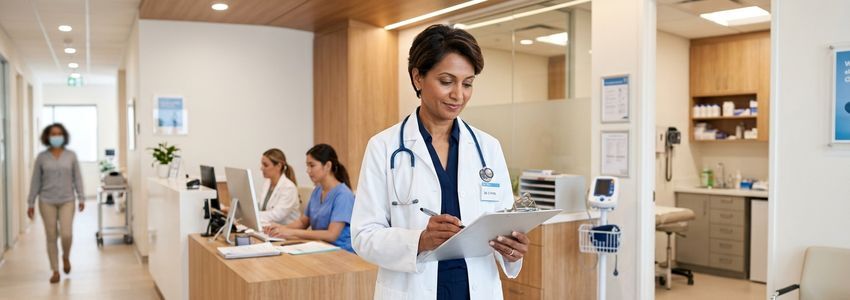
Occupational medicine clinics serve as the backbone of workplace health in the United States, providing injury treatment, pre-employment physicals, drug testing, and preventive care to employees across virtually every industry. Running a successful occupational medicine clinic requires more than clinical expertise - it demands significant capital investment in diagnostic equipment, staffing, and facility operations. Whether you are opening a new clinic, adding a second location, or upgrading equipment to stay competitive, an occupational medicine clinic business loan gives you the financial foundation to grow and serve your employer clients effectively.
In This Article
- What Is an Occupational Medicine Clinic Business Loan?
- Key Benefits of Financing Your Clinic
- How Occupational Medicine Clinic Financing Works
- Types of Business Loans Available
- How Crestmont Capital Helps
- Who Qualifies?
- Comparing Your Financing Options
- Real-World Scenarios
- Frequently Asked Questions
- How to Get Started
What Is an Occupational Medicine Clinic Business Loan?
An occupational medicine clinic business loan is a financing product specifically used by workplace health center owners and operators to fund the operational and growth needs of their practice. Unlike general purpose small business loans, these loans are often structured around the unique revenue model of occupational medicine - which includes employer-contracted services, workers' compensation billing, third-party payer relationships, and often a mix of recurring and episodic income streams.
Occupational medicine clinics, also known as workplace health centers or employee health clinics, generate revenue primarily through employer contracts, insurance reimbursements, and direct billing for services such as injury evaluation and treatment, OSHA-mandated physicals, DOT exams, audiometric testing, and drug and alcohol screening. This revenue model, while steady, often involves delayed reimbursement cycles that create cash flow gaps - exactly where business financing becomes critical.
Business loans for occupational medicine clinics can range from $25,000 to $5 million or more, depending on the lender and the specific use of funds. Loan proceeds are commonly used for purchasing or leasing diagnostic equipment, expanding clinic space, hiring physicians and mid-level providers, investing in electronic health record (EHR) systems, and bridging short-term cash flow shortfalls between service delivery and insurance payment.
Industry Snapshot: According to the U.S. Bureau of Labor Statistics, workplace injuries and illnesses account for millions of cases each year, driving consistent demand for occupational medicine services regardless of broader economic cycles. This makes occupational health clinics a resilient and bankable business model for lenders.
Key Benefits of Financing Your Occupational Medicine Clinic
Access to capital at the right time can determine whether your clinic captures new employer contracts, expands into an underserved market, or loses business to a competitor who can offer more comprehensive services. The right financing package transforms strategic plans into operational reality.
Here are the core benefits of securing an occupational medicine clinic business loan:
- Preserve working capital: Finance major purchases without depleting the cash reserves you need for day-to-day operations, payroll, and unexpected expenses.
- Accelerate equipment upgrades: Invest in the latest digital X-ray systems, audiometric booths, pulmonary function testing equipment, and point-of-care diagnostics without large upfront capital outlays.
- Win larger employer contracts: Many large employers require clinic partners to offer a full spectrum of services. Financing allows you to build out capabilities quickly and compete for higher-value contracts.
- Bridge billing gaps: Insurance reimbursements and workers' compensation payments can take 30 to 90 days. A working capital loan or line of credit smooths these gaps without disrupting operations.
- Fund location expansion: Open additional clinic sites, satellite locations near industrial parks, or mobile clinic units to serve employer clients across multiple worksites.
- Invest in technology: EHR systems, telehealth platforms, and digital case management tools are essential for modern occupational medicine programs but require significant upfront investment.
- Hire and retain physicians: Attracting qualified occupational medicine physicians and nurse practitioners in a competitive labor market often requires signing bonuses, relocation assistance, and robust compensation packages.
Ready to Finance Your Occupational Medicine Clinic?
Crestmont Capital offers fast, flexible financing for healthcare and occupational health businesses. Apply in minutes - no obligation.
Apply Now →How Occupational Medicine Clinic Financing Works
The process of obtaining a business loan for your occupational medicine clinic follows a structured path from application to funding. Understanding each stage helps you prepare the right documentation and set realistic expectations for approval timelines.
Step 1: Assess Your Financing Needs
Start by identifying exactly what you need the funds for and how much capital is required. Equipment purchases, facility buildouts, staffing costs, and working capital needs all carry different financing structures. A clear picture of your funding needs allows lenders to match you with the right product.
Step 2: Gather Your Financial Documentation
Lenders will typically request recent bank statements, tax returns, accounts receivable aging reports, employer contract summaries, and a basic overview of your clinic's revenue mix. Occupational medicine clinics with strong employer contract pipelines and consistent billing volumes are viewed favorably by underwriters.
Step 3: Choose the Right Loan Product
Not all business loans work the same way. Term loans provide lump-sum funding ideal for equipment or expansion. Lines of credit offer revolving access to capital for cash flow management. SBA loans provide longer terms and lower rates for qualifying clinics. Revenue-based financing ties repayment to your actual collections - a useful structure for clinics with variable billing cycles.
Step 4: Submit Your Application and Receive Offers
Modern business lenders like Crestmont Capital can often deliver a funding decision within 24 to 48 hours of receiving a completed application. Unlike traditional bank loans that may take weeks or months, alternative lenders specialize in fast turnarounds without sacrificing competitive rates.
Step 5: Review Terms and Accept Funding
Once approved, review the loan agreement carefully - including interest rate (or factor rate for MCAs), repayment term, payment frequency, and any prepayment options. Once you accept, funds are typically deposited within 1 to 5 business days.
Types of Business Loans for Occupational Medicine Clinics
The business lending market offers several distinct financing products that occupational medicine clinic owners can leverage. Each has specific advantages depending on your clinic's stage, revenue profile, and intended use of funds.
Term Loans
A traditional term loan provides a lump sum of capital repaid over a fixed period - typically 1 to 10 years - with regular payments. Term loans are well-suited for defined capital investments like equipment, leasehold improvements, or a practice acquisition. Rates vary based on your credit profile and the lender.
SBA 7(a) Loans
The SBA 7(a) loan program is one of the most attractive financing options for established occupational medicine clinics. With loan amounts up to $5 million, repayment terms up to 10 years for working capital (25 years for real estate), and government-backed guarantees that reduce lender risk, SBA loans offer competitive rates that can significantly lower your borrowing costs. The tradeoff is a more intensive documentation and underwriting process.
Business Line of Credit
A revolving line of credit gives your clinic on-demand access to capital up to a preset limit. Draw funds when needed, repay as your cash flow allows, and draw again. Lines of credit are ideal for managing the timing gaps between service delivery and insurance reimbursement - one of the most common cash flow challenges in occupational medicine.
Equipment Financing
Equipment-specific loans allow you to finance diagnostic and clinical equipment using the equipment itself as collateral. This structure typically offers favorable rates and terms because lenders have a tangible asset securing the loan. Common purchases include digital X-ray units, spirometry equipment, audiometric testing systems, and occupational health software platforms.
Working Capital Loans
Unsecured working capital loans provide fast access to funds without requiring collateral. These are commonly used to cover payroll, operational overhead, and supply costs during high-volume periods or when reimbursement timing creates a temporary cash gap.
Revenue-Based Financing
Revenue-based financing ties repayment to a percentage of your daily or weekly collections. Payments rise during high-revenue periods and decrease when collections slow - a naturally flexible structure for clinics with variable billing volume.
By the Numbers
Occupational Medicine Clinic Financing - Key Statistics
$5M+
Maximum SBA loan amount for qualifying clinics
24 Hrs
Typical approval time with alternative lenders
90 Days
Average workers' comp reimbursement cycle creating cash flow gaps
33M+
U.S. small businesses that depend on access to capital for growth
How Crestmont Capital Helps Occupational Medicine Clinics
Crestmont Capital has built its reputation as the #1 business lender in the United States by doing what banks often cannot - moving quickly, thinking flexibly, and treating every business owner as an individual rather than a credit score. For occupational medicine clinic owners, this translates into tailored financing solutions that match the specific economics of your practice.
Unlike traditional lenders who may struggle to understand the nuances of employer-contract revenue, third-party billing cycles, and the capital intensity of diagnostic equipment, Crestmont Capital works with healthcare businesses regularly. Our team understands how occupational medicine clinics generate revenue, what the typical reimbursement timeline looks like, and why a clinic showing strong employer contracts may need capital even when cash on hand is temporarily constrained.
Our small business loan programs are available to occupational medicine clinics in all 50 states. Whether you need a SBA loan for long-term clinic expansion, a business line of credit to manage billing gaps, or equipment financing for your next diagnostic system, Crestmont Capital can match you with the right product in as little as 24 hours.
For clinic owners who have previously explored financing for their medical practice, our related guide on business loans for medical practices provides additional context on how healthcare providers can structure their financing strategy. We also offer specialized medical equipment financing for clinics investing in clinical technology.
Grow Your Occupational Medicine Practice Today
From equipment financing to working capital - Crestmont Capital has the funding you need. Decisions in as little as 24 hours.
Get Funded →Who Qualifies for an Occupational Medicine Clinic Business Loan?
Qualification requirements for occupational medicine clinic business loans vary depending on the lender type and loan product. Here is a realistic overview of what most lenders look for.
Time in Business: Most lenders require at least 6 to 12 months of operating history for working capital products, and 2 or more years for SBA and conventional bank loans. Brand-new clinics may qualify for equipment financing or startup-oriented products with higher equity injection requirements.
Annual Revenue: Traditional term loans and SBA products typically require annual revenue of $150,000 or more. Alternative lenders may work with clinics generating as little as $75,000 to $100,000 per year, especially when employer contracts provide consistent and documented revenue.
Credit Profile: Personal credit scores of 650 or above are generally required for competitive rates. Alternative lenders may approve clinics with scores as low as 500 to 550, though with higher rates and shorter terms. Business credit history is also a positive factor for established clinics.
Cash Flow and Profitability: Lenders look for evidence that your clinic generates sufficient cash flow to service the proposed debt. Bank statements showing consistent monthly deposits, low NSF incidents, and reasonable account balances are important. Clinics with strong employer contracts are generally viewed favorably even during cyclical slow periods.
Industry and Business Type: Occupational medicine clinics are generally viewed positively by business lenders due to the stable, recurring nature of employer contracts and the essential nature of workplace health services. Lenders familiar with healthcare revenue cycles tend to be the best fit.
Good to Know: The SBA loan program is available to occupational medicine clinics that meet size standards for the healthcare industry. Clinics that do not qualify on their own may be able to access SBA funds through a Certified Development Company (CDC) or an SBA-approved lender.
Comparing Occupational Medicine Clinic Financing Options
Choosing the right loan product depends on your specific situation. The table below summarizes the key differences between the most common financing options for occupational medicine clinics.
| Loan Type | Best For | Loan Amount | Speed |
|---|---|---|---|
| Term Loan | Equipment, expansion, buildout | $25K - $2M+ | 1-5 days |
| SBA 7(a) Loan | Long-term growth, real estate | Up to $5M | 2-8 weeks |
| Line of Credit | Cash flow gaps, billing cycles | $10K - $500K | 1-3 days |
| Equipment Financing | Diagnostic equipment purchases | $10K - $1M+ | 1-3 days |
| Working Capital Loan | Payroll, overhead, supplies | $10K - $500K | Same day |
| Revenue-Based Financing | Variable billing months | $10K - $250K | 1-2 days |
According to CNBC's small business financing coverage, business owners who compare multiple lending options before committing consistently secure better rates and more favorable terms. Taking the time to understand each product type - and how it maps to your clinic's specific cash flow patterns - is worth the effort.
Real-World Scenarios for Occupational Medicine Clinic Owners
To bring the numbers to life, here are six realistic scenarios that illustrate how occupational medicine clinic owners are using business financing to solve everyday challenges and capitalize on growth opportunities.
Scenario 1: Purchasing a Digital X-Ray System
A mid-sized occupational medicine clinic in the Midwest has been sending patients to a radiology center down the street for imaging. The referral process delays return-to-work clearances and frustrates employer clients who expect same-day results. The owner uses a $150,000 equipment financing loan to purchase a digital X-ray system, reducing imaging turnaround from days to hours and landing two new employer contracts within six months.
Scenario 2: Bridging a Workers' Comp Billing Gap
A workplace health center in Texas services three large manufacturing employers, generating strong monthly revenue. A state workers' compensation payer slows reimbursements by 60 days due to an administrative backlog. The clinic owner draws $80,000 from an established working capital line of credit to cover payroll and vendor payments during the delay, repaying when reimbursements clear.
Scenario 3: Opening a Second Clinic Near a New Industrial Park
A successful occupational medicine clinic operator in the Southeast learns that a large auto parts manufacturer is building a new plant nearby that will employ 1,200 workers. She uses a $425,000 term loan to lease and outfit a 3,000 square foot clinic near the site, staffing it in time to sign an exclusive employer health services agreement before the plant opens.
Scenario 4: Implementing a New EHR System
An occupational health clinic transitions from paper-based records to a specialized occupational medicine EHR platform. The $65,000 software implementation, hardware, and training costs are financed through a working capital loan, allowing the clinic to modernize without disrupting cash reserves.
Scenario 5: Acquiring an Existing Occupational Medicine Practice
A physician with 12 years of occupational medicine experience identifies a retiring colleague's established clinic - complete with employer contracts, trained staff, and a physical therapy suite - as an acquisition opportunity. A combination of an SBA 7(a) loan and a smaller term loan provides $1.2 million in acquisition financing, allowing the buyer to step into a revenue-generating operation from day one.
Scenario 6: Adding Mobile Clinic Capabilities
A clinic owner in a rural agricultural region recognizes that reaching seasonal farm workers requires bringing services to the worksite rather than waiting for patients to travel. A $90,000 equipment and vehicle loan funds a fully equipped mobile clinic unit, opening a new service line that generates $18,000 per month in employer-contracted revenue.
As Forbes reports, small business owners who use financing strategically - rather than only as a last resort - tend to invest in growth opportunities earlier and build more competitive businesses over time. Occupational medicine is no exception.
Frequently Asked Questions
What is the minimum credit score required for an occupational medicine clinic business loan?
Most alternative lenders require a minimum personal credit score of 550 to 600. SBA loans and conventional bank products typically require 650 or above. A stronger credit score generally translates to lower interest rates and better loan terms.
How long does it take to get approved for a clinic business loan?
Alternative lenders can deliver approvals in as little as 24 to 48 hours. SBA loans take longer - typically 2 to 8 weeks depending on the lender and loan complexity. If speed matters, alternative financing from a lender like Crestmont Capital is the fastest path to funding.
Can I get a business loan to buy an existing occupational medicine clinic?
Yes. Practice acquisition financing is available through SBA 7(a) loans, conventional term loans, and in some cases, seller financing combined with a third-party loan. Acquisitions require more documentation including the practice valuation, financial statements from the target clinic, and a purchase agreement.
What documents do I need to apply for a business loan?
Most lenders require 3 to 6 months of business bank statements, your most recent 1 to 2 years of business tax returns, basic personal identification, and a completed application. For larger loans, lenders may also request a profit and loss statement, balance sheet, and accounts receivable aging report.
How much can I borrow for my occupational medicine clinic?
Loan amounts range from $10,000 for small working capital needs to $5 million or more through SBA programs. The amount you can borrow depends on your annual revenue, cash flow, credit profile, and the specific lender's underwriting criteria. As a general guideline, lenders often approve loans up to 10 to 20 percent of your annual gross revenue for unsecured products.
Can a new occupational medicine clinic get financing?
New clinics - typically those under 12 months in operation - face more limited options. Equipment financing using the purchased assets as collateral is often accessible. SBA loans have startup provisions in some cases. Clinics with signed employer contracts or letters of intent, physician credentials, and strong personal credit are viewed more favorably by lenders evaluating startup risk.
Is collateral required for an occupational medicine clinic loan?
Not always. Many alternative lenders offer unsecured business loans based primarily on cash flow and revenue. Equipment loans are secured by the equipment itself. SBA and conventional bank loans often require collateral such as business assets or a personal guarantee from the owner. The collateral requirement depends on the lender, loan amount, and your overall credit profile.
Can I use a business loan to hire additional physicians or staff?
Yes. Working capital loans, lines of credit, and general-purpose term loans can be used to cover hiring costs including signing bonuses, recruitment fees, salary advances, and the cost of onboarding new clinical staff. Lenders do not typically restrict how working capital is used within normal business operations.
What interest rates should I expect for a clinic business loan?
Interest rates vary widely depending on the lender type, your credit profile, and loan structure. SBA loans typically carry rates of prime plus 2.25 to 4.75 percent. Conventional bank term loans range from approximately 6 to 12 percent APR. Alternative lenders may charge 12 to 45 percent APR or use factor rates in the range of 1.10 to 1.50 for revenue-based products. Always compare the total cost of capital - not just the stated rate - across multiple offers.
Can I refinance an existing business loan for my clinic?
Yes. Refinancing existing debt is a common use of business loans, especially when a clinic's credit profile has improved since the original loan was issued. Refinancing can lower your interest rate, extend your repayment term to reduce monthly payments, or consolidate multiple loans into a single obligation. Ask your lender specifically about debt refinancing options.
Do I need to be a physician to qualify for an occupational medicine clinic business loan?
No. Business loans are extended to the business entity rather than to an individual professional. Non-physician owners such as business operators, management services organizations (MSOs), and investor groups that own occupational medicine clinics can qualify for business financing just as physician-owners can. What matters to lenders is the financial performance of the business and the creditworthiness of the guarantor.
How does a business line of credit differ from a term loan for my clinic?
A term loan provides a one-time lump sum that is repaid over a fixed schedule - ideal for defined capital investments. A line of credit is revolving: you draw funds as needed up to your approved limit, repay as cash flow allows, and draw again. Lines of credit are better suited for managing recurring cash flow gaps, while term loans are better for large, one-time capital expenditures.
Can I use a business loan to lease clinic space?
Yes. Business loan proceeds can be used to cover lease security deposits, first and last month's rent, and tenant improvement buildouts. If you are opening a new clinic location, a combination of a term loan for buildout costs and a working capital line to cover early operating expenses before revenue ramps up is a common approach.
What happens if my clinic's revenue is seasonal or variable?
Revenue variability is common in occupational medicine clinics that serve seasonal industries such as agriculture, construction, or tourism. Revenue-based financing adjusts repayments automatically based on your actual collections. A business line of credit can also be drawn during slow months and repaid during high-revenue periods. Discuss your revenue patterns openly with your lender to find the most appropriate repayment structure.
How quickly can I receive funding once approved?
With alternative lenders like Crestmont Capital, funding can be deposited into your account as quickly as the same business day after approval for smaller working capital products, or within 1 to 5 business days for larger term loans and equipment financing. SBA loans and traditional bank products take considerably longer due to their underwriting processes.
Apply for Your Occupational Medicine Clinic Loan Today
Fast approvals. Flexible terms. No obligation. Get the capital your workplace health center needs to grow.
Start Your Application →How to Get Started
Complete our quick application at offers.crestmontcapital.com/apply-now. Basic information about your clinic and 3 to 6 months of bank statements is all you need to get started.
A Crestmont Capital advisor will review your clinic's financial profile, discuss your funding goals, and match you with the right loan product and terms for your situation.
Once approved and documents are signed, funds are deposited directly into your business bank account - often within 24 to 48 hours. Put your capital to work immediately.
Conclusion
Occupational medicine clinics play a critical role in keeping America's workforce healthy, safe, and productive. But running and growing a successful workplace health center requires capital - for equipment, staffing, technology, and the operational costs that come with serving employer clients at scale. An occupational medicine clinic business loan gives you the financial flexibility to invest in your clinic's future without waiting for the perfect moment or depleting your operating reserves.
Whether you need to bridge a billing gap, purchase a new diagnostic system, expand to a second location, or acquire an existing practice, the right financing solution is available. According to U.S. Census Bureau data, healthcare businesses that invest in growth capital consistently outperform those that rely solely on reinvested revenue - making strategic borrowing one of the most reliable tools in a clinic owner's growth playbook.
Crestmont Capital has helped thousands of business owners across the country secure fast, flexible financing. If you are ready to take the next step for your occupational medicine clinic, apply today and receive a funding decision in as little as 24 hours. Your clinic's growth starts with one application.
Disclaimer: The information provided in this article is for general educational purposes only and is not financial, legal, or tax advice. Funding terms, qualifications, and product availability may vary and are subject to change without notice. Crestmont Capital does not guarantee approval, rates, or specific outcomes. For personalized information about your business funding options, contact our team directly.