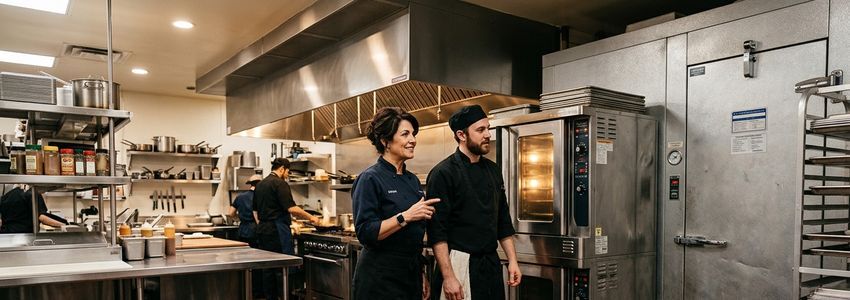
If you have been researching the Fatburger franchise cost and wondering how to fund your entry into this iconic burger brand, you are in the right place. Fatburger has been serving fresh, cooked-to-order burgers since 1952, and with growing consumer demand for quality fast-casual dining, it remains a compelling franchise investment opportunity. In this guide, Crestmont Capital breaks down everything you need to know about Fatburger franchise financing - from total startup costs to loan options, qualification criteria, and real-world funding scenarios.
In This Article
- What Is Fatburger? Brand Overview
- Fatburger Franchise Costs: Investment Breakdown
- Financing Options for Your Fatburger Franchise
- How Crestmont Capital Helps Franchise Investors
- How to Qualify for Franchise Financing
- Real-World Financing Scenarios
- FAQ: Fatburger Franchise Financing
- Next Steps to Fund Your Fatburger Franchise
- Conclusion
What Is Fatburger? Brand Overview
Founded in Los Angeles in 1952 by Lovie Yancey, Fatburger is one of America's most enduring burger chains. The brand built its reputation on fresh, never-frozen beef patties cooked to order - a standard long before the "better burger" trend took off. Today, Fatburger operates hundreds of locations globally, with a strong presence in the western United States and expanding markets across the Middle East, Asia, and Canada.
Fatburger is owned by FAT Brands Inc., a leading restaurant franchising company that also owns brands such as Johnny Rockets, Round Table Pizza, Twin Peaks, and Marble Slab Creamery. This corporate backing provides franchisees with the operational and marketing support of a large multi-brand system - which is a meaningful advantage when seeking franchise financing. Lenders view established franchisors with strong parent companies more favorably than independent startup restaurants.
Fatburger's menu centers on customizable burgers ranging from a single "Baby Fat" to the massive "XXXL" option, complemented by fat fries, onion rings, milkshakes, and turkey burgers. The brand targets customers looking for a step above fast food but at accessible price points, placing it firmly in the competitive fast-casual segment.
Why Fatburger Stands Out: With 70+ years of brand history, backing from FAT Brands Inc., and a globally recognized menu, Fatburger offers franchisees a proven concept with built-in consumer recognition. This brand equity makes it easier to secure franchise financing compared to newer or lesser-known concepts.
By the Numbers
Fatburger Franchise - Key Statistics
1952
Year Founded
300+
Locations Worldwide
$500K+
Typical Startup Investment
FAT Brands
Parent Company (NASDAQ: FAT)
Fatburger Franchise Costs: Investment Breakdown
Understanding the full financial commitment of a Fatburger franchise is essential before approaching any lender. The total investment can vary significantly based on location, build-out type (inline strip mall, end-cap, freestanding), and whether you are converting an existing restaurant or building from scratch. Here is a detailed breakdown of typical costs:
Initial Franchise Fee
Fatburger charges an initial franchise fee, which grants you the right to operate under the brand. For a traditional Fatburger location, the franchise fee typically ranges from $35,000 to $50,000. Multi-unit development agreements may offer some reduction in per-unit fees.
Total Initial Investment Range
The full startup cost for a Fatburger franchise generally falls between $456,000 and $1,200,000, depending heavily on real estate costs and build-out complexity. Here is a typical cost breakdown:
- Leasehold Improvements / Build-Out: $150,000 - $500,000
- Equipment and Fixtures: $80,000 - $200,000
- Signage: $15,000 - $40,000
- Furniture and Decor: $20,000 - $60,000
- Technology and POS Systems: $10,000 - $25,000
- Initial Inventory: $10,000 - $20,000
- Training Expenses: $5,000 - $20,000
- Working Capital (3-6 months): $50,000 - $150,000
- Insurance and Permits: $10,000 - $25,000
- Grand Opening Marketing: $10,000 - $30,000
Ongoing Royalty and Fees
Once operational, franchisees pay ongoing royalties to FAT Brands. Fatburger's royalty fee is approximately 6% of gross sales, plus a marketing/advertising fund contribution of around 1-3% of gross sales. These recurring expenses factor into your cash flow projections, which lenders will examine carefully.
Liquid Capital and Net Worth Requirements
To qualify for a Fatburger franchise directly with the franchisor, you typically need:
- Minimum liquid capital of approximately $200,000
- Minimum net worth of approximately $500,000
These thresholds are set by FAT Brands to ensure franchisees have sufficient financial stability, but they do not eliminate the need for external financing - most franchisees fund a significant portion of their investment with business loans.
Ready to Finance Your Fatburger Franchise?
Get fast, flexible financing from the #1 business lender in the U.S. Apply in minutes.
Apply Now ->Financing Options for Your Fatburger Franchise
The good news for aspiring Fatburger franchisees is that multiple financing paths exist. The right strategy depends on your credit profile, available collateral, time in business, and how quickly you need to move. Below are the most effective loan products to consider:
SBA 7(a) Loans
The U.S. Small Business Administration's flagship loan program - the SBA loans 7(a) program - is one of the most popular franchise financing vehicles available. SBA 7(a) loans offer:
- Loan amounts up to $5 million
- Repayment terms up to 10 years (25 years for real estate)
- Competitive interest rates (currently prime + 2.25% to 4.75%)
- Lower down payment requirements (as low as 10%)
- Franchisor support in the SBA approval process
FAT Brands has worked with SBA lenders in the past, which can simplify the approval process since the franchisor is already familiar with the documentation requirements. According to SBA.gov, franchises on the SBA Franchise Registry often have faster processing times because the franchise agreement has already been reviewed and approved.
SBA 504 Loans
If you plan to purchase real estate or major equipment as part of your Fatburger buildout, the SBA 504 loan program is worth exploring. This program partners with Certified Development Companies (CDCs) to provide long-term, fixed-rate financing for fixed assets. Key features include:
- Up to $5.5 million in SBA-backed funding for equipment and real estate
- Fixed interest rates tied to U.S. Treasury rates
- Repayment terms of 10, 20, or 25 years
- Down payment as low as 10%
Traditional Business Term Loans
Conventional small business loans through banks or alternative lenders can cover both startup and expansion costs. While approval criteria tend to be more stringent than SBA loans (typically requiring 2+ years in business for existing operators), they often close faster than government-backed programs. Loan amounts can range from $50,000 to $2 million+, with terms from 1 to 7 years.
Equipment Financing
A significant portion of your Fatburger startup costs will go toward commercial kitchen equipment - grills, fryers, refrigeration units, POS systems, and prep stations. Equipment financing allows you to fund these purchases specifically, using the equipment itself as collateral. This preserves your working capital for operations and reduces the total unsecured debt load on your balance sheet.
Equipment loans for restaurant startups typically cover 80-100% of the equipment cost, with terms of 3-7 years. Interest rates are generally lower than unsecured loans because the lender has a tangible asset securing the debt.
Business Line of Credit
A business line of credit is a flexible revolving credit facility ideal for managing cash flow fluctuations during your first year of operations. Rather than taking a lump sum, you draw funds as needed and only pay interest on what you use. This is particularly valuable for covering:
- Payroll during slow periods
- Seasonal inventory purchases
- Unexpected equipment repairs
- Marketing and promotional campaigns
ROBS (Rollover for Business Startups)
If you have a qualified retirement account (401k or IRA) with $50,000 or more, a ROBS arrangement allows you to invest those funds into your franchise without early withdrawal penalties or taxes. This is not technically a loan - it is a corporate structure that allows retirement funds to be used as equity capital. While complex to set up, ROBS can significantly reduce your need for external debt financing.
Franchisor Financing Programs
FAT Brands and Fatburger occasionally offer or connect franchisees with preferred lender programs. Check directly with the franchise development team about any current incentives, reduced fees for veterans, or relationships with specific franchise-friendly lenders.
Pro Tip: Many successful Fatburger franchisees use a combination of financing products - for example, an SBA 7(a) loan for the build-out combined with an equipment loan for kitchen gear and a line of credit for working capital. This layered approach maximizes coverage while keeping individual loan payments manageable.
How Crestmont Capital Helps Franchise Investors
Crestmont Capital is rated the #1 business lender in the United States, with deep expertise in franchise financing across food service, retail, and service industries. Unlike a single bank with rigid products, Crestmont Capital works with a network of lenders to match you with the best available financing for your specific situation.
Here is what sets Crestmont Capital apart for Fatburger franchise investors:
Speed and Efficiency
Franchise timelines are often tight. Fatburger territory availability does not wait for slow underwriting processes. Crestmont Capital's fast business loans can often close in days rather than weeks, giving you the agility to move when the right opportunity arises. Our streamlined application process takes minutes, not hours.
Multiple Loan Products Under One Roof
Rather than approaching five different lenders for different pieces of your financing puzzle, Crestmont Capital can coordinate SBA loans, equipment financing, lines of credit, and working capital loans simultaneously. This single-lender coordination reduces paperwork, speeds up approval timelines, and ensures your financing strategy is coherent rather than fragmented.
Franchise-Specific Underwriting
General business lenders often struggle to evaluate franchise investments accurately. They may not understand franchisor support structures, royalty obligations, or the significance of brand performance data in projecting unit economics. Crestmont Capital's underwriters are experienced in restaurant and food service franchise financing, allowing for more accurate and favorable deal structuring.
Flexible Qualification Standards
Not every franchisee has a perfect credit score or two years of restaurant operating history. Crestmont Capital offers pathways for borrowers with challenged credit profiles, as well as first-time franchise buyers who may not have previous food service experience. What matters most is the overall picture - your financial stability, the strength of the franchise brand, and your business plan.
Ongoing Partnership
Your relationship with Crestmont Capital does not end at closing. As your Fatburger location grows, you may want to expand to additional units, renovate your existing location, or upgrade equipment. Crestmont Capital supports multi-unit franchise growth with scalable financing solutions. Learn more about small business financing options tailored to your growth stage.
For comparison, see how we have helped other franchise investors: check out our guide to Dutch Bros franchise financing or our overview of Kona Ice franchise loan options to understand how our approach applies across different brand categories.
Get Matched With the Right Fatburger Franchise Loan
Our franchise financing specialists will review your situation and find the best loan options available. No obligation, no hard credit pull to start.
Apply Now ->How to Qualify for Franchise Financing
Qualifying for a Fatburger franchise loan involves satisfying both the franchisor's requirements and your lender's underwriting criteria. Here is what you need to know about both sides of the equation:
Franchisor Qualification (FAT Brands / Fatburger)
To be approved as a Fatburger franchisee, you generally need to demonstrate:
- Net worth: Approximately $500,000+
- Liquid assets: Approximately $200,000+ (cash, liquid investments, accessible retirement funds)
- Business acumen: Prior business ownership or management experience is preferred, though not always required
- Restaurant experience: Helpful but not mandatory - FAT Brands provides comprehensive training programs
- Market selection: You must select an available territory or market within Fatburger's expansion strategy
Lender Qualification
Lenders evaluating your franchise loan application will typically assess the following factors:
Credit Score
For SBA loans, most lenders prefer a personal credit score of 650 or higher, though some programs accept scores as low as 600 with compensating factors. For conventional term loans, 680+ is generally preferred. Equipment financing can sometimes be approved at lower scores depending on collateral quality.
Collateral
SBA lenders are required to collateralize loans to the extent possible. This may include a lien on your restaurant's equipment, leasehold improvements, and potentially personal assets such as real estate. However, SBA policy prohibits declining a loan solely due to insufficient collateral if the borrower otherwise qualifies.
Business Plan and Financial Projections
A well-prepared business plan is critical for franchise startup financing. Your plan should include:
- Executive summary of the Fatburger opportunity
- Detailed startup cost breakdown
- 3-year financial projections (revenue, expenses, cash flow)
- Market analysis for your chosen location
- Management team backgrounds
- Franchise agreement summary
Equity Injection
Most lenders require you to contribute 10-30% of the total project cost from your own funds (equity injection). This demonstrates skin in the game and reduces the lender's risk. For SBA loans, a 10% injection is often sufficient when the franchise is well-established.
Debt Service Coverage
Lenders calculate your Debt Service Coverage Ratio (DSCR) to ensure your projected cash flow can comfortably cover loan payments. A DSCR of 1.25 or higher is typically required, meaning your net operating income should be at least 1.25 times your annual debt obligations.
First-Time Franchisee? Don't let a lack of restaurant operating history stop you from applying. Lenders for well-known franchise brands like Fatburger often weigh the franchise system's historical performance data more heavily than the individual applicant's food service background. FAT Brands provides Item 19 financial performance representations in their FDD that lenders can use as benchmarks.
Real-World Financing Scenarios
To make this more concrete, here are three hypothetical scenarios illustrating how different Fatburger franchise investors might approach financing:
Scenario 1: Experienced Restaurateur Expanding to Fatburger
Profile: Maria has operated two pizza restaurants for eight years. She has a 710 credit score, $300,000 in liquid assets, and $800,000 net worth. She wants to open a single Fatburger location in a suburban strip mall with an estimated total investment of $650,000.
Strategy: Maria applies for an SBA 7(a) loan for $500,000 and contributes $150,000 from personal savings as her equity injection. She also secures a $75,000 equipment loan specifically for kitchen equipment, which closes faster than the SBA process. Her existing restaurant cash flow demonstrates strong DSCR, and her experience makes the underwriting straightforward.
Outcome: SBA 7(a) approved at prime + 2.75%, 10-year term. Equipment loan at 8.5% over 5 years. Monthly combined payment: approximately $6,200. Projected monthly revenue at stabilization: $85,000, making DSCR comfortable at approximately 1.6.
Scenario 2: First-Time Franchise Buyer with Strong Financials
Profile: David is a corporate executive with no restaurant experience but has $400,000 in liquid assets, a 740 credit score, and $1.2 million net worth. He wants to purchase a Fatburger franchise in a high-traffic urban area. Estimated total investment: $900,000.
Strategy: David uses a ROBS arrangement to invest $200,000 from his 401(k) as equity, then applies for an SBA 7(a) loan for $600,000. He also uses $100,000 from savings to meet his equity injection requirement. He hires an experienced general manager with restaurant background to satisfy lenders and the franchisor that operations will be professionally managed.
Outcome: ROBS setup completed in 4 weeks. SBA loan approved with 10% equity injection (the combination of ROBS funds and personal savings). Total monthly debt service: approximately $7,800. David focuses on his corporate career while his GM runs day-to-day operations.
Scenario 3: Multi-Unit Developer Planning for Growth
Profile: Sandra already operates two Fatburger locations and wants to open a third in a new market. She has demonstrated operational success with AUV (Average Unit Volume) of $900,000 per location. Credit score: 695. Existing SBA loan balance: $280,000 combined.
Strategy: Sandra leverages her existing operational track record to qualify for an SBA 7(a) loan for her third unit. The proven unit economics from her existing locations serve as the strongest underwriting factor. She also secures a business line of credit for $75,000 to manage pre-opening expenses and initial working capital across all three locations.
Outcome: SBA loan approved at favorable terms due to demonstrated performance. Sandra's three-unit portfolio generates combined annual revenue of approximately $2.7 million, comfortably covering all debt service obligations.
FAQ: Fatburger Franchise Financing
What is the minimum investment to open a Fatburger franchise?
Can I finance 100% of my Fatburger franchise startup costs?
What credit score do I need for a Fatburger franchise loan?
Is Fatburger on the SBA Franchise Registry?
How long does it take to get approved for a franchise loan?
What documents do I need to apply for a Fatburger franchise loan?
What is the Fatburger franchise royalty rate?
Can I use my 401(k) or IRA to fund a Fatburger franchise?
Does Fatburger offer financing directly to franchisees?
What is the average revenue for a Fatburger franchise?
Is restaurant experience required to get a Fatburger franchise loan?
How much working capital do I need for my first year?
Can I get a franchise loan with bad credit?
What is the difference between an SBA 7(a) and SBA 504 loan for franchise financing?
How does Crestmont Capital differ from a traditional bank for franchise loans?
Next Steps to Fund Your Fatburger Franchise
Your Fatburger Franchise Financing Roadmap
Request the Fatburger Franchise Disclosure Document (FDD)
Contact FAT Brands franchise development to receive the FDD. Study the investment requirements, royalty obligations, and Item 19 financial performance data carefully before making any financial commitments.
Assess Your Financial Position
Calculate your liquid assets, net worth, and credit score. Determine how much equity you can contribute and how much you need to borrow. This forms the basis of your financing strategy.
Prepare Your Business Plan and Financial Projections
A well-documented business plan dramatically improves your loan approval odds and terms. Include market analysis, startup cost breakdown, 3-year financial projections, and your management team backgrounds.
Apply with Crestmont Capital
Submit your application to Crestmont Capital. Our franchise financing specialists will review your situation, identify the best loan products available, and guide you through the approval process from application to funding.
Finalize Your Franchise Agreement and Site Selection
Once financing is approved, finalize your franchise agreement with FAT Brands, secure your lease, and begin the build-out process with Fatburger's approved vendor network.
Open, Operate, and Scale
Complete FAT Brands training, execute your grand opening plan, and work closely with your Fatburger field consultant to optimize operations. When ready to expand, Crestmont Capital is here to help you finance your next unit.
Conclusion
Opening a Fatburger franchise is a serious financial undertaking, but with 70+ years of brand history, the backing of FAT Brands Inc., and proven consumer demand for quality burgers, it represents a genuinely compelling business opportunity. The key to success is not just finding the right location or hiring the right team - it is securing the right financing structure from the start.
Whether you are a first-time franchise buyer exploring your options or an experienced operator looking to add Fatburger to your portfolio, understanding your financing options puts you in a far stronger negotiating position - both with lenders and with the franchisor. The franchise financing landscape has more options than most people realize: SBA loans, equipment financing, lines of credit, ROBS arrangements, and conventional term loans can all be combined into a comprehensive capital stack tailored to your specific situation.
According to research cited by Forbes, the franchise model consistently outperforms independent startups in survival rates, with established brands providing built-in training, supply chains, and marketing support that dramatically reduce early-stage risk. The U.S. Census Bureau data on small business ownership reinforces that franchise businesses have unique structural advantages over independent concepts, particularly in their ability to attract favorable financing terms.
Crestmont Capital is here to help you navigate every aspect of your Fatburger franchise financing journey. Our team of franchise lending specialists understands the restaurant industry, the FAT Brands system, and the specific documentation required to get your loan approved quickly and on the best possible terms.
Ready to take the next step? Apply now and let Crestmont Capital help you turn your Fatburger franchise dream into a funded, operating business.
Start Your Fatburger Franchise Financing Today
Join hundreds of franchise investors who have trusted Crestmont Capital for fast, flexible business financing. Apply in minutes and get a decision fast.
Apply Now ->Disclaimer: The information provided in this article is for general educational purposes only and is not financial, legal, or tax advice. Funding terms, qualifications, and product availability may vary and are subject to change without notice. Crestmont Capital does not guarantee approval, rates, or specific outcomes. For personalized information about your business funding options, contact our team directly.

Allan Garfinkle
Allan Garfinkle is the Chief Revenue Officer at Crestmont Capital, where he has spent more than a decade leading revenue strategy, business development, and operational growth. With 28 years of experience building and advising startups and small businesses, Allan has helped more than 10,000 business owners navigate financing decisions, growth opportunities, and changing economic conditions. He earned a Bachelor of Science in Economics and an MBA with a concentration in Finance from Northeastern University, as well as a Juris Doctor from New England Law, where his studies focused on contracts and business law. His writing draws on extensive practical experience in small-business lending, equipment financing, business credit, and commercial finance.