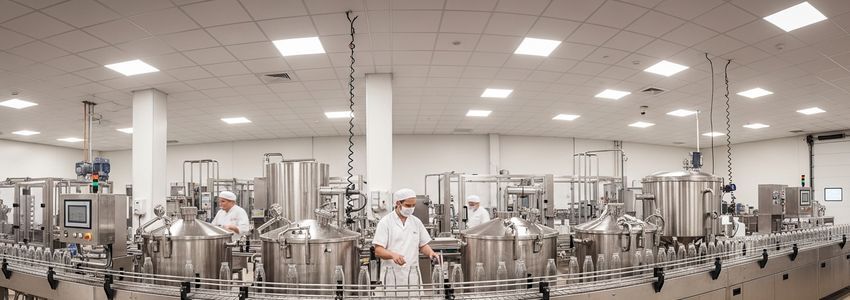
Equipment financing for specialty food production facilities gives manufacturers the capital they need to acquire the industrial-grade machinery, processing lines, and compliance-grade systems required to compete and grow. Whether you operate a craft condiment bottling plant, an artisan cheese production facility, a cold-pressed juice operation, or a specialty bakery at commercial scale, the right financing strategy can mean the difference between stagnation and exponential growth.
Specialty food is one of the fastest-growing segments in the U.S. food industry, with retail sales exceeding $195 billion annually according to the Specialty Food Association. Yet the same market dynamics that drive demand also create intense capital pressure. Equipment costs in food manufacturing have risen sharply. Regulatory requirements from the FDA's Food Safety Modernization Act (FSMA) mandate increasingly sophisticated processing controls, temperature management, and traceability systems. For growing producers, the challenge is not lack of demand but lack of capital to meet it.
This guide walks through every aspect of equipment financing for specialty food production, from what qualifies, to how to structure your financing, to how Crestmont Capital helps specialty food businesses get funded fast.
In This Article
- What Is Equipment Financing for Specialty Food Production?
- What Equipment Qualifies?
- Key Benefits for Specialty Food Producers
- How Equipment Financing Works
- Specialty Food Equipment Financing: By the Numbers
- Financing vs. Leasing: Which Is Right for You?
- Who Qualifies?
- Real-World Scenarios
- How Crestmont Capital Helps
- Frequently Asked Questions
- How to Get Started
What Is Equipment Financing for Specialty Food Production?
Equipment financing is a type of business loan in which the equipment being purchased serves as collateral for the loan. Instead of paying the full purchase price upfront, your business makes fixed monthly payments over a defined term, typically ranging from 24 to 84 months. At the end of the term, you own the equipment outright.
In the specialty food production context, this applies to virtually any asset your facility needs to operate: processing machines, packaging lines, cold storage systems, conveyors, commercial ovens, industrial mixers, and the full range of food safety infrastructure required under FSMA and state regulations.
Because the equipment itself secures the loan, approval standards are often more accessible than traditional unsecured business loans. Lenders evaluate the asset's value and remaining useful life alongside your business financials, which means food manufacturers with modest credit profiles or shorter operating histories can still qualify for meaningful financing amounts.
Industry Insight: According to the Equipment Leasing and Finance Association (ELFA), over 80% of U.S. businesses that use equipment for operations rely on some form of equipment financing or leasing. In capital-intensive sectors like food manufacturing, that number is even higher.
What Equipment Qualifies for Specialty Food Production Financing?
The range of financeable equipment in the specialty food sector is broad. Most commercial lenders will finance any asset with a clear market value and useful life of five years or more. Below is a breakdown of the primary categories:
Processing and Manufacturing Equipment
- Industrial mixers, blenders, and homogenizers
- Commercial food processors and slicers
- Pasteurization systems and retort equipment
- Fermentation tanks and vessels
- Commercial ovens, fryers, and steam cooking systems
- Extrusion machinery for pasta, snacks, and cereals
- Cold-press juice extraction systems
- Roasting and drying equipment for nuts, seeds, and specialty grains
Packaging and Bottling Lines
- Automated bottling and capping machines
- Pouching, bagging, and sealing equipment
- Labeling and barcoding systems
- Shrink-wrap and case-packing lines
- Checkweighing and metal detection systems (FSMA compliance)
- Vacuum packaging equipment
Cold Storage and Refrigeration
- Walk-in coolers and freezers
- Blast chillers and shock freezers
- Refrigerated display and storage cabinets
- Cold chain transport equipment
Quality Control and Compliance Equipment
- Laboratory testing equipment (pH meters, moisture analyzers, spectrophotometers)
- Sanitation and clean-in-place (CIP) systems
- Environmental monitoring systems
- Digital traceability and lot-tracking systems
Facility Infrastructure
- Commercial-grade HVAC systems for climate-controlled production areas
- Industrial exhaust and ventilation systems
- Commercial water purification and treatment systems
- Specialty flooring, drains, and wall cladding for food-grade environments
Good to Know: Soft costs associated with equipment installation - such as delivery, rigging, and initial calibration - can sometimes be rolled into the equipment financing amount, reducing your out-of-pocket installation expense significantly.
Need Equipment for Your Specialty Food Facility?
Crestmont Capital specializes in food production equipment financing. Fast approvals, flexible terms, and no prepayment penalties on most programs.
Get Your Quote Today →Key Benefits of Equipment Financing for Specialty Food Producers
Specialty food businesses operate in a demanding environment where margin pressure, compliance costs, and rapid consumer trend cycles all compete for capital. Equipment financing addresses several of the most critical financial challenges simultaneously.
Preserve Working Capital
A commercial bottling line or automated packaging system can easily cost $150,000 to $500,000 or more. Paying for that asset in cash would deplete the working capital your business needs to buy raw materials, fund marketing, cover payroll, and manage seasonal fluctuations. Equipment financing spreads that cost over time, keeping your operating funds available for day-to-day operations.
Predictable Fixed Payments
Unlike revolving lines of credit that fluctuate with your borrowing, equipment loans carry fixed monthly payments for the life of the term. This makes financial planning straightforward. You know exactly what you owe each month, allowing you to build it directly into your operating budget without surprises.
Fast Access to Production Capacity
Specialty food markets move quickly. When a retailer like Whole Foods, Trader Joe's, or a regional distributor comes calling with a major purchase order, you need the capacity to fulfill it. Equipment financing lets you acquire the machinery now and pay for it over time, capturing the revenue opportunity without waiting years to save the capital needed.
Build Business Credit
Consistent, on-time payments on an equipment loan strengthen your business credit profile, improving your access to larger financing amounts and better rates on future transactions. For specialty food companies that plan to scale, this compounding benefit matters significantly over time.
Potential Asset Ownership
Unlike operating leases where the equipment reverts to the lessor at term end, equipment loans result in full ownership. Once you make your final payment, the asset is yours free and clear - adding real value to your balance sheet and your facility's productive capacity.
How Equipment Financing Works for Food Manufacturers
The process from application to funded equipment typically takes between two and ten business days, depending on the loan size and the lender's review process. Here is how it unfolds:
Step 1 - Identify the Equipment. Obtain a formal quote from your equipment vendor. This document becomes the foundation of your financing application. The quote should specify the make, model, serial number, delivery timeline, and total purchase price including any installation costs you want to roll in.
Step 2 - Submit an Application. Most commercial equipment financing applications require basic business information: legal business name, EIN, years in operation, annual revenue, and owner information. For loans under $150,000, many lenders offer "credit-only" decisions based on your credit profile alone - no financial statements required.
Step 3 - Underwriting and Approval. The lender evaluates your creditworthiness and the collateral value of the equipment. Approval timelines range from same-day decisions on smaller transactions to several business days for larger structured deals. Strong applicants with good credit and two or more years in business often receive approval within 24 to 48 hours.
Step 4 - Documentation and Funding. Once approved, you sign the loan or lease agreement. The lender sends payment directly to your vendor, who then delivers and installs the equipment. You begin making monthly payments per your agreement terms.
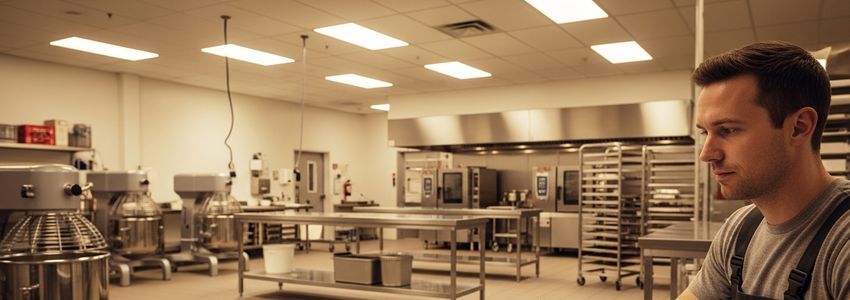
Step 5 - Equipment in Production. With the equipment installed and operational, you begin generating the additional revenue and efficiency gains that the investment was designed to produce. The equipment effectively pays for itself through increased output, reduced labor, improved quality, or expanded product lines.
By the Numbers
Specialty Food Equipment Financing at a Glance
$195B
Annual U.S. specialty food retail sales (SFA)
80%+
Of manufacturers use equipment financing (ELFA)
2-5 Days
Typical approval-to-funding timeline
$5M+
Maximum financing available through Crestmont
Equipment Financing vs. Equipment Leasing: Choosing the Right Structure
When financing production equipment, specialty food manufacturers have two primary structural choices: a loan (equipment financing) or a lease. Each has distinct advantages depending on your business goals, cash flow profile, and long-term asset strategy.
| Feature | Equipment Loan | Equipment Lease |
|---|---|---|
| Ownership at end of term | Yes - you own it outright | Depends on lease type ($1 buyout vs. FMV) |
| Monthly payment | Typically higher | Typically lower |
| Down payment required | Often 0-10% | Often first/last payment only |
| Balance sheet impact | Asset and liability appear | May be kept off-balance-sheet (operating lease) |
| Equipment upgrade flexibility | Lower - you own the asset | Higher - return and upgrade at term end |
| Best for | Long-lived core assets you plan to use 10+ years | Technology-driven assets that become outdated quickly |
For most specialty food production equipment - commercial mixers, bottling lines, packaging systems - the loan structure is often preferred because these assets have useful lives of 10 to 20 years or longer. Financing them to own ensures you build long-term equity in your production infrastructure. For technology-dependent assets like laboratory testing systems or traceability software platforms, leasing may offer more strategic flexibility.
Explore our full breakdown in our guide to equipment leasing vs. equipment financing to understand which structure fits your specific situation.
Who Qualifies for Specialty Food Equipment Financing?
Equipment financing is accessible to a wide range of specialty food businesses. While specific requirements vary by lender and loan size, typical qualification criteria include:
Basic Eligibility Criteria
- Time in Business: Most commercial lenders prefer 12 to 24 months in operation. Startups may qualify through specialized startup equipment programs or by providing a stronger personal credit profile and business plan.
- Credit Score: A minimum personal credit score of 600 to 640 is typical for standard equipment loans. Scores above 680 qualify for better rates and terms. Higher-score borrowers often receive same-day approvals.
- Annual Revenue: Many lenders require $100,000 to $250,000 in annual revenue for loans over $50,000. Transactions under $150,000 can often be approved without revenue documentation for borrowers with strong credit.
- Business Structure: Most loan types accept LLCs, S-Corps, C-Corps, and sole proprietors. Your business must be legally registered and in good standing in your state.
Documentation Typically Required
- Vendor quote or invoice for the equipment
- Basic business application (name, EIN, revenue, time in business)
- Personal credit authorization
- For larger loans ($250,000+): 2 years of business tax returns, recent bank statements, and a financial summary may be required
Pro Tip: Specialty food businesses with FDA registration, Hazard Analysis Critical Control Points (HACCP) plans, or USDA inspections on file may actually strengthen their loan applications. These regulatory credentials signal operational seriousness and reduce perceived risk for underwriters.
Real-World Scenarios: How Specialty Food Producers Use Equipment Financing
Abstract financing concepts become clearer when applied to real production scenarios. Here are six examples of how specialty food manufacturers use equipment financing to grow their operations.
Scenario 1: The Artisan Hot Sauce Producer Scaling to Retail
A Texas-based hot sauce brand had grown steadily through farmers markets and direct-to-consumer channels. When a national natural grocery chain offered a regional rollout, the owner needed an automated filling and bottling line to hit the required volume. The equipment cost $180,000. Rather than depleting working capital, the business financed the equipment over 60 months at a fixed monthly payment. The retail revenue from the new account covered the payment with margin to spare within the first quarter.
Scenario 2: The Specialty Cheese Maker Expanding Aging Capacity
A Wisconsin artisan cheesemaker had mastered production but was limited by aging cave capacity. Installing additional humidity-controlled aging rooms required $95,000 in refrigeration and climate control equipment. Equipment financing allowed the business to build out the new aging rooms without waiting two years to accumulate the necessary cash reserves. The expanded inventory supported a 40% increase in wholesale revenue over the following 12 months.
Scenario 3: The Cold-Pressed Juice Operation Upgrading Extraction
A California cold-pressed juice brand was using outdated hydraulic press equipment that created production bottlenecks during peak seasons. Upgrading to a high-throughput commercial cold-press system costing $220,000 would have consumed their entire cash reserve. Instead, they used a 48-month equipment loan, reduced production time by 35%, and used the freed capital to fund a regional marketing campaign that doubled their retail placement within 18 months.
Scenario 4: The Specialty Bakery Automating Packaging
A New York specialty cookie company was hand-packaging every unit, which limited volume and created inconsistency. An automated flow-wrap packaging line for $75,000 was financed over 36 months. Labor savings alone paid for the monthly financing cost within six months, and the improved shelf-ready packaging opened the door to mass-market grocery buyers who required consistent, retail-ready presentation.
Scenario 5: The Craft Condiment Producer Achieving FSMA Compliance
A growing Pacific Northwest condiment brand received a warning from their co-packer about FSMA allergen control standards that would require a dedicated production line. Rather than lose the co-pack relationship, they financed their own allergen-free processing equipment for $140,000, brought allergen-sensitive production in-house, achieved FSMA compliance, and eliminated co-pack fees that were eroding their margins.
Scenario 6: The Specialty Protein Bar Manufacturer Expanding Capacity
A functional nutrition brand producing specialty protein bars had exhausted the capacity of their existing extrusion equipment. The lead time to save enough cash for a new extrusion line would have taken 18 months, during which a competitor could capture significant shelf space. Equipment financing for a $350,000 commercial extrusion system allowed immediate expansion with a structured payment plan aligned to projected revenue growth.
Ready to Scale Your Food Production?
Our food manufacturing finance specialists understand the equipment needs of specialty producers. Get a same-day decision on your application.
Apply in Minutes →How Crestmont Capital Helps Specialty Food Producers Get Funded
Crestmont Capital is the #1 rated business lender in the United States, with deep expertise in equipment financing for food and beverage manufacturers. We understand the unique demands of the specialty food industry - the compliance requirements, the seasonal revenue patterns, the rapid scaling opportunities - and we structure financing accordingly.
Our food equipment financing programs are designed for the realities of specialty food production. Unlike banks that apply generic criteria, we evaluate your specific production assets, revenue trends, and growth trajectory to build a financing structure that makes sense for your business.
Through our manufacturing equipment financing platform, specialty food producers can access:
- Loan amounts from $25,000 to $5 million+
- Terms from 24 to 84 months
- Fixed monthly payments with no surprise adjustments
- Approvals in as little as 24 to 48 hours for qualified applicants
- Programs for startups, businesses with less-than-perfect credit, and rapid-growth operations
- 100% financing with no down payment on select programs
We also offer complementary financing options for specialty food businesses that need capital beyond equipment. If you need to fund ingredient purchases, build raw material reserves ahead of a major retail launch, or cover operational expenses during a growth phase, our working capital loans provide the flexible cash flow support you need alongside your equipment financing.
For producers looking at the broader landscape of capital options available to food and beverage manufacturers, we recommend reading our guide to food and beverage business loans and production expansion.
Our team works directly with specialty food businesses at every stage - from single-facility artisan operations to multi-site commercial producers. We are not a marketplace that passes your application to a dozen lenders. We are a direct capital provider with the authority to make fast decisions and structure deals that banks and online aggregators cannot match.
Frequently Asked Questions
What is equipment financing for specialty food production?
Equipment financing for specialty food production is a loan in which commercial food processing machinery, packaging lines, cold storage systems, and related production assets serve as collateral. The borrower receives funds to purchase the equipment and repays over a defined term, typically 24 to 84 months, with fixed monthly payments. Upon final payment, the business owns the equipment outright.
What types of food production equipment can I finance?
Virtually any commercial food production asset qualifies, including industrial mixers, blenders, pasteurization systems, fermentation tanks, bottling and packaging lines, commercial ovens, cold storage units, refrigeration systems, labeling equipment, checkweighers, metal detectors, clean-in-place (CIP) sanitation systems, and quality control laboratory equipment. Soft costs like installation and delivery can often be included in the financing amount as well.
How much can I borrow for specialty food equipment?
Financing amounts typically range from $25,000 to $5 million or more depending on the lender and your qualifications. For individual equipment purchases under $150,000, many lenders offer simplified credit-only decisions that do not require full financial documentation. Larger transactions for complete production lines or multi-asset acquisitions can be structured through commercial equipment financing programs that accommodate higher amounts.
What credit score do I need to qualify?
Most equipment financing programs require a minimum personal credit score in the range of 600 to 640. Borrowers with scores above 680 typically receive the most competitive rates and terms, and often receive same-day approval decisions. Some lenders also offer programs for borrowers with lower credit scores, particularly when the equipment itself has strong collateral value and the business demonstrates consistent revenue.
How long does the approval process take?
For transactions under $150,000 with strong credit, approvals typically come within 24 to 48 business hours. Larger and more complex transactions that require full financial documentation may take three to seven business days to underwrite. Once approved, funding to your vendor is typically completed within two to five additional business days.
Do I need a down payment for food equipment financing?
Many equipment financing programs offer 100% financing with no down payment required, particularly for qualified borrowers with strong credit and established business history. Some lenders may require a 10 to 20% down payment for startups or borrowers with lower credit scores. It is worth applying and reviewing your approval terms, as down payment requirements vary widely by lender and applicant profile.
Can a startup specialty food business qualify for equipment financing?
Yes, though startup equipment financing carries somewhat more stringent requirements than established business programs. Startups typically need a strong personal credit score (680+), may be required to provide a down payment of 10 to 20%, and may face higher interest rates to offset the lack of operating history. Some lenders specialize in startup equipment programs. Providing a detailed business plan and demonstrating any existing purchase orders or distribution agreements can strengthen a startup application significantly.
What documentation is typically required?
For smaller transactions (under $150,000), many lenders require only a completed application, personal credit authorization, and a vendor quote or invoice. For larger transactions, requirements typically expand to include two years of business tax returns, recent bank statements (typically three to six months), and sometimes a profit and loss statement. Established businesses with strong credit may qualify for simplified documentation programs regardless of loan size.
What are typical interest rates for food equipment financing?
Interest rates for equipment financing vary based on credit score, time in business, loan amount, and lender type. Well-qualified borrowers with strong credit typically see rates ranging from 5% to 12% APR. Borrowers with lower credit scores or shorter business history may see rates in the 12% to 25% range. Because equipment loans are secured by the asset itself, rates are generally lower than unsecured business loans of comparable size.
Can I finance used food production equipment?
Yes. Many lenders offer programs for used or refurbished food production equipment, though underwriting criteria may be somewhat more stringent. The equipment typically needs to be less than 10 to 12 years old, in documented good working condition, and from a recognized commercial manufacturer. An independent appraisal or condition report may be required for high-value used equipment transactions. Used equipment financing can be an excellent way to acquire proven assets at a lower purchase price while still preserving working capital.
How does equipment financing compare to a business line of credit for equipment purchases?
Equipment financing and lines of credit serve different purposes. Equipment loans are specifically structured for large, defined asset purchases, carry lower interest rates because the equipment serves as collateral, and result in ownership. A business line of credit is better suited for recurring, smaller purchases and variable cash flow management. For a $200,000 packaging line, equipment financing is almost always more cost-effective and appropriate than drawing a line of credit. Lines of credit are best reserved for inventory, labor, marketing, and short-term operational expenses.
Can I finance multiple pieces of equipment in a single transaction?
Yes. It is common to bundle multiple equipment items into a single financing transaction, particularly when outfitting a complete production line or multiple departments in a facility. Lenders will review the aggregate list of equipment and typically fund everything under one loan with a single monthly payment. This simplifies your financial administration and may result in better overall terms than financing each piece separately.
What happens if my production equipment breaks down or needs replacement before the loan is paid off?
If financed equipment fails before the loan is paid off, you remain obligated to continue making payments on the loan. For this reason, maintaining adequate commercial property and equipment insurance is essential. Many lenders require proof of insurance as a condition of funding. In some cases, you can refinance or take on additional financing for replacement equipment. If you are considering upgrading equipment mid-term, some lenders allow equipment loan refinancing or consolidation.
Does equipment financing require a personal guarantee?
Most commercial equipment financing programs for small and mid-sized specialty food businesses do require a personal guarantee from the principal owner(s) of the business. This is standard across the lending industry and reflects the lender's need for accountability beyond the equipment collateral alone. Established corporations with strong credit and significant assets may be able to negotiate equipment financing without a personal guarantee in some cases, though this is less common for transactions under $1 million.
How do I find the right equipment financing lender for my specialty food business?
The most important factors are speed, flexibility, and experience with food manufacturing. Bank equipment loans tend to be slow (weeks to months), highly documentation-intensive, and inflexible in terms. Specialty commercial lenders like Crestmont Capital offer faster approvals, streamlined applications, and the ability to structure transactions around your specific equipment, revenue profile, and growth timeline. Always compare the total cost of financing, not just the headline interest rate, and work with a lender who understands your industry.
How to Get Started
Obtain a formal quote from your equipment supplier. You will need this to complete your financing application and for the lender to confirm collateral value.
Complete our quick application at offers.crestmontcapital.com/apply-now. Our food equipment financing specialists review applications typically within 24 hours for qualified applicants.
A Crestmont Capital advisor will review your needs, confirm your equipment details, and present your approval with term and payment options. No obligation until you sign.
Once you sign your agreement, we fund your vendor directly. Your equipment is delivered, installed, and in production - typically within days of final approval.
Conclusion: Equipment Financing as a Growth Engine for Specialty Food Producers
Equipment financing for specialty food production is not just a tactical cash flow tool - it is a strategic growth engine. By spreading the cost of capital-intensive production assets over time, specialty food manufacturers can move faster, scale smarter, and respond to market opportunities without the constraints of limited cash reserves.
The specialty food industry rewards speed and quality in equal measure. Having the equipment to produce at scale, meet compliance requirements, and consistently deliver retail-ready product is table stakes for any brand serious about retail distribution and national growth. Equipment financing gives you the means to build that infrastructure now, not years from now.
Crestmont Capital is ready to help. With programs tailored to food and beverage manufacturers at every stage of growth, we bring the speed, flexibility, and expertise your business needs to get funded and get moving. Start your application today and discover what Crestmont Capital can do for your specialty food operation.
Disclaimer: The information provided in this article is for general educational purposes only and is not financial, legal, or tax advice. Funding terms, qualifications, and product availability may vary and are subject to change without notice. Crestmont Capital does not guarantee approval, rates, or specific outcomes. For personalized information about your business funding options, contact our team directly.