Equipment financing for on-demand manufacturing has become one of the most critical capital tools available to modern production businesses. As custom production, short-run manufacturing, and just-in-time fulfillment models continue to reshape how goods are made and delivered, manufacturers need fast, flexible funding to stay competitive in a market that punishes hesitation.
Whether you run a CNC machine shop, an industrial 3D printing operation, a contract packaging facility, or an advanced fabrication studio, your ability to upgrade equipment quickly and cost-effectively determines your capacity to win contracts, meet deadlines, and scale revenue. This guide walks through everything you need to know about financing manufacturing equipment, from how it works to how to qualify and where to apply.
In This Article
- What Is Equipment Financing for On-Demand Manufacturing?
- The Rise of On-Demand Manufacturing
- Key Benefits of Equipment Financing
- How Equipment Financing Works: Step by Step
- Types of Equipment Financing Structures
- Who Qualifies for Manufacturing Equipment Financing?
- Comparing Equipment Financing to Other Capital Options
- Real-World Scenarios
- How Crestmont Capital Supports On-Demand Manufacturers
- Financial Strategy Considerations
- Frequently Asked Questions
- How to Get Started
What Is Equipment Financing for On-Demand Manufacturing?
Equipment financing for on-demand manufacturing is a funding solution that allows production businesses to acquire essential machinery and technology without paying the full purchase price upfront. Instead of depleting cash reserves or waiting years to save for capital purchases, manufacturers make structured payments over time while putting the equipment to work immediately generating revenue.
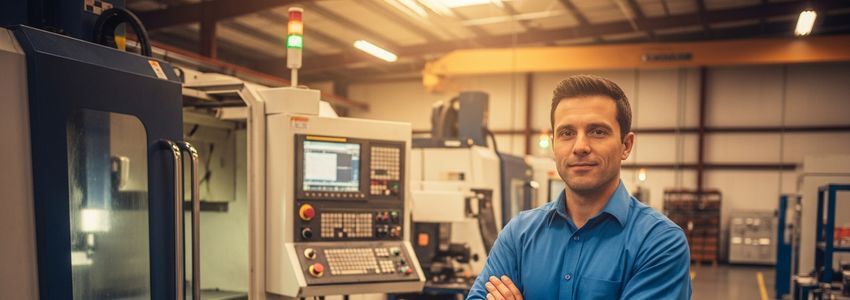
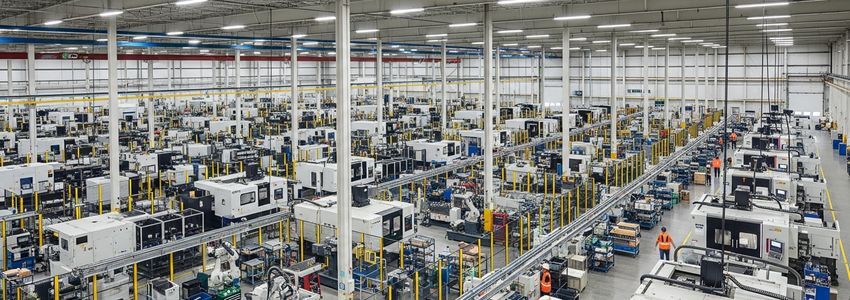
This form of financing typically covers a wide range of production assets, including CNC machines, industrial laser cutters, robotic assembly systems, 3D printing equipment, digital fabrication tools, automated packaging lines, and advanced quality control systems. Because the equipment itself serves as collateral, lenders can move quickly, often providing approvals within days rather than weeks.
There are several core product types within equipment financing:
- Equipment loans - Fixed-rate loans where the business owns the equipment outright once the loan is repaid
- Equipment leases - Structured rental arrangements where the business uses the equipment for a defined term and may purchase at the end
- Sale-leaseback arrangements - Businesses sell owned equipment to a lender and lease it back, unlocking trapped capital
- Capital equipment programs - Customized multi-asset programs for larger manufacturing buildouts
For on-demand manufacturers specifically, the alignment between equipment cost and revenue generation is especially powerful. When financing payments are structured to match production capacity increases, the equipment pays for itself as it earns.
The Rise of On-Demand Manufacturing Models
On-demand manufacturing has moved from a niche strategy to a mainstream production model across dozens of industries. Unlike traditional batch production that relies on forecasting large inventory runs, on-demand manufacturing produces goods in direct response to confirmed orders, reducing waste, lowering storage costs, and enabling much faster customization.
This model relies on several interconnected capabilities:
- Short, flexible production runs that can be reconfigured quickly
- Rapid prototyping and iteration cycles
- Automation and robotics to reduce per-unit labor costs
- Digital order management systems integrated with production floor software
- Precision machinery capable of handling diverse specifications within a single run
According to reporting from Reuters, manufacturers across multiple sectors are increasing capital investment in automation and digital production systems to remain competitive in fast-cycle global supply chains. Coverage from CNBC has highlighted how reshoring trends and localized production are accelerating capital equipment purchases, with manufacturers investing heavily to bring capacity back to North America.
Data from the U.S. Census Bureau shows steady growth across advanced manufacturing segments that depend heavily on technology-driven production processes. The manufacturing sector continues to invest in machinery, equipment, and technology at a pace that outstrips most other industries.
These shifts create enormous opportunity, but they also require capital. A manufacturer that cannot finance the right equipment at the right time risks losing contracts to better-equipped competitors.
Industry Insight: The U.S. manufacturing sector employs over 12 million workers and contributes more than $2.3 trillion to GDP annually, according to the National Association of Manufacturers. As on-demand production models scale, access to equipment financing has become as critical as access to skilled labor.
Key Benefits of Equipment Financing for On-Demand Manufacturers
Equipment financing is not simply a way to acquire machinery when cash is limited. For on-demand manufacturers specifically, it is a strategic tool that shapes competitive positioning, cash flow management, and long-term growth capacity.
Preserves Working Capital
Spending six figures on a single piece of equipment can cripple day-to-day operations, leaving little room to cover payroll, raw materials, utilities, or unexpected expenses. Equipment financing keeps that capital in the business where it can generate returns across multiple uses simultaneously.
Enables Rapid Technology Adoption
In manufacturing, equipment cycles move faster than ever. A 3D printer that was state-of-the-art three years ago may be significantly outperformed by current generation systems. Financing allows manufacturers to stay current without the full financial burden of repeated large purchases.
Aligns Payments with Revenue
When financing terms are structured correctly, monthly payments correspond to the revenue the financed equipment generates. A CNC machine that adds $30,000 per month in new contract revenue can comfortably service a $4,500 monthly payment. The math works in the business's favor when equipment financing is used strategically.
Faster Approvals than Traditional Lending
Equipment financing approvals can often be completed within 24 to 72 hours for established businesses. Because the equipment serves as collateral, underwriting is more streamlined than general business loan processes that require extensive financial documentation and longer review cycles.
Flexible Term Structures
Equipment loans and leases typically offer terms ranging from 24 to 84 months, giving businesses control over payment size and cash flow impact. Short terms work for equipment with fast ROI; longer terms spread costs across a broader revenue base.
Supports Scaling Without Equity Dilution
Unlike equity financing that requires giving up ownership stakes, equipment financing is debt-based, meaning the business retains full ownership and control. For founders and operators who want to grow without outside investors, this distinction is critical.
Did You Know? According to the Equipment Leasing and Finance Association, over 80% of U.S. businesses use some form of financing to acquire equipment. Manufacturing businesses rely on equipment financing at higher rates than nearly any other sector due to the capital intensity of production operations.
Ready to Finance Your Manufacturing Equipment?
Get fast, flexible equipment financing from the #1 business lender in the U.S. Approvals within days, terms tailored to your production cycle.
Apply Now →How Equipment Financing Works: Step by Step
Understanding the financing process removes much of the hesitation manufacturers often feel about external capital. The process is more straightforward than many business owners expect, particularly when working with a lender experienced in manufacturing operations.
Step 1: Identify Operational Needs
Start by auditing your current production bottlenecks. Which equipment constraints are costing you contracts, increasing per-unit costs, or limiting throughput? The most effective equipment financing decisions are driven by clear operational analysis rather than opportunistic acquisition.
Step 2: Vendor Selection and Quotes
Once you identify the machinery you need, obtain formal quotes from qualified vendors. Equipment financing providers can typically fund new and used machinery from a wide range of manufacturers. Having a formal quote expedites the approval process significantly.
Step 3: Application Submission
With a lender like Crestmont Capital, the application is designed to be straightforward. Core underwriting factors include:
- Time in business (typically 1 year minimum, though exceptions exist)
- Annual revenue and revenue consistency
- Equipment type, condition, and valuation
- Credit profile of the business and guarantors
- Projected production output from the financed equipment
Step 4: Approval and Documentation
Once conditionally approved, the lender prepares financing documents outlining rate, term, payment schedule, and ownership terms. Review these carefully to ensure the payment structure fits your cash flow model.
Step 5: Funding and Equipment Delivery
After documentation is executed, funds are typically sent directly to the equipment vendor. The business receives the equipment and begins production while servicing structured monthly payments.
Step 6: End-of-Term Options
At the end of the financing term, the outcome depends on your product structure. Equipment loan borrowers own the equipment outright. Equipment lessees may purchase at fair market value, renew the lease, or return and upgrade to newer technology.
Types of Equipment Financing Structures
Choosing the right financing structure is as important as choosing the right equipment. Each structure has different implications for cash flow, ownership, and long-term cost.
Equipment Loans
The most straightforward option: the lender provides capital to purchase the equipment, secured by the asset itself. The business makes fixed monthly payments over a defined term and owns the equipment outright upon final payment. This structure works best for long-life machinery with predictable use cycles, such as CNC mills, industrial presses, and fabrication systems.
Capital Leases
A capital lease functions similarly to an equipment loan from an accounting perspective, treating the equipment as an owned asset on the balance sheet. Capital leases often include a nominal purchase option at the end of the term, commonly $1. These structures provide accounting treatment similar to ownership.
Operating Leases
Operating leases keep the equipment off the balance sheet and are treated as rental expenses. This structure is well-suited for technology that evolves quickly, such as inspection systems, precision measurement tools, or software-integrated production equipment. Operating leases make it easy to upgrade at term end without being locked into aging technology.
Sale-Leaseback Arrangements
Manufacturers with significant owned equipment can use a sale-leaseback to unlock trapped capital. The business sells its existing machinery to a financing company and leases it back under a structured agreement, continuing to operate the equipment while freeing up cash for other strategic investments.
Master Equipment Financing Agreements
For manufacturers planning multiple equipment acquisitions over time, a master facility establishes pre-approved financing terms that can be drawn on as equipment needs arise. This eliminates the need to renegotiate financing for each purchase, reducing administrative burden and accelerating acquisition speed.
By the Numbers
On-Demand Manufacturing Equipment Financing - Key Statistics
80%
Of U.S. businesses use financing to acquire equipment
$1T+
In equipment financed annually across U.S. industries
24-84
Months - typical equipment financing term range
72 hrs
Typical approval timeline for qualified manufacturers
Who Qualifies for Manufacturing Equipment Financing?
Equipment financing is accessible to a wide range of manufacturing businesses, including companies that might not qualify for traditional bank loans. Because the financed equipment itself serves as collateral, lenders can evaluate applications with greater flexibility than general-purpose business lending.
Qualifying Factors
Most equipment financing programs evaluate the following criteria:
- Time in business: Most programs require at least 12 months of operating history, though newer businesses with strong revenue may have options
- Annual revenue: Higher revenue demonstrates the ability to service debt comfortably; most programs prefer $100,000 or more annually
- Credit profile: Personal and business credit history is reviewed, though strong business performance can offset lower scores in some programs
- Equipment value: The financed asset must meet lender collateral standards; equipment that retains value over time is preferred
- Industry experience: Demonstrated experience in the manufacturing sector adds strength to applications from newer businesses
Types of Manufacturers That Benefit Most
Equipment financing for on-demand manufacturing is particularly effective for:
- CNC machine shops and metal fabricators
- Industrial 3D printing and additive manufacturing companies
- Contract manufacturers serving aerospace, automotive, and defense sectors
- Custom packaging and labeling operations
- Robotics-integrated production facilities
- Textile and apparel manufacturers adopting digital cutting and printing systems
- Electronics assembly and testing operations
- Food processing and specialty manufacturing facilities
If your production operation depends on precision equipment to fulfill customer orders, equipment financing is likely your most cost-effective capital solution. You can explore options through Crestmont Capital's equipment financing program, which serves manufacturers across all production specialties.
Comparing Equipment Financing to Other Capital Options
Manufacturers evaluating capital options often consider multiple paths before committing to a strategy. Understanding how equipment financing compares to alternatives helps ensure you select the right tool for your specific situation.
| Factor | Equipment Financing | Traditional Bank Loan | Business Line of Credit |
|---|---|---|---|
| Approval Speed | 24-72 hours | Weeks to months | Days to weeks |
| Collateral Required | Equipment itself | Broad business assets | Varies by lender |
| Best For | Specific equipment purchase | General capital needs | Short-term operational costs |
| Credit Flexibility | Higher (collateral-backed) | Lower (strict underwriting) | Moderate |
| Ownership After Term | Full ownership (loan) or options (lease) | Full ownership | N/A - revolving credit |
For manufacturers specifically financing capital equipment, the equipment financing structure typically delivers the best combination of speed, flexibility, and payment alignment. A business line of credit works well for operational expenses and short-term cash flow management, but it is not designed for large capital asset acquisitions.
Manufacturers who have faced credit challenges in the past may also qualify through specialized programs. Crestmont Capital's bad credit business loans and equipment financing programs evaluate the full picture of a business's health, not just credit score alone.
Real-World Scenarios
Understanding how equipment financing plays out in practice helps manufacturers see how the strategy applies to their own operations.
Scenario 1: CNC Shop Expanding into Aerospace Parts
A mid-sized CNC machine shop in the Midwest had an opportunity to enter the aerospace components market, but the contract required certification and five-axis machining capability the shop did not yet have. A $380,000 equipment financing facility funded a certified five-axis CNC system with aerospace-grade precision. The new contract generated $55,000 per month in revenue, far exceeding the $6,200 monthly payment. The shop entered a new market, expanded its client base, and retained full working capital throughout the process.
Scenario 2: Additive Manufacturer Scaling Production Capacity
An industrial 3D printing company was winning orders it could not fulfill fast enough with its existing printers. Financing four additional industrial systems costing $1.2 million in total allowed the company to triple monthly output. By spreading payments over 60 months, the monthly obligation fit comfortably within the additional revenue generated. The business scaled without raising equity or depleting cash reserves.
Scenario 3: Packaging Manufacturer Automating Fulfillment Lines
A regional packaging company was losing bids to competitors with faster automated lines. Equipment financing for two robotic palletizing systems and a high-speed labeling line reduced per-unit processing time by 60 percent. The business won three new distribution contracts within six months of installation, and the monthly equipment payment was covered within the first week of each billing cycle.
Scenario 4: Contract Manufacturer Reshoring Production
Following supply chain disruptions that affected overseas manufacturing, a contract manufacturer decided to reshore full production to a domestic facility. Equipment financing covered the buildout of an entire production line, including fabrication, assembly, and quality control systems. Structured over 72 months, the payment schedule aligned with contract revenue from the company's anchor client, eliminating cash flow risk.
Scenario 5: Textile Manufacturer Adopting Digital Production
A textile company specializing in custom apparel used equipment financing to acquire digital cutting systems and direct-to-garment printing machinery. The on-demand production model eliminated overstock entirely, reduced material waste by 40 percent, and enabled the company to take smaller, more profitable orders from e-commerce clients. The financed equipment transformed the business model without requiring equity investment or large cash outlays. You can read more about financing strategies for this sector in Crestmont's guide to textile and apparel manufacturing financing.
Scenario 6: Electronics Assembly Facility Upgrading Testing Systems
An electronics contract manufacturer needed to upgrade automated optical inspection and functional testing systems to meet new client compliance requirements. Financing $650,000 in testing equipment preserved the working capital needed to stock components for a large production run. The upgrade enabled the company to retain its largest client and win a second major account requiring identical compliance capabilities.
Start Financing Your Production Equipment Today
Crestmont Capital specializes in manufacturing equipment financing. Apply online in minutes and get a decision within 72 hours.
Apply Now →How Crestmont Capital Supports On-Demand Manufacturers
Crestmont Capital has built a reputation as one of the most responsive equipment financing providers in the country, with specialized experience in manufacturing operations across dozens of production categories. Unlike generalist lenders, Crestmont understands how manufacturing revenue cycles work, how equipment values are assessed in production contexts, and how to structure financing that actually fits your operational reality.
What Sets Crestmont Capital Apart
- Fast approvals: Qualified manufacturers can receive approval decisions within 72 hours of submitting a complete application
- New and used equipment: Crestmont finances both brand-new machinery and quality used equipment that meets valuation standards
- Competitive fixed rates: Predictable payment schedules make cash flow planning straightforward
- Flexible term lengths: Programs from 24 to 84 months accommodate equipment with varying revenue generation timelines
- Programs for multiple credit profiles: Strong business performance can offset credit score limitations in many cases
- Multi-asset facilities: Manufacturers planning multiple acquisitions can establish master financing agreements for streamlined access to capital
Crestmont also supports manufacturers who need broader capital access alongside equipment financing. Small business loans can fund hiring, facility expansion, and operational needs, while equipment financing covers the machinery itself. Many manufacturing businesses use both product types to execute comprehensive growth plans.
For manufacturers with significant working capital requirements tied to large production contracts, long-term business loans provide structured capital with extended repayment timelines suited to large-scale manufacturing investment cycles.
You can also explore Crestmont's comprehensive overview of the equipment financing landscape in the guide to how equipment financing works for business owners across all industries.
Crestmont Capital Advantage: As the #1-rated business lender in the U.S., Crestmont Capital has funded thousands of manufacturing businesses across every production category. Our team understands equipment values, production revenue cycles, and the capital strategies that drive real manufacturing growth.
Financial Strategy Considerations for Manufacturing Equipment Financing
Equipment financing decisions should be made as part of a broader financial strategy, not in isolation. Manufacturers who approach capital investment with clear criteria make better decisions and generate stronger returns from financed assets.
Total Cost of Capital
Evaluate the total cost of financing, including interest, fees, and any end-of-term costs, against the total production value the equipment generates over its useful life. Equipment that generates a strong return on financed cost is a good candidate for financing. Equipment that produces marginal returns may warrant a lower-cost acquisition approach.
Equipment Lifespan and Technology Risk
Machinery with long, predictable useful lives, such as industrial presses, stamping machines, and welding systems, is well-suited for ownership-oriented loan structures. Technology-dependent equipment that evolves rapidly, such as precision measurement systems or software-integrated production tools, may benefit from lease structures that allow upgrading at term end.
Revenue Timing and Payment Alignment
Ideally, equipment financing payments should be smaller than the incremental revenue the equipment generates within the first production month. If the math does not work in month one, ensure there is a clear and realistic revenue ramp that makes the investment viable within the first few months of operation.
Maintenance and Operating Costs
Factor maintenance, calibration, tooling, and software licensing costs into your total equipment cost model. A machine with low financing costs but high maintenance requirements may actually be more expensive than a better-built system with a higher monthly payment but lower operating overhead.
Balance Sheet Implications
Equipment loans appear on the balance sheet as both an asset and a liability, which affects debt ratios and may impact future borrowing capacity. Operating leases keep assets off the balance sheet. Discuss the implications with your accountant to choose the structure that best supports your financial reporting and borrowing strategy.
Manufacturers who need to move quickly on equipment decisions without the time for extended financial analysis can access Crestmont's fast business loans and equipment financing programs, which are designed to compress decision timelines without compromising on competitive terms.
Additionally, manufacturers who handle significant accounts receivable from production contracts may benefit from understanding how manufacturing factoring works as a complementary working capital tool alongside equipment financing.
Frequently Asked Questions
How to Get Started
Audit your current production bottlenecks and determine which equipment acquisition will generate the clearest return. Have a vendor quote ready before applying.
Complete the quick application at offers.crestmontcapital.com/apply-now - it takes just a few minutes and requires basic business information and your equipment quote.
A Crestmont Capital specialist will review your application and contact you with a decision, typically within 24 to 72 hours. They will walk through structure options, rates, and terms tailored to your production needs.
After documentation is complete, funds go directly to your equipment vendor. You take delivery, start production, and begin generating the revenue that makes the investment worthwhile.
Conclusion
Equipment financing for on-demand manufacturing is not just a funding tool; it is a competitive strategy. In a production environment where speed, precision, and technology determine who wins contracts and who falls behind, the ability to acquire the right machinery at the right time is directly tied to revenue growth and market position.
By using structured equipment financing, on-demand manufacturers can modernize production lines, adopt automation, expand capacity, and enter new markets, all without depleting working capital or diluting ownership. The payments are predictable, the equipment is immediately productive, and the investment compounds over time as financed assets generate returns that far exceed financing costs.
Crestmont Capital provides manufacturing equipment financing programs designed specifically for the production realities that modern manufacturers face. Fast approvals, flexible structures, and experience with manufacturing operations across dozens of sectors make Crestmont an ideal partner for businesses ready to invest in growth with confidence.
Invest in Your Production Future Today
Apply for equipment financing through Crestmont Capital and get a decision within 72 hours. No obligation, no lengthy paperwork - just fast capital for manufacturers who are ready to grow.
Apply Now →Disclaimer: The information provided in this article is for general educational purposes only and is not financial, legal, or tax advice. Funding terms, qualifications, and product availability may vary and are subject to change without notice. Crestmont Capital does not guarantee approval, rates, or specific outcomes. For personalized information about your business funding options, contact our team directly.