Running an elevator installation or service company means managing long project timelines, expensive equipment, and demanding cash flow requirements that most lenders don't fully understand. An elevator contractor business loan gives your company the capital to purchase hydraulic units, hoistway components, and control systems, keep your crews fully staffed between contract payments, and grow your portfolio of commercial and residential projects. This guide covers every financing option available to elevator contractors, how to qualify, and how Crestmont Capital makes funding straightforward for specialized trade contractors.
In This Article
- What Is an Elevator Contractor Business Loan?
- Types of Financing for Elevator Contractors
- How Elevator Contractor Financing Works
- Elevator Industry Financing - Key Numbers
- Who Qualifies for an Elevator Contractor Loan?
- What Can You Use the Funds For?
- How Crestmont Capital Helps Elevator Contractors
- Real-World Scenarios
- Comparing Your Financing Options
- How to Get Started
- Frequently Asked Questions
What Is an Elevator Contractor Business Loan?
An elevator contractor business loan is a form of commercial financing designed to address the specific operational and capital needs of elevator installation, maintenance, and modernization companies. These loans recognize that elevator contractors deal with unusually long payment cycles - a single commercial installation project may span six to eighteen months before the final draw is released - and that the equipment and materials required upfront can easily run into the hundreds of thousands of dollars.
Unlike standard small business loans, elevator contractor financing is evaluated against your contract backlog, revenue history, and project pipeline rather than just your credit score. Lenders who work with trade contractors understand that a company with $3 million in signed contracts is fundamentally different from a retail business with steady daily revenue, even if both report similar annual figures on paper.
Elevator contractors typically borrow to solve one of three core problems: equipment and parts procurement, payroll and crew costs during project gaps, and working capital to bid on and win larger commercial contracts. The right loan structure depends on which of these challenges is most urgent for your business right now.
Industry Snapshot: According to the U.S. Bureau of Labor Statistics, elevator and escalator installers and repairers number approximately 24,000 workers nationwide, and the sector is projected to grow 4% through 2032. The elevator installation market is concentrated among specialized trade contractors who win contracts from commercial developers, hospitals, hotels, and municipalities - all segments with lengthy payment cycles that require robust working capital strategies.
Types of Financing Available to Elevator Contractors
Elevator contractors have access to several financing structures, each suited to a different business need. Understanding the differences will help you select the most cost-effective option for your situation.
Term Loans
A term loan delivers a lump sum upfront that you repay over a fixed period, typically 12 to 60 months. Term loans work well for large, predictable needs like purchasing a hydraulic elevator unit, financing a modernization project, or expanding your service vehicle fleet. Interest rates vary based on your credit profile, revenue history, and loan term, but elevator contractors with two or more years in business and consistent revenue often qualify for competitive rates.
Business Line of Credit
A business line of credit gives you a revolving credit facility you draw from as needed and repay on a flexible schedule. For elevator contractors, this is often the most valuable tool because it handles the unpredictable nature of trade contracting - a delayed payment from a general contractor won't derail your payroll if you can draw from your line. Lines of credit are revolving, meaning as you repay what you've drawn, that capacity becomes available again.
Equipment Financing
Equipment financing is purpose-built for purchasing or leasing physical assets. Elevator contractors routinely use equipment financing to acquire hydraulic pumping units, machine room equipment, control panels, testing rigs, hoisting machinery, and specialty service vehicles. The equipment itself often serves as collateral, which means approval is partly tied to the asset's value rather than just your business financials. This makes equipment financing accessible even for contractors whose tax returns don't fully reflect their current contract volume.
Working Capital Loans
Working capital loans are designed to cover operating expenses during revenue gaps. These are short-to-medium term loans - typically three to twenty-four months - that give you immediate cash to pay suppliers, subcontractors, and crews while waiting on project draw payments. A working capital loan is the right tool when you have strong accounts receivable but need to bridge the gap between when work is performed and when payment is released.
SBA Loans
SBA loans, particularly the SBA 7(a) program, offer longer terms (up to 10 years for working capital, 25 years for real estate) and government-guaranteed backing that can translate to lower rates for qualified elevator contractors. According to the SBA's 7(a) loan program, businesses with solid revenue history and good credit can access up to $5 million. The tradeoff is time: SBA applications are more documentation-intensive and can take four to eight weeks to fund.
Invoice Financing
Invoice financing allows you to borrow against your outstanding accounts receivable - your pending project draw payments. If you have $400,000 in approved but unpaid invoices from a commercial developer, an invoice financing lender can advance you 80-90% of that total immediately, with the balance released when the invoices are paid. This is particularly valuable for elevator contractors who have completed substantial work but are waiting on slow-paying general contractors or municipalities.
Finance Your Next Elevator Contract
Get the working capital, equipment financing, or project funding your elevator company needs - without waiting months on a bank.
Apply Now →How Elevator Contractor Financing Works
The application and approval process for an elevator contractor business loan follows a straightforward path when you work with a lender experienced in trade contracting. Here is what to expect at each stage.
Step 1: Identify Your Financing Need
Before applying, clarify exactly what you need the capital for and how much you need. Is this a one-time equipment purchase? Ongoing working capital? A bridge between project payments? The answer shapes which loan type you should pursue and what terms you should expect. Lenders will ask this question during underwriting, and having a clear answer accelerates approval.
Step 2: Gather Your Business Documentation
Most lenders will ask for three to six months of bank statements, your two most recent years of business tax returns (for SBA and traditional bank loans), a copy of your contractor's license, proof of business registration, and in some cases, copies of active contracts or a project backlog summary. Alternative lenders and online business loan platforms often require significantly less documentation - bank statements and basic business info may be sufficient.
Step 3: Submit Your Application
Online applications can be completed in minutes. Crestmont Capital's application at offers.crestmontcapital.com/apply-now takes approximately five minutes to complete. Traditional bank and SBA applications are more involved and may take several days to complete the paperwork.
Step 4: Underwriting and Approval
The lender reviews your application, financials, and credit profile. Alternative lenders can approve elevator contractors in as little as 24 hours. SBA and traditional bank loans typically require 2-8 weeks. Your contract backlog, annual revenue, time in business, and personal credit score all factor into the decision.
Step 5: Funding
Upon approval, funds are disbursed to your business bank account. Alternative and online lenders often fund within one to three business days. SBA and bank loans may take one to two additional weeks for closing and disbursement.
By the Numbers
Elevator Contractor Financing - Key Statistics
24K+
U.S. elevator installer and repairer professionals (BLS 2023)
$5M
Maximum SBA 7(a) loan available to qualified elevator contractors
24 Hr
Approval turnaround with alternative lenders like Crestmont Capital
4%
Projected job growth for elevator installers through 2032 (BLS)
Who Qualifies for an Elevator Contractor Business Loan?
Qualification requirements vary significantly by lender type. Here is a general breakdown of what each category of lender looks for.
Alternative and Online Lenders (Fastest Approval)
The most accessible option for most elevator contractors. Typical requirements include at least six months in business, $10,000 or more in monthly revenue, and a personal credit score of 550 or higher. Some lenders have no minimum credit score requirement and evaluate applications based primarily on cash flow and revenue.
Traditional Banks
Banks typically require two or more years in business, annual revenue of $250,000 or more, and personal credit scores of 680 or above. Banks often want to see profitable tax returns and may require collateral. The upside is generally lower interest rates for well-qualified applicants.
SBA Lenders
SBA loans require two or more years in business, demonstrable repayment ability, and personal credit scores of 650 or higher. SBA lenders will also verify that you do not have access to alternative financing at reasonable terms - this is a statutory requirement of the SBA guarantee program.
Equipment Financing Lenders
Equipment lenders often approve based heavily on the value of the equipment being financed, making them more accessible to contractors with shorter credit histories or lower credit scores. Startups and newer contractors may find equipment financing easier to obtain than an unsecured working capital loan.
Key Qualification Factors for Elevator Contractors: Lenders evaluating elevator contractor loans often give extra weight to your active contract backlog, license status, insurance coverage, and whether you have long-term maintenance agreements in place. Maintenance agreements represent predictable recurring revenue, which lenders love - and they can materially improve your loan terms.
What Can You Use an Elevator Contractor Business Loan For?
The uses of elevator contractor financing are broad. Most lenders impose minimal restrictions on how business loan proceeds are used, provided the funds go toward legitimate business purposes. Common uses include:
Equipment and Parts Procurement
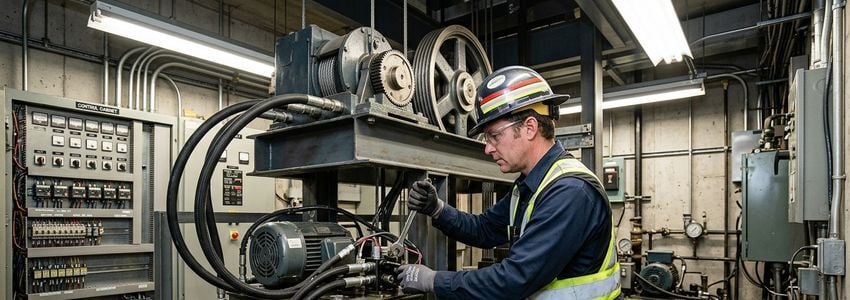
Hydraulic elevator units, traction drive systems, hoistway components, counterweight assemblies, control panels, cab interiors, and safety equipment all represent significant capital outlays. Elevator parts and equipment can range from $20,000 for a basic residential unit to $500,000 or more for a high-rise commercial system. Financing these purchases allows you to preserve cash while still winning and completing projects.
Crew Payroll and Labor Costs
Elevator mechanics are among the highest-paid tradespeople in the construction industry. According to the U.S. Bureau of Labor Statistics, the median annual wage for elevator installers and repairers exceeds $99,000 per year, with experienced lead mechanics in metropolitan markets earning significantly more. Keeping your crew paid during gaps between project payments or during slow seasons is one of the most critical uses of working capital financing.
Bidding on Larger Commercial Contracts
Winning a major commercial contract - a hospital, hotel, or high-rise condominium - often requires demonstrating financial capacity upfront. Having an active credit facility or demonstrable funding access can be the difference between being prequalified for a $2 million installation project and being passed over in favor of a larger competitor. Small business loans can help you scale to compete for these higher-value opportunities.
Modernization Projects
Elevator modernization - upgrading older systems with new controls, motors, cabs, and safety features - is a growing segment of the elevator contractor market. According to Forbes, aging building stock is driving substantial demand for elevator modernization nationwide as property owners upgrade to meet energy efficiency standards and ADA requirements. Financing modernization projects separately from your general working capital helps protect cash flow.
Service Vehicles and Field Equipment
A well-equipped fleet of service vehicles is essential for efficient maintenance operations. Specialty tools, diagnostic equipment, lubricants, and safety gear all represent ongoing capital requirements that a revolving line of credit or equipment loan can address.
Business Expansion and Team Growth
When demand exceeds your current capacity - common in markets with active commercial construction - financing can fund the addition of a second crew, the acquisition of a smaller elevator service company, or the expansion into a new metropolitan area. A long-term business loan with flexible repayment gives you the runway to grow sustainably without overextending your cash position.
Ready to Scale Your Elevator Business?
From equipment purchases to large commercial contracts, Crestmont Capital has the elevator contractor financing you need - with same-day decisions available.
Get Your Rate →How Crestmont Capital Helps Elevator Contractors
Crestmont Capital is a nationwide business lender that works with specialty trade contractors including elevator installation and service companies. Unlike traditional banks that often struggle to evaluate contractor businesses - particularly those with lumpy revenue patterns tied to large project completions - Crestmont Capital's underwriting team understands how to read a trade contractor's financials and assess true repayment capacity.
Elevator contractors working with Crestmont Capital benefit from fast decisions, flexible structures, and a financing team that won't ask you to explain what a hoistway is. Our small business financing options span working capital loans, equipment financing, business lines of credit, and SBA loan assistance - giving you a single source for all your funding needs as your company grows.
What Sets Crestmont Capital Apart for Contractors
- Revenue-Based Evaluation: We look at your actual cash flow and contract backlog, not just your tax returns. Contractors with strong project pipelines often qualify for more than they expect.
- Fast Funding: Approvals in as little as 24 hours, with funding often within 1-3 business days. When a supplier offers a discount for immediate payment, you can act.
- Flexible Loan Amounts: From $25,000 for a targeted equipment purchase to $5 million for larger expansion financing.
- No Prepayment Penalties on Select Products: Pay off your loan early if a large project pays out ahead of schedule - without penalty.
- Repeat Borrower Benefits: Contractors who work with Crestmont Capital on one project often qualify for larger facilities as they build a track record with us.
For elevator contractors who have been turned down by banks or who simply don't have time to wait through a months-long SBA process, Crestmont Capital offers a practical, contractor-friendly alternative. Our fast business loans are built specifically for business owners who need to move quickly.
Real-World Financing Scenarios for Elevator Contractors
Understanding how other elevator contractors have used financing helps clarify which option is right for your situation. The following scenarios represent common financing challenges in the elevator contracting industry.
Scenario 1: Equipment Purchase for a Hospital Contract
A mid-sized elevator installation company based in Atlanta wins a contract to install four hydraulic elevators in a new medical office building. The total contract value is $1.2 million, but the equipment - hydraulic units, rails, cabs, and control systems - must be ordered and partially paid upfront. The general contractor's payment schedule releases draws only after each unit is certified operational. The elevator company secures a $280,000 equipment financing loan, covering the upfront materials cost and preserving their cash reserves for payroll and overhead while the project is underway.
Scenario 2: Bridging a Payroll Gap During a Slow Quarter
An elevator service company in Chicago has three active maintenance contracts worth $18,000 per month in recurring revenue, plus two installation projects in progress with draws expected in 60 days. January and February are slow for new installations, but the owner doesn't want to lay off two experienced mechanics who would be difficult to rehire in the spring. A $95,000 working capital loan covers payroll, benefits, and operating costs for two months, allowing the company to retain its team and hit the ground running when spring construction season begins.
Scenario 3: Modernization Project Pre-Financing
A Connecticut-based elevator contractor lands a $450,000 modernization contract on a 1970s office building. The project requires purchasing new control systems, motors, and cab interiors totaling $190,000 - most of which must be ordered before work begins. The owner draws $175,000 from a business line of credit to fund the materials purchase, completes the project over three months, and repays the line when the final payment is received from the property owner.
Scenario 4: Expanding to a Second Market
A successful elevator contractor in Phoenix wants to open a second location in Las Vegas to serve the booming hospitality construction market. The expansion requires hiring two additional mechanics, leasing a service vehicle, and stocking replacement parts. A $220,000 term loan provides the capital to stand up the Las Vegas operation, with repayment structured over 36 months to match the expected ramp-up period for the new market.
Scenario 5: Winning a Government Contract Bid
An elevator contractor in the Southeast wins a bid to install elevators in three county government buildings. Government contracts are attractive for their reliability but often have 60-to-90-day payment terms tied to government appropriations cycles. The contractor uses invoice financing to access $310,000 against approved but unpaid government invoices, giving the business the cash it needs to complete all three installations without depleting its operating reserves.
Scenario 6: Emergency Parts Replacement
An elevator maintenance company manages 47 elevator service contracts across a metropolitan area. A critical parts failure in a high-traffic commercial building requires immediate replacement of a hydraulic pump assembly - a $28,000 repair that isn't covered under the maintenance agreement. The company uses a business line of credit to fund the repair immediately, preserving the client relationship and avoiding a costly breach-of-service claim.
Comparing Your Elevator Contractor Financing Options
| Loan Type | Best For | Funding Speed | Typical Amount |
|---|---|---|---|
| Term Loan | Equipment, expansion, large projects | 1-5 business days | $25K - $2M |
| Line of Credit | Ongoing working capital, payroll gaps | 1-3 business days | $25K - $500K |
| Equipment Financing | Hydraulic units, control systems, vehicles | 2-5 business days | $10K - $2M |
| Invoice Financing | Accounts receivable from slow-paying GCs | 1-3 business days | Up to 90% of invoice value |
| SBA 7(a) Loan | Long-term capital, real estate | 4-8 weeks | Up to $5M |
| Working Capital Loan | Short-term payroll and operations | 1-3 business days | $10K - $500K |
Pro Tip: Many elevator contractors use multiple financing products simultaneously - a line of credit for ongoing working capital, equipment financing for major asset purchases, and invoice financing when large commercial receivables are outstanding. A lender like Crestmont Capital can help you structure a multi-product financing plan that addresses all three needs without overlapping or overextending your credit.
According to a CNBC report on small business financing trends, contractors who maintain access to a revolving line of credit demonstrate significantly better financial resilience during economic slowdowns compared to those relying solely on cash flow. And per Reuters, alternative lenders have become the preferred financing source for specialty trade contractors who find traditional bank timelines incompatible with project-based business models.
How to Get Started
Complete our quick application at offers.crestmontcapital.com/apply-now - it takes about five minutes and requires no commitment.
A Crestmont Capital advisor familiar with trade contracting will review your financials, contract backlog, and goals to match you with the right financing structure.
Receive your funds and put them to work - often within 1-3 business days of approval. Use the capital for equipment, payroll, project funding, or whatever your business needs most right now.
Conclusion
Elevator contractors operate in a specialized segment of the construction industry where capital requirements are high, payment cycles are long, and the cost of falling behind on payroll or parts procurement is severe. An elevator contractor business loan - whether structured as a working capital loan, equipment financing, business line of credit, or SBA loan - gives your company the financial foundation to take on more contracts, retain your best mechanics, and grow sustainably.
Crestmont Capital understands the unique cash flow dynamics of trade contracting. Whether you need $50,000 to bridge a payroll gap or $500,000 to fund a major commercial installation, we have the experience and lending products to structure a solution that fits your business. Apply today and get a decision within 24 hours.
Apply for Your Elevator Contractor Business Loan
Fast approvals. Flexible terms. Contractor-friendly underwriting. Get started with Crestmont Capital - rated #1 business lender in the U.S.
Apply Now →Frequently Asked Questions
What is an elevator contractor business loan?
An elevator contractor business loan is commercial financing designed to help elevator installation, maintenance, and modernization companies manage cash flow, purchase equipment, cover payroll, and fund project operations. It can take the form of a term loan, line of credit, equipment financing, invoice financing, or SBA loan depending on the contractor's specific needs.
How much can an elevator contractor borrow?
Loan amounts depend on revenue, time in business, and the type of financing. Working capital loans and lines of credit typically range from $10,000 to $500,000. Equipment financing can reach $2 million or more for large hydraulic or traction systems. SBA loans allow up to $5 million for qualified borrowers. Crestmont Capital can discuss the right amount for your specific situation.
Can a new elevator contractor get a business loan?
Yes, though options are more limited. New contractors with less than two years in business typically have access to equipment financing (where the asset serves as collateral), certain alternative lenders with shorter time-in-business requirements, and SBA microloans for smaller amounts. Having an active contractor's license, insurance, and signed contracts strengthens any application from a newer company.
What credit score is needed for an elevator contractor loan?
Requirements vary by lender. Alternative lenders may approve contractors with scores as low as 550. Traditional banks typically require 680 or above. SBA lenders generally look for 650+. Regardless of credit score, strong revenue and a solid contract backlog can help offset a lower score with many lenders. Crestmont Capital evaluates the full picture of your business, not just your credit score.
How fast can I get funded?
With Crestmont Capital and similar alternative lenders, elevator contractors can often get a decision within 24 hours and funding within 1-3 business days. Traditional banks typically take 2-4 weeks. SBA loans can take 4-8 weeks or longer. If time is critical - such as needing to order parts immediately or meet a payroll date - alternative lenders are the fastest path to capital.
What documents do I need to apply?
For alternative lenders, typically: 3-6 months of business bank statements, basic business information, and your contractor's license. For SBA and bank loans, you'll also need 2 years of business tax returns, personal tax returns, a profit and loss statement, balance sheet, and possibly copies of active contracts. Crestmont Capital keeps the process straightforward and will tell you exactly what's needed when you apply.
Can I get a loan if my elevator company has inconsistent monthly revenue?
Yes. Lenders experienced with trade contractors understand that project-based businesses have lumpy revenue - large payments received when projects complete, followed by quieter periods. Underwriters who specialize in contractor financing evaluate your average revenue over 6-12 months, not just your worst month. Revenue-based lenders and alternative lenders are particularly adept at handling contractors with uneven monthly cash flow.
Is collateral required for an elevator contractor loan?
It depends on the loan type. Equipment financing uses the equipment itself as collateral. SBA loans above $25,000 typically require collateral when available. Many alternative lenders, including some products from Crestmont Capital, offer unsecured working capital loans and lines of credit that do not require specific collateral. These products are generally faster to approve and fund than secured loan products.
How does invoice financing work for elevator contractors?
Invoice financing allows you to borrow against outstanding invoices that have been approved but not yet paid. For example, if you have $300,000 in approved draw requests from a general contractor that are 45 days from payment, an invoice financing lender can advance you 80-90% of that total immediately. When the invoices are paid, you repay the advance plus fees. This is particularly useful for elevator contractors dealing with slow-paying commercial clients or municipalities.
Can I use a business loan to fund elevator modernization projects?
Absolutely. Elevator modernization is one of the most common uses of contractor business loans. Materials for modernization projects - new control systems, motors, cabs, and safety equipment - often represent significant upfront costs before project draws begin. A term loan or line of credit can fund these purchases, allowing your company to take on modernization contracts that would otherwise be cash-flow constrained.
What are typical interest rates for elevator contractor business loans?
Rates vary significantly based on loan type, credit profile, and lender. SBA loans typically carry the lowest rates (Prime rate plus a percentage, often resulting in 7-11% depending on market conditions). Traditional bank term loans may range from 6-13%. Alternative lenders and online business loan products have higher rates (factor rates of 1.10-1.50 or APRs ranging widely) but offer faster access to capital. Equipment financing rates depend on the asset and credit quality. Crestmont Capital will quote you specific rates based on your application.
Does having a union certification help me qualify for financing?
Indirectly, yes. Being a union elevator contractor typically means your mechanics are certified through the IUEC (International Union of Elevator Constructors), which often translates into eligibility for larger commercial contracts with hospitals, government buildings, and major developers. Higher-value contracts mean stronger revenue and more favorable loan terms. Lenders don't directly factor in union status, but the business profile of a union contractor often reflects favorably in underwriting.
Can I get financing for both installation and service/maintenance operations?
Yes. Many elevator contractors have both an installation division and a service and maintenance division with different cash flow dynamics. Installation has larger, less frequent payments; service has smaller, recurring revenue. A lender like Crestmont Capital can structure financing that accounts for both revenue streams - potentially a line of credit for service operations and a term loan for installation project funding.
How does a business line of credit help an elevator contractor?
A business line of credit is often the most flexible and valuable financing tool for elevator contractors. It gives you a pool of revolving credit you can draw from as needed - for payroll during a slow month, for an emergency parts purchase, for materials at the start of a new project. You only pay interest on what you draw, and as you repay, that capacity becomes available again. Many elevator contractors use their line of credit as a financial safety net that keeps operations smooth regardless of when project payments arrive.
How do I start the application process with Crestmont Capital?
The easiest way to start is to visit offers.crestmontcapital.com/apply-now and complete our five-minute online application. You'll receive an initial decision quickly, and a Crestmont Capital financing specialist will contact you to discuss your options, answer questions about rates and terms, and guide you through the documentation process. There is no application fee and no obligation to accept any offer.
Disclaimer: The information provided in this article is for general educational purposes only and is not financial, legal, or tax advice. Funding terms, qualifications, and product availability may vary and are subject to change without notice. Crestmont Capital does not guarantee approval, rates, or specific outcomes. For personalized information about your business funding options, contact our team directly.