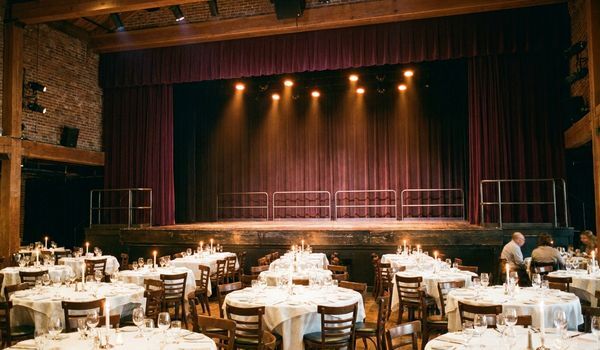
Dinner theater business loans give entertainment venue owners the capital they need to open, operate, renovate, and expand a unique kind of business that blends live performance with full-service dining. Running a dinner theater means managing two businesses at once: a restaurant and a live entertainment venue. Each side carries its own costs, from commercial kitchen equipment and table service staff to stage lighting, sound systems, costumes, and performer payroll. The right financing lets you invest in both sides of the operation without draining your cash reserves.
This guide covers everything dinner theater owners need to know about financing: the loan types available, what lenders look for, how to qualify, realistic rate expectations, and how to match the right funding product to your specific project. Whether you are converting a historic building into a supper club venue, upgrading a tired kitchen, or bridging a slow season, there is a financing structure built for your situation.
In This Article
- What Are Dinner Theater Business Loans?
- Why Dinner Theaters Need Specialized Financing
- How Dinner Theater Business Loans Work
- Types of Dinner Theater Financing
- What Can You Finance?
- Who Qualifies?
- Comparing Your Funding Options
- How Crestmont Capital Helps
- Real-World Scenarios
- Frequently Asked Questions
- How to Get Started
What Are Dinner Theater Business Loans?
Dinner theater business loans are commercial financing products used to fund the startup, operation, renovation, or growth of a venue that combines live theatrical entertainment with a served meal. The term covers a range of funding structures rather than one single loan product. Term loans, business lines of credit, equipment financing, SBA-backed loans, and working capital advances all fall under this umbrella when the borrower operates a dinner theater, supper club, murder mystery venue, or similar eatertainment concept.
What makes this category distinct is the dual nature of the business itself. A lender evaluating a dinner theater is really evaluating two revenue engines at the same time: food and beverage sales on one side, ticket sales and event bookings on the other. That dual revenue model can actually strengthen a loan application, because diversified income streams reduce the risk that one slow month sinks the business. A strong weekend box office can offset a quiet Tuesday in the dining room, and private event bookings add a third revenue layer that most pure restaurants never see.
These loans are used by independent owner-operators, regional theater companies adding a dining component, restaurateurs expanding into live entertainment, and investors converting historic theaters or banquet halls into full dinner show venues. Loan sizes range widely, from $25,000 working capital facilities for established venues to multi-million dollar packages for ground-up conversions of historic properties.
Why Dinner Theaters Need Specialized Financing
Dinner theaters carry a cost structure that most traditional small businesses never face. Understanding those costs explains why access to flexible capital matters so much in this industry.
High upfront buildout costs. A dinner theater needs everything a restaurant needs, plus everything a theater needs. That means a commercial kitchen, bar, dining room furniture, and point of sale systems, alongside a stage, theatrical lighting, professional sound equipment, rigging, curtains, dressing rooms, and often tiered or banquet-style seating built around sightlines. Buildouts for combined venues routinely run into the hundreds of thousands of dollars before the first ticket is sold.
Dual payroll pressure. You are paying kitchen staff, servers, and bartenders at the same time as performers, musicians, directors, stage managers, and technicians. Payroll is one of the largest ongoing expenses, and it does not pause during slow weeks.
Seasonal revenue swings. Most dinner theaters see strong holiday and weekend demand with softer midweek and off-season attendance. Cash flow financing smooths those valleys so fixed costs stay covered year-round.
Production costs per show. Every new production requires investment: rights and licensing fees, set construction, costumes, marketing, and rehearsal payroll before a single ticket is sold. A hit show pays that back many times over, but the capital has to be there first.
Key Stat: Arts and cultural production added more than $1.1 trillion in value to the U.S. economy in recent federal measurements, representing over 4 percent of GDP. Live entertainment venues sit inside one of the most resilient consumer spending categories in the country.
According to the U.S. Census Bureau's Economic Census, arts, entertainment, and recreation businesses generate hundreds of billions of dollars in annual receipts, while food services and drinking places add well over a trillion more. A dinner theater draws revenue from both of these categories at the same time, which is precisely what makes the model so durable when it is capitalized correctly.
The benefits of securing the right financing structure include:
- Preserved cash reserves. Financing large purchases over time keeps working capital available for payroll, inventory, and marketing.
- Faster growth. Expanding seating capacity, adding a matinee service, or launching a new production becomes possible now instead of after years of saving.
- Better guest experience. Modern sound, lighting, and kitchen equipment directly improve reviews, repeat visits, and word-of-mouth referrals.
- Competitive positioning. In markets with multiple entertainment options, the venue with the best production value and dining quality wins group bookings and corporate events.
- Predictable payments. Fixed monthly payments make budgeting straightforward compared to dipping into fluctuating cash flow.
Ready to Fund Your Dinner Theater Vision?
Get fast, flexible financing from the #1 business lender in the U.S. No obligation - apply in minutes.
Apply Now →How Dinner Theater Business Loans Work
The mechanics of a dinner theater loan follow the same broad pattern as other small business financing, with a few industry-specific wrinkles. Here is the process from start to funding.
Step 1: Define the project and the amount. Lenders want to know exactly what the money will do. A request for $180,000 to install a new stage lighting rig, replace 220 banquet seats, and upgrade the convection oven line is far stronger than a vague request for expansion capital. Tie the amount to quotes, contractor bids, or equipment invoices whenever possible.
Step 2: Gather your financials. Expect to provide three to six months of business bank statements, your most recent business tax return, a year-to-date profit and loss statement, and basic details about your venue: time in business, average monthly revenue, existing debt, and ownership structure. Established venues with two or more years of operating history have the smoothest path, though strong revenue can compensate for shorter history.
Step 3: Apply and get matched to products. With a lender like Crestmont Capital, a single application opens the door to multiple product types. A funding advisor reviews your revenue pattern, credit profile, and project type, then recommends the structure that fits: a term loan for a renovation, a line of credit for seasonal coverage, equipment financing for the kitchen upgrade, or a combination.
Step 4: Review offers and terms. Offers spell out the funded amount, term length, payment schedule, and total cost of capital. Compare the annualized cost, not just the monthly payment, and check for prepayment penalties if you expect a strong season to let you pay down early.
Step 5: Sign and receive funds. Many products fund within one to three business days of approval. Equipment financing may pay the vendor directly. Term loans and working capital typically deposit straight into your business account.
Step 6: Put the capital to work and repay. Payments run on a fixed schedule, usually monthly for term loans and weekly or daily for shorter-term products. A strong show season accelerates paydown; a line of credit lets you draw and repay as cash flow moves.
Types of Dinner Theater Financing
No single loan product covers every need a dinner theater has. Most successful venues use a blend of two or three structures over time. Here are the core options.
Term loans. A lump sum repaid over a fixed period, typically one to ten years. Best for large defined projects: a venue acquisition, a major renovation, a seating expansion, or a full production launch. Predictable monthly payments make term loans the backbone of most entertainment venue financing. Crestmont Capital offers small business financing structured around your venue's revenue pattern.
Business lines of credit. A revolving facility you draw from as needed and repay as cash comes in. Perfect for the seasonal rhythm of a dinner theater: draw during the slow quarter to cover payroll and rent, repay when holiday bookings surge. You only pay interest on what you use. A business line of credit is the single most useful tool for managing the gap between box office peaks and valleys.
Equipment financing. Purpose-built funding for the physical assets of your venue: commercial ranges, walk-in coolers, dishwashers, lighting consoles, speaker arrays, projectors, and point of sale systems. The equipment itself serves as collateral, which keeps rates lower and approvals faster. Equipment financing can cover up to 100 percent of the purchase price with terms matched to the useful life of the asset.
SBA loans. Government-backed loans through the Small Business Administration offer the lowest rates and longest terms available, up to 25 years for real estate. The tradeoff is a slower, documentation-heavy process that can take 60 to 90 days. For a dinner theater buying its building or funding a ground-up conversion, the SBA loan programs are worth the wait. Crestmont's SBA loan team can walk you through eligibility.
Working capital loans and advances. Short-term funding based on your revenue rather than hard collateral. Approvals move fast, sometimes same-day, and repayment flexes with your sales. These work well for bridging a slow season, funding a marketing push for a new show, or covering an unexpected repair without touching your line of credit.
By the Numbers
Dinner Theater and Live Entertainment - Key Statistics
$1.1T
Annual value added to U.S. GDP by arts and cultural production
33.3M
Small businesses operating in the United States (SBA)
$1.5T
Projected U.S. restaurant industry sales (National Restaurant Association)
1-3 Days
Typical funding speed for working capital and term loan approvals
What Can You Finance With a Dinner Theater Loan?
One of the most common questions owners ask is what the money can actually be used for. The short answer: nearly any legitimate business expense. Here is how dinner theater owners most often deploy loan proceeds.
Venue acquisition and buildout. Buying or leasing a space and transforming it into a functioning dinner theater is the largest single use of funds. Historic theaters, former banquet halls, and vacant retail anchors all make compelling conversions, and each demands serious capital for seating tiers, stage construction, acoustic treatment, and kitchen installation.
Kitchen and bar equipment. Ranges, ovens, fryers, refrigeration, ice machines, draft systems, and dishwashing lines. A dinner theater kitchen must produce banquet-volume service on a fixed showtime schedule, which means equipment reliability is not optional.
Stage, sound, and lighting technology. Digital mixing consoles, wireless microphone systems, LED lighting rigs, followspots, projection, and acoustic panels. Production quality is your product. Audiences comparing you to a streaming service and a night out at the movies expect a professional experience.
New production launches. Rights and licensing, set construction, costumes, casting, rehearsal payroll, and opening marketing. A new show is essentially a product launch, and funding it properly determines whether it opens to full houses or empty seats.
Marketing and group sales. Dinner theaters live on group bookings: corporate holiday parties, tour buses, birthday celebrations, and fundraisers. Funding a dedicated group sales push, a website rebuild with online ticketing, or a regional advertising campaign often delivers the fastest payback of any investment. Consumer spending has shifted steadily toward experiences over material goods, a trend covered extensively by outlets like CNBC's small business reporting, and venues that market the full evening experience capture that demand most effectively.
Payroll and operating expenses during slow periods. Keeping your core cast, kitchen leadership, and technical crew intact through the off-season protects the quality that drives your reviews. Short-term working capital bridges those weeks without layoffs.
Who Qualifies for Dinner Theater Business Loans?
Qualification standards vary by product and lender, but the core factors are consistent across the industry.
Time in business. Most term loan and line of credit products want at least six months to two years of operating history. SBA loans typically require two years. Newer venues can still access equipment financing and revenue-based products, since those lean more heavily on current sales and collateral than on history.
Revenue. Lenders look at your average monthly deposits as the primary measure of repayment capacity. Many alternative products start around $10,000 to $15,000 in monthly revenue, while larger term loans scale with demonstrated cash flow. A dinner theater with strong ticket pre-sales and event deposits should highlight those forward bookings in the application.
Credit profile. Personal credit scores of 650 and above unlock the widest product menu and best pricing. Scores in the 550 to 650 range still qualify for working capital and equipment products at adjusted rates. Lenders review the whole picture: a strong revenue trend and low existing debt can offset a middling score.
Existing obligations. Your current debt load relative to revenue matters. If fixed payments already consume a large share of monthly cash flow, a lender may size the new facility smaller or structure it as a line of credit instead of a lump sum.
Collateral and guarantees. Equipment financing is secured by the assets themselves. Larger term loans may file a blanket lien on business assets, and most small business loans include a personal guarantee from owners with 20 percent or more equity.
Pro Tip: Dinner theaters with multiple revenue streams should document each one separately: ticket sales, food and beverage, private events, and merchandise. Lenders underwrite total deposits, but itemized revenue demonstrates stability and often supports a larger approval.
Dinner Theater Loans vs. Other Funding Options
How does dedicated business financing stack up against the alternatives dinner theater owners typically consider? This comparison lays out the practical tradeoffs.
| Funding Option | Speed | Cost | Best Use Case |
|---|---|---|---|
| Term Loan | 1-5 business days | Moderate, fixed payments | Renovations, expansions, show launches |
| Business Line of Credit | 1-3 business days | Interest only on drawn amount | Seasonal cash flow, payroll gaps |
| Equipment Financing | 1-3 business days | Lower, asset-secured | Kitchen, sound, lighting purchases |
| SBA Loan | 30-90 days | Lowest available rates | Real estate, large conversions |
| Personal Savings | Immediate | No interest, but full risk | Small gaps only; depletes safety net |
| Investor Capital | Months | Equity dilution, profit share | Large new-venue launches |
Compared to personal savings, business financing preserves your safety net and lets the venue's own revenue service the debt. Compared to investor capital, loans keep full ownership and creative control in your hands, which matters enormously in a business where artistic vision drives the brand. And compared to credit cards, dedicated business products carry materially lower costs at the ticket sizes a dinner theater actually needs. Independent analysis from Forbes Advisor's business loan coverage consistently shows that structured term financing beats revolving card debt for six-figure projects, both on total cost and on monthly payment impact.
Owners of related venue types face the same calculus. Our guide to concert venue business loans covers the live-music side of the entertainment industry, and our movie theater financing guide walks through a cinema-specific version of the same dual-revenue model.
How Crestmont Capital Helps Dinner Theater Owners
Crestmont Capital is rated the #1 business lender in the country, and entertainment venues are a core specialty. The difference shows up in three places: speed, structure, and understanding of how a dinner theater actually makes money.
Speed that matches show business. When a sound board dies on a Thursday and you have a sold-out weekend, you cannot wait six weeks for a bank committee. Crestmont's streamlined application delivers decisions in hours and funding in as little as one business day for most products.
Structures built around your season. A funding advisor who understands entertainment revenue will not force a rigid daily-payment product onto a venue with weekend-heavy sales. Crestmont matches the repayment rhythm to your actual cash flow: monthly term loan payments for a renovation, a revolving line of credit for the off-season, equipment financing for the kitchen, or a combination package.
One application, multiple products. Instead of applying separately for an equipment loan, a line of credit, and a term loan, you apply once. Your advisor builds the full package, which might pair unsecured working capital loans for the season bridge with equipment financing for the new convection ovens.
Crestmont has funded thousands of hospitality and entertainment businesses nationwide, from single-room supper clubs to multi-venue operators. Restaurants within entertainment venues are a particular strength, as covered in our restaurant business loans guide. The same underwriting expertise applies directly to the dining side of your dinner theater.
Get a Funding Package Built for Your Venue
One application. Multiple loan options. Decisions in hours, not weeks.
Apply Now →Real-World Dinner Theater Financing Scenarios
Abstract loan terms make more sense in concrete situations. Here are four scenarios drawn from the most common ways dinner theater owners use financing.
Scenario 1: The historic conversion. An owner-operator buys a 1940s single-screen cinema in a revitalizing downtown district for $650,000 and needs another $400,000 to convert it into a 180-seat dinner theater with a full commercial kitchen. An SBA 504 loan covers the real estate and major construction at the lowest available rate, while equipment financing handles the $120,000 kitchen package and the $85,000 sound and lighting rig. The venue opens with manageable fixed payments and a 25-year runway on the building.
Scenario 2: The mid-season equipment failure. A regional dinner theater's main convection oven and walk-in compressor fail within the same month, mid-run of a popular show. Replacing both costs $58,000. Equipment financing funds the full amount in three days, the shows never cancel, and the five-year term keeps payments around $1,200 per month, easily covered by weekend banquet service.
Scenario 3: The seasonal bridge. A tourist-market dinner theater does 65 percent of its annual revenue between November and April. Every summer it faces the same squeeze: full payroll and rent against half-full houses. A $100,000 business line of credit solves it permanently. The venue draws $30,000 to $40,000 each off-season, repays it by February, and pays interest only on what it uses.
Scenario 4: The capacity expansion. A successful murder mystery dinner theater with a two-month ticket waitlist decides to add a 60-seat second dining room and a dedicated bar. The $175,000 project is funded with a five-year term loan. The added seats generate roughly $28,000 in new monthly revenue at historical average ticket and per-person dining spend, covering the loan payment in the first week of each month.
Frequently Asked Questions
What is a dinner theater business loan? +
It is any commercial financing product used to fund a venue that combines live entertainment with served dining. Term loans, lines of credit, equipment financing, SBA loans, and working capital products all qualify, and most venues use a combination matched to specific projects like renovations, equipment purchases, or seasonal cash flow coverage.
How much can I borrow for a dinner theater? +
Loan sizes range from $25,000 working capital facilities to multi-million dollar packages for venue acquisitions. The amount you qualify for depends on your monthly revenue, time in business, credit profile, and existing debt. Most lenders size approvals at a level your demonstrated cash flow can comfortably service.
What credit score do I need to qualify? +
Scores of 650 and above unlock the widest product selection and best rates. Scores between 550 and 650 still qualify for working capital and equipment financing, usually at adjusted pricing. Strong revenue trends and low existing debt can offset a lower score, since lenders underwrite the whole business picture.
Can I get a dinner theater loan with bad credit? +
Yes. Revenue-based products and equipment financing weigh current sales and collateral more heavily than credit history. A dinner theater with strong monthly deposits but a damaged credit score can still access meaningful funding, though at higher cost. Rebuilding credit with a smaller facility first often unlocks better terms within a year.
How fast can I get funding? +
Working capital and equipment financing can fund in one to three business days after approval. Standard term loans typically take two to five days. SBA loans are the slow exception at 30 to 90 days, which is the tradeoff for their lower rates and longer terms.
Do I need collateral for a dinner theater loan? +
Not always. Equipment financing is secured by the purchased assets themselves. Working capital products and many lines of credit are unsecured, relying on revenue and a personal guarantee instead. Larger term loans may take a blanket lien on business assets, but specific hard collateral is rarely required for approvals under $500,000.
Can I finance a dinner theater renovation? +
Absolutely. Renovations are one of the most common uses of term loans in this industry. Seating expansions, kitchen remodels, stage rebuilds, lobby upgrades, and ADA compliance projects all qualify. Lenders like to see contractor bids or detailed project budgets attached to renovation requests.
What documents do I need to apply? +
Most applications require three to six months of business bank statements, a recent profit and loss statement, your latest business tax return, and basic ownership information. Equipment financing adds a vendor quote or invoice. SBA loans require substantially more documentation, including personal financial statements and several years of returns.
Are SBA loans a good fit for dinner theaters? +
For the right project, they are the best-priced option available. SBA 7(a) and 504 loans offer rates well below alternative products and terms up to 25 years for real estate. The catch is speed and paperwork. Use SBA financing for planned projects like venue purchases and major conversions, and faster products for time-sensitive needs.
Can I use a loan to buy kitchen and stage equipment? +
Yes, and equipment financing is purpose-built for exactly that. It can cover up to 100 percent of the purchase price for ovens, refrigeration, dishwashers, lighting rigs, sound systems, projectors, and POS systems. Terms typically run three to seven years, matched to the useful life of the equipment, and the assets themselves secure the loan.
What interest rates should I expect? +
Rates vary by product, credit profile, and term length. SBA loans currently price in the single digits to low teens. Bank and alternative term loans range from roughly 8 to 25 percent annualized. Equipment financing lands in a similar band, while short-term working capital carries higher factor-based pricing. Strong credit, longer history, and higher revenue all pull pricing down.
Can a recently opened dinner theater qualify for funding? +
Venues with at least six months of operating history and consistent monthly revenue can qualify for working capital, equipment financing, and some term products. Under two years of history narrows the menu and may reduce the approved amount, but strong ticket sales and event deposits demonstrate repayment capacity that lenders respect.
Can I refinance existing dinner theater debt? +
Yes. Refinancing replaces expensive short-term debt with a longer-term, lower-payment structure. Owners who stacked daily-payment advances during a rough patch often consolidate them into a single term loan, cutting their monthly obligations significantly. You will need payoff statements from current lenders as part of the application.
What is the difference between a term loan and a line of credit? +
A term loan delivers one lump sum that you repay on a fixed schedule, ideal for defined projects like renovations or show launches. A line of credit is a revolving facility you draw from and repay as needed, paying interest only on the outstanding balance. Most dinner theaters eventually carry both: a term loan for the big project and a line for seasonal swings.
How do I apply with Crestmont Capital? +
Start with the online application at offers.crestmontcapital.com/apply-now, which takes just a few minutes. A funding advisor reviews your revenue, credit, and project, then presents matched options with clear terms. Most applicants receive decisions within hours and funding within one to three business days.
Your Next Sold-Out Season Starts Here
Join thousands of business owners who funded their growth with Crestmont Capital.
Apply Now →How to Get Started
Complete our quick application at offers.crestmontcapital.com/apply-now - takes just a few minutes.
A Crestmont Capital advisor will review your venue's revenue pattern and match you with the right financing structure.
Receive your funds and put them to work on your venue, often within days of approval.
Final Thoughts on Dinner Theater Business Loans
A dinner theater asks more of its owner than almost any other small business: you are running a restaurant, producing live theater, and managing a venue all at the same time. That complexity is exactly why the right financing partner matters. Dinner theater business loans exist to match capital to each side of the operation, from the walk-in cooler to the lighting rig to the seasonal payroll bridge.
The owners who thrive in this industry treat financing as a strategic tool rather than a last resort. They lock in a line of credit before the slow season arrives, finance equipment before it fails mid-run, and fund expansions while demand is proven instead of after competitors catch up. With the right structure in place, capital stops being a constraint and starts being the fuel for your next great production.
Crestmont Capital has helped thousands of business owners across hospitality and entertainment fund their growth with fast decisions, flexible structures, and advisors who understand how venues like yours actually make money. The application takes minutes, and there is no obligation to accept an offer.
Disclaimer: The information provided in this article is for general educational purposes only and is not financial, legal, or tax advice. Funding terms, qualifications, and product availability may vary and are subject to change without notice. Crestmont Capital does not guarantee approval, rates, or specific outcomes. For personalized information about your business funding options, contact our team directly.

Allan Garfinkle
Allan Garfinkle is the Chief Revenue Officer at Crestmont Capital, where he has spent more than a decade leading revenue strategy, business development, and operational growth. With 28 years of experience building and advising startups and small businesses, Allan has helped more than 10,000 business owners navigate financing decisions, growth opportunities, and changing economic conditions. He earned a Bachelor of Science in Economics and an MBA with a concentration in Finance from Northeastern University, as well as a Juris Doctor from New England Law, where his studies focused on contracts and business law. His writing draws on extensive practical experience in small-business lending, equipment financing, business credit, and commercial finance.