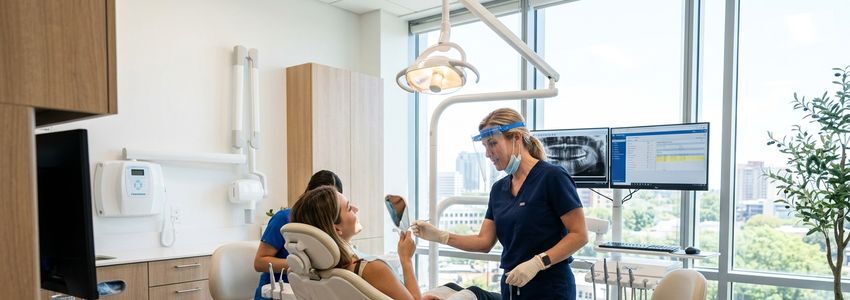
Running a dental practice is one of the most capital-intensive ventures in healthcare. From high-tech imaging systems and patient chairs to payroll, lease obligations, and continuing education, the financial demands never let up. A dental practice business loan gives practice owners and dentists the capital they need to grow, upgrade, and stabilize - without waiting for insurance reimbursements to catch up with expenses.
Whether you are opening a new office, expanding to a second location, replacing aging equipment, or simply managing a slow revenue month, the right financing can make the difference between a thriving practice and a stagnant one. This guide covers every major loan option available to dentists, how to qualify, what lenders want to see, and how Crestmont Capital can help you get funded fast.
In This Article
- What Is a Dental Practice Business Loan?
- Key Benefits for Dental Practice Owners
- Types of Dental Practice Business Loans
- How Dental Practice Financing Works
- How to Qualify
- Who Benefits Most
- Real-World Scenarios
- How Crestmont Capital Helps
- Comparing Your Financing Options
- How to Get Started
- Frequently Asked Questions
What Is a Dental Practice Business Loan?
A dental practice business loan is a form of commercial financing specifically used by dentists and dental office owners to fund practice-related expenses. Unlike personal loans or general consumer credit, these loans are underwritten based on the financial performance of the dental practice itself, making approval more attainable for established operators with consistent revenue.
Dental practices are among the most creditworthy small businesses in the country. Lenders view dentistry as a stable, recession-resistant profession with strong cash flow predictability. According to the U.S. Small Business Administration, healthcare businesses including dental practices consistently show some of the lowest default rates across all small business loan categories.
Funding from a dental practice business loan can be used for nearly any legitimate business purpose: purchasing diagnostic or treatment equipment, renovating your facility, hiring and training staff, covering working capital gaps, acquiring an existing practice, or opening a second location. The flexibility makes these loans one of the most powerful tools in a dentist's financial arsenal.
Industry Insight: The American Dental Association reports that the average dental practice generates between $750,000 and $1.5 million in annual collections, making dental offices strong loan candidates with predictable repayment capacity.
Key Benefits for Dental Practice Owners
Dental practice owners who secure business financing gain several strategic advantages over competitors who rely solely on operating cash flow. Here is why dentists pursue business loans as a growth tool rather than a last resort.
- Preserve cash reserves - Keep operating funds available for payroll, supplies, and emergencies instead of tying them up in capital purchases
- Access to modern technology - Finance cone beam CT scanners, digital X-ray systems, CAD/CAM milling units, and laser equipment that command premium patient fees
- Faster practice growth - Fund expansion without waiting years for organic savings to accumulate
- Competitive positioning - Offer services and patient experiences that smaller, under-equipped practices cannot match
- Working capital flexibility - Bridge cash flow gaps caused by insurance reimbursement delays or seasonal patient volume dips
- Staff investment - Hire specialists, hygienists, or front office managers who generate more revenue than they cost
- Leverage good credit while rates allow - Lock in favorable rates during periods of accessible lending rather than waiting until capital is urgently needed
The bottom line is that strategic financing allows dental practices to grow on their terms rather than on cash flow's terms. Practices that invest in growth consistently outperform those that defer capital investment indefinitely.
Types of Dental Practice Business Loans
Dental practice owners have access to a range of financing products, each suited to different needs, timelines, and financial profiles. Understanding your options positions you to choose the product that delivers the best outcome for your specific situation.
Term Loans
A traditional term loan provides a lump sum of capital repaid over a fixed period - typically 2 to 10 years - with regular monthly payments. Term loans are ideal for major purchases like equipment, practice acquisitions, or facility renovations. Interest rates are generally competitive, especially for borrowers with strong credit and established revenue histories.
SBA Loans
SBA loans are government-backed loans that offer some of the lowest rates available to small business owners. The SBA 7(a) program is the most popular for dental practices, offering loan amounts up to $5 million with repayment terms up to 10 years for working capital or up to 25 years for real estate. The catch is that the approval process is longer and documentation requirements are more extensive. Dentists with strong financial records and a willingness to navigate the process will find SBA loans among the most affordable options in the market.
Equipment Financing
Dental equipment financing is purpose-built for practices that need to acquire specific assets. The equipment itself serves as collateral, which means approval is often easier and rates are frequently lower than unsecured options. Dental chairs, autoclaves, panoramic X-ray machines, intraoral cameras, and CEREC systems are all commonly financed this way. Loan amounts match the equipment purchase price and repayment terms typically align with the asset's useful life.
Business Line of Credit
A business line of credit functions like a revolving credit account that your practice draws from as needed. You only pay interest on what you borrow, and as you repay the balance, your available credit replenishes. Lines of credit are perfect for managing cash flow variability, covering supply purchases, or handling unexpected expenses without applying for a new loan each time capital is needed.
Working Capital Loans
Working capital loans provide short-to-medium term funding to cover operational expenses such as payroll, rent, utilities, and supply orders. These loans are particularly valuable during slow patient months or periods when insurance reimbursement timelines extend beyond normal. Small business loans structured as working capital products typically fund in days rather than weeks.
Practice Acquisition Loans
Buying an existing dental practice often requires financing that covers the purchase price, transition costs, and initial working capital simultaneously. Acquisition loans are structured to account for the goodwill value of the practice - a factor that traditional lenders sometimes struggle with but specialized dental lenders understand well. Loan amounts for acquisitions commonly range from $250,000 to over $2 million depending on the practice's size and revenue.
| Loan Type | Best For | Typical Amount | Funding Speed |
|---|---|---|---|
| Term Loan | Renovations, major purchases | $50K - $2M+ | 1-2 weeks |
| SBA 7(a) Loan | Long-term growth, low rates | Up to $5M | 4-8 weeks |
| Equipment Financing | Specific equipment purchase | $10K - $500K | 3-7 days |
| Line of Credit | Cash flow, recurring expenses | $25K - $500K | 1-5 days |
| Working Capital | Payroll, supplies, operations | $10K - $250K | 24-72 hours |
| Acquisition Loan | Buying an existing practice | $250K - $3M+ | 2-6 weeks |
Ready to Fund Your Dental Practice?
Explore financing options built for dental professionals. No obligation - get a quote in minutes from the #1 business lender in the U.S.
Apply Now →How Dental Practice Financing Works
Understanding the mechanics of dental practice lending helps you navigate the process with confidence and avoid common mistakes that delay funding. The application-to-funding journey typically follows a predictable path, and knowing each step eliminates surprises.
Step 1 - Define Your Capital Need
Before approaching any lender, clarify exactly how much capital you need and what you will use it for. Vague requests produce vague offers. Whether you need $80,000 for a new cone beam CT scanner or $300,000 to build out a second operatory, specificity helps lenders structure the right product and demonstrates that you have a deliberate plan for the funds.
Step 2 - Gather Financial Documentation
Lenders will review your practice's financial performance before extending credit. Standard documentation includes 6 to 24 months of business bank statements, two years of business and personal tax returns (for SBA and traditional loans), a current profit and loss statement, and possibly accounts receivable aging reports. The more organized your records, the faster the underwriting process moves.
Step 3 - Submit Your Application
Most alternative lenders and specialty dental lenders accept online applications that take 10 to 15 minutes to complete. Traditional banks and SBA lenders require more paperwork and in-person meetings, but the tradeoff is typically better rates and terms for those willing to invest the time.
Step 4 - Underwriting and Approval
Lenders analyze your credit profile, practice revenue, debt service coverage ratio, and the purpose of the loan. Dental practices are viewed favorably because of the profession's income stability and low default history. According to reporting from Forbes, healthcare practices including dental offices typically receive more favorable lending terms than most other small business categories due to their stable revenue streams and high earning potential.
Step 5 - Funding
Once approved, funds are disbursed directly to your business account. Equipment financing may disburse directly to the vendor. Working capital and term loan funds typically arrive within 24 to 72 hours for alternative lenders. SBA loans and traditional bank financing take longer but deliver capital at more favorable rates.
By the Numbers
Dental Practice Business Loans - Key Statistics
$187B
U.S. dental industry annual revenue (IBISWorld)
200K+
Active dental practices in the U.S.
72 hrs
Typical funding timeline with alternative lenders
$500K
Avg. practice acquisition cost in major metro markets
How to Qualify for a Dental Practice Business Loan
Qualification requirements vary significantly depending on the lender type and loan product. However, most lenders evaluate dental practice loan applications across the same core dimensions. Knowing what they look for helps you strengthen your application before you submit it.
Credit Score
Your personal credit score plays a meaningful role in most dental practice loan approvals. Traditional banks typically want scores of 680 or higher. SBA lenders look for 650 at minimum. Alternative and specialty lenders will work with scores in the 580 to 650 range, though rates will reflect the additional credit risk. If your score needs improvement, paying down revolving balances and resolving any collection accounts before applying can meaningfully shift your approval odds and rates.
Practice Revenue and Cash Flow
Lenders want evidence that your practice generates enough revenue to comfortably service the new debt. Most look for a debt service coverage ratio (DSCR) of at least 1.25, meaning your net income covers loan payments by at least 125%. For a practice with $900,000 in annual revenue and $200,000 in annual operating profit, a $100,000 loan with $25,000 in annual payments would demonstrate a DSCR well above the minimum threshold.
Time in Business
Established practices have a significant advantage. Most conventional lenders want to see at least 2 years in operation. Alternative lenders may work with practices that have 6 to 12 months of operating history, though loan amounts and terms may be more conservative for younger businesses. Newer practices can strengthen their application by presenting a solid business plan and patient acquisition projections.
Collateral
Equipment loans are secured by the equipment being purchased. Term loans and SBA loans may require personal guarantees, business assets, or real estate as collateral. Lines of credit are often unsecured for established practices with strong financials. Understanding what collateral is available strengthens your negotiating position and expands the range of products you can access.
Pro Tip: Dental practices with consistent revenue growth - even modest single-digit annual increases - are viewed significantly more favorably by underwriters than flat-revenue practices. Showing upward momentum tells lenders the practice has momentum behind it.
Who Benefits Most from a Dental Practice Business Loan
Not every dental professional has the same financing need. A dental practice business loan serves a diverse range of operators at different stages of their professional journey. Here is a breakdown of who benefits most from each type of financing.
Established Solo Practitioners
A dentist running a solo practice for 5 or more years with consistent revenue is an ideal candidate for term loans and equipment financing. Their track record makes underwriting straightforward, and their stable income often qualifies them for the most favorable rates. Common uses: upgrading to digital X-ray systems, adding a cone beam CT unit, renovating the reception area, or adding an operatory chair.
Multi-Location Owners
Dentists managing two or more locations often use business loans to finance the build-out and equipment for additional locations. They may also use commercial lines of credit to manage cash flow across multiple entities with different billing cycles and insurance reimbursement schedules. Larger credit facilities and commercial real estate loans are common in this group.
Dentists Buying an Existing Practice
Practice acquisitions require financing that accounts for both the tangible assets and the intangible goodwill - the patient relationships and revenue streams that give the practice its value. Lenders experienced with dental practice acquisitions understand how to structure these deals and can often get the transaction funded within 30 to 45 days. The acquired practice's revenue history frequently serves as the primary underwriting basis.
New Dentists Building from Scratch
A dentist fresh out of residency or associate work who wants to open their own practice faces the most challenging lending environment, but the path is not closed. Lenders who specialize in dental startup loans understand the profession's income trajectory and often fund de novo practices based on the dentist's educational credentials, location analysis, and business plan. Many new dentists find success by starting with a leased space and financing the equipment before building toward ownership.
Group Practices and DSOs
Dental service organizations and group practices use commercial financing extensively to fund acquisitions, technology upgrades, and practice integrations. These entities often access larger credit facilities, revolving lines, and structured commercial loans that align with their more complex operational models. Their scale and revenue diversification typically make them attractive borrowers for higher-limit facilities.

Real-World Scenarios: Dental Practices Putting Loans to Work
Understanding how other dental practices have used business loans helps illustrate the range of situations where financing creates meaningful business outcomes. These scenarios represent common situations Crestmont Capital helps address.
Scenario 1: Equipment Upgrade to Compete
A general dentistry practice in a suburban market was losing patients to a competitor that had recently installed a same-day CEREC crown milling system. The practice owner needed $180,000 to acquire the system and integrate it into the clinical workflow. Rather than waiting 3 to 4 years to save that amount from operating cash flow, the owner financed the purchase through an equipment loan. Within 18 months, the practice had recaptured patient volume and was generating significant additional revenue from in-house crown procedures that had previously been sent to the lab.
Scenario 2: Managing Insurance Reimbursement Delays
A 4-operatory general practice with strong patient volume encountered a cash flow crisis when a major insurance payer extended processing times from 30 to 65 days following a system migration. The practice needed $75,000 to cover two months of payroll and supply costs while collections caught up. A short-term working capital loan bridged the gap without requiring the owner to draw personal funds or delay staff paychecks.
Scenario 3: Opening a Second Location
A periodontist with a well-established primary practice in a city center identified strong patient demand in a growing suburban neighborhood 12 miles away. The build-out and equipment for the second location totaled $420,000. The periodontist secured a term loan based on the primary practice's revenue history. The second location reached breakeven within the first year and became profitable in year two, well ahead of projections.
Scenario 4: Practice Acquisition
A dental associate working at a group practice for six years identified a solo practitioner approaching retirement who was willing to sell for $650,000. The associate had strong personal credit and substantial clinical credentials but limited personal savings. A dental practice acquisition loan covered the purchase price, transition costs, and 90 days of initial working capital. The acquired practice's existing patient base and revenue history served as the primary underwriting basis, making the transaction viable despite the associate's limited prior ownership history.
Scenario 5: Technology-Driven Specialty Expansion
A general dentist recognized that patients were being referred out for cone beam CT imaging at a cost of $350 to $500 per scan. Bringing that capability in-house required a $95,000 investment in the imaging system and software. An equipment financing arrangement structured the purchase over 60 months. The scan revenue more than offset the monthly payment within the first quarter, and the system also improved the practice's implant and orthodontic case planning capabilities.
Scenario 6: Staffing Investment During Growth Phase
A high-volume practice with a 3-month patient backlog needed to hire a second associate dentist and two additional dental assistants to reduce wait times and capture demand. The hiring, onboarding, and training cycle required approximately $85,000 before the new staff became revenue-generating. A working capital loan funded the gap and was fully repaid within eight months as the expanded team increased monthly collections significantly.
How Crestmont Capital Helps Dental Practice Owners
Crestmont Capital is one of the most active dental practice lenders in the U.S. market, providing a range of financing solutions specifically structured for dental professionals. Our team understands the unique financial dynamics of dental practices - from insurance reimbursement cycles to equipment depreciation schedules - and structures loans accordingly.
We offer dental practice owners access to equipment financing, working capital loans, term loans, and lines of credit with fast approvals and competitive terms. Unlike traditional banks that apply one-size-fits-all underwriting standards to every small business, Crestmont's underwriters evaluate dental practices with an industry-specific lens that recognizes the profession's inherent strengths as a borrower category.
Dental practice owners applying with Crestmont typically receive initial approval decisions within hours, not days. Funding can arrive in as few as 24 hours for working capital and 3 to 5 business days for equipment and term loans. There is no obligation to accept any offer, and applications do not require a hard credit pull to see preliminary options.
Our clients include solo practitioners, group practice operators, DSO affiliates, and dentists opening their first practice. The common thread is that each one needed capital faster than traditional banking could provide it, and Crestmont delivered. If you want to see how other healthcare professionals have navigated similar decisions, our overview of medical practice loans covers parallel use cases across the healthcare sector.
Get Your Dental Practice Funded Fast
Crestmont Capital has helped hundreds of dental practices access the capital they need. Apply now and see your options within hours - no commitment required.
Apply Now →Comparing Dental Practice Financing Options
Every dental practice has a unique financial profile, and no single loan product is right for every situation. The comparison below highlights the key tradeoffs between the major financing categories so you can match the right tool to your need.
Traditional Bank Loans vs. Alternative Lenders
Traditional banks offer lower interest rates but come with slower approvals, more documentation requirements, and stricter credit standards. Alternative lenders like Crestmont Capital move faster, work with a broader range of credit profiles, and require less paperwork - but rates may be moderately higher to reflect the streamlined underwriting. For most dentists, the right choice depends on urgency and the purpose of the funds. A practice acquisition that can afford 6 to 8 weeks of processing may benefit from a bank or SBA product. An equipment replacement or cash flow bridge needs the speed that alternative lenders provide.
According to CNBC, small business owners are increasingly turning to alternative lenders for speed and flexibility, with approval timelines of 1 to 3 days compared to weeks or months at traditional institutions.
Loans vs. Leasing
For equipment, dental practice owners sometimes debate whether to borrow to buy or to lease. Leasing preserves cash and can make high-cost equipment accessible at lower monthly payments, but you do not build equity in the equipment and may face restrictions on modifications. Financing to purchase gives you full ownership at the end of the term and may offer more flexibility in how you use and upgrade the equipment. The right choice depends on how long you plan to use the equipment and your preference for ownership versus payment efficiency.
Fixed vs. Variable Rate Financing
Fixed-rate loans lock in your interest rate for the life of the loan, making budgeting predictable. Variable-rate products - common in lines of credit - fluctuate with market rates. In periods of rate stability or decline, variable products can save money. During periods of rising rates, fixed products protect against increasing payment burdens. Most dental practice owners prefer fixed-rate term loans for large capital expenditures and reserve variable-rate lines of credit for flexible, short-term use.
Lending Landscape: According to Bloomberg, healthcare and medical practices - including dental offices - represent one of the most sought-after small business lending segments, with default rates roughly 30 to 40 percent below the broader small business average. This favorable risk profile gives dental practice owners more negotiating leverage than most borrowers realize.
How to Get Started
Complete our fast application at offers.crestmontcapital.com/apply-now - takes less than 15 minutes and does not require a hard credit pull to see your options.
A Crestmont Capital advisor with healthcare lending experience will review your practice's financial profile and match you with the right loan product and terms.
Once approved, funding arrives in your business account often within 24 to 72 hours. For equipment purchases, funds can disburse directly to the vendor on your behalf.
Frequently Asked Questions
What is a dental practice business loan?
A dental practice business loan is a commercial financing product used by dentists and dental office owners to fund practice expenses such as equipment purchases, facility renovations, working capital, staff hiring, or practice acquisitions. These loans are underwritten based on the financial performance of the dental practice and are available through banks, SBA lenders, and alternative lenders like Crestmont Capital.
How much can I borrow for my dental practice?
Loan amounts vary by product and lender. Equipment financing typically ranges from $10,000 to $500,000 per transaction. Working capital loans commonly run from $10,000 to $250,000. Term loans for established practices can reach $2 million or more. SBA 7(a) loans go up to $5 million. The amount you qualify for depends on your practice's revenue, credit profile, and the purpose of the loan.
What credit score do I need for a dental practice loan?
Credit score requirements vary by lender type. Traditional banks and SBA lenders typically require scores of 650 to 680 or higher. Alternative and specialty lenders may work with scores as low as 580 to 620, though terms will reflect the additional risk. Improving your score before applying - by paying down revolving balances and resolving any derogatory items - can meaningfully improve both your approval odds and the rates you receive.
How fast can I get a dental practice business loan?
Funding speed depends heavily on the lender and loan type. Alternative lenders like Crestmont Capital can approve and fund working capital loans and equipment financing in as little as 24 to 72 hours. Term loans from alternative lenders typically fund within 5 to 7 business days. SBA loans and traditional bank loans require 4 to 8 weeks due to more extensive underwriting and documentation requirements.
Can a new dental practice qualify for a business loan?
Yes, though options are more limited than for established practices. Startup and de novo dental practices often qualify for equipment financing based on the asset's collateral value and the dentist's personal credit and credentials. Lenders who specialize in dental startup lending also evaluate the practice's location, market demographics, and the dentist's clinical experience when making approval decisions. A solid business plan with realistic patient acquisition projections strengthens a startup application considerably.
What can I use a dental practice business loan for?
Dental practice business loans can fund virtually any legitimate business expense including: purchasing or upgrading dental equipment (chairs, imaging, sterilization, CAD/CAM systems), facility renovations or build-outs, staff hiring and training, marketing and patient acquisition campaigns, practice acquisitions or buyouts, working capital for day-to-day operations, and expansion into new locations or specialties.
Do I need collateral to get a dental practice loan?
Collateral requirements vary by loan type. Equipment loans are secured by the equipment being financed, which makes them easier to approve than unsecured products. SBA loans typically require collateral when available, and personal guarantees are standard. Working capital loans and lines of credit from alternative lenders are often unsecured for established practices with strong revenue. Lenders will evaluate your overall financial profile to determine what collateral, if any, is required.
What interest rates can I expect on a dental practice loan?
Interest rates on dental practice business loans range widely depending on the lender type, loan product, and borrower profile. SBA loans typically carry rates in the 6 to 11 percent range. Traditional bank term loans are often in the 7 to 12 percent range. Alternative lender products for working capital or equipment may range from 9 to 30 percent depending on credit profile and loan term. Equipment financing rates are generally among the most competitive because the asset provides security for the lender.
Is it better to lease or buy dental equipment?
Whether to lease or buy dental equipment depends on your cash flow goals, how long you plan to use the equipment, and whether you want to build equity in the asset. Leasing typically offers lower monthly payments and the flexibility to upgrade equipment at the end of the term. Buying through a loan means higher monthly payments but full ownership of the asset after the term. For long-life equipment like operatory chairs or sterilizers, buying often makes more financial sense over a 10 to 15 year horizon.
Can I finance a dental practice acquisition?
Yes. Practice acquisition financing is one of the most common uses of dental practice business loans. Lenders experienced in dental acquisitions can structure financing that covers the purchase price, transition costs, and initial working capital. The acquired practice's revenue history is a primary underwriting factor, which means even buyers with limited personal savings can often qualify if the target practice has strong documented collections.
How long are repayment terms on dental practice loans?
Repayment terms vary by loan product. Working capital loans typically have terms of 6 to 24 months. Equipment financing usually runs 24 to 84 months depending on the equipment's useful life. Traditional term loans for established practices range from 2 to 10 years. SBA 7(a) loans have terms up to 10 years for working capital and equipment and up to 25 years for real estate. Longer terms mean lower monthly payments but more total interest paid over the life of the loan.
What documents do I need to apply for a dental practice loan?
Documentation requirements depend on the lender and loan product. Alternative lenders typically require 3 to 6 months of business bank statements, a completed application, and basic business information. Traditional and SBA lenders require more: typically 2 years of business and personal tax returns, a current profit and loss statement, a balance sheet, accounts receivable aging report, and a business plan for startups or acquisitions. Having your documents organized before applying accelerates the underwriting process significantly.
Can I get a dental practice loan with bad credit?
Yes, though your options narrow and rates typically increase as credit scores decline. Alternative lenders and specialty dental lenders work with scores in the 580 to 640 range, particularly when the practice itself has strong revenue. Equipment financing is often more accessible for lower-credit borrowers because the equipment serves as collateral. Working to improve your credit score before applying - even modestly - can open up better rates and larger loan amounts.
How does a dental practice loan affect my practice's cash flow?
A dental practice loan adds a monthly debt service obligation to your operating expenses, which reduces net cash flow by the loan payment amount. However, if the loan funds revenue-generating assets - such as equipment that enables higher-revenue procedures or additional operatories that increase patient throughput - the revenue uplift typically exceeds the loan payment, resulting in a net positive cash flow impact. Working capital loans stabilize existing cash flow without creating a direct revenue offset.
Why choose Crestmont Capital for a dental practice business loan?
Crestmont Capital is rated the #1 business lender in the U.S. and has extensive experience funding dental practices across all growth stages. We offer fast approvals - often within hours - competitive terms, and financing specialists who understand the unique financial dynamics of dental offices. Our application process is simple, our team is accessible, and we are committed to helping dental practice owners access capital without the friction of traditional banking. Apply online to see your options with no hard credit pull required.
Your Dental Practice Deserves the Best Financing
Stop letting cash flow stand between your practice and its potential. Apply with Crestmont Capital and get a decision in hours, not weeks.
Apply Now →Conclusion
A dental practice business loan is more than just borrowed money - it is a strategic tool that allows dentists to invest in their practice, serve more patients, and build lasting enterprise value without sacrificing the capital reserves needed for day-to-day operations. Whether your goal is to upgrade equipment, acquire a practice, expand your footprint, or bridge a cash flow gap, there is a financing product designed for your specific situation.
Dental practices occupy a uniquely strong position in the small business lending landscape. The profession's income stability, low default rates, and high earning potential make dental offices among the most attractive borrowers in the healthcare sector. That works in your favor when you approach the right lender with a clear plan for the funds.
Crestmont Capital specializes in helping dental practice owners access capital quickly, with terms that reflect the strength of the dental profession rather than the limitations of generic small business underwriting. If you are ready to take the next step, apply now and see what a dental practice business loan from Crestmont can do for your practice.
Disclaimer: The information provided in this article is for general educational purposes only and is not financial, legal, or tax advice. Funding terms, qualifications, and product availability may vary and are subject to change without notice. Crestmont Capital does not guarantee approval, rates, or specific outcomes. For personalized information about your business funding options, contact our team directly.