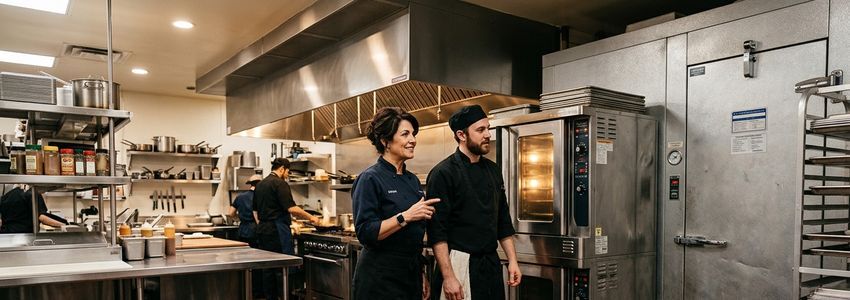
Securing a commercial kitchen business loan is one of the most strategic moves a food entrepreneur can make in today's rapidly evolving culinary landscape. Whether you operate a ghost kitchen delivering meals through third-party apps, rent space in a shared commissary, or plan to build out a dedicated commercial cooking facility, access to capital defines how fast you can grow, how well you can equip your operation, and how confidently you can scale. This guide covers everything food business owners need to know about financing a commercial kitchen, from loan types and qualifications to real-world scenarios and how Crestmont Capital can help you get funded fast.
In This Article
- What Is a Commercial Kitchen Business Loan?
- Ghost Kitchens and Commissaries: The Financing Challenge
- Types of Loans for Commercial Kitchen Businesses
- Commercial Kitchen Financing at a Glance
- How the Loan Process Works
- Who Qualifies for Commercial Kitchen Financing?
- What Can You Use the Funds For?
- How Crestmont Capital Helps
- Real-World Scenarios
- Comparing Financing Options
- Frequently Asked Questions
- How to Get Started
What Is a Commercial Kitchen Business Loan?
A commercial kitchen business loan is a form of financing specifically used to fund costs associated with operating, equipping, leasing, or building out a professional food production space. Unlike a personal loan or a standard business credit card, these loans are structured around the capital needs of food businesses - covering everything from commercial-grade ovens and industrial refrigeration units to commissary memberships, renovations, and working capital gaps between delivery payouts and supply invoices.
The term "commercial kitchen" encompasses a wide variety of operations. Traditional brick-and-mortar restaurants with dedicated kitchens represent one end of the spectrum, but the market has expanded significantly to include ghost kitchens (also called dark kitchens or cloud kitchens), shared commissary spaces, catering operations, meal prep companies, and food product manufacturers that rent certified kitchen space by the hour or month. Each of these business models carries its own financing needs and its own set of lender considerations.
According to Forbes, the ghost kitchen industry is projected to reach $1 trillion globally by 2030, driven by rising consumer demand for food delivery and lower operational costs compared to traditional dine-in restaurants. This growth trajectory makes commercial kitchen financing one of the most in-demand loan categories in the food service sector.
Did You Know: Ghost kitchens can launch with 20-30% lower upfront costs than traditional restaurants, but still require $50,000 to $250,000 in startup and scaling capital for equipment, licensing, technology platforms, and working capital.
Ghost Kitchens and Commissaries: The Financing Challenge
Ghost kitchens and shared commissary operations present a unique set of challenges when it comes to securing financing. Traditional lenders often struggle to categorize these businesses because they lack storefront real estate collateral, may not have years of established revenue history, and operate in a segment that was largely unknown to most underwriters just a decade ago. Despite these hurdles, they are legitimate, high-revenue businesses that banks and alternative lenders are increasingly learning to evaluate.
Ghost kitchens typically generate revenue through delivery platforms like DoorDash, Uber Eats, and Grubhub. This creates a revenue pattern that can look inconsistent to traditional lenders who expect predictable monthly deposits. However, alternative lenders who understand the food delivery ecosystem can analyze three to six months of platform payouts to accurately assess average monthly revenue and determine a safe loan amount.
Shared commissary businesses face a different challenge: they sell membership access and hourly rentals, which means their revenue comes in smaller, more frequent increments across a large number of clients. This model can actually demonstrate very stable cash flow when properly documented. Commissary operators who maintain solid bank statements and membership records often find it easier than expected to qualify for working capital loans or equipment financing when they approach the right lenders.
The SBA recognizes food service businesses as a significant driver of small business formation and lending. Several SBA loan programs are available to commercial kitchen operators, including the popular SBA 7(a) loan, which can fund kitchen buildouts, equipment purchases, and working capital needs.
Ready to Finance Your Commercial Kitchen?
Crestmont Capital offers fast, flexible funding for ghost kitchens, commissaries, and food businesses of all kinds. Apply in minutes - no obligation.
Apply Now →Types of Loans for Commercial Kitchen Businesses
Food entrepreneurs have access to a broader menu of financing options than many realize. The right choice depends on how much capital you need, what you plan to use it for, how quickly you need funding, and the current health of your business finances.
SBA 7(a) Loans
SBA 7(a) loans are one of the most competitive financing tools available to small food businesses. With loan amounts up to $5 million and repayment terms of up to 25 years for real estate or 10 years for equipment and working capital, these loans offer low interest rates and long repayment windows that keep monthly payments manageable. They are ideal for ghost kitchen operators purchasing or building out a permanent space, or commissary owners looking to acquire real estate or major equipment. The application process takes longer than alternative loans - typically 30 to 90 days - but the terms are hard to beat for qualified applicants. Crestmont Capital's SBA loan program connects food business owners with the right SBA product for their specific situation.
Term Loans
Traditional term loans provide a lump sum of capital repaid over a set period, typically one to five years, with fixed or variable interest rates. They work well for defined, large purchases - like a full commercial kitchen buildout, a major equipment acquisition, or a facility expansion. For businesses with at least one to two years of operating history and consistent revenue, term loans offer predictable repayment schedules and competitive rates. Long-term business loans give kitchen operators the extended runway they need for large capital investments.
Business Lines of Credit
A business line of credit is particularly well-suited to commercial kitchen operations because of its flexibility. Rather than receiving a lump sum, you draw from an available credit limit as needed and only pay interest on the amount you use. This works exceptionally well for managing the cash flow gaps that food businesses routinely face - covering ingredient orders before a large catering event, replacing a piece of equipment that breaks unexpectedly, or bridging the gap between delivery platform payouts and vendor invoices. A business line of credit gives kitchen operators an on-demand capital buffer that protects against disruption.
Equipment Financing
Commercial kitchen equipment is expensive. Industrial ovens, walk-in coolers, commercial dishwashers, blast chillers, and specialized cooking equipment can easily cost $50,000 to $200,000 or more for a fully equipped kitchen. Equipment financing allows you to spread that cost over the usable life of the equipment - typically three to seven years - while the equipment itself serves as collateral. This means approval is often easier than unsecured loans, and newer businesses can sometimes qualify even without years of financial history. Crestmont Capital's restaurant equipment financing is designed specifically for food service operators.
Working Capital Loans
Working capital loans address the most immediate operational need for commercial kitchen businesses: keeping cash flowing when revenue and expenses don't align perfectly. Food businesses often face significant timing gaps - they buy supplies today, prepare food tomorrow, deliver or serve within a week, and collect payment from platforms or clients days or weeks later. A working capital loan bridges these gaps and ensures your operation never stalls due to short-term cash constraints. Small business loans from Crestmont Capital can be structured specifically as working capital facilities for food operators.
Short-Term Business Loans
Short-term business loans are an excellent option when you need capital quickly and can repay within 3 to 18 months. These loans are commonly used for seasonal inventory builds, marketing campaigns ahead of peak delivery seasons, or covering unexpected equipment repairs that can't wait for a longer approval process.
By the Numbers
Commercial Kitchen Financing - Key Statistics
$1T
Global ghost kitchen market projected by 2030 (Forbes)
30%
Lower startup costs vs. traditional restaurants
$250K
Max typical funding for single commercial kitchen buildout
24 Hrs
Approval timeline for fast business loan options
How the Loan Process Works
The commercial kitchen loan process follows a clear sequence of steps, and knowing what to expect can dramatically improve your outcome. Lenders evaluate food businesses using the same core criteria they apply to any business - revenue, creditworthiness, time in business, and use of funds - but with an eye toward industry-specific nuances.
Step 1: Assess Your Capital Needs. Before applying, determine exactly how much you need and why. Break down your capital needs into categories: equipment, buildout costs, working capital reserves, licensing and permits, and technology (POS systems, delivery platform integrations, inventory management). A clear, itemized funding request shows lenders you have a specific plan, which increases approval odds.
Step 2: Gather Your Financial Documents. Most lenders will request three to six months of bank statements, recent profit and loss statements, current revenue figures, and a summary of your business structure. Ghost kitchen operators should also gather their delivery platform payout records, which serve as proof of consistent revenue. Commissary operators should document membership agreements and rental logs.
Step 3: Review Your Credit Profile. Personal credit scores above 600 generally qualify for most alternative business loans. SBA loans typically require 650 or higher. If your credit is below these thresholds, look into bad credit business loans designed for borrowers with less-than-perfect credit histories.
Step 4: Submit Your Application. Online applications with Crestmont Capital take just minutes to complete. You'll receive an initial decision quickly, and a funding advisor will walk you through your options in detail before you commit to any terms.
Step 5: Receive Funding. Once approved, funds are typically deposited within one to five business days, depending on the loan type and lender. SBA loans take longer due to additional underwriting requirements, but alternative lenders can fund within 24 hours in many cases.
Pro Tip: Ghost kitchen operators should compile at least six months of delivery platform payout reports before applying. Platforms like DoorDash and Uber Eats provide downloadable earning summaries that make excellent substitutes for traditional revenue documentation when bank deposits don't reflect the full picture of your earnings.
Who Qualifies for Commercial Kitchen Financing?
Qualification standards vary significantly depending on the lender and loan type. Here is a broad overview of what most lenders look for when evaluating commercial kitchen business loan applications.
Time in Business
Most alternative lenders require at least six months to one year of operating history. SBA loans typically require two or more years. However, equipment financing is available to newer businesses, sometimes with as little as six months of history, because the equipment itself serves as collateral and reduces lender risk.
Monthly Revenue
A minimum of $10,000 to $15,000 in average monthly revenue is typically required for unsecured working capital loans. Higher revenue thresholds apply to larger loan amounts. Ghost kitchen operators with multiple delivery platform accounts may need to aggregate revenue across platforms to meet these minimums.
Credit Score
Alternative lenders accept scores as low as 550-600 for many loan products. Traditional bank loans and SBA programs generally require 650 or higher. Fast business loans designed for quick access to capital often have more flexible credit requirements in exchange for slightly higher rates.
Industry Classification
Food service businesses, including ghost kitchens, catering operations, meal prep services, and commissary facilities, are generally classified under standard restaurant or food manufacturing SIC codes. This helps lenders assess industry-specific risk factors and available programs.
Collateral
Many commercial kitchen loans are unsecured, meaning no collateral is required. Equipment loans use the purchased equipment as collateral. SBA loans may require a personal guarantee and in some cases a lien on business assets. Lenders evaluate the full picture of your business before determining collateral requirements.
| Loan Type | Min. Credit Score | Min. Time in Business | Funding Speed |
|---|---|---|---|
| SBA 7(a) Loan | 650+ | 2 Years | 30-90 Days |
| Term Loan | 620+ | 1 Year | 3-7 Days |
| Business Line of Credit | 600+ | 6 Months | 1-3 Days |
| Equipment Financing | 580+ | 6 Months | 1-5 Days |
| Working Capital Loan | 550+ | 6 Months | 24-48 Hours |

What Can You Use the Funds For?
Commercial kitchen business loans are highly versatile and can be used for a wide range of operational and growth-related expenses. Understanding the eligible use cases helps you frame your funding request in a way that resonates with lenders and ensures you're applying for the right loan type.
Equipment Purchases. Industrial stoves, commercial refrigerators, prep tables, blast chillers, commercial mixers, ventilation systems, and specialized cooking equipment. This is often the single largest expense for kitchen operators, and equipment financing is specifically structured to handle these costs.
Kitchen Buildouts and Renovations. Installing commercial-grade plumbing, electrical systems, gas lines, ventilation, and fire suppression systems required for health department certification. Buildout costs can range from $75,000 to $300,000 depending on the scope of work.
Licensing and Health Certifications. Commercial kitchens must meet strict local and state health department requirements. Permit fees, inspection costs, and certification expenses can add up quickly, especially for new facilities or when expanding into new jurisdictions.
Technology and Software. POS systems, delivery platform integration software, inventory management platforms, food safety tracking systems, and automated ordering tools represent a growing operational investment for modern commercial kitchen businesses.
Commissary Membership and Rent. Many ghost kitchen operators rent space in shared commissary facilities rather than operating their own. Loan funds can cover prepaid membership fees, security deposits, and monthly rental costs during periods of growth or revenue fluctuation.
Inventory and Ingredients. Purchasing ingredients in bulk reduces per-unit costs significantly. Working capital loans and lines of credit are commonly used to fund large inventory purchases ahead of peak seasons, large catering contracts, or new menu launches.
Staffing and Payroll. Hiring and retaining qualified kitchen staff is one of the most significant challenges in the food service industry. Short-term working capital financing can bridge payroll gaps during slow periods or support a staffing ramp-up when scaling operations.
Marketing and Brand Building. Food businesses that invest in professional photography, social media advertising, and delivery platform optimization see measurably better order volumes. Loan funds used for strategic marketing can generate a strong return on investment.
Get the Capital Your Kitchen Needs
From equipment to working capital, Crestmont Capital has flexible options built for commercial kitchen operators. Talk to a funding advisor today.
Start Your Application →How Crestmont Capital Helps Commercial Kitchen Operators
Crestmont Capital is a nationwide business lender rated #1 in the country, with a deep understanding of food service businesses and the unique financing challenges they face. We work with ghost kitchen operators, shared commissary businesses, catering companies, meal prep entrepreneurs, and food product manufacturers across every state to connect them with the right loan at the right terms.
Our funding advisors understand the delivery platform revenue model. We know that a ghost kitchen operator showing strong DoorDash and Grubhub payouts is running a legitimate, revenue-generating business, and we evaluate applications accordingly. We don't require restaurant storefronts or traditional collateral for many of our loan products - we look at cash flow, revenue consistency, and business potential.
We offer small business loans ranging from $10,000 to over $5 million, with repayment terms and structures designed to match your cash flow patterns. Our lines of credit give kitchen operators ongoing access to capital without reapplying every time cash gets tight. Our equipment financing programs put essential tools in your kitchen within days, not weeks.
The application process is simple, fast, and fully online. You can complete your initial application in minutes, and many businesses receive approval decisions the same day. Commercial kitchen equipment financing through Crestmont Capital is specifically available for the food service industry, with terms that reflect the equipment's productive lifespan and your business's revenue capacity.
According to CNBC, the rise of delivery-first restaurant models has created new lending opportunities and new lending complexity - and Crestmont Capital has built the expertise to navigate both. We are not a one-size-fits-all lender. We look at each kitchen operator's unique situation and build a financing solution that works for their specific business model.
Real-World Scenarios
Understanding how other commercial kitchen operators have used financing can help you identify the right approach for your own business. Here are six representative scenarios that reflect common needs in this industry.
Scenario 1: Ghost Kitchen Operator Adding a Second Brand. A solo operator running a successful virtual burger brand from a rented commissary kitchen wants to launch a second virtual brand specializing in Asian fusion. Adding the second brand requires additional prep equipment, expanded ingredient inventory, and a slightly larger kitchen timeshare commitment. A $35,000 working capital loan from Crestmont Capital covers the equipment additions, a two-month supply of ingredients, and delivery platform onboarding fees for the new brand. Within four months, the second brand generates enough revenue to cover the loan payment and then some.
Scenario 2: Commissary Operator Purchasing a Walk-In Cooler. A shared commissary facility serving 22 member tenants is running out of cold storage capacity. A new walk-in cooler unit costs $45,000 installed. Equipment financing covers 100% of the cost with a five-year repayment schedule. The monthly loan payment is easily covered by adding three new commissary memberships at $800 per month each - a net positive cash flow outcome from day one.
Scenario 3: Catering Company Bridging a Revenue Gap. A catering company books a $120,000 corporate event for the following quarter but needs $40,000 in ingredient and staffing costs within 30 days to begin preparation. A short-term working capital loan provides the funds upfront. The loan is repaid in full when the event payment clears - a clean, self-liquidating financing transaction.
Scenario 4: Meal Prep Service Scaling Production. A meal prep business delivering to 200 weekly subscribers wants to scale to 600 subscribers. The growth requires three additional commercial-grade food processors, a larger blast chiller, and two additional part-time prep cooks for six months while demand stabilizes. An $85,000 term loan over 36 months funds the equipment and initial payroll expansion. Subscriber revenue growth comfortably covers the additional loan expense within three months.
Scenario 5: Ghost Kitchen Operator Securing a Permanent Space. After two years of renting commissary kitchen time, a successful ghost kitchen operator is ready to lease and build out a dedicated 2,000 square-foot kitchen space. Total buildout costs are estimated at $210,000, covering plumbing, electrical, commercial equipment, ventilation, and fire suppression. A combination of an SBA 7(a) loan and a smaller equipment financing facility covers the full cost, with repayment structured over 10 years to keep monthly payments manageable while the business continues generating consistent delivery revenue.
Scenario 6: Food Product Manufacturer Entering Retail. A small-batch hot sauce company operating from a rented shared kitchen has secured its first retail distribution deal with a regional grocery chain. Fulfilling the initial purchase order requires $60,000 in ingredient inventory, commercial-grade bottling equipment, and packaging materials. A combination of a $30,000 inventory financing facility and a $30,000 equipment loan provides the necessary capital within five business days - fast enough to meet the distribution timeline without losing the contract.
Comparing Your Financing Options
Not all commercial kitchen business loans are created equal. Choosing the wrong loan type can mean paying more in interest than necessary, or worse, being locked into repayment terms that don't match your revenue cycle. Here is a direct comparison of the key trade-offs between the most common options for kitchen operators.
SBA loans offer the lowest interest rates and longest repayment terms, but they require the strongest credentials and take the longest to fund. They are best suited for established businesses making large, strategic investments in permanent facilities or major equipment. Working capital loans and lines of credit are ideal for ongoing operational needs - they fund fast, they flex with your revenue, and they don't require significant assets as collateral. Equipment financing sits in the middle ground: faster than SBA, more affordable than unsecured loans, and purpose-built for the large capital equipment purchases that define commercial kitchen operations.
For ghost kitchen operators who are still in growth mode, the most practical approach is often a combination of equipment financing for large one-time purchases and a line of credit for ongoing working capital needs. This two-product strategy gives you the structured repayment of a term loan for equipment and the flexibility of on-demand credit for everything else.
According to Bloomberg, the commercial kitchen and ghost kitchen sector saw significant consolidation and external investment through 2023 and 2024, which has made lenders more comfortable with the model. This increased comfort has translated to more available credit and better terms for qualified kitchen operators.
Key Insight: Many commercial kitchen operators find that a two-product financing strategy - equipment financing for major purchases plus a business line of credit for working capital - provides the most flexibility at the best overall cost of capital.
Compare Your Options with a Funding Advisor
Not sure which loan type is right for your commercial kitchen? Our team will walk you through every option and help you pick the right one.
Apply Now →Frequently Asked Questions
What is a commercial kitchen business loan?
A commercial kitchen business loan is financing used to fund costs associated with equipping, building out, operating, or expanding a professional food production facility. This includes ghost kitchens, shared commissaries, catering operations, and traditional restaurant kitchens. Loan types range from equipment financing and term loans to business lines of credit and SBA programs.
Can ghost kitchens qualify for business loans?
Yes. Ghost kitchens can qualify for business loans, including working capital loans, equipment financing, term loans, and lines of credit. Lenders evaluate ghost kitchen applications based on revenue from delivery platforms, bank statement history, time in business, and credit profile. Providing delivery platform payout records alongside bank statements strengthens the application significantly.
How much can I borrow for a commercial kitchen business loan?
Loan amounts range from $10,000 for small working capital needs to over $5 million for large commercial buildouts through SBA programs. The amount you qualify for depends on your average monthly revenue, creditworthiness, time in business, and the specific loan type. Most alternative lenders offer between $25,000 and $500,000 for established food businesses.
Do I need collateral to get a commercial kitchen business loan?
Not always. Many working capital loans and business lines of credit are unsecured and do not require collateral. Equipment financing uses the purchased equipment as collateral, which often makes approval easier. SBA loans may require a personal guarantee and sometimes a business asset lien. Alternative lenders generally focus more on cash flow than collateral.
What credit score do I need for a commercial kitchen business loan?
Credit score requirements vary by loan type and lender. Alternative lenders typically accept scores as low as 550-580 for working capital loans and equipment financing. Traditional term loans and SBA programs generally require 620-650 or higher. A stronger credit score typically translates to better interest rates and loan terms, but many commercial kitchen operators qualify even with imperfect credit.
How fast can I get funded for a commercial kitchen loan?
Funding timelines depend on the loan type. Working capital loans and lines of credit from alternative lenders like Crestmont Capital can fund within 24 to 48 hours of approval. Equipment financing typically funds within one to five business days. Traditional term loans take three to seven days. SBA loans require 30 to 90 days due to additional underwriting and government processing requirements.
Can I use a business loan to pay for shared commissary kitchen membership fees?
Yes. Working capital loans and business lines of credit can be used to pay for commissary kitchen membership fees, security deposits, and monthly rental costs. These are legitimate operational expenses that lenders support. Many food entrepreneurs use working capital financing to pre-pay several months of commissary access when securing a preferred timeslot or locking in a lower membership rate.
What documents do I need to apply for a commercial kitchen business loan?
Most lenders request three to six months of business bank statements, a recent profit and loss statement or revenue summary, basic business information (legal name, EIN, time in business), and a description of how you plan to use the funds. Ghost kitchen operators should also provide delivery platform payout records. Equipment financing applications may require quotes or invoices for the equipment being purchased.
Are SBA loans available for ghost kitchen businesses?
Yes. Ghost kitchen businesses that meet SBA eligibility requirements - including minimum time in business, revenue thresholds, and credit standards - can qualify for SBA 7(a) loans. These loans are particularly useful for larger investments such as building out a permanent kitchen space or purchasing major commercial equipment. Working with an SBA-experienced lender like Crestmont Capital helps navigate the application process efficiently.
What is the difference between a ghost kitchen and a shared commissary?
A ghost kitchen (also called a cloud kitchen or dark kitchen) is a delivery-only food business that operates from a commercial kitchen space without a storefront. A shared commissary is a licensed commercial kitchen facility that rents time and space to multiple food businesses - including ghost kitchens, caterers, food truck operators, and food product manufacturers. Ghost kitchens often rent from shared commissaries, but a ghost kitchen can also operate from its own dedicated facility.
Can I finance commercial kitchen equipment with bad credit?
Yes. Equipment financing is one of the most accessible loan products for borrowers with imperfect credit because the equipment itself serves as collateral. This collateral reduces lender risk, which allows approval at lower credit scores than unsecured loans. Scores as low as 550-580 can qualify for equipment financing through alternative lenders. Strong monthly revenue is often a more important factor than credit score for equipment loans.
How does a business line of credit work for a commissary kitchen?
A business line of credit gives a commissary kitchen owner access to a pre-approved credit limit that can be drawn on as needed. You only pay interest on the amount you actually use. This is ideal for commissary operators who need to cover unexpected expenses - such as equipment repair, a surge in member demand requiring additional supplies, or a temporary dip in membership revenue. As you repay what you borrowed, the credit line replenishes for future use.
How much does it cost to build out a commercial kitchen?
Commercial kitchen buildout costs vary significantly based on size, existing infrastructure, and required equipment. A basic ghost kitchen buildout in a pre-plumbed space might cost $50,000 to $100,000. A full-featured commissary kitchen buildout with multiple cooking stations, walk-in refrigeration, commercial hood systems, and fire suppression can cost $150,000 to $400,000 or more. SBA loans and term loans are the most common financing tools for large buildout projects.
What interest rates should I expect on a commercial kitchen business loan?
Interest rates on commercial kitchen business loans vary widely based on loan type, lender, credit profile, and current market conditions. SBA 7(a) loans typically carry rates of prime plus 2.25% to 4.75%. Equipment financing rates range from 5% to 25% APR. Working capital loans and lines of credit from alternative lenders range from 10% to 45% APR depending on risk profile and repayment term. Stronger credit and longer operating history consistently produce better rates.
Can a new ghost kitchen with less than one year in business get a loan?
Some lenders offer financing to businesses with as little as six months of operating history, particularly for equipment financing where the purchased equipment serves as collateral. Very new ghost kitchens with less than six months of history face more limited options, though equipment financing through the right lender may still be available. Building a track record of consistent delivery platform revenue for at least six months before applying significantly improves approval odds and loan terms.
How to Get Started
Complete our quick application at offers.crestmontcapital.com/apply-now - it takes just a few minutes and there is no obligation to accept any offer.
A Crestmont Capital funding advisor will review your commercial kitchen operation, assess your financing needs, and match you with the right loan product - whether that's equipment financing, a working capital loan, a line of credit, or an SBA loan.
Receive your funds and put them to work - often within 24 to 48 hours for working capital loans, or within days for equipment financing. Fast access to capital keeps your kitchen running and growing without interruption.
Conclusion
A commercial kitchen business loan is not just a financial tool - it is the foundation that allows ghost kitchen operators, shared commissary businesses, catering companies, and food entrepreneurs of every kind to grow with confidence. The commercial kitchen industry is evolving faster than ever, and the businesses that access capital strategically will be the ones that scale, expand, and capture market share in an increasingly competitive delivery economy.
Whether you need $20,000 to upgrade a critical piece of equipment, $150,000 to build out a permanent kitchen facility, or an ongoing line of credit to manage cash flow through seasonal peaks and valleys, Crestmont Capital has a financing solution designed for your specific situation. We work with food businesses across the country, we understand the delivery platform revenue model, and we move fast - because your opportunity won't wait.
Apply today and discover why Crestmont Capital is rated #1 in the country for business lending. Your next chapter in commercial kitchen entrepreneurship starts with the right funding partner at your side.
Disclaimer: The information provided in this article is for general educational purposes only and is not financial, legal, or tax advice. Funding terms, qualifications, and product availability may vary and are subject to change without notice. Crestmont Capital does not guarantee approval, rates, or specific outcomes. For personalized information about your business funding options, contact our team directly.