When a lender approves you for equipment financing, the deal often comes with a catch: a required down payment, typically ranging from 10% to 30% of the equipment's purchase price. For a $200,000 piece of machinery, that means coming up with $20,000 to $60,000 in cash before you ever receive the keys. A business loan for equipment down payment gives you a practical way to cover that upfront cost without draining your operating cash or delaying a critical acquisition.
This guide breaks down why lenders require down payments on equipment loans, which types of business financing work best for covering them, what qualifications you need, and how to structure the funding so your cash flow stays intact throughout the process.
In This Article
- Why Equipment Lenders Require Down Payments
- Loan Types That Cover Equipment Down Payments
- How the Process Works
- By the Numbers: Equipment Down Payment Financing
- Who Qualifies
- Real-World Scenarios
- How Crestmont Capital Helps
- Comparing Your Financing Options
- How to Get Started
- Frequently Asked Questions
Why Equipment Lenders Require Down Payments
Equipment financing is secured lending — the equipment itself serves as collateral. But lenders know that equipment depreciates the moment it goes into service, sometimes losing 20% or more of its value in the first year. A down payment protects the lender by ensuring that what you owe on the loan never significantly exceeds what the equipment is actually worth in a repossession scenario.
According to the U.S. Small Business Administration, down payment requirements on commercial equipment loans typically fall between 10% and 25%, though specialized or high-depreciation equipment can push that requirement to 30% or higher. For many small and mid-size businesses, coming up with that amount out of pocket is not always realistic — particularly when the equipment purchase is driven by a new contract, seasonal demand, or urgent replacement of a failed asset.
That is where a business loan for equipment down payment becomes a strategic tool rather than a last resort. Rather than delaying the acquisition or depleting cash reserves, you borrow the down payment through a separate financing vehicle, close the equipment loan, and repay both obligations from the cash flow the new equipment generates.
Key Stat: According to CNBC's small business research, more than 60% of small business owners cite insufficient cash reserves as the primary obstacle to equipment acquisition — even when they qualify for equipment financing itself.
Loan Types That Cover Equipment Down Payments
Not every loan product is well-suited for this use case. The ideal financing for an equipment down payment is fast to fund, flexible on use-of-funds, and carries repayment terms that align with the equipment's earning potential. Here are the most common and effective options.
Unsecured Working Capital Loans
An unsecured working capital loan provides a lump sum of capital without requiring collateral beyond your business's cash flow and creditworthiness. These loans are ideal for equipment down payments because they fund quickly — often within 24 to 72 hours — and place no restrictions on how you use the funds. You can direct the proceeds directly toward the down payment without jumping through additional approval hoops.
Repayment terms typically range from 3 to 24 months, and loan amounts can reach $500,000 or more depending on your business revenue. The tradeoff is that interest rates are higher than secured products, so it is important to factor that cost into your overall equipment acquisition budget.
Business Lines of Credit
A business line of credit functions like a revolving credit facility — you draw funds as needed, pay interest only on what you use, and replenish the available balance as you repay. For equipment down payments, a line of credit offers flexibility that a term loan does not. If the equipment closing is delayed, your capital sits idle until you need it. Once you deploy it toward the down payment, your line refreshes as you repay, giving you ongoing access to working capital for the equipment's operational needs.
Lines of credit are particularly well-suited to businesses that make multiple equipment purchases throughout the year, as the facility can cover successive down payments without requiring a new loan application each time.
Short-Term Business Loans
Short-term business loans are lump-sum financing products with repayment periods of 3 to 18 months. They are designed for specific capital needs rather than ongoing operations — which makes them a natural fit for covering a defined sum like a down payment. Because the repayment period is shorter, you can pay off the down payment loan relatively quickly, ideally before the equipment reaches full productive capacity and before the primary equipment loan becomes a larger strain on cash flow.
SBA Loans
SBA loans, particularly the SBA 7(a) program, allow proceeds to be used for down payments on commercial assets under certain conditions. These loans carry lower interest rates than most alternative products and offer repayment terms of up to 10 years for equipment and up to 25 years for real estate. The tradeoff is time — SBA loans can take 30 to 90 days to process, which may not align with a time-sensitive equipment acquisition. However, for planned purchases where the timeline is flexible, an SBA loan is one of the most cost-effective ways to finance a down payment.
Revenue-Based Financing
Revenue-based financing provides capital in exchange for a fixed percentage of future daily or weekly business revenue. Because repayment scales with cash flow, this product is particularly attractive for seasonal businesses or companies with variable monthly revenue. It does not require the fixed monthly payments of a traditional loan, which gives you breathing room during slower periods while the new equipment ramps up productivity.
Need Capital for Your Equipment Down Payment?
Crestmont Capital offers fast, flexible financing specifically designed to help businesses cover required down payments and close equipment deals without delay.
Apply Now →How the Process Works
Understanding the sequence of events helps you plan your financing strategy and avoid costly delays. The process typically unfolds in five phases:
Phase 1: Identify Your Equipment and Get a Quote
Before applying for down payment financing, know exactly what equipment you are buying and what the total purchase price will be. Get a formal quote from the equipment vendor or dealer. This gives you the exact number you need to calculate the required down payment and the total loan amount.
Phase 2: Confirm the Down Payment Requirement
Contact your equipment lender and confirm the exact down payment percentage they require for your specific transaction. Factors affecting this requirement include the type of equipment, the equipment's age (new versus used), your credit profile, how long you have been in business, and the equipment's depreciation characteristics. Some lenders will negotiate the down payment requirement for borrowers with strong credit and significant business tenure.
Phase 3: Apply for Down Payment Financing
Apply for a working capital loan, line of credit, or other down payment financing vehicle. Crestmont Capital specializes in fast-turnaround funding — many applicants receive approvals within 24 hours and funds within 2 to 3 business days. Prepare your most recent bank statements, basic business financial information, and a brief description of the intended use.
Phase 4: Close the Equipment Loan
Once your down payment capital is in hand, proceed with the equipment financing closing. Pay the down payment, sign the equipment loan documentation, and take delivery of the equipment. Your two loan obligations — the down payment loan and the equipment loan — will run concurrently, but the equipment's productive output should generate revenue to service both.
Phase 5: Repay Both Obligations from Equipment Revenue
The most important aspect of this strategy is cash flow modeling. Before executing, calculate whether the equipment's expected revenue — or the cost savings it generates — is sufficient to cover both the equipment loan payment and the down payment loan payment simultaneously. If the numbers work, you have a sound acquisition strategy. If they are uncomfortably tight, consider negotiating longer repayment terms on either or both loans.

By the Numbers: Equipment Down Payment Financing
By the Numbers
Equipment Down Payment Financing — Key Statistics
10-30%
Typical equipment loan down payment requirement
$1.3T
U.S. equipment finance market annual volume (ELFA, 2025)
24 Hrs
Typical funding speed for working capital down payment loans
8 in 10
Businesses use financing rather than cash for equipment purchases
Who Qualifies for Equipment Down Payment Financing
Qualification requirements vary by product type and lender. However, Crestmont Capital works with a broad range of businesses — including those that would not qualify at a traditional bank. Here is a general overview of what lenders look for:
Time in Business
Most working capital lenders require at least 6 months of operating history, while SBA lenders typically want 2 or more years. The longer your business has been operating, the more lending options become available and the more favorable your rates and terms are likely to be. That said, businesses with 12 or more months of solid revenue history can often access fast-turnaround down payment financing even without years of established credit.
Monthly Revenue
Revenue-based lenders and working capital providers typically set minimum monthly revenue requirements between $10,000 and $25,000. Your loan amount is often set at 50% to 150% of your average monthly revenue, depending on the product and your credit profile. This means a business generating $30,000 per month in revenue might qualify for $15,000 to $45,000 in working capital — enough to cover down payments on many equipment purchases.
Credit Score
While traditional lenders typically require a personal FICO score of 680 or above, alternative lenders and specialty finance companies can approve down payment loans for borrowers with scores as low as 500. If your credit is less than perfect, Crestmont Capital offers bad credit business loans specifically designed to help established businesses access capital regardless of credit challenges.
Industry and Equipment Type
Some industries are considered higher risk by lenders, which can affect eligibility or require additional documentation. However, most businesses in construction, manufacturing, transportation, healthcare, food service, agriculture, and professional services can access equipment down payment financing without significant barriers.
Pro Tip: Applying for down payment financing before you finalize the equipment purchase agreement gives you more negotiating leverage with the equipment vendor. Knowing you have capital ready to deploy often positions you to negotiate better pricing or vendor terms on the equipment itself.
Real-World Scenarios: When This Strategy Makes Sense
Theory only goes so far. The following scenarios illustrate how business owners across different industries use business loans for equipment down payments to execute acquisitions they otherwise could not afford out of pocket.
Scenario 1: Construction Company Adding a Crane
A mid-size construction company wins a major commercial project requiring a 50-ton crane. The crane costs $480,000, and the equipment lender requires a 20% down payment — $96,000. The company has $40,000 in operating cash and does not want to deplete reserves. They apply for a $60,000 working capital loan with Crestmont Capital, receive approval in 48 hours, and combine those funds with their available cash to meet the full down payment. The crane begins generating project revenue immediately, and both the working capital loan and the crane financing are repaid from project billing within 18 months.
Scenario 2: Restaurant Expanding Its Kitchen
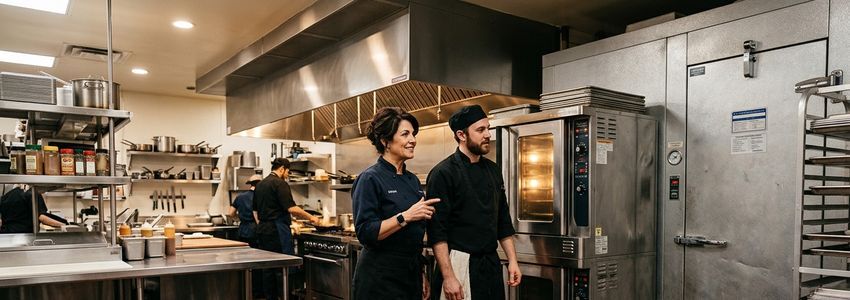
A growing restaurant chain is opening a second location and needs $180,000 in commercial kitchen equipment. The equipment lender requires 15% down — $27,000. The owner does not want to wait while saving the cash because the lease on the new location starts in 60 days. A short-term business loan covers the down payment, the kitchen is installed on schedule, and the new location opens as planned. Revenue from the second location begins repaying the down payment loan within the first full month of operations.
Scenario 3: Medical Practice Upgrading Imaging Equipment
A radiology group needs to replace a 12-year-old MRI machine with a newer, higher-resolution model. The new system costs $1.2 million. With a 10% down payment required, the practice needs $120,000 in cash before the equipment financing can close. Rather than divert working capital or delay patient care, the practice secures a business line of credit for $150,000, draws $120,000 for the down payment, and retains the remaining $30,000 as an operational buffer during the installation period. The increased imaging capacity generates enough additional patient revenue to service both obligations comfortably.
Scenario 4: Trucking Company Expanding Its Fleet
A regional trucking operation wins a logistics contract that requires three additional semi-trucks. Each truck costs $165,000, and the fleet lender requires a 15% down payment — $24,750 per truck, or $74,250 total. The company's capital is tied up in receivables. They apply for a working capital loan against their accounts receivable and use those funds to cover the combined down payment across all three trucks. The contract revenue begins flowing within 30 days, and the down payment loan is repaid within its 12-month term.
Scenario 5: Manufacturing Plant Adding a CNC Machine
A precision manufacturing company has an opportunity to win a high-volume parts contract but needs a CNC machining center to fulfill the order volume. The machine costs $320,000, and the equipment lender requires 25% down — $80,000. The company has sufficient creditworthiness but limited liquid cash after a recent facility investment. A fast-turnaround working capital loan provides the $80,000 needed to close the equipment financing. The new contract covers both loan payments and generates a net margin improvement within the first quarter of production.
Scenario 6: Healthcare Clinic Financing a Surgical Suite
An outpatient surgery center is adding a second surgical suite to address growing patient demand. The surgical equipment package costs $900,000. With a 20% down payment required, the center needs $180,000. Because SBA 504 loan proceeds can be used for this type of acquisition, the center works with Crestmont Capital to structure an SBA financing package that covers both the down payment and the total equipment cost within a single, government-backed financing structure with a 10-year repayment term and a rate well below what conventional equipment lenders offer.
See If Your Business Qualifies
Our financing specialists work with businesses across every industry to structure equipment down payment solutions that protect cash flow and close deals fast.
Get Pre-Qualified →How Crestmont Capital Helps You Finance Equipment Down Payments
Crestmont Capital is rated the #1 business lender in the United States, with a full suite of financing products designed to help businesses access capital fast — without the bureaucracy of traditional banking. When it comes to equipment down payment financing, Crestmont offers several distinct advantages over banks and conventional lenders.
Speed That Matches Your Timeline
Equipment deals move fast. Vendors hold pricing for limited windows, and missing a closing date can cost you the deal entirely. Crestmont's working capital loans fund in as little as 24 to 48 hours from approval. Our fast business loans are designed specifically for situations where time is not a luxury you have.
Flexible Use of Funds
Unlike equipment loans themselves — which require proceeds to be used for the specific asset being financed — working capital products from Crestmont can be used for any business purpose, including down payments on separately financed equipment. There is no "use of funds" restriction that would limit your flexibility.
Multiple Product Options Under One Roof
Crestmont offers small business loans, lines of credit, SBA loans, revenue-based financing, and direct equipment financing — all through a single application process. If you need both the down payment financing and the equipment loan itself, Crestmont can potentially structure both obligations, simplifying your management and potentially improving your overall deal economics.
We Work With Imperfect Credit
Not every business has pristine credit. If your score is lower than traditional bank thresholds or your business has experienced past financial challenges, Crestmont's team of specialists can often structure financing solutions that conventional lenders cannot. Our approval decisions look at the full picture of your business performance — not just a credit score.
For businesses that also need to explore equipment financing options directly, Crestmont offers competitive rates, fast processing, and financing for virtually any type of commercial equipment across all major industries.
Comparing Your Equipment Down Payment Financing Options
| Product | Funding Speed | Typical Terms | Credit Req. | Best For |
|---|---|---|---|---|
| Working Capital Loan | 24-72 hours | 3-24 months | 500+ | Fast closing, urgent need |
| Business Line of Credit | 1-5 business days | Revolving | 600+ | Multiple purchases, flexibility |
| Short-Term Loan | 24-72 hours | 3-18 months | 500+ | Defined amount, quick payoff |
| SBA 7(a) Loan | 30-90 days | Up to 10 years | 680+ | Large amounts, lowest rates |
| Revenue-Based Financing | 24-72 hours | Flexible | No min. | Variable revenue, seasonal ops |
Important: According to Forbes, the total cost of borrowing for an equipment down payment should always be weighed against the revenue or cost savings the new equipment will generate. If the equipment's economic benefit exceeds the combined cost of both financing obligations, the strategy is sound regardless of the interest rate on the down payment loan.
Strategies to Reduce or Eliminate the Down Payment
Before borrowing to cover a down payment, it is always worth exploring whether you can reduce or eliminate the requirement altogether. Here are several strategies worth discussing with your lender:
Offer Additional Collateral
If you have other unencumbered business assets — existing equipment, commercial vehicles, accounts receivable, or real property — offering them as additional collateral can sometimes reduce or eliminate the down payment requirement. Lenders are primarily motivated by collateral coverage; if you can give them equivalent security through other assets, they may waive the cash down payment.
Improve Your Credit Profile First
Borrowers with higher credit scores often receive lower down payment requirements from equipment lenders. If your acquisition is not urgent, spending 3 to 6 months improving your personal and business credit — paying down revolving balances, resolving derogatory marks, and establishing positive payment history — can translate directly into a lower down payment requirement when you do apply.
Explore No-Down-Payment Equipment Financing
Some equipment lenders offer 100% financing on certain asset types, particularly new equipment with strong resale value. Crestmont Capital can help you identify whether zero-down equipment financing is available for your specific acquisition, which would eliminate the need for separate down payment financing entirely.
Negotiate with the Vendor
Equipment vendors — particularly those who want to move inventory — sometimes have manufacturer financing relationships or dealer financing arrangements that carry lower down payment requirements than traditional commercial lenders. Always ask the vendor what financing options they can arrange directly before approaching a third-party lender.
Documentation You Will Need
Preparing your documentation in advance significantly speeds up the approval process for down payment financing. Here is a standard checklist:
- Last 3 to 6 months of business bank statements
- Business formation documents (Articles of Incorporation, LLC Operating Agreement)
- Government-issued personal ID for all owners with 20%+ ownership
- Equipment purchase quote or invoice from the vendor
- Most recent business tax return (for SBA and traditional loan applications)
- Profit and loss statement (for applications above $100,000)
- Business credit report (Crestmont will pull this as part of the application)
For working capital loans and short-term financing products, Crestmont typically only requires bank statements and basic business information — no financials, no tax returns, no lengthy application. The entire process from application to funding often takes less than 72 hours for qualifying businesses.
How to Get Started
Confirm the total equipment price and the exact down payment percentage your equipment lender requires before applying for financing.
Complete our quick application at offers.crestmontcapital.com/apply-now — takes just a few minutes with no impact on your credit score for pre-qualification.
A Crestmont Capital advisor will review your specific equipment acquisition, identify the right financing product, and structure the solution to fit your cash flow and repayment capacity.
Receive your down payment capital, close the equipment financing, take delivery of your equipment, and put it to work generating revenue from day one.
Conclusion
A required down payment should not be the obstacle that prevents your business from acquiring equipment that drives growth, improves efficiency, or fulfills a new contract. A business loan for equipment down payment is a well-established, strategically sound financing approach that lets you close equipment deals without depleting working capital or waiting until you have accumulated enough cash on hand.
The key is choosing the right financing vehicle — one that funds fast enough to match your equipment closing timeline, carries terms your cash flow can service comfortably alongside the equipment loan, and is structured by a lender who understands the mechanics of equipment acquisition financing. Crestmont Capital has the product suite, the speed, and the expertise to help you get both pieces of the puzzle in place.
Ready to move forward? Apply now and let our specialists structure the right down payment financing for your equipment acquisition.
Frequently Asked Questions
Can I use a business loan specifically for an equipment down payment?
Yes. Unsecured working capital loans, business lines of credit, and short-term business loans do not restrict how you use the funds. You can direct proceeds from these products toward an equipment down payment, closing costs, or any other business-related need. The down payment loan and the equipment loan operate as separate obligations.
How much can I borrow for an equipment down payment?
Loan amounts vary by product and lender. Working capital loans from Crestmont Capital can range from $5,000 to $500,000 or more, depending on your monthly revenue and creditworthiness. SBA 7(a) loans can reach $5 million. The amount you can borrow is typically tied to your business's revenue — most lenders offer 50% to 150% of your average monthly revenue as a benchmark.
How quickly can I get funding for an equipment down payment?
Working capital loans and short-term business loans can fund in as little as 24 to 72 hours. SBA loans take 30 to 90 days. If you have a time-sensitive equipment closing, a fast-turnaround working capital product is typically the best option. Crestmont Capital offers same-day pre-qualification and rapid funding for qualifying applicants.
What credit score do I need to borrow for an equipment down payment?
Credit score requirements vary by lender and product. Traditional bank loans and SBA loans generally require scores of 680 or higher. Alternative lenders and working capital providers may approve borrowers with scores as low as 500 to 550, depending on revenue and business history. Crestmont Capital evaluates the full picture of your business's financial health, not just your credit score.
Is it smart to borrow money to make a down payment on equipment?
It can be, if the math works. The key question is whether the equipment's revenue contribution or cost savings exceed the combined cost of the down payment loan and the equipment loan. If the new equipment enables you to fulfill more contracts, increase output, reduce labor costs, or improve margins, the borrowing cost is typically justified. The strategy works best when the equipment has immediate productive value.
Can I use an SBA loan for an equipment down payment?
Yes, under certain conditions. SBA 7(a) loan proceeds can be used for down payments on commercial assets. SBA 504 loans can finance both the equipment and the required equity injection in specific structures. The tradeoff is processing time — SBA loans take significantly longer to close than working capital products. For urgent acquisitions, a working capital bridge loan may be more practical.
What documents do I need to apply for equipment down payment financing?
For working capital loans and short-term financing, Crestmont typically requires 3 to 6 months of business bank statements and basic business information. For larger loans or SBA products, you may also need business tax returns, a profit and loss statement, and the equipment purchase quote or invoice. Having these documents ready before applying accelerates the approval process significantly.
How much is a typical equipment loan down payment?
Equipment loan down payments typically range from 10% to 30% of the total purchase price, depending on the lender, the type of equipment, and the borrower's credit profile. New equipment with strong resale value and borrowers with excellent credit often qualify for the lower end of that range. Used equipment, specialty assets, or borrowers with weaker credit may face requirements at the higher end or above 30%.
Will my equipment lender know I borrowed the down payment?
Some equipment lenders ask borrowers to certify the source of the down payment, similar to how mortgage lenders verify down payment funds. If your lender requires this certification, disclose the source honestly. Many equipment lenders — particularly in commercial finance — do not require down payment sourcing verification. Ask your equipment lender directly about their requirements before applying for down payment financing.
Can a new business get financing for an equipment down payment?
It is more challenging for new businesses, but not impossible. Most working capital lenders require at least 6 months of operating history and demonstrable revenue. Businesses under 6 months old have fewer options and may need to rely on personal credit, secured lending against personal assets, or SBA microloans. Established businesses with 1 or more year of operating history have access to the widest range of down payment financing products.
Does financing an equipment down payment affect my ability to get the equipment loan itself?
Potentially, yes. Taking on additional debt before closing the equipment loan can affect your debt-service coverage ratio and may show up on your credit report depending on the product type. For this reason, it is generally better to apply for down payment financing and the equipment loan within a short window — and to discuss your overall financing strategy with both lenders upfront. Crestmont Capital can help you sequence the applications to minimize any negative impact on the equipment loan approval.
What is the difference between a working capital loan and an equipment loan?
An equipment loan is secured by the equipment being purchased and can only be used for that specific asset. A working capital loan is typically unsecured (or secured by business assets broadly) and can be used for any business purpose, including down payments on separately financed equipment. Equipment loans usually carry lower interest rates because of the collateral, while working capital loans fund faster and offer greater flexibility.
Can I use a business line of credit repeatedly for equipment down payments?
Yes. A business line of credit is a revolving facility — as you repay what you draw, the available balance replenishes. This makes it an excellent solution for businesses that make multiple equipment purchases throughout the year. Rather than applying for a new loan each time you need a down payment, your line of credit is always available to draw on for the next acquisition.
Are interest rates higher for down payment loans than for equipment loans?
Generally, yes. Equipment loans are secured by the equipment itself, which reduces the lender's risk and allows for lower interest rates. Working capital loans used for down payments are often unsecured, which means higher rates. However, because down payment loans are typically smaller in amount and shorter in term than the equipment loan itself, the total interest cost is usually modest relative to the economic benefit of acquiring the equipment on schedule.
How do I calculate whether down payment financing makes financial sense for my business?
The basic test is straightforward: add the monthly payment on the down payment loan to the monthly payment on the equipment loan. If the equipment's expected monthly revenue contribution or cost savings exceeds that combined monthly obligation — with enough margin to cover operational costs — the financing strategy makes sense. If the numbers are tight, consider negotiating longer repayment terms on either or both loans to lower the monthly payment burden before proceeding.
Ready to Finance Your Equipment Down Payment?
Crestmont Capital is the #1 business lender in the U.S. Apply in minutes and get your equipment deal funded fast.
Apply Now →Disclaimer: The information provided in this article is for general educational purposes only and is not financial, legal, or tax advice. Funding terms, qualifications, and product availability may vary and are subject to change without notice. Crestmont Capital does not guarantee approval, rates, or specific outcomes. For personalized information about your business funding options, contact our team directly.