
 (800) 949-0401
Business Expansion Loans for Transforming Unused Space Into Revenue Areas
Many business owners are sitting on hidden revenue opportunities — and they don't even realize it. That unused corner of your warehouse, the vacant storage room collecting dust, the empty floor of your commercial building — these underutilized spaces represent untapped potential that business expansion loans can unlock.
Transforming unused commercial space into productive, revenue-generating areas is one of the smartest investments a business owner can make. You already pay for the square footage. Why not make it work for you? Whether you want to add a new product line, expand your service offerings, create a customer-facing retail area, or build out a new production floor, business expansion loans provide the capital you need to make it happen — without relocating or signing a new lease.
In This Article
- What Are Business Expansion Loans?
- Types of Unused Spaces You Can Transform
- Types of Business Expansion Loans Available
- How Business Expansion Loans Work
- Benefits of Transforming Unused Space
- Expansion by the Numbers
- Who Qualifies for Business Expansion Loans?
- How Crestmont Capital Helps
- Real-World Scenarios
- Frequently Asked Questions
- How to Get Started
What Are Business Expansion Loans?
Business expansion loans are financing products designed to help established businesses grow their operations. Unlike startup loans, expansion loans are available to businesses with a proven track record — and they provide the capital needed to take the next step in your growth journey.
When it comes to transforming unused space into revenue areas, these loans cover everything from renovation and construction costs to new equipment, furnishings, shelving, technology systems, and tenant improvements. You use the loan proceeds to build out the space, then use the new revenue that space generates to repay the loan.
The key advantage is that you're investing in an asset you already own or lease. You're not paying for a new location — you're maximizing the value of your current footprint. This makes the ROI calculation relatively straightforward and the risk profile more manageable than opening a brand-new location from scratch.
Key Insight: According to the U.S. Small Business Administration, businesses that expand their physical capacity typically see revenue growth of 15-30% within the first year of opening the new space — making space transformation one of the highest-ROI investments a small business can make.
Ready to Transform Your Unused Space?
Get the capital you need to convert idle square footage into profitable revenue areas — fast approvals from the #1 U.S. business lender.
Apply Now →Types of Unused Spaces You Can Transform
Before diving into the financing options, it helps to identify the types of unused spaces that businesses commonly transform into revenue-generating areas. The possibilities are broader than most business owners realize.
Storage Rooms and Back-Office Areas
Oversized storage rooms and back-office areas are among the most common targets for space transformation. Many businesses accumulate more back-room square footage than they actually need. Converting even a portion of that space into a customer-facing area, additional service station, or production zone can significantly boost revenue without adding overhead.
Unused Warehouse Corners and Open Floor Space
Warehouses often have dead zones — areas near loading docks, awkward corners, or sections that were once used for a product line that's been discontinued. These spaces can be repurposed for new product lines, assembly operations, packing stations, or even retail showrooms for wholesale customers who want to view products in person.
Vacant Upper Floors and Mezzanine Levels
If your building has an upper floor or mezzanine that's currently being used for storage or sitting completely empty, converting it into office space, a training room, a client meeting area, or a secondary service area can add enormous value. The build-out cost per square foot is typically lower for existing space than for new construction.
Underutilized Outdoor Areas
Parking lots, side yards, rooftops, and outdoor courtyards are often overlooked. Depending on your business type, these areas can become outdoor dining spaces, loading zones, equipment storage areas with proper coverage, or even small-scale retail kiosks. Zoning permitting, these transformations can be highly profitable with relatively modest investment.
Basement and Below-Grade Space
Below-grade space is typically the most affordable square footage in commercial buildings. With proper egress, lighting, and environmental controls, basements can become production areas, storage facilities with controlled access, training rooms, or data center space for tech companies.
Types of Business Expansion Loans Available
Not all business expansion loans are the same. Understanding your options helps you choose the right product for your specific space transformation project.
Term Loans
Traditional term loans are the most common vehicle for space transformation projects. You receive a lump sum of capital, use it to fund the renovation and build-out, and repay it over a fixed period — typically 2 to 10 years — with regular monthly payments. Term loans work well for large projects where you know the total cost upfront.
At Crestmont Capital, our small business loans include term loan options with competitive rates and flexible repayment structures tailored to your cash flow cycle.
Business Lines of Credit
A business line of credit is ideal for space transformation projects where costs are phased or where you need flexibility during the renovation. You draw funds as needed, pay interest only on what you use, and replenish the credit line as you repay. This is particularly useful when working with contractors whose billing is milestone-based.
SBA 7(a) Loans
SBA 7(a) loans can fund commercial real estate improvements and tenant improvements up to $5 million with longer repayment terms (up to 25 years for real estate projects). The extended terms mean lower monthly payments, which helps manage cash flow during the post-renovation ramp-up period when the space is generating initial revenue. Learn more about SBA loans and how they can fund your expansion.
Equipment Financing
If your space transformation requires new equipment — industrial ovens, manufacturing machinery, refrigeration units, POS systems, or specialty tools — equipment financing allows you to purchase that equipment while using the equipment itself as collateral. This keeps your term loan capacity available for the construction and renovation costs.
Working Capital Loans
Once your new space is operational, you'll need working capital to stock it, hire staff, and handle the initial operating period before the space is fully generating revenue. Working capital loans provide the short-term cash flow cushion that most business owners need during the launch phase of a new revenue area.
How Business Expansion Loans Work
Understanding the mechanics of business expansion loans helps you plan your project realistically and approach lenders with confidence.
Step 1: Assess Your Space and Define the Project
Before applying for financing, do a thorough assessment of the space you want to transform. Get contractor bids, create a project timeline, and estimate the new revenue the space will generate once operational. Lenders want to see that you've done your homework and that the investment makes financial sense.
Step 2: Determine How Much Financing You Need
A common mistake is underestimating project costs. Add a 15-20% contingency buffer to your contractor bids to account for change orders, unexpected structural issues, and permitting delays. You should also factor in the cost of furnishings, equipment, signage, and inventory that will populate the new space.
Step 3: Gather Your Financial Documents
Lenders will typically ask for 3-6 months of business bank statements, your most recent business tax returns (2 years), a profit and loss statement, and sometimes a business plan or project summary for larger loans. Having these ready accelerates the underwriting process significantly.
Step 4: Apply and Get Approved
At Crestmont Capital, our application process is streamlined and fast. Many borrowers receive preliminary approval within 24-48 hours. We evaluate your overall business health — revenue, time in business, credit profile, and the strength of the project — rather than making decisions based on a single metric.
Step 5: Fund the Project and Repay
Loan proceeds are disbursed to your business account, and you use them to fund the renovation and build-out. As the new space begins generating revenue, that additional income covers your monthly loan payments while contributing to your overall profitability.
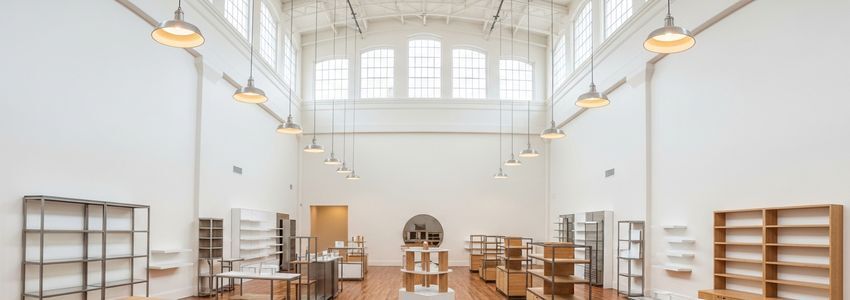
Benefits of Transforming Unused Space
There are compelling reasons why transforming unused space is one of the most popular uses for business expansion loans. The benefits span financial, operational, and competitive dimensions.
- No additional lease costs. You already pay rent or a mortgage on the space. Adding revenue from it doesn't increase your occupancy costs.
- Faster path to profitability. Compared to opening a new location, the build-out timeline for existing space is typically 30-50% shorter.
- Proven customer base. If you're adding a new product or service line in your existing location, you're selling to customers who already know and trust your business.
- Tax advantages. Renovation costs, depreciation on new equipment, and loan interest may be deductible business expenses (consult your tax professional).
- Competitive differentiation. Expanding your offerings or capacity often allows you to serve more customers, take on larger contracts, and out-compete smaller rivals who lack your capacity.
- Increased business value. A more profitable business with higher revenue and expanded operations commands a higher valuation if you ever want to sell.
According to Forbes: Small businesses that expand within their existing footprint report a 40% reduction in expansion costs compared to businesses that open new locations — while achieving similar revenue gains within 18 months.
Expansion Financing: By the Numbers
By the Numbers
Business Space Transformation - Key Statistics
40%
Lower cost vs. opening new location
30%
Average revenue increase within 12 months
$50K+
Average expansion loan amount for space transformation
24hrs
Typical time to initial approval at Crestmont Capital
Who Qualifies for Business Expansion Loans?
Business expansion loans are available to a wide range of established businesses. The eligibility criteria vary by loan type, but here are the general benchmarks you should know.
Time in Business
Most expansion loan programs require at least 1-2 years of business history. SBA loans typically require 2+ years, while alternative lenders like Crestmont Capital can work with businesses that have been operating for as little as 6-12 months in many cases.
Annual Revenue
Lenders want to see that your business generates enough revenue to support the loan payments. For most expansion loans, minimum annual revenue requirements range from $100,000 to $250,000, depending on the loan size and type. The SBA's rule of thumb is that your debt service coverage ratio (DSCR) should be at least 1.25x — meaning your business earns $1.25 for every $1.00 of debt obligations.
Credit Profile
A business credit score of 600+ and a personal credit score of 650+ are typical benchmarks for mainstream expansion loans. If your credit profile needs work, consider bad credit business loans or explore programs that place more weight on cash flow than credit scores.
Business Type and Industry
Most industries are eligible for expansion loans. However, businesses in highly regulated industries (cannabis, adult entertainment) or those with inconsistent cash flow (seasonal businesses) may face additional scrutiny. Lenders want to see that the business model is viable and that the expansion plan is realistic.
Existing Debt Load
Your existing debt obligations matter. If your business is already heavily leveraged, adding a new expansion loan could strain your cash flow. Lenders evaluate your total debt service coverage to ensure you can handle the additional payment obligation.
How Crestmont Capital Helps
Crestmont Capital specializes in helping established businesses access the growth capital they need — and space transformation projects are among the most common and most successful uses of our financing.
We offer multiple financing products that can be tailored to your specific expansion project. Our small business loans range from $5,000 to several million dollars, covering projects of virtually any scale. Our underwriting team evaluates the overall strength of your business — not just a single credit score — so more business owners qualify than they might expect.
Our process is built for speed and simplicity. The application takes minutes to complete. Preliminary decisions often come within 24 hours. Funding typically occurs within 2-5 business days for most loan types, with some same-day funding options available for qualified borrowers.
For projects that require phased funding, our business line of credit products give you the flexibility to draw what you need, when you need it. This is particularly valuable for renovation projects where contractor billing is milestone-based and costs can vary.
We also offer equipment financing packages that can be bundled with your space transformation loan, allowing you to finance both the build-out and the new equipment in a single, streamlined process.
Put Your Empty Square Footage to Work
Crestmont Capital has helped thousands of business owners fund space transformations. Apply today and get a decision in 24 hours.
Get Your Expansion Loan →Real-World Scenarios: Space Transformation in Action
The best way to understand how business expansion loans work is to see them in action. Here are six realistic scenarios that illustrate how different types of businesses have used these loans to transform unused space into revenue.
Scenario 1: Restaurant Adds Private Dining Room
A mid-sized restaurant had an underutilized back storage area of approximately 600 square feet. The owner secured a $75,000 term loan to convert it into a private dining room for events and group dinners. Within six months, the private dining room was generating an additional $12,000 per month in event bookings alone — a payback period of just over six months on the initial investment.
Scenario 2: Auto Shop Expands Into Adjacent Bay
An auto repair shop that had been using a connected bay primarily for storing parts decided to clear it out and equip it as a full service bay. A $45,000 equipment financing loan covered the lift, tools, and diagnostic equipment. The new bay added capacity for 3-4 additional vehicles per day, increasing the shop's revenue by approximately $18,000 per month.
Scenario 3: Wholesale Distributor Creates B2C Retail Space
A wholesale food distributor that sold exclusively to restaurants and grocery stores had a large showroom attached to its warehouse that was gathering dust. Using a $120,000 expansion loan, the owner converted it into a direct-to-consumer retail area. The new retail channel added a 15% revenue stream that the business had never tapped before.
Scenario 4: Manufacturing Company Adds Production Line
A small manufacturer had open floor space in its facility that was originally allocated for a production line that never materialized. Rather than sit on the idle space, the owner secured a $250,000 term loan to install a second production line for a complementary product. The new line increased total production capacity by 40% and allowed the company to take on significantly larger contracts.
Scenario 5: Dental Practice Adds Treatment Room
A dental practice had a storage room adjacent to its clinical area that could be converted into a fourth treatment room. The $85,000 investment in renovation and new dental equipment allowed the practice to schedule an additional 8-10 patients per day, adding over $20,000 per month in revenue.
Scenario 6: Fitness Studio Creates Recovery Zone
A boutique fitness studio converted a seldom-used stretching area into a premium recovery zone with infrared saunas and cold plunge equipment. The $95,000 investment was funded through an equipment financing loan. The new recovery zone generated an additional $8,500 per month in membership add-on revenue and improved member retention significantly.
Frequently Asked Questions
How to Get Started
Walk your facility and identify the unused or underutilized space you want to transform. Get contractor bids and create a project budget with a 15-20% contingency buffer.
Complete our quick application at offers.crestmontcapital.com/apply-now - it takes just a few minutes and requires no hard credit pull to get started.
A Crestmont Capital advisor will review your project and match you with the right financing option - term loan, line of credit, equipment financing, or a combination of products.
Receive your funds - often within 2-5 business days - and start your renovation. Your existing square footage starts generating new revenue, and your business grows without the cost and risk of a new location.
Your Unused Space Is Waiting to Pay You Back
Every day that space sits empty is revenue you're leaving on the table. Let Crestmont Capital help you unlock it. Apply now - no obligation, no hard credit pull to get started.
Apply for an Expansion Loan →Conclusion
Business expansion loans for transforming unused space into revenue areas represent one of the most compelling growth opportunities available to established businesses. The math is compelling: you already pay for the square footage, you already have a customer base, and you already have operational infrastructure in place. Adding a revenue layer to space you currently waste is among the highest-ROI investments a business can make.
Whether you're looking to add a production line, create a new service area, open a retail component, or simply make better use of your existing footprint, business expansion loans from Crestmont Capital provide the capital you need to make it happen — quickly, efficiently, and on terms that work for your cash flow. Don't let your unused space keep collecting dust. Put it to work for your business.
Disclaimer: The information provided in this article is for general educational purposes only and is not financial, legal, or tax advice. Funding terms, qualifications, and product availability may vary and are subject to change without notice. Crestmont Capital does not guarantee approval, rates, or specific outcomes. For personalized information about your business funding options, contact our team directly.








