If you are exploring the Avid Hotels franchise opportunity, you already know that IHG built this brand specifically for the modern mid-scale traveler who wants reliable, comfortable accommodations without paying for frills they will never use. What you may not yet know is exactly how to finance an Avid Hotels property from the ground up, and that is precisely what this guide covers. Whether you are a seasoned hotelier adding to your portfolio or a first-time franchisee ready to break ground, understanding your financing options is the single most important step before signing a franchise agreement. This comprehensive guide walks you through avid hotels franchise cost realities, financing structures, SBA loan programs, qualification standards, and how Crestmont Capital's commercial financing team helps hotel franchisees close deals every day.
What is Avid Hotels?
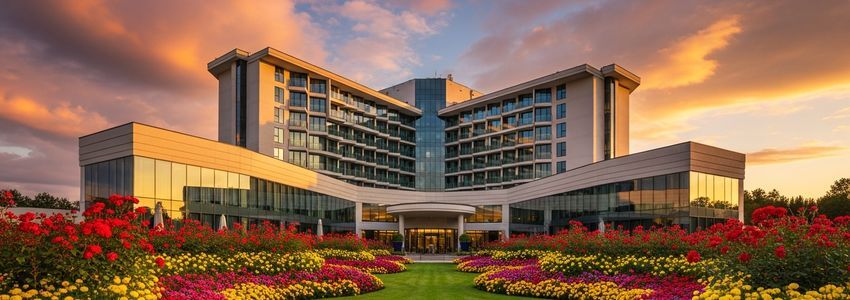
Avid Hotels is IHG's newest mid-scale brand, officially launched in 2018 after years of consumer research pointing to a clear market gap: travelers wanted clean, quiet, modern rooms with reliable Wi-Fi and a solid breakfast at a reasonable price point, without the dated decor and inconsistent quality common in older mid-scale properties. IHG responded by engineering Avid Hotels from scratch, specifically optimizing the brand for new construction rather than conversions.
The brand's name is intentional. IHG chose "Avid" to reflect the passion and intentionality of the modern traveler who is "avid" about getting things done, whether that means closing a business deal, connecting with family, or simply recharging before the next leg of a road trip. Every design decision in the Avid Hotels prototype reflects that philosophy. Rooms are designed around sleep quality, with premium mattresses and advanced soundproofing. Common areas are minimal but functional. The grab-and-go breakfast model keeps mornings efficient.
As an IHG brand, Avid Hotels franchisees benefit immediately from enrollment in IHG One Rewards, one of the most powerful loyalty programs in the hospitality industry with over 100 million members globally. That built-in demand engine is one of the most compelling arguments for choosing an IHG flag, especially for a newer brand that is still building its own identity in secondary markets.
Avid Hotels properties are designed for secondary cities, suburban corridors, and airport-adjacent markets where mid-scale demand is strong but full-service hotel investment is impractical. The typical property footprint runs between 80 and 150 rooms, making it manageable for individual franchisees and smaller hotel groups while still generating the revenue needed to service construction-level debt.
Since launch, Avid Hotels has grown steadily across the United States, with properties open and under construction in markets ranging from college towns to interstate highway corridors. For franchisees, the brand offers a relatively low royalty structure compared to premium IHG flags, while still delivering access to IHG's global reservation systems, sales infrastructure, and brand marketing. The combination makes Avid Hotels one of the more financially attractive new-construction franchise opportunities in the mid-scale segment today.
If you are looking for a point of comparison within the IHG portfolio, you might also want to review our guides on Holiday Inn Express franchise financing and Crowne Plaza franchise financing, which cover IHG's upper-midscale and upscale segments respectively.
Avid Hotels Franchise Costs
Understanding the full cost structure of an Avid Hotels franchise is essential before you approach any lender. Lenders want to see that you have done your homework on project costs, ongoing operating expenses, and the franchise fee obligations that will affect your cash flow from day one. Here is a detailed breakdown of the key cost components you will encounter.
Initial Franchise Fee
The initial franchise fee for an Avid Hotels property is approximately $60,000. This one-time fee is paid at signing and grants you the right to operate under the Avid Hotels brand within your defined territory. Compared to the overall project cost, the franchise fee is a relatively small line item, but it must be factored into your equity and working capital projections from the start.
Total Initial Investment Range
For a new-construction Avid Hotels property, IHG's Franchise Disclosure Document (FDD) indicates a total initial investment range of approximately $8.5 million to $14.5 million. This wide range reflects variables including land costs (which vary dramatically by market), local construction labor rates, regional material costs, and the number of rooms in the specific prototype. Most Avid Hotels projects fall toward the middle of this range for a standard 100-room footprint in a mid-sized market.
Here is a general breakdown of where those dollars go in a typical Avid Hotels new-construction project:
- Land acquisition: $500,000 to $2,000,000+ depending on market and location
- Hard construction costs: $5,000,000 to $9,000,000 (varies by prototype size and regional labor)
- Soft costs (architecture, engineering, permits, legal): $400,000 to $800,000
- Furniture, fixtures, and equipment (FF&E): $700,000 to $1,400,000
- Technology, PMS, and signage: $150,000 to $300,000
- Initial franchise fee: $60,000
- Pre-opening expenses (training, staffing, marketing): $100,000 to $250,000
- Working capital reserve: $200,000 to $500,000
Ongoing Royalty and Fee Structure
Once your Avid Hotels property is open, you will owe IHG ongoing fees based on gross room revenue. The royalty fee is 5% of gross room revenue, which is competitive within the mid-scale segment. The marketing and reservation fee is approximately 3.5% of gross room revenue, which covers IHG's centralized reservation system, brand marketing campaigns, and your property's participation in IHG One Rewards. Combined, you should budget approximately 8.5% of gross room revenue for IHG fees in your operating projections.
IHG's Property Improvement Plan (PIP) Costs
For new construction, you will not face a Property Improvement Plan (PIP) at opening since you are building to brand standards from day one. However, if you are acquiring an existing Avid Hotels property or converting a compatible asset, a PIP may be required and costs can range from several hundred thousand dollars to over a million, depending on the scope of required renovations. Always account for PIP costs in your acquisition financing if applicable.
Equity Requirements
Most lenders require franchisees to contribute 20% to 30% of the total project cost in equity. For an $11 million Avid Hotels project, that means $2.2 million to $3.3 million in equity. This can come from cash on hand, equity in existing real estate, business assets, or investor partnerships. Structuring your equity story correctly is one of the key ways Crestmont Capital helps clients prepare for the lending conversation.
Ready to Finance Your Avid Hotels Franchise?
Get pre-qualified today and see what loan programs you qualify for. Our hotel financing specialists are standing by.
Apply Now →Financing Options for Avid Hotels Franchisees
Hotel franchise financing is one of the more complex areas of commercial lending. Unlike standard commercial real estate loans, hotel loans must account for business operations, brand standards, and the cyclical nature of hospitality revenue. Understanding the landscape of available loan programs is the first step toward choosing the right structure for your Avid Hotels project.
SBA 7(a) Loans
The SBA 7(a) program is the Small Business Administration's flagship loan program and one of the most popular financing tools for hotel franchisees. According to the SBA, 7(a) loans can be used for real estate acquisition, construction, equipment, and working capital, making them highly versatile for hotel projects. The maximum loan amount under SBA 7(a) is $5 million, which means larger Avid Hotels projects typically require either a second financing layer or a different program. For smaller properties or projects where a portion of the total cost is covered by equity or seller financing, the SBA 7(a) can be the primary loan vehicle.
SBA 7(a) loans offer down payments as low as 10% for qualifying franchisees, extended repayment terms of up to 25 years for real estate-secured loans, and interest rates that are regulated by the SBA, making them more predictable than many conventional products. The key trade-off is the paperwork and processing time, which can run 60 to 90 days or more through many lenders.
SBA 504 Loans
The SBA 504 program is specifically designed for fixed-asset financing, making it an excellent fit for new-construction hotel projects. Under the 504 structure, a Certified Development Company (CDC) provides 40% of the project cost at a fixed interest rate, a conventional lender provides 50%, and the borrower contributes 10% in equity. For an $11 million Avid Hotels project, that means approximately $5.5 million from a bank, $4.4 million from the CDC, and $1.1 million in equity from the franchisee.
The SBA 504 program is particularly advantageous because of its fixed-rate component. The CDC portion carries a fixed interest rate set at the time of closing, giving franchisees protection against rising rates during the loan term. Terms for the real estate portion run 20 to 25 years, which keeps monthly payments manageable relative to the loan amount.
Conventional Commercial Real Estate Loans
Conventional CRE loans from banks, credit unions, and commercial mortgage lenders are available for hotel projects but typically require stronger financial profiles and higher equity contributions than SBA programs. Lenders generally require 25% to 35% down for conventional hotel construction loans, and terms are typically shorter than SBA products, running 10 to 20 years with amortization periods up to 25 years. For well-capitalized franchisees with strong operating histories, conventional loans offer faster processing and fewer documentation requirements than SBA programs.
USDA Business and Industry Loans
For Avid Hotels projects in eligible rural areas, the USDA Business and Industry (B&I) loan program can be an excellent alternative to SBA financing. USDA B&I loans offer loan amounts up to $25 million, making them suitable for larger hotel projects that exceed SBA maximums. Eligible areas are defined by USDA as communities with populations under 50,000, which aligns well with many of the secondary and suburban markets where Avid Hotels is actively expanding.
Bridge Loans
Bridge loans are short-term financing instruments used to cover gaps during the construction and lease-up phases of a hotel project. A franchisee might use a bridge loan to acquire land before permanent financing is in place, to cover construction costs while waiting for SBA approval, or to carry a property through its stabilization period before refinancing into permanent debt. Bridge loans are typically 12 to 36 months in duration and carry higher interest rates than permanent financing, so they are used as a transitional tool rather than a long-term solution.
FF&E Financing
Furniture, fixtures, and equipment (FF&E) represent a significant cost in any new hotel project. With Avid Hotels, FF&E typically runs $700,000 to $1.4 million depending on property size. Rather than rolling all FF&E costs into the primary construction loan, many franchisees use dedicated equipment financing to cover these costs separately. FF&E loans are typically structured as 5 to 7 year term loans with monthly payments, and they can be closed concurrently with the primary construction loan to ensure everything is funded at opening.
Construction Loans
For new-construction Avid Hotels projects, a construction loan is typically the first piece of debt in the capital stack. Construction loans are short-term credit facilities that advance funds to pay contractors as work progresses, then convert to permanent financing once the project is complete and meets IHG's brand standards. The conversion point (often called "conversion to perm" or "mini-perm") is a critical milestone that triggers the permanent loan terms and begins the amortization period.
SBA Loans for Avid Hotels Franchisees
SBA loans deserve their own dedicated section because they are the most commonly used financing tool for hotel franchisees, particularly for borrowers who are developing their first or second property. The Small Business Administration does not lend money directly; instead, it guarantees a portion of loans made by approved lenders, reducing the risk to the bank and allowing lenders to offer more favorable terms than they otherwise would.
SBA Eligibility for Hotel Franchises
To qualify for an SBA loan for an Avid Hotels project, your business must meet the SBA's definition of a small business (generally, net worth under $15 million and average net income under $5 million), you must be an eligible for-profit entity, and you must demonstrate that you cannot obtain financing on reasonable terms through conventional channels. Avid Hotels is an approved IHG franchise that qualifies for SBA lending, and IHG's established brand presence actually strengthens your application by demonstrating market demand and franchisor support systems.
Avid Hotels on the SBA Franchise Registry
One of the practical advantages of choosing an established brand like Avid Hotels is that the franchise agreement has already been reviewed and approved for SBA lending purposes. The SBA Franchise Registry confirms which franchise agreements have been pre-cleared for SBA financing, and IHG brands including Avid Hotels appear on the registry. This means lenders do not have to perform independent review of your franchise agreement's eligibility, which can shorten the approval timeline meaningfully.
How SBA Loan Proceeds Can Be Used
SBA loan proceeds for an Avid Hotels project can cover land acquisition, site preparation and grading, hard construction costs, architectural and engineering fees, furniture fixtures and equipment, technology infrastructure, signage, pre-opening training costs, and working capital. This flexibility makes the SBA program genuinely useful across the full spectrum of project costs, not just the physical building.
SBA Loan Terms for Hotels
For hotel real estate loans under the SBA 7(a) program, the maximum term is 25 years. Interest rates are tied to the Prime Rate and can be fixed or variable depending on the lender. The SBA sets maximum interest rate spreads, so rates are generally competitive with or better than conventional hotel loan rates. For SBA 504 loans, the CDC portion carries a fixed rate set at closing, which provides long-term certainty for financial planning purposes.
SBA Loan Processing Timeline
One important reality to manage in your project timeline is that SBA loans take time. Standard SBA 7(a) processing through most lenders runs 60 to 90 days from application to funding, and complex construction projects can take longer. Preferred SBA lenders have delegated authority from the SBA, which can reduce processing time to 30 to 45 days in some cases. Crestmont Capital works with a network of preferred SBA lenders to help clients access faster processing and smoother underwriting.
How Crestmont Capital Helps Avid Hotels Franchisees
Navigating hotel franchise financing without experienced guidance is one of the most common mistakes first-time franchisees make. The loan structures are complex, lender requirements vary significantly, and the difference between a well-structured deal and a poorly structured one can mean hundreds of thousands of dollars in additional interest cost over the life of the loan. Crestmont Capital exists specifically to solve this problem for business owners and franchisees.
Access to Multiple Lenders
Crestmont Capital is not a bank. We are a commercial financing intermediary with relationships across a broad network of SBA-approved lenders, conventional commercial banks, USDA lenders, and alternative capital sources. When you work with Crestmont, your loan package goes to multiple lenders simultaneously, which means you get competitive term sheets rather than accepting whatever a single bank is willing to offer. This competition among lenders typically results in better rates, better terms, and better overall loan structure for the borrower.
SBA Loan Expertise
Our team has deep expertise in SBA loans for hotel franchise projects specifically. We know which SBA lenders have active appetite for hotel construction, which programs fit different project sizes, and how to structure loan packages to maximize approval probability. Many of our hotel clients come to us after being turned down by their local bank and are surprised to learn that the right lender for their specific project profile was never going to be a community bank in the first place.
Construction-to-Perm Structuring
For new-construction Avid Hotels projects, getting the construction-to-permanent loan structure right from the start is critical. A poorly structured construction loan can create problems at the conversion point, leave you with an underfunded project, or create debt coverage gaps that threaten your permanent financing. Our team structures these transactions carefully, coordinating between construction lender, permanent lender, SBA guarantee, and FF&E lender to ensure all pieces close in the right sequence.
Small Business Loan Options
Beyond SBA programs, Crestmont Capital offers access to small business loans that can cover pre-development costs, working capital needs during the ramp-up period, or bridge financing while permanent loans are being processed. These products can be structured quickly and often fund within days rather than weeks, which is important when time-sensitive project milestones are at stake.
Franchise-Specific Financial Modeling
Before you approach a lender, you need a compelling financial model that demonstrates the project's debt service coverage and overall viability. Crestmont Capital's team helps franchisees build hotel-specific financial projections that incorporate realistic occupancy ramp-up curves, RevPAR benchmarks for comparable markets, the IHG royalty and fee stack, and appropriate debt service assumptions. Lenders respond to well-prepared packages, and a strong financial model is often the difference between approval and denial.
Speak With a Hotel Financing Specialist Today
Our team has helped hotel franchisees across the country secure the funding they need. Let us help you too.
Get Financing Help →Real-World Avid Hotels Financing Scenarios
Understanding how financing actually works in practice helps franchisees set realistic expectations and structure their projects appropriately. Here are five representative scenarios covering different borrower profiles and project types.
Scenario 1: First-Time Franchisee, New Construction in a Secondary Market
A real estate developer in a mid-sized Midwestern city decides to develop her first Avid Hotels property on a land parcel she already owns. Total project cost is estimated at $9.8 million including the $750,000 land value she is contributing as equity. She has an additional $1.2 million in liquid assets. Her total equity contribution is $1.95 million (roughly 20%), and she is seeking $7.85 million in debt financing. Crestmont Capital structures an SBA 504 loan: $4.9 million from a bank at a variable rate tied to Prime, and $3.9 million through a CDC at a fixed rate. The SBA guarantee covers the bank's risk exposure, enabling approval despite the developer's lack of hotel operating history. Total monthly debt service is approximately $58,000, covered comfortably by projected stabilized-year revenue of $2.4 million.
Scenario 2: Experienced Operator, Portfolio Expansion
A hotel management company that already operates four IHG properties across two states is adding a new Avid Hotels to their portfolio. Total project cost is $12.1 million. Because of the operator's existing hotel experience and the cross-collateralization opportunity across their portfolio, a conventional commercial real estate lender agrees to finance $8.5 million at 70% LTV on a 20-year amortization with a 10-year fixed rate. The operator contributes $3.6 million in equity from a combination of cash and a HELOC on an existing free-and-clear property. No SBA program is needed due to the operator's strong track record and lender comfort level.
Scenario 3: Rural Market, USDA B&I Loan
An entrepreneurial couple with hotel management experience identifies a strong location in a rural community near a major interstate interchange. The community has a population under 10,000 and qualifies for USDA B&I financing. Total project cost is $8.7 million. The couple secures a USDA B&I loan for $6.5 million (75% of project cost) at a competitive long-term rate with a 25-year term. They contribute $2.2 million in equity from personal savings and a family investor. The USDA program's higher loan-to-value ratio (compared to conventional lending) is the key enabler in this scenario, allowing the couple to develop the property without depleting their liquidity reserves.
Scenario 4: Acquisition and Renovation of an Existing Property
A hotel investor identifies an existing limited-service property that is a strong candidate for conversion to the Avid Hotels brand. The purchase price is $4.2 million, and IHG's required renovation scope (PIP) is estimated at $2.8 million, bringing total project cost to $7 million. Crestmont Capital structures an SBA 7(a) loan for $4.9 million (70% LTV), covering both acquisition and renovation costs under a single loan. The investor contributes $2.1 million (30%) in equity. A separate FF&E financing line of $650,000 covers brand-required furniture and fixtures. Total investment positions the investor for a stabilized NOI of approximately $875,000 annually at a 12.5% cash-on-cash return.
Scenario 5: Multi-Phase Development with Bridge Financing
A development group is pursuing a site that requires environmental remediation and rezoning before construction can begin. They secure a bridge loan of $1.8 million to cover land acquisition and pre-development costs while the site work is completed. Once the site is shovel-ready and permits are in hand 14 months later, they refinance into an SBA 504 construction loan for the full $11.3 million project, with the bridge loan paid off at closing. The bridge lender (through Crestmont) charges a 2-point origination fee and an 11% interest rate for the bridge period, but the certainty of being able to control the site during development justifies the cost. Upon project completion and stabilization, the group projects a 14% cash-on-cash return based on a $2.9 million stabilized NOI.
Avid Hotels By the Numbers
Get Your Avid Hotels Financing Quote
No obligations. No upfront fees. Just straight answers about what you qualify for and what your payments will look like.
Apply Now →Who Qualifies for Avid Hotels Financing?
Qualification standards for hotel franchise loans vary by program, but there are common criteria that apply across most lenders and loan types. Understanding these criteria in advance helps you assess your current position and identify any gaps to address before applying.
Credit Score Requirements
For SBA loans, most lenders require a personal credit score of at least 650, though scores above 700 are preferred and scores above 720 significantly improve your terms. For conventional commercial real estate loans, lenders generally prefer scores of 700 or higher. A strong credit profile signals to lenders that you manage financial obligations responsibly, which is particularly important for a first-time hotel franchisee without an operating track record to offset credit risk.
Net Worth and Liquidity
Lenders evaluate both your total net worth and your liquid assets separately. Net worth requirements vary by loan program and project size, but most hotel lenders want to see a net worth at least equal to the loan amount requested. Liquidity requirements typically mandate that you have post-closing liquid reserves equal to at least 10% of the loan amount, ensuring you have the working capital to operate through the initial ramp-up period without defaulting on loan payments.
Hotel Experience
Hotel operating experience is not always required, particularly for well-established brands with strong training programs like Avid Hotels and IHG. However, experience does improve your terms and your approval probability. Lenders look for direct hotel management experience, adjacent hospitality experience (restaurant groups, resort management, etc.), or a management company arrangement that brings operational expertise to the project even if the borrower personally lacks it. If you are a first-time operator, partnering with an experienced hotel management company can be a game-changer for your loan application.
Business Plan Quality
A comprehensive business plan is non-negotiable for hotel franchise loan applications. Your plan should include market analysis demonstrating demand in your specific location, competitive set analysis (the "comp set" in hotel parlance), detailed financial projections for years one through five, management structure and team bios, and a construction timeline and budget. Lenders are investing in your ability to execute the project, and a well-researched business plan is your opportunity to demonstrate that capability.
Franchise Approval
You must have IHG's franchise approval (or at minimum be in the approval process) before a lender will fully commit to financing your Avid Hotels project. IHG's approval process includes a review of your financial strength, your proposed site, your management qualifications, and your overall fit with the brand's development goals. Securing franchise approval first also gives you access to IHG's approved vendor lists, construction specifications, and design guidelines, which are essential inputs for accurate project cost estimates.
Debt Service Coverage Ratio
Most hotel lenders require a projected Debt Service Coverage Ratio (DSCR) of at least 1.25x at stabilized occupancy, meaning your projected net operating income must be at least 125% of your annual debt service obligation. For an Avid Hotels property with $1.5 million in annual debt service, your stabilized-year NOI projection must demonstrate at least $1.875 million. Market-level occupancy data, competitive rate analysis, and realistic expense modeling all feed into this critical calculation. Our commercial financing team works with clients to build DSCR models that are both credible and compelling to lenders.
FAQ: Frequently Asked Questions About Avid Hotels Franchise Financing
What is the minimum investment required to open an Avid Hotels franchise?
The minimum total initial investment for a new-construction Avid Hotels franchise is approximately $8.5 million, according to IHG's Franchise Disclosure Document. This figure includes land, construction, FF&E, the franchise fee, pre-opening costs, and initial working capital. Actual costs vary significantly based on land values in your target market, local construction labor rates, and the specific room count of your prototype.
Can I finance an Avid Hotels franchise with an SBA loan?
Yes. Avid Hotels is an IHG brand that qualifies for SBA financing. Both the SBA 7(a) and SBA 504 programs can be used for Avid Hotels projects, covering land, construction, FF&E, and working capital. The SBA 7(a) program has a $5 million maximum, while the SBA 504 program can accommodate larger projects through the combined CDC and bank financing structure.
How much equity do I need to open an Avid Hotels?
Most lenders require 20% to 30% equity for hotel franchise projects. For an SBA 504 loan, the minimum equity contribution is 10% of total project cost. For a $10 million Avid Hotels project, that means a minimum of $1 million in equity under SBA 504, or $2 to $3 million under conventional lending standards. Your equity can come from cash, real estate equity, business assets, or investor contributions.
What credit score do I need to get an Avid Hotels loan?
For SBA hotel loans, most lenders require a minimum personal credit score of 650, though 700 or above is preferred. For conventional commercial real estate financing, lenders typically prefer scores of 700 or higher. Higher credit scores generally translate to better interest rates and more favorable loan terms.
Do I need hotel experience to get financing for an Avid Hotels?
Hotel experience is not always required, but it significantly strengthens your loan application. First-time hotel operators can improve their approval odds by partnering with an experienced hotel management company, demonstrating adjacent business experience, or showing a deep understanding of the local market. IHG also provides training and support through its franchise onboarding program, which helps bridge experience gaps for new franchisees.
What are Avid Hotels' ongoing royalty fees?
Avid Hotels franchisees pay a royalty fee of 5% of gross room revenue to IHG, plus a marketing and reservation fee of approximately 3.5% of gross room revenue. The combined ongoing fee obligation is approximately 8.5% of gross room revenue, which is competitive within the mid-scale hotel segment and significantly lower than many full-service brand options.
How long does the SBA loan process take for a hotel project?
SBA loan processing for hotel projects typically takes 60 to 90 days from application to funding through standard lenders. Preferred SBA lenders with delegated authority can reduce this to 30 to 45 days in some cases. Complex construction projects with multiple loan components (construction, perm, FF&E) may take longer, so building adequate lead time into your development timeline is essential.
What is a DSCR and why does it matter for hotel loans?
DSCR stands for Debt Service Coverage Ratio. It measures your property's ability to generate enough income to cover its loan payments. Most hotel lenders require a projected DSCR of at least 1.25x at stabilized occupancy, meaning your net operating income must be 25% higher than your total annual debt service. A DSCR below 1.0x means the property cannot cover its own debt from operations, which is a dealbreaker for virtually all lenders.
Can I use the USDA B&I loan program for an Avid Hotels project?
Yes, if your project is located in an eligible rural area (generally communities with populations under 50,000), the USDA Business and Industry loan program can be an excellent financing option. USDA B&I loans can reach $25 million, making them suitable for larger projects that exceed SBA program limits. The program offers competitive rates and longer terms than many conventional hotel loans.
What is FF&E financing and do I need it for an Avid Hotels?
FF&E stands for Furniture, Fixtures, and Equipment. For a new-construction Avid Hotels property, FF&E costs typically run $700,000 to $1.4 million. Rather than rolling all FF&E costs into your primary construction loan, a dedicated FF&E financing line can spread these costs over a 5 to 7 year term, reducing the overall construction loan amount and potentially improving your debt-to-equity ratio. Crestmont Capital can structure FF&E financing as a companion product to your primary hotel loan.
What markets is Avid Hotels targeting for expansion?
IHG designed the Avid Hotels brand specifically for secondary cities, suburban markets, and airport corridors where mid-scale demand is strong but full-service hotel investment is impractical. Target markets include mid-sized regional cities, interstate highway intersections, college towns, healthcare corridors, and suburban business parks. These markets often have less competitive supply than primary urban centers, which can accelerate a new property's ramp to stabilized occupancy.
Can I convert an existing hotel to the Avid Hotels brand?
Avid Hotels was designed primarily as a new-construction brand, and IHG's preference is for purpose-built properties that meet their specific prototype standards. However, conversion opportunities do exist in some cases for properties that are compatible with Avid Hotels' design requirements. Conversion projects typically require an IHG-approved PIP (Property Improvement Plan) to bring the property up to brand standards, and the cost of that PIP must be factored into your total project financing.
How does Crestmont Capital help with Avid Hotels financing?
Crestmont Capital helps Avid Hotels franchisees by providing access to a broad network of SBA lenders, conventional commercial real estate lenders, USDA lenders, and alternative capital sources. Our team structures loan packages, prepares financial projections, coordinates between multiple lenders in complex transactions, and advocates for our clients throughout the underwriting process. We work with first-time franchisees and experienced operators alike, tailoring our approach to each client's unique situation.
What documents do I need to apply for an Avid Hotels franchise loan?
A typical hotel franchise loan application requires: personal and business tax returns for the past three years, personal financial statement, business plan with financial projections, franchise disclosure document and franchise agreement (or application confirmation), site information including purchase contract or lease, construction cost estimates from a licensed contractor, environmental report (Phase I at minimum), appraisal (ordered by the lender), and hotel experience documentation. Crestmont Capital provides a detailed checklist tailored to your specific loan program.
What interest rates can I expect for an Avid Hotels loan?
Interest rates for hotel franchise loans vary based on the loan program, your credit profile, market conditions at the time of closing, and lender competition. As a general reference point, SBA 7(a) hotel loans have historically ranged from Prime + 1.5% to Prime + 2.75%. SBA 504 CDC rates are fixed at a rate tied to 10-year Treasury notes at the time of closing. Conventional hotel loans typically run 0.5% to 1.5% higher than SBA rates for comparable borrower profiles. Rates change frequently; contact Crestmont Capital for current rate indications.
How to Get Started: Next Steps for Avid Hotels Franchise Financing
Before approaching lenders, begin the IHG franchise application process. Having a Letter of Intent or franchise approval in hand significantly strengthens your position with lenders and demonstrates that IHG has validated your market, site, and qualifications.
Pull your personal credit reports, inventory your liquid assets and net worth, and identify your available equity contribution. Understanding your financial starting point lets Crestmont Capital match you with the right loan program from the beginning rather than shopping you to lenders who are not the right fit.
Engage a contractor or development consultant with hotel construction experience to produce a preliminary cost estimate for your specific site and room count. This estimate, along with your land cost, forms the basis for determining your total project cost and the loan amount you need to request.
Reach out to our hotel financing team to discuss your project. We will review your situation, identify the most appropriate loan programs, and explain the documentation you will need to prepare. This initial consultation is free and carries no obligation.
With Crestmont Capital's guidance, assemble your complete loan application package including financial statements, business plan, projections, site information, and franchise documentation. We review everything before submission to identify and address any issues that could slow underwriting or lead to denial.
Crestmont submits your package to multiple qualified lenders simultaneously. When term sheets arrive, we help you compare them on an apples-to-apples basis, factoring in not just interest rates but loan structure, prepayment penalties, recourse requirements, and lender reputation in the hotel space. You choose the best offer and we manage the closing process through funding.
Conclusion: Your Avid Hotels Financing Journey Starts Here
The Avid Hotels brand represents one of the most compelling new-construction franchise opportunities in the mid-scale hotel segment today. IHG built it from the ground up to meet real demand in markets that are underserved by full-service hotels, equipped it with the power of the IHG One Rewards loyalty ecosystem, and priced it with a royalty structure that leaves meaningful cash flow for franchisees who execute well. The financing challenge is real but absolutely solvable with the right guidance and the right lending partners.
Whether you are looking at your first hotel development or adding an Avid Hotels to an existing portfolio, the key is getting your financing structure right from the start. The wrong loan structure costs money every month for 20 or 25 years. The right structure creates a foundation for a business that generates strong returns and can be refinanced, expanded, or sold from a position of strength.
Crestmont Capital has helped hotel franchisees across the country navigate exactly this process. Our team knows the IHG brand family, the SBA hotel lending landscape, and the lenders who are actively looking to finance properties like yours. We would love to help you do the same.
If you found this guide helpful, you might also want to read our related guides on Holiday Inn Express franchise financing and explore our full range of small business loan options for hospitality entrepreneurs.
Ready to Finance Your Avid Hotels Property?
Apply today and our hotel financing specialists will reach out within one business day to discuss your project and options.
Start Your Application →Disclaimer: The information provided in this article is for general educational purposes only and does not constitute financial, legal, or investment advice. Loan terms, interest rates, and program availability are subject to change and vary by lender, borrower qualifications, and market conditions. Always consult with qualified financial and legal professionals before making franchise investment or financing decisions. Crestmont Capital is a commercial financing intermediary and is not affiliated with IHG, Avid Hotels, or the U.S. Small Business Administration.