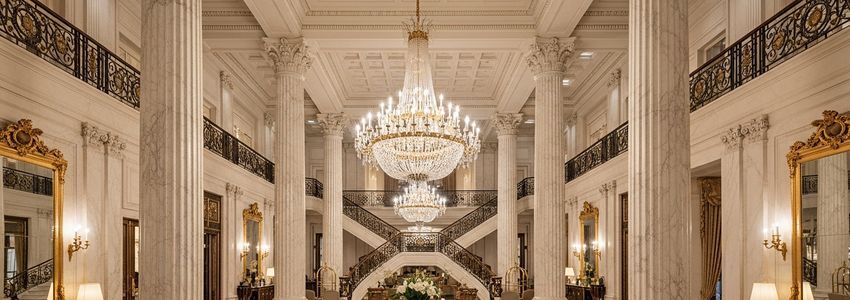
The Waldorf Astoria name carries unmatched prestige in the global luxury hospitality industry. As Hilton's ultra-luxury flagship brand, securing a Waldorf Astoria franchise represents one of the most ambitious - and rewarding - investments in the hotel sector. The waldorf astoria franchise cost is substantial, typically ranging from $75 million to well over $500 million per property depending on location, scope, and whether you're developing a new build or converting an existing landmark asset. Understanding how to finance that investment is the difference between a deal that closes and one that stalls on the drawing board.
In this comprehensive guide, we'll break down everything you need to know about Waldorf Astoria franchise financing - from the full cost structure and brand requirements to the most effective loan products available to institutional investors, hotel developers, and family offices. Whether you're exploring commercial financing for the first time or looking to optimize your capital stack, this guide gives you a complete roadmap.
Ready to Finance Your Waldorf Astoria Investment?
Get fast, flexible commercial financing from the #1 business lender in the U.S. Apply in minutes.
Apply Now →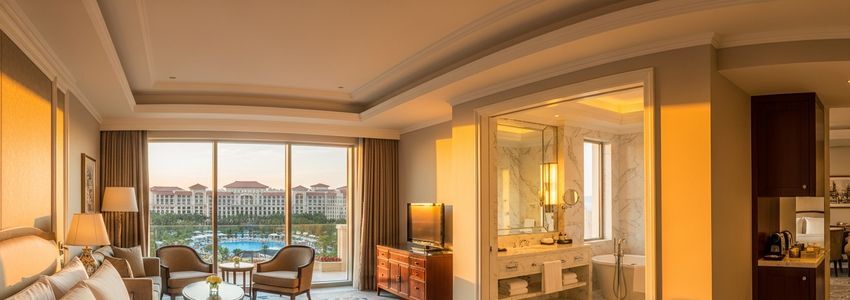
What Is the Waldorf Astoria Brand?
The Waldorf Astoria brand traces its roots to 1893 in New York City, where it became a defining symbol of American luxury and elegance. Today, as Hilton's crown jewel, the Waldorf Astoria portfolio spans the world's most coveted destinations - from the storied halls of the Waldorf Astoria New York to iconic properties in Dubai, the Maldives, Amsterdam, Edinburgh, and Jerusalem.
The brand is not simply a hotel category. It represents a philosophy of timeless luxury, white-glove service, and architectural grandeur that demands a level of investment - and operational commitment - far beyond what most hotel brands require. Hilton enforces some of the most exacting brand standards in the hospitality world, covering everything from the grade of marble used in lobbies to the thread count of linens, staffing ratios, culinary programming, and spa services.
For investors, the Waldorf Astoria brand offers something equally rare: association with a globally recognized name that commands premium room rates, high average daily rates (ADR), and strong revenue per available room (RevPAR) in its competitive set. According to data cited by Forbes, ultra-luxury hotel assets have outperformed other commercial real estate categories in total return over the past decade - making this asset class one of the most attractive for long-term wealth building.
Brand Insight: Waldorf Astoria properties consistently achieve ADR premiums of 40-80% above their local luxury competitive set, driven by brand recognition, service reputation, and global distribution through the Hilton Honors loyalty program with over 180 million members.
Waldorf Astoria Franchise Cost Breakdown
Before you can secure the right financing, you need to understand the full scope of costs involved. The waldorf astoria franchise cost is multi-layered and includes far more than a simple franchise fee. Here is a detailed breakdown of the major cost categories:
Initial Franchise Fee
Hilton charges an initial franchise fee for the Waldorf Astoria brand that typically ranges from approximately $75,000 to $200,000. The exact amount is based on the number of rooms and property type. This fee grants the right to operate under the brand for the term of the franchise agreement, typically 20 to 30 years.
Property Development or Acquisition Cost
This is the largest component of the total investment. Depending on location and format:
- Urban gateway city conversions (existing historic landmark buildings): $100M-$500M+
- New ground-up construction in major metro markets: $75M-$300M+
- Resort destination properties: $80M-$400M+ depending on land, scope, and amenities
Renovation and Brand Standard Compliance
Hilton requires that all Waldorf Astoria properties meet ultra-luxury brand standards before and during operation. For conversion projects, this typically means a comprehensive property improvement plan (PIP) that includes:
- Full gut renovation of guestrooms and suites with ultra-luxury finishes
- Lobby and public area redesigns meeting Waldorf Astoria design guidelines
- Installation of approved spa, fitness, and F&B programming
- Technology infrastructure upgrades (PMS, in-room systems, connectivity)
Renovation costs for existing properties regularly run $100,000 to $250,000 per key - meaning a 250-room property could require $25M to $62.5M in renovation investment alone.
Ongoing Royalty and Program Fees
Once open, Waldorf Astoria franchisees pay ongoing fees including:
- Royalty fee: Typically 5-6% of gross room revenue
- Marketing/program fee: Typically 3-4% of gross room revenue
- Reservations and loyalty fees: Additional fees based on reservations made through Hilton channels
These ongoing fees are important for lenders to factor into debt service coverage calculations during underwriting.
Pre-Opening Costs
Before the first guest checks in, franchisees must fund significant pre-opening expenses:
- Marketing and soft launch campaigns
- Staff recruitment, hiring, and training programs
- Soft goods (linens, uniforms, operating supplies)
- Technology systems setup and integration
- Licensing, permitting, and legal fees
Pre-opening costs typically range from $3M to $15M+ depending on property size and market.
Waldorf Astoria Investment Snapshot
$75M-$500M+
Total Investment Range
5-6%
Ongoing Royalty Fee
$75K-$200K
Initial Franchise Fee
20-30 yrs
Typical Franchise Term
Why Specialized Financing Is Critical for Waldorf Astoria Projects
The scale of a Waldorf Astoria investment puts it firmly in the territory of institutional-grade financing - far beyond the reach of traditional small business loans or standard commercial mortgages. Several factors make specialized financing not just helpful but essential:
Capital intensity: With total project costs frequently exceeding $100 million, the equity requirement alone - typically 25-40% of total project cost - demands serious liquidity. Arranging the right debt structures around that equity is critical to protecting returns.
Long development timelines: Ground-up Waldorf Astoria projects often take 3-6 years from site acquisition to opening. Conversion projects typically require 18-36 months of construction before generating any revenue. Lenders must be comfortable with extended pre-revenue periods.
Brand standard compliance risk: Hilton's PIP requirements can evolve during a project, and cost overruns in luxury construction are common. Financing structures need built-in flexibility and contingency reserves.
Operational complexity: Post-opening, debt service coverage ratios must account for the ramp-up period (typically 2-4 years for a new luxury hotel to reach stabilized occupancy). Lenders familiar with hospitality underwriting understand these dynamics; generalist lenders often do not.
According to Bloomberg, ultra-luxury hotel transactions have attracted growing interest from sovereign wealth funds, REITs, and family offices precisely because of their strong inflation-hedge characteristics and brand-driven pricing power - but the complexity of financing these deals continues to challenge even seasoned investors.
Financing Options for Waldorf Astoria Investors
There is no single loan product that handles the entire Waldorf Astoria investment. Instead, sophisticated investors assemble a capital stack - layering different financing instruments to cover different tranches of the total project cost. Below, we walk through the primary financing options available.
SBA 504 Loans for Luxury Hotel Projects
The SBA 504 loan program is one of the most powerful tools for owner-occupied commercial real estate - and hotel properties can qualify under certain conditions. The SBA 504 program is structured as a partnership between a conventional lender (providing 50% of the project), a Certified Development Company (providing 40% via a government-backed debenture), and the borrower (contributing 10% equity for established businesses).
Key advantages of SBA 504 for eligible hotel projects:
- Below-market fixed interest rates on the SBA-backed portion
- Long amortization terms (up to 25 years for real estate)
- Lower equity injection requirement (10% vs. 25-40% for conventional)
- Fixed-rate certainty on a significant portion of the debt
The primary limitation: SBA 504 has loan size maximums ($5.5M to $16.5M on the SBA-backed portion depending on project type), which means it only covers a fraction of the total Waldorf Astoria project cost. However, it can be an excellent tool for acquiring a specific property parcel or for smaller ancillary components of a larger project. For a deeper look at available government-backed programs, explore our guide to SBA loans.
Pro Tip: SBA 504 financing can be layered with conventional senior debt for the right project types. Work with a commercial financing specialist who understands how to structure SBA-backed components alongside institutional debt facilities for hotel projects.
CMBS and Commercial Real Estate Loans
Commercial Mortgage-Backed Securities (CMBS) loans - also called conduit loans - are one of the most widely used financing tools for large hotel transactions. In a CMBS structure, the loan is originated by a lender and then pooled with other commercial real estate loans, securitized, and sold to institutional investors on the bond markets. This structure allows lenders to offer competitive terms on large loan sizes.
For Waldorf Astoria investors, CMBS loans offer several advantages:
- Large loan sizes: CMBS lenders regularly fund loans of $50M-$500M+ for luxury hotel assets
- Non-recourse structure: Most CMBS loans are non-recourse to the borrower (with standard carve-outs), which is critical for institutional investors and family offices
- Competitive rates: CMBS spreads over U.S. Treasury benchmarks are often tighter than conventional portfolio lenders for stabilized assets
- Interest-only periods: Many CMBS loans offer interest-only periods that align with hotel ramp-up timelines
The trade-off: CMBS loans are relatively inflexible. Early repayment is subject to defeasance or yield maintenance provisions, and modifications are complex. CMBS works best for stabilized, income-producing assets rather than development projects.
Portfolio commercial real estate loans from insurance companies, regional banks, and debt funds offer more flexibility than CMBS and can be tailored to construction, renovation, and value-add scenarios. These lenders often have specific hospitality lending programs with underwriters who understand hotel-specific metrics like RevPAR, occupancy trends, and management agreement structures.
Construction-to-Permanent Financing for New Builds
For ground-up Waldorf Astoria construction projects, a construction-to-permanent loan (also called a "construction perm" or "mini-perm") provides a single financing solution that converts from a construction facility to a permanent mortgage upon project completion. This eliminates the need to refinance at completion - reducing transaction costs and refinancing risk.
During the construction phase (typically 24-48 months for luxury hotel projects), the borrower draws down funds against a pre-approved facility as construction milestones are met. Interest is paid only on drawn amounts. Upon substantial completion and stabilization, the loan converts to a permanent mortgage with a longer amortization schedule.
Construction lenders for luxury hotel projects typically require:
- Experienced hotel developer/sponsor with a proven track record
- Executed hotel management agreement with a qualified operator
- Signed franchise agreement with Hilton
- Detailed construction budget with adequate contingency (typically 10-15%)
- Equity injection of 30-40% of total project cost
- Pre-sales, pre-leasing, or demand study evidence for the market
This type of long-term business loan structure provides stability throughout the lengthy development and stabilization process.
Ready to Finance Your Waldorf Astoria Investment?
Get fast, flexible commercial financing from the #1 business lender in the U.S. Apply in minutes.
Apply Now →Bridge Loans and Mezzanine Financing
Bridge Loans for Acquisitions and Repositioning
Bridge loans are short-term financing instruments - typically 12 to 36 months - designed to "bridge" the gap between acquisition and permanent financing or stabilization. For Waldorf Astoria investors, bridge loans are invaluable in several scenarios:
- Acquiring an underperforming luxury asset before implementing the Waldorf Astoria conversion and repositioning plan
- Funding a repositioning of a currently-branded property to Waldorf Astoria standards while the PIP is underway
- Closing quickly on a competitive deal where traditional financing timelines are too slow
- Financing a property that doesn't yet meet stabilized underwriting criteria for permanent lenders
Bridge lenders for luxury hospitality assets include debt funds, private credit firms, and specialty finance companies. Rates are higher than permanent financing (typically SOFR + 3-6%), but the speed and flexibility justify the cost when execution is critical.
An acquisition loan can serve as the initial bridge financing vehicle, giving investors the capital to secure a property quickly while permanent financing is arranged.
Mezzanine Financing for Capital Stack Completion
Mezzanine financing fills the gap between senior debt and equity in a hotel project's capital stack. Rather than being secured by the real estate directly (like a mortgage), mezzanine debt is typically secured by a pledge of the ownership interests in the property-owning entity. This subordinate position means mezzanine lenders charge significantly higher rates - commonly in the 10-15%+ range - but they allow borrowers to reduce equity requirements and achieve higher leverage.
For a $150M Waldorf Astoria project, a typical capital stack might look like this:
- Senior debt (CMBS or portfolio loan): $90M (60% LTC)
- Mezzanine loan: $22.5M (15% LTC)
- Equity: $37.5M (25% LTC)
Mezzanine financing providers for luxury hotel projects include private debt funds, family offices lending on real estate, and insurance companies with alternative investment mandates.
Key Stat: According to industry data, the average luxury hotel transaction in gateway markets involves at least two to three distinct debt instruments, with mezzanine financing present in over 40% of deals exceeding $100M. Building the right capital stack structure is as important as finding competitive pricing on any single loan.
Private Equity Partnerships and Joint Ventures
Many Waldorf Astoria projects - particularly those at the $200M+ scale - involve equity partners rather than a single investor carrying the full equity requirement. Private equity partnerships and joint ventures allow developers to bring in institutional equity capital while retaining operational control and a meaningful economic interest in the upside.
Common joint venture structures for luxury hotel projects include:
- Preferred equity: An institutional investor receives a preferred return (typically 8-12% per year) and a share of profits, while the developer-operator retains control
- Common equity JV: Both parties share in all cash flows and appreciation on an agreed percentage basis
- REIT partnership: Hotel REITs or non-traded REITs provide equity capital in exchange for a management agreement and economic participation
- Family office co-investment: Family offices frequently co-invest alongside sponsors in ultra-luxury hotel projects as a real asset allocation
When structuring a joint venture, clear waterfall provisions, decision-making rights, exit rights, and buy/sell mechanisms are essential. Experienced hospitality attorneys and financial advisors are critical partners in this process.
How Crestmont Capital Can Help Waldorf Astoria Investors
Crestmont Capital has established itself as a leading provider of commercial financing solutions for hospitality investors across the United States. Unlike generalist lenders, Crestmont Capital's team understands the unique underwriting dynamics of luxury hotel projects - including the extended ramp-up periods, brand standard compliance requirements, and capital stack complexity that define Waldorf Astoria-level investments.
Crestmont Capital offers flexible financing structures designed to meet investors where they are in the project lifecycle:
- Pre-development capital: Financing for site acquisition, feasibility studies, and design development phases
- Construction financing: Draw-based facilities for ground-up development and major renovation projects
- Bridge-to-perm financing: Short-term capital to fund acquisitions and reposition assets toward Waldorf Astoria brand standards
- Permanent commercial real estate loans: Long-term, fixed-rate financing for stabilized luxury hotel assets
- Mezzanine and subordinate debt: Capital stack completion financing to reduce equity requirements
Crestmont Capital's approach is built on speed, transparency, and genuine partnership with investors - not simply processing loan applications. The team works directly with hotel developers, institutional investors, and family offices to understand the specifics of each project and structure the most appropriate financing solution.
Crestmont Capital has also financed projects across the broader Hilton hotel brand portfolio. If you're considering other Hilton brands, our guides to the Hilton Garden Inn franchise loan and Holiday Inn franchise loan provide detailed financing breakdowns for those segments of the market.
How to Qualify for a Waldorf Astoria Project Loan
Qualification requirements for Waldorf Astoria-scale financing are rigorous. Lenders at this level are evaluating not just the property but the entire sponsor ecosystem. Here are the key factors that determine lender confidence:
Sponsor Track Record
Lenders require demonstrated experience with luxury hotel development, ownership, or management. First-time hotel developers face significant hurdles and typically need to partner with an experienced co-sponsor or management company with a verifiable track record in the luxury segment.
Hilton Franchise Agreement
Lenders will require evidence of a franchise agreement with Hilton Hotels & Resorts (or at minimum, a letter of intent) demonstrating that the brand has approved the project. This approval signals that the property meets Hilton's location, design, and operator quality standards.
Hotel Management Agreement
Most lenders require a signed management agreement with a qualified hotel management company. This can be a third-party management company or the developer's own management entity, provided it has demonstrated luxury hotel operating capabilities.
Financial Strength and Liquidity
Borrowers are expected to demonstrate significant financial strength, including:
- Net worth equal to or greater than the loan amount
- Liquid assets to cover the equity injection plus 6-12 months of interest reserves
- Strong credit history with no material defaults
Market and Feasibility Analysis
A comprehensive market study by a recognized hospitality consulting firm (STR, HVS, PKF Consulting, or similar) is typically required. This study must demonstrate sufficient demand, achievable ADR, and realistic stabilized occupancy projections that support the pro forma cash flows.
Construction Budget and Plans
For development and renovation projects, lenders require complete construction plans, specifications, and a detailed budget prepared or reviewed by a qualified cost estimator. A construction contract with a reputable general contractor is required before loan closing for most construction facilities.
Building the Right Capital Stack for Your Waldorf Astoria Project
The capital stack for a Waldorf Astoria project is not a one-size-fits-all structure. The optimal mix of senior debt, mezzanine financing, preferred equity, and common equity depends on several factors:
- Stage of development: Early-stage projects require more patient capital; stabilized assets can access tighter CMBS or insurance company pricing
- Sponsor equity capacity: Investors with larger balance sheets can take a higher equity position to reduce debt costs and maximize return on equity
- Project risk profile: Conversion projects in strong markets carry less risk than ground-up development in emerging markets, and pricing reflects that
- Target hold period: Short-term value-add strategies (buy, renovate, sell) favor bridge debt; long-term hold strategies favor fixed-rate permanent financing
- Exit strategy: Projects targeting a hotel REIT exit, brand sale, or recapitalization need capital stack structures that facilitate those outcomes
Working with an experienced commercial financing advisor who understands luxury hospitality is essential for building a capital stack that optimizes cost of capital while managing risk. The wrong structure - too much leverage at the wrong cost - can turn an excellent real estate asset into a financial problem.
Next Steps to Secure Your Waldorf Astoria Financing
Your Waldorf Astoria Financing Roadmap
- Define your project scope: Determine whether you're pursuing a new build, conversion, or acquisition of an existing Waldorf Astoria property - each has different financing needs.
- Engage with Hilton Development: Initiate discussions with Hilton Hotels & Resorts' development team to understand brand approval requirements and begin the franchise agreement process.
- Assemble your advisory team: Hire an experienced hospitality attorney, accountant, and commercial financing advisor before approaching any lenders.
- Commission a market feasibility study: Engage a recognized hospitality consulting firm to prepare a market and financial feasibility study supporting your project's pro forma.
- Define your capital stack target: Work with your financing advisor to identify the optimal mix of senior debt, mezzanine capital, and equity for your project and risk profile.
- Engage Crestmont Capital: Contact our team for a confidential financing consultation. We'll review your project, assess financing options, and connect you with the right capital sources for your Waldorf Astoria investment.
Ready to Finance Your Waldorf Astoria Investment?
Get fast, flexible commercial financing from the #1 business lender in the U.S. Apply in minutes.
Apply Now →Frequently Asked Questions About Waldorf Astoria Franchise Financing
What is the total waldorf astoria franchise cost?
The total waldorf astoria franchise cost varies widely depending on location, property type, and scope of development. New build projects in major gateway cities typically cost $150M to $500M+ in total project cost, including land, construction, soft costs, pre-opening expenses, and working capital. Conversion of an existing luxury property may range from $75M to $300M+ depending on the renovation scope required by Hilton's PIP. The initial franchise fee itself is approximately $75,000 to $200,000, which represents a small portion of the total investment.
Can I use an SBA loan to finance a Waldorf Astoria hotel?
SBA loans, particularly the SBA 504 program, can be used for certain components of a Waldorf Astoria hotel project - specifically for owner-occupied commercial real estate. However, SBA loan maximums (up to $16.5M on the SBA-backed debenture) mean that SBA financing covers only a fraction of most Waldorf Astoria project costs. SBA programs are better suited to smaller hospitality projects. For projects at the Waldorf Astoria investment scale, senior debt typically comes from CMBS lenders, insurance companies, or institutional portfolio lenders, often supplemented by mezzanine financing and private equity.
What is a typical LTV for a Waldorf Astoria hotel financing?
Loan-to-value (LTV) ratios for luxury hotel projects typically range from 55% to 70% for senior debt on stabilized assets, and 50% to 65% for construction and value-add projects where there is more risk. Including mezzanine debt, total leverage may reach 75-80% of total project cost. Lenders apply conservative LTV standards to luxury hotels because the assets are operationally intensive and value can be sensitive to brand performance, management quality, and market conditions. Borrowers should be prepared to contribute 25-40% of total project cost as equity.
How do Waldorf Astoria royalty fees affect loan underwriting?
Waldorf Astoria royalty fees (typically 5-6% of gross room revenue) and marketing/program fees (3-4% of gross room revenue) are treated as operating expenses in hotel loan underwriting. Lenders deduct these fees from gross revenue when calculating net operating income (NOI) and debt service coverage ratio (DSCR). This means your project's NOI - and therefore your borrowing capacity - is directly affected by the ongoing fee structure. A well-structured franchise agreement with manageable fees is an important consideration when evaluating the economics of any Waldorf Astoria investment.
What is a CMBS loan and is it right for a Waldorf Astoria property?
A Commercial Mortgage-Backed Securities (CMBS) loan is a type of commercial real estate mortgage that is pooled with other loans, securitized, and sold to bond market investors. CMBS loans offer competitive rates and large loan sizes, making them well-suited for stabilized Waldorf Astoria properties. Key advantages include non-recourse structure (with carve-outs), interest-only periods, and loan sizes of $50M-$500M+. The main drawbacks are inflexibility for early repayment (defeasance or yield maintenance penalties) and limited ability to modify loan terms during the term. CMBS works best for stabilized, income-generating Waldorf Astoria assets rather than development projects.
What is mezzanine financing and when should I use it?
Mezzanine financing is subordinate debt that sits between senior debt and equity in a project's capital stack. It is secured by a pledge of the ownership interests in the property entity rather than a direct mortgage on the real estate. Mezzanine financing allows borrowers to achieve higher overall leverage - reducing the equity they need to invest - but comes at a higher interest rate (typically 10-15%+). For Waldorf Astoria projects, mezzanine financing is most useful when senior lenders will not provide full leverage and the borrower wants to minimize equity investment to maximize return on equity. It is also commonly used in bridge-to-perm scenarios where the project is being repositioned to a higher value.
Do I need a hotel management company to secure financing?
Yes, in virtually all cases, lenders financing Waldorf Astoria-branded hotel projects require an executed hotel management agreement (HMA) with a qualified management company. The management company must have demonstrated experience operating luxury hotels, and ideally Waldorf Astoria or comparable ultra-luxury properties. The management agreement terms (length, fees, termination rights) are also carefully reviewed by lenders, as they affect NOI projections and the lender's ability to replace management in a default scenario. Franchise lenders specifically want to see that brand standards will be maintained through professional management.
What is the typical debt service coverage ratio (DSCR) required for luxury hotel loans?
Most senior lenders for luxury hotel properties require a minimum debt service coverage ratio (DSCR) of 1.25x on a stabilized basis, meaning the property's net operating income must be at least 25% higher than the annual debt service (principal and interest payments). Conservative lenders may require 1.35x or higher given the operational complexity of luxury hotel assets. DSCR is calculated using the property's stabilized NOI - typically year 3 or 4 projections for new properties - and the lender's underwritten debt service at the actual loan rate. Understanding DSCR requirements is critical for sizing your loan appropriately.
How long does it take to close a Waldorf Astoria hotel loan?
Loan closing timelines for Waldorf Astoria-scale transactions vary significantly by loan type. Bridge loans from private debt funds can close in 30-60 days for well-prepared borrowers. Construction loans and CMBS loans typically require 60-120 days due to the extensive diligence process, third-party reports (appraisal, environmental, engineering, market study), franchise agreement review, and legal documentation. Institutional debt fund transactions may be faster (45-75 days) if the fund has a streamlined process. Building in adequate time for financing in your acquisition or development timeline is critical to avoiding costly delays.
What third-party reports are required for hotel loan underwriting?
Lenders for Waldorf Astoria hotel projects typically require a comprehensive set of third-party reports, including: (1) Appraisal by a MAI-certified appraiser with luxury hospitality experience; (2) Market feasibility study by a recognized hospitality consulting firm (HVS, STR, PKF, or similar); (3) Phase I Environmental Site Assessment (and Phase II if warranted); (4) Property Condition Assessment (PCA) evaluating physical condition and capital needs; (5) ALTA survey and title report; (6) Seismic assessment (in applicable markets); and (7) Construction cost review by an independent construction consultant (for development loans). These reports collectively give lenders the information they need to underwrite the value, feasibility, and risk of the project.
Can I finance a Waldorf Astoria conversion project differently than a new build?
Yes, conversion projects and new builds are typically financed with different structures. Conversion projects - where an existing hotel or historic building is repositioned to Waldorf Astoria standards - often use bridge-to-perm financing: a bridge loan funds the acquisition and renovation, then converts to permanent CMBS or portfolio financing once the property is stabilized under the new brand. New builds typically require a full construction loan that funds the development phase, then either converts to a permanent loan or is refinanced upon stabilization. Conversion projects may also have access to historic tax credits (for qualifying buildings), which can be monetized as an additional equity source.
What is the difference between a hotel franchise agreement and a management agreement?
A hotel franchise agreement grants the owner the right to operate under a specific brand (such as Waldorf Astoria) in exchange for fees and compliance with brand standards. The franchisee can manage the hotel directly or hire a third-party management company. A hotel management agreement (HMA) is a separate contract between the property owner and a hotel management company, under which the management company operates the hotel day-to-day for a fee. Many Waldorf Astoria properties involve both a Hilton franchise agreement and a third-party HMA with a qualified luxury operator. Lenders review both agreements carefully, as they directly affect the property's income potential and operational risk profile.
Are there tax incentives available for luxury hotel development?
Yes, several tax incentives may be available depending on project location and structure: (1) Historic Tax Credits (HTCs) - Federal and state HTCs are available for certified historic structures, providing a 20% federal tax credit on qualified rehabilitation expenditures. Many landmark hotel conversions qualify; (2) Opportunity Zone tax benefits - If the property is in a designated Opportunity Zone, investors may defer and reduce capital gains taxes; (3) Accelerated depreciation - Cost segregation studies can accelerate depreciation deductions on hotel assets; (4) State and local incentives - Many municipalities offer TIF financing, grant programs, or abatements for high-quality hotel development. Consulting with a tax attorney specializing in real estate development is critical to identifying and capturing available incentives.
How does Hilton support franchisees during the development process?
Hilton provides franchisees with a comprehensive support package during the development process, including: design and construction review services to ensure brand standard compliance; a dedicated development team that works with the franchisee through the PIP and construction phases; access to Hilton's approved vendor programs for FF&E, OS&E, and technology systems (which can reduce procurement costs); pre-opening support including training programs, systems setup, and sales & marketing assistance; and access to Hilton's global reservation and distribution platform, which provides immediate marketing reach from day one. This support is a key part of the value proposition of the Waldorf Astoria franchise and factors positively into lender underwriting of projected revenue performance.
How can Crestmont Capital help me finance a Waldorf Astoria hotel project?
Crestmont Capital offers a full suite of commercial financing solutions designed for hotel investors and developers at every stage of the project lifecycle. Whether you need an acquisition bridge loan to close quickly on a target property, construction financing to fund a ground-up or renovation project, or permanent commercial real estate financing for a stabilized asset, Crestmont Capital's team has the expertise and capital relationships to structure the right solution. Crestmont Capital's advisors work directly with clients - not through layers of intermediaries - to move quickly and deliver financing certainty. To discuss your Waldorf Astoria project, apply online or contact our team for a confidential consultation.
Disclaimer: The information provided in this article is for general educational purposes only and is not financial, legal, or tax advice. Funding terms, qualifications, and product availability may vary and are subject to change without notice. Crestmont Capital does not guarantee approval, rates, or specific outcomes. For personalized information about your business funding options, contact our team directly.