As one of Tennessee's fastest-growing cities, Clarksville presents a landscape ripe with opportunity for ambitious entrepreneurs. Securing the right funding is a critical step in launching, managing, or expanding a business in this dynamic market. This comprehensive guide provides everything you need to know about navigating the world of small business loans in Clarksville, Tennessee, equipping you with the knowledge to fuel your company's growth in 2026 and beyond.
In This Article
- What Makes Clarksville a Strong Market for Small Business?
- Types of Small Business Loans Available in Clarksville
- SBA Loans for Clarksville Entrepreneurs
- How to Qualify for Small Business Funding
- How to Apply for Small Business Loans in Clarksville
- How Crestmont Capital Helps Clarksville Businesses
- Real-World Financing Scenarios for Clarksville Businesses
- Clarksville Business Resources and Support Organizations
- Frequently Asked Questions
- How to Get Started
- Conclusion
What Makes Clarksville a Strong Market for Small Business?
Clarksville, Tennessee is not just a growing city; it is a burgeoning economic hub with a unique combination of stability and dynamic potential. Located in Montgomery County, just 45 miles northwest of Nashville, it leverages its strategic position to foster a robust environment for entrepreneurs. Understanding the local economic drivers is key to positioning your business for success and securing the capital needed to thrive.
The city's growth is undeniable. With a population exceeding 180,000, Clarksville is the fifth-largest city in Tennessee and has consistently been ranked among the fastest-growing metropolitan areas in the United States. This rapid expansion translates directly into a growing customer base, an expanding talent pool, and increased demand for goods and services across all sectors.
The Economic Pillars of Clarksville
Several key factors contribute to Clarksville's economic strength and make it an attractive location for small businesses:
- Fort Campbell: As the home of the 101st Airborne Division, Fort Campbell is a massive economic engine for the entire region. The military installation provides a stable population base of soldiers, families, civilian employees, and veterans. This creates consistent demand for housing, retail, healthcare, and professional services. Businesses that cater to or support this community have a built-in, resilient market.
- Austin Peay State University (APSU): APSU adds a layer of economic and cultural vibrancy to the city. The university is a major employer and brings thousands of students, faculty, and staff to the area. It fuels the local economy through spending, provides an educated workforce, and fosters innovation through its academic programs and business development centers.
- Manufacturing and Industrial Growth: Clarksville-Montgomery County has successfully attracted major industrial players, including names like LG, Google, and Hankook Tire. This large-scale investment creates a powerful ripple effect, generating opportunities for smaller businesses in logistics, supply chain management, maintenance services, and skilled trades. According to the U.S. Census Bureau, Montgomery County is home to thousands of employer establishments, a number that continues to grow with the industrial base.
- Healthcare Sector Expansion: With a growing population comes an increasing need for healthcare services. Tennova Healthcare - Clarksville is a major regional hospital, and the city supports a wide network of clinics, specialized medical practices, and wellness centers. This creates opportunities for medical professionals, support services, and health-related retail.
- Proximity to Nashville: Clarksville's location near Nashville offers the best of both worlds. Businesses can benefit from the economic spillover of a major metropolitan area-access to a larger market, transportation networks, and specialized suppliers-while enjoying a lower cost of living and doing business in Clarksville itself.
Key Fact: Tennessee's business-friendly tax structure, which includes no state income tax on wages, makes it an attractive place to start and grow a business. This allows entrepreneurs to retain more of their earnings for reinvestment and expansion.
Areas of Opportunity
Growth isn't confined to a single area. Several key development zones present specific opportunities for new and expanding businesses:
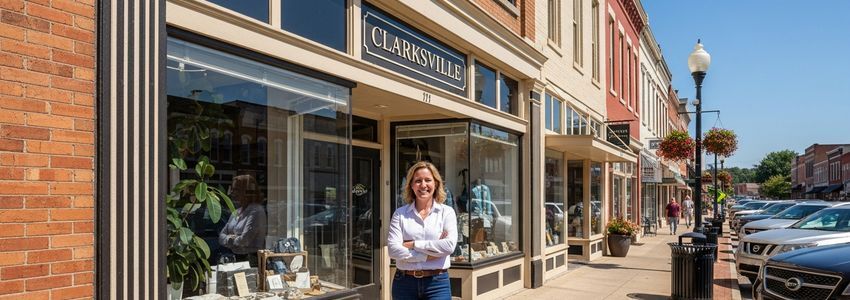
- Downtown Revitalization: Significant investment has been poured into revitalizing downtown Clarksville, creating a vibrant hub for retail boutiques, restaurants, professional services, and entertainment venues like the F&M Bank Arena.
- Highway 41A Corridor: This major artery is a prime location for retail, quick-service restaurants, and businesses that rely on high visibility and traffic counts.
- Clarksville Gateway: The area around Interstate 24, particularly near Exit 4, is a rapidly developing commercial zone perfect for hospitality, logistics, and large-format retail.
This combination of a stable military presence, a growing university, a strong industrial base, and a strategic location makes Clarksville a fertile ground for entrepreneurs. Whether you're in retail, professional services, construction, or healthcare, the city's upward trajectory provides a solid foundation for growth. The key is to secure the right financing to capitalize on these opportunities.
Types of Small Business Loans Available in Clarksville
Once you've identified an opportunity in the Clarksville market, the next step is to understand the various funding tools at your disposal. The world of small business financing is diverse, with different products designed to meet specific needs, timelines, and business profiles. Choosing the correct loan type can significantly impact your cash flow, profitability, and long-term success. Below is a detailed breakdown of the most common types of business loans available to Clarksville entrepreneurs.
Term Loans
A term loan is what most people picture when they think of a business loan. You borrow a lump sum of capital and repay it, plus interest, over a predetermined period (the "term") through regular installments. They are highly versatile and can be used for almost any business purpose.
- Short-Term Business Loans: These loans typically have repayment terms of 3 to 24 months. They are designed for immediate, time-sensitive needs where a quick return on investment is expected. Because of their speed and accessibility, they may carry higher interest rates than long-term options.
- Best for: Covering unexpected cash flow gaps, purchasing fast-turning inventory, financing a small marketing campaign, or seizing a time-sensitive opportunity. Learn more about short-term business loans and their strategic uses.
- Long-Term Business Loans: With repayment terms that can extend from 3 to 10 years or more, these loans are intended for significant, long-term investments. They generally offer lower interest rates but have stricter qualification requirements, including a strong credit history and several years in business.
- Best for: Major business expansion, purchasing real estate, large-scale renovations, or acquiring another company.
Business Line of Credit
A business line of credit functions like a business credit card but with more favorable terms and higher limits. You are approved for a maximum credit amount and can draw funds as needed, up to that limit. You only pay interest on the amount you've drawn. As you repay the principal, your available credit is replenished.
- Best for: Managing fluctuating cash flow, handling seasonal business cycles, bridging the gap between accounts receivable and payable, and having a flexible safety net for unforeseen expenses. It's an excellent tool for Clarksville construction companies waiting on contract payments or retailers stocking up for the holidays.
SBA Loans
Backed by the U.S. Small Business Administration (SBA), these loans are not issued by the government itself but are guaranteed by it. This government guarantee reduces the risk for lenders, allowing them to offer very favorable terms, including long repayment periods and low interest rates. While highly desirable, they are known for a rigorous application process.
- Best for: Almost any legitimate business purpose, including working capital, equipment purchase, and real estate acquisition. They are a premier option for financially healthy businesses planning significant growth. We will cover these in greater detail in the next section.
Equipment Financing
This is a specialized type of loan designed specifically for the purchase of machinery and equipment. The equipment being purchased serves as its own collateral for the loan, which can make it easier to qualify for than other types of funding. Terms are often structured to match the expected useful lifespan of the equipment.
- Best for: Clarksville's manufacturing plants needing new machinery, construction companies buying heavy vehicles, medical clinics upgrading diagnostic tools, or restaurants installing a new commercial kitchen. Explore the benefits of equipment financing for your specific industry.
Invoice Financing (Accounts Receivable Financing)
If your business operates on a B2B model and deals with long invoice payment cycles (30, 60, or 90 days), invoice financing can be a lifeline. You can sell your outstanding invoices to a financing company at a discount to receive a large percentage of their value upfront (typically 80-90%). You receive the remaining balance, less the lender's fees, once your client pays the invoice.
- Best for: B2B service providers, wholesalers, and government contractors in the Clarksville area who need to unlock working capital tied up in unpaid invoices to cover payroll and other operational costs.
Expert Tip: When evaluating loan options, look beyond the interest rate. Consider the total cost of capital, which includes all fees, the repayment term, and the payment frequency. An option with a slightly higher rate but more flexible terms might be better for your cash flow.
Merchant Cash Advance (MCA)
An MCA is not technically a loan but an advance on your future credit and debit card sales. A provider gives you a lump sum of cash in exchange for a percentage of your daily sales until the advance is paid back, plus a fee. The repayment is automatic and fluctuates with your sales volume.
- Best for: Businesses with high volumes of card transactions, like restaurants, retail stores, and coffee shops, that need very fast access to capital and may not qualify for traditional loans. It's crucial to understand that MCAs have a high cost of capital and should be used strategically for short-term, high-return needs.
Commercial Real Estate (CRE) Loans
Specifically for purchasing, developing, or renovating commercial property, CRE loans are long-term, high-value financing products. They function similarly to residential mortgages but are secured by the business property itself. Lenders will closely examine the property's value, potential income, and the borrower's financial health.
- Best for: Buying an office building downtown, constructing a new warehouse near the industrial park, or purchasing a retail space along a major commercial corridor like Wilma Rudolph Boulevard.
Ready to Grow Your Clarksville Business?
Get fast, flexible financing from the #1 business lender in the U.S. No obligation - apply in minutes.
Apply NowSBA Loans for Clarksville Entrepreneurs
For many Clarksville small businesses, securing a loan from the U.S. Small Business Administration (SBA) program represents the gold standard of financing. These government-backed loans offer some of the most attractive terms available, including low interest rates, long repayment periods, and reasonable down payments. It is important to clarify a common misconception: the SBA does not directly lend money to businesses (with the exception of disaster loans). Instead, it provides a guarantee to lending partners like banks and approved financial institutions, such as Crestmont Capital. This guarantee mitigates the lender's risk, making them more willing to provide capital to small businesses under favorable conditions.
Understanding the different types of SBA loans is crucial for determining which program best fits your business's needs. For a more in-depth overview, our complete guide to SBA loans is an excellent resource.
SBA 7(a) Loan Program
The 7(a) program is the SBA's most popular and flexible loan offering. It can be used for a wide variety of business purposes, making it an all-purpose tool for growth and stability. Loan amounts can go up to $5 million.
Common Uses for SBA 7(a) Loans in Clarksville:
- Working Capital: Manage day-to-day operations, cover payroll, and purchase inventory.
- Business Expansion: Finance the opening of a new location, whether it's a restaurant downtown or a service center near Fort Campbell.
- Equipment Purchase: Acquire essential machinery, vehicles, or technology.
- Real Estate: Purchase or construct commercial buildings.
- Refinancing Debt: Consolidate existing high-interest business debt into a single, more manageable monthly payment.
Terms for 7(a) loans are generous, typically up to 10 years for working capital and equipment, and up to 25 years for real estate. Interest rates can be fixed or variable and are capped by the SBA, ensuring they remain competitive.
SBA 504 Loan Program
The 504 loan program is designed specifically for financing major fixed assets that promote business growth and job creation. This program has a unique structure involving three parties:
- A Senior Lender (like a bank) provides about 50% of the project cost.
- A Certified Development Company (CDC), a nonprofit partner of the SBA, provides up to 40% of the cost through an SBA-backed loan.
- The Small Business Owner contributes a down payment of at least 10%.
Eligible Uses for SBA 504 Loans:
- Purchasing land and existing buildings.
- Constructing new facilities or modernizing existing ones.
- Acquiring long-term machinery and equipment with a useful life of at least 10 years.
This program is ideal for a Clarksville manufacturing company looking to build a new plant or a growing medical practice that needs to purchase its own office building. The long-term, fixed-rate financing for the CDC portion of the loan makes it a powerful and stable financing tool.
SBA Microloan Program
As the name suggests, the Microloan program provides smaller loans, ranging from a few hundred dollars up to $50,000. These loans are administered through a network of nonprofit, community-based intermediary lenders. The focus is often on helping startups, minority-owned businesses, and entrepreneurs in underserved communities. While the average loan size is around $13,000, they can be a critical source of seed capital.
Common Uses for Microloans:
- Inventory and supplies.
- Furniture and fixtures.
- Machinery and equipment.
- Working capital.
Note that SBA microloans cannot be used to pay existing debts or to purchase real estate.
SBA Express Loans
For businesses needing capital more quickly, the SBA Express program offers an accelerated application and approval process. The SBA aims to respond to applications within 36 hours, though the lender's internal process will also affect the overall timeline. The maximum loan amount is $500,000, and the SBA's guarantee is lower (50%) than the standard 7(a) loan. This can sometimes result in slightly higher interest rates, but the trade-off is significant speed and convenience.
Why Pursue an SBA Loan?
Despite the notoriously detailed application process, the benefits of an SBA loan are substantial:
- Long Repayment Terms: Longer terms mean lower monthly payments, which greatly improves a business's cash flow.
- Low Interest Rates: The SBA's interest rate caps keep financing costs affordable.
- Lower Down Payments: SBA loans often require down payments of only 10-20%, preserving your working capital for other needs.
- Flexibility: The 7(a) program in particular can be used for a vast range of business expenses.
For official details and lender matching tools, the SBA's official website is the definitive source of information. Working with an experienced lender like Crestmont Capital can help you navigate the complexities of the application and increase your chances of approval.
How to Qualify for Small Business Funding
Securing a business loan is a process of demonstrating to a lender that your business is a sound investment with a high probability of repaying its debt. Lenders in Clarksville, whether they are national institutions or local banks, assess risk using a set of standardized criteria. Understanding these factors and preparing in advance can dramatically improve your chances of getting approved for the funding you need. The "5 C's of Credit" provide a useful framework for what lenders evaluate: Character, Capacity, Capital, Collateral, and Conditions.
1. Credit Score (Character)
Your credit history is one of the most significant factors in any lending decision. Lenders will look at both your personal and business credit scores.
- Personal Credit Score (FICO): For most small businesses, especially newer ones, the owner's personal credit is a primary indicator of financial responsibility. A score above 680 is generally considered good, while a score of 720 or higher will open up the best rates and terms. If your score is below 650, your options may be limited to more expensive financing like MCAs or short-term loans.
- Business Credit Score: As your business matures, it will build its own credit profile with agencies like Dun & Bradstreet, Experian, and Equifax. A strong business credit score shows that your company has a history of paying its suppliers and creditors on time.
2. Annual Revenue and Cash Flow (Capacity)
Capacity refers to your business's ability to generate enough cash flow to cover its expenses and make loan payments. Lenders will scrutinize your financial statements to assess this.
- Annual Revenue: Lenders have minimum revenue requirements, which vary by loan product. For many online lenders, this might be $100,000 - $250,000 in annual revenue. For larger bank loans or SBA loans, it will be significantly higher.
- Debt-to-Income (DTI) Ratio / Debt Service Coverage Ratio (DSCR): Lenders want to see that your existing income can comfortably cover your proposed new loan payment on top of your existing debts. A strong DSCR (typically 1.25x or higher) indicates a healthy financial cushion.
- Bank Statements: You will typically need to provide 3-6 months of business bank statements. Lenders look for consistent deposits, a healthy average daily balance, and no excessive non-sufficient funds (NSF) fees or overdrafts.
3. Time in Business (Conditions)
The length of time your business has been operational is a key indicator of its stability. Most traditional lenders and SBA programs prefer to see at least two years of operational history. Businesses under two years old are considered higher risk, though some products from alternative lenders are available for newer companies (often requiring at least 6-12 months in business).
4. Collateral (Collateral)
Collateral is an asset (such as real estate, equipment, or inventory) that you pledge to a lender to secure a loan. If you default on the loan, the lender can seize the collateral to recoup their losses.
- Secured Loans: These loans are backed by specific collateral and typically offer lower interest rates because of the reduced risk for the lender. Equipment financing and commercial real estate loans are examples.
- Unsecured Loans: These loans do not require specific collateral, but they are riskier for lenders and thus come with higher interest rates. They often require a personal guarantee from the business owner, making you personally liable for the debt if the business cannot pay.
5. Business Plan and Use of Funds (Capital & Conditions)
Lenders need to understand how you plan to use the loan and how it will help your business grow. This is where your business plan becomes critical, especially for startups or large loan requests.
- Detailed Business Plan: Your plan should include an executive summary, market analysis, organizational structure, marketing and sales strategy, and-most importantly-detailed financial projections.
- Specific Use of Funds: Be precise. Instead of saying "for expansion," detail that you need "$50,000 for a new delivery vehicle, $25,000 for inventory, and $15,000 for a digital marketing campaign." This shows you have a clear, well-researched strategy for growth.
Essential Documents to Prepare
Having your paperwork in order before you apply will streamline the process. Be ready to provide:
- Driver's License / Government-Issued ID
- Business Bank Statements (3-12 months)
- Personal and Business Tax Returns (2-3 years)
- Profit & Loss Statement and Balance Sheet
- Business Licenses and Articles of Incorporation
- A Detailed List of Existing Business Debts
- A Comprehensive Business Plan (for certain loans)
Meeting these qualifications can seem daunting, but preparation is key. By understanding what lenders are looking for, you can strengthen your financial profile and present a compelling case for your Clarksville business. For more tips, read our guide on how to get approved for a business loan fast.

How to Apply for Small Business Loans in Clarksville
Quick Guide
The 4-Step Business Loan Application Process
Assess & Prepare
Determine exactly how much funding you need and for what purpose. Gather all necessary financial documents, such as bank statements, tax returns, and your business plan.
Compare Options
Research different lenders-including traditional banks, credit unions, and online lenders like Crestmont Capital. Compare the loan types, interest rates, terms, and qualification requirements to find the best fit.
Submit Your Application
Complete the lender's application accurately and thoroughly. A streamlined online application, like the one offered by Crestmont, can take just minutes to complete and requires minimal paperwork upfront.
Review & Fund
If approved, you will receive one or more loan offers. Carefully review the terms, rates, and fees with your funding specialist. Once you accept an offer, the funds are typically disbursed to your business account in 1-3 days.
How Crestmont Capital Helps Clarksville Businesses
In a competitive market like Clarksville, choosing the right lending partner is just as important as choosing the right type of loan. While traditional banks have long been the default option, they often involve slow processes, rigid requirements, and a high likelihood of rejection for many small businesses. Crestmont Capital, rated the #1 business lender in the country, was built to solve these challenges. We provide Clarksville entrepreneurs with a faster, more flexible, and more accessible path to the capital they need to succeed.
Our approach is fundamentally different. We combine cutting-edge financial technology with personalized, expert service to deliver a superior funding experience. Here is how Crestmont Capital empowers businesses in Clarksville and Montgomery County:
- Speed and Efficiency: We know that opportunity doesn't wait. Our online application takes just a few minutes to complete, and many businesses receive a decision in hours, not weeks. Once approved, funding can be in your account in as little as 24 hours. This speed allows you to act quickly, whether it's bidding on a new contract or purchasing discounted inventory.
- A Broad Spectrum of Funding Solutions: We are not a one-size-fits-all lender. Our extensive network and diverse portfolio of products mean we can find the perfect fit for your specific situation. From flexible business lines of credit and robust SBA loans to specialized equipment financing, we offer a complete suite of Small Business Loans to cover any need.
- Higher Approval Rates: Our advanced underwriting process looks beyond just a credit score. We take a holistic view of your business's health, including its cash flow, industry, and growth potential. This allows us to approve many strong Clarksville businesses that might be turned away by traditional banks.
- Dedicated Funding Specialists: When you work with Crestmont Capital, you are not just a number in a queue. You are assigned a dedicated funding specialist who will act as your guide and advocate throughout the entire process. They will take the time to understand your goals, answer your questions, and help you compare offers to ensure you make the best decision for your company's future.
- Transparent and Simple Process: We believe in clarity and honesty. There are no hidden fees or confusing jargon. Your funding specialist will walk you through every detail of your loan offer so you know the exact cost of capital and repayment terms before you commit. Our goal is to build long-term partnerships based on trust.
Whether you're a veteran-owned business near Fort Campbell, a growing manufacturer in the industrial park, or a popular restaurant downtown, Crestmont Capital has the expertise and the resources to support your vision. We are committed to providing the best possible small business financing options to help the Clarksville business community thrive.
Get Your Personalized Loan Quote
See what your Clarksville business qualifies for in minutes. There's no cost, no obligation, and no impact on your credit score to apply.
Apply in 2 MinutesReal-World Financing Scenarios for Clarksville Businesses
To better understand how different loan products apply to real-world situations, let's explore some hypothetical scenarios for businesses operating in Clarksville's key industries. These examples illustrate the strategic use of capital to solve problems and seize growth opportunities.
Scenario 1: The Downtown Restaurant Expansion
The Business: "The Governor's Grub," a popular family-owned restaurant near the Austin Peay campus, has a loyal following and is consistently at capacity during peak hours. The owner wants to expand by leasing an adjacent storefront to double their seating capacity and add a private event space.
The Challenge: The project requires significant capital for renovations, new kitchen equipment, furniture, and hiring additional staff before the new space can generate revenue.
The Solution: The owner applies for a $150,000 long-term business loan. This provides the lump sum needed for the entire project. The 7-year repayment term keeps the monthly payments manageable, allowing the restaurant to comfortably cover the debt service even before the expansion is fully operational. The increased revenue from the larger space is projected to cover the loan payments and significantly boost profitability within the first year.
Scenario 2: The Government Contractor's Cash Flow Crunch
The Business: "Patriot Logistics," a veteran-owned trucking company, wins a major contract to transport supplies for Fort Campbell. The contract is lucrative, but the government's payment terms are net-60, meaning they won't get paid for two months after completing the work.
The Challenge: The company needs immediate cash to cover fuel, driver salaries, and vehicle maintenance for the duration of the contract. Waiting 60 days for payment would cripple their operations.
The Solution: The owner secures a $250,000 business line of credit. They draw funds as needed to cover weekly payroll and operational costs. As soon as the government payment arrives, they pay back the drawn amount in full, minimizing interest costs and replenishing their credit line for the next phase of the contract. This flexible tool allows them to bridge the cash flow gap without taking on long-term debt.
Scenario 3: The Medical Clinic's Technology Upgrade
The Business: A successful dental practice located near Tennova Healthcare wants to offer advanced 3D imaging services to its patients. The necessary cone-beam computed tomography (CBCT) machine is a significant investment.
The Challenge: The cost of the machine is $120,000, a large cash outlay that the practice would prefer to finance.
The Solution: The dentist uses equipment financing to acquire the CBCT machine. The loan is secured by the machine itself, which simplifies the approval process. The loan term is set at 5 years, matching the expected useful life of the technology. The new service generates an immediate revenue stream that more than covers the monthly loan payment, and the financing structure allows the practice to conserve its working capital for other needs.
Market Insight: A 2023 report from Forbes Advisor noted a significant increase in demand for equipment financing as businesses automate and upgrade technology to improve efficiency and combat rising labor costs.
Scenario 4: The Boutique's Seasonal Inventory Push
The Business: A retail boutique in downtown Clarksville needs to stock up on inventory for the busy holiday shopping season. They have the opportunity to get a significant discount from a supplier by placing a large order in September.
The Challenge: The boutique's cash flow is tight in the early fall, and they don't have the $40,000 in cash needed to make the bulk purchase.
The Solution: The owner takes out a $40,000 short-term business loan with a 6-month repayment term. They secure the discounted inventory, which dramatically increases their profit margin on holiday sales. The revenue generated from November and December sales is more than enough to repay the loan in full, making the financing cost a small price to pay for the increased profitability.
Clarksville Business Resources and Support Organizations
Navigating the journey of entrepreneurship is easier with a strong support network. Fortunately, Clarksville and the state of Tennessee offer a wealth of resources designed to help small businesses start, grow, and succeed. These organizations provide free or low-cost counseling, training, networking opportunities, and assistance with navigating regulations and financing.
Clarksville-Montgomery County Economic Development Council (EDC)
The EDC is a pivotal organization focused on attracting new businesses to the area and supporting the growth of existing ones. They are a primary source of information on local market data, economic trends, available commercial sites, and local incentives. The EDC can be an invaluable partner for businesses looking to expand their footprint in Montgomery County.
Tennessee Small Business Development Center (TSBDC) at Austin Peay State University
Hosted by APSU, the TSBDC is part of a statewide network that provides expert business guidance at no cost. Their certified consultants offer confidential, one-on-one counseling on a wide range of topics, including:
- Business plan development
- Financial projections and analysis
- Marketing and sales strategies
- Accessing capital and preparing loan applications
- Government contracting
The TSBDC is an essential first stop for both aspiring and established entrepreneurs seeking professional advice.
Clarksville Area Chamber of Commerce
The Chamber of Commerce is the leading voice for the local business community. Membership offers numerous benefits, including networking events where you can connect with other business owners, potential clients, and community leaders. They also provide business advocacy, promotional opportunities, and educational workshops to help members grow their businesses.
SCORE Nashville
While based in Nashville, the SCORE chapter serves the entire Middle Tennessee region, including Clarksville. SCORE is a nonprofit association and a resource partner of the SBA. It provides free business mentorship from a network of experienced executives and entrepreneurs. Whether you need guidance on a specific challenge or a long-term mentor to help you navigate your business journey, SCORE volunteers offer their expertise to help you succeed.
U.S. Small Business Administration (SBA) - Tennessee District Office
The SBA's state-level office is the hub for all federal programs and resources for small businesses. They work with local partners like the TSBDC and SCORE to deliver services. The district office website is a gateway to information on government contracting programs (like 8(a) for disadvantaged businesses and HUBZone), disaster assistance, and finding SBA-approved lenders in the Clarksville area. They also host numerous training events and webinars on topics critical to business success.
Engaging with these organizations can provide you with the knowledge, connections, and support needed to complement your financial strategy and build a resilient, thriving business in Clarksville.
Frequently Asked Questions
What is the minimum credit score needed for a small business loan in Clarksville?
The minimum credit score varies by lender and loan type. For traditional bank loans and SBA loans, lenders typically look for a personal FICO score of 680 or higher. Alternative lenders like Crestmont Capital can often work with scores as low as 600 for certain products, focusing more on the business's cash flow and overall health. A higher score will generally result in better rates and terms.
How long does it take to get a business loan in Clarksville, Tennessee?
The timeline depends on the lender. Traditional banks and SBA loans can take anywhere from 30 to 90 days from application to funding. Online lenders like Crestmont Capital have a much faster process, with applications taking minutes, approvals often happening the same day, and funding being available in as little as 24-48 hours for products like short-term loans and lines of credit.
Are there specific loans for veteran-owned businesses near Fort Campbell?
Yes. The SBA offers several programs that benefit veterans, such as fee waivers or reductions on certain SBA 7(a) and Express loans through the SBA Veterans Advantage program. Additionally, many lenders, including Crestmont Capital, have extensive experience working with veteran entrepreneurs and understand their unique needs. Mentioning your veteran status during the application process is always recommended.
Can I get a business loan in Clarksville with no collateral?
Yes, unsecured business loans are available. These loans do not require you to pledge specific assets like property or equipment. Options include business lines of credit, some term loans, and merchant cash advances. Because they are riskier for lenders, unsecured loans typically have higher interest rates and may require a personal guarantee from the business owner.
What are typical interest rates for small business loans in Tennessee?
Interest rates can range widely. As of 2026, SBA 7(a) loans and bank term loans often have rates from 7% to 11%. Business lines of credit might range from 8% to 25% APR. Short-term loans and merchant cash advances have higher costs, often expressed as a factor rate, which can translate to a much higher APR. Your rate will depend on your creditworthiness, time in business, revenue, and the loan type.
Do I need a business plan to get a loan?
It depends on the loan. For most SBA loans, large bank loans, or if you are a startup, a comprehensive business plan is essential. For smaller loans from online lenders, a full business plan may not be required if you have strong revenue and have been in business for over a year. However, having one is always beneficial as it clarifies your strategy and demonstrates professionalism.
What is the difference between a loan from a bank and an online lender?
The primary differences are speed, flexibility, and requirements. Banks typically offer lower rates but have a very slow, paper-intensive process and strict credit requirements, leading to low approval rates. Online lenders like Crestmont Capital prioritize speed and technology, offer a streamlined digital application, are more flexible on credit and time in business, and have much higher approval rates.
Can a startup business get a loan in Clarksville?
It is challenging but not impossible. Most lenders require at least 1-2 years in business. Startups (under one year) have limited options, which may include SBA Microloans, personal loans, or funding from friends and family. A strong business plan, excellent personal credit, and a significant owner investment (capital injection) are crucial for securing startup funding.
How much working capital can I qualify for?
The amount of working capital you can qualify for is typically based on your monthly revenue. Many lenders will approve you for an amount equal to 1-2 times your average monthly gross revenue. For example, a business with $50,000 in average monthly sales might qualify for a working capital loan or line of credit between $50,000 and $100,000.
What documents are required for a small business loan application?
Commonly required documents include 3-6 months of business bank statements, 2-3 years of business and personal tax returns, a year-to-date profit and loss statement, a balance sheet, and a government-issued ID. For a streamlined application with an online lender, you may only need to provide bank statements and basic business information initially.
Does applying for a loan hurt my credit score?
Submitting an initial application with most online lenders, including Crestmont Capital, results in a "soft credit pull," which does not affect your credit score. A "hard credit pull," which can temporarily lower your score by a few points, is only conducted later in the process once you decide to move forward with a specific loan offer. Traditional banks often perform a hard pull immediately.
Can I use a business loan to buy out a partner?
Yes, a business acquisition loan, often structured as a term loan or an SBA 7(a) loan, can be used for a partner buyout. Lenders will evaluate the ongoing health of the business and the qualifications of the remaining owner to ensure the business can continue to operate profitably and service the new debt.
What is the best type of loan for a construction company in Clarksville?
Construction companies often benefit from a combination of financing tools. A business line of credit is ideal for managing cash flow between projects and covering costs while waiting for invoice payments. Equipment financing is perfect for purchasing or leasing heavy machinery like excavators and trucks. For larger-scale expansion, an SBA 7(a) loan could be the best option.
Are there any state-specific loan programs in Tennessee?
While Tennessee has a very business-friendly environment, most direct lending support comes through federal programs like the SBA or private lenders. The state's economic development efforts, like those from Launch Tennessee, often focus on grants and venture capital for high-growth tech startups rather than traditional small business loans. The TSBDC is the best resource for navigating all available options.
How can I improve my chances of getting approved for a loan?
To improve your chances: 1) Monitor and improve your personal and business credit scores. 2) Maintain clean business bank accounts with a healthy average balance. 3) Organize all your financial documents before you apply. 4) Have a clear and specific plan for how you will use the funds to generate more revenue. 5) Work with an experienced lender who can guide you to the right product.
How to Get Started
Taking the next step toward funding your Clarksville business is straightforward. Follow this simple process to get the capital you need to grow.
- 1 Apply Online in Minutes: Complete our simple, secure online application. There is no fee, no obligation, and it will not impact your credit score.
- 2 Consult with a Specialist: A dedicated funding specialist will reach out to discuss your needs, review your qualifications, and present you with the best available loan options.
- 3 Receive Your Funding: After you select the best offer for your business and complete the final steps, the capital will be deposited directly into your business bank account, often in as little as 24 hours.
Don't Wait for Opportunity. Create It.
Fuel your Clarksville business's growth with fast, reliable funding. Start your risk-free application now.
Apply NowConclusion
Clarksville, Tennessee, offers a fertile economic landscape for entrepreneurs willing to seize the moment. With its steady growth, diverse industry base, and business-friendly climate, the potential for success is immense. However, capitalizing on this potential requires access to timely and appropriate capital. Understanding the nuances of term loans, lines of credit, SBA programs, and other financing vehicles is the first step toward building a financially sound and scalable enterprise.
The journey to securing funding can be complex, but you do not have to navigate it alone. By preparing your financial documents, understanding your business's needs, and partnering with a lender that values speed and service, you can confidently secure the resources you need. Whether you are expanding your operations, upgrading equipment, or managing daily cash flow, the right financing solution is within reach. By leveraging the information in this guide, you are well-equipped to find the perfect small business loans in Clarksville, Tennessee, and write the next chapter of your company's success story.
Disclaimer: The information provided in this article is for general educational purposes only and is not financial, legal, or tax advice. Funding terms, qualifications, and product availability may vary and are subject to change without notice. Crestmont Capital does not guarantee approval, rates, or specific outcomes. For personalized information about your business funding options, contact our team directly.