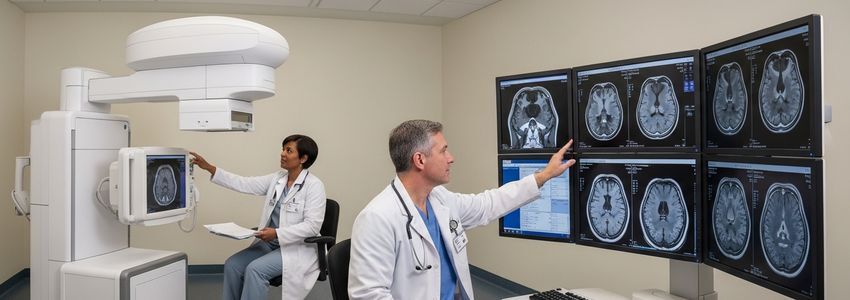
In the high-stakes, technologically advanced world of medical imaging, success is defined by precision, speed, and diagnostic accuracy. For radiologists and imaging center owners, this means constant investment in state-of-the-art equipment, skilled personnel, and efficient operations. However, the capital required to launch, expand, or simply maintain a competitive edge can be staggering. An MRI machine can cost millions, a new PACS system can run into six figures, and even routine operational expenses can strain cash flow. This is where radiology practice loans become an indispensable tool, providing the financial power needed to deliver exceptional patient care and build a thriving business.
Navigating the world of commercial finance can feel as complex as interpreting a difficult scan. Traditional lenders may not fully grasp the unique financial landscape of a modern radiology practice, from its high-revenue potential to its equally high overhead. That's why partnering with a specialized lender is crucial. Since our founding in 2015, Crestmont Capital has established itself as the #1 rated business lender in the U.S. by understanding the specific needs of medical professionals. We've designed financing solutions that align with the goals of radiologists, whether you're a solo practitioner acquiring your first ultrasound machine or a multi-location group investing in the latest 3T MRI technology.
This comprehensive guide will serve as your roadmap to understanding and securing the right financing for your radiology practice. We will explore the different types of loans available, break down the costs of essential equipment, detail the qualification requirements, and provide real-world examples of how strategic financing can transform a practice. Our goal is to demystify the process and empower you with the knowledge to make confident financial decisions that will drive your practice forward for years to come.
In This Article
- Why Radiology Practices Need Specialized Financing
- The Tangible Benefits of Securing a Radiology Practice Loan
- Types of Financing Solutions for Radiologists
- A Deep Dive into Radiology Equipment Costs
- Qualifying for a Radiology Practice Loan: What Lenders Look For
- How Crestmont Capital Streamlines Radiology Financing
- Real-World Scenarios: Radiology Financing in Action
- Frequently Asked Questions (FAQ) About Radiology Practice Loans
- Your Next Steps to Secure Funding
Why Radiology Practices Need Specialized Financing
Radiology is one of the most capital-intensive specialties in medicine. The barrier to entry is high, and the cost of staying current is a constant financial pressure. Unlike a primary care office that can operate with relatively modest equipment, an imaging center's core assets are multi-million dollar pieces of technology. This unique business model creates a continuous and significant need for strategic financing.
Here are the primary drivers for financing in a radiology practice:
- High-Cost Equipment Acquisition: The most obvious need is for purchasing or leasing diagnostic imaging equipment. A single high-field MRI or a multi-slice CT scanner represents a massive capital outlay that is impractical for most practices to pay for with cash on hand. Financing allows practices to acquire this essential technology without depleting their liquid reserves.
- Technology Upgrades and Replacement: Medical technology evolves at a blistering pace. A CT scanner that was top-of-the-line five years ago may now be considered outdated, offering slower scan times and higher radiation doses than newer models. To remain competitive and provide the best patient outcomes, practices must regularly upgrade or replace their equipment. Financing makes this refresh cycle financially manageable.
- Practice Expansion and Renovation: Growth often requires physical expansion. Whether it's opening a new satellite imaging center, adding a women's imaging suite, or renovating an existing facility to accommodate new equipment (like building an RF-shielded MRI room), these projects require substantial funding for construction, permitting, and project management.
- Working Capital and Operational Cash Flow: Day-to-day operations also demand significant capital. Payroll for highly skilled technologists and administrative staff, insurance, marketing, and supplies all add up. Furthermore, the long reimbursement cycles from insurance companies and Medicare can create cash flow gaps. A working capital loan or business line of credit can provide the necessary buffer to ensure smooth operations.
- Practice Acquisition or Partner Buy-In/Buy-Out: Financing is often essential for growth through acquisition. Buying another practice or imaging center allows for rapid market share expansion. Similarly, loans are frequently used to facilitate the financial transitions of partners joining or retiring from a group practice.
Without access to flexible and substantial financing, a radiology practice would struggle to start, grow, and compete. It's not just about buying machines; it's about funding the entire ecosystem of a modern, high-functioning diagnostic imaging business.
The Tangible Benefits of Securing a Radiology Practice Loan
While taking on debt can seem daunting, strategic financing offers powerful advantages that can accelerate growth and enhance profitability. For radiologists, the benefits extend far beyond simply being able to afford a piece of equipment.
- Preservation of Working Capital: This is perhaps the most critical benefit. Paying millions in cash for an MRI machine would cripple a practice's liquidity, leaving no funds for unforeseen opportunities or emergencies. Financing allows you to keep your cash reserves available for operational needs, marketing initiatives, staff bonuses, or weathering a slow reimbursement period.
- Competitive Advantage Through Technology: In radiology, the practice with the latest technology often wins. Referring physicians want to send their patients to centers with the fastest scanners, lowest radiation doses, and highest-resolution images. Financing enables you to acquire this cutting-edge equipment, making your practice more attractive to both referrers and patients.
- Significant Tax Advantages: Many financing structures, particularly equipment financing agreements and specific types of leases, can offer substantial tax benefits. Under Section 179 of the IRS tax code, businesses can often deduct the full purchase price of qualifying equipment in the year it is put into service. This can lead to a significant reduction in your practice's tax liability. Always consult with a tax professional, but financing is a key strategy to leverage these deductions.
- Predictable Budgeting and Financial Planning: A loan or lease comes with a fixed monthly payment schedule. This makes budgeting predictable and straightforward. You know exactly what your equipment costs will be each month, allowing for more accurate financial forecasting and strategic planning without the worry of a massive, unexpected capital expense.
- Generation of Immediate ROI: The right piece of equipment starts generating revenue from its first scan. By financing the purchase, you can have the machine operational and earning income long before it's fully paid for. The revenue generated by the new equipment can often cover-and exceed-the monthly loan payment, resulting in a positive return on investment from day one.
Ready to Upgrade Your Practice?
Don't let capital constraints hold you back. Crestmont Capital offers fast, flexible financing solutions tailored for radiologists. See how much you qualify for in minutes.
Apply NowTypes of Financing Solutions for Radiologists
Radiologists have several financing avenues available, each designed for different needs and financial situations. Understanding these options is the first step toward choosing the right solution for your practice. At Crestmont Capital, we offer a full suite of products to ensure you get the perfect fit.
Equipment Financing
This is the most common type of financing for radiology practices. An equipment financing agreement is essentially a loan where the equipment itself serves as the collateral. This is a major advantage, as it often means you don't have to pledge other business or personal assets.
- Best For: Purchasing specific high-value assets like MRI machines, CT scanners, C-arms, or ultrasound units.
- How it Works: The lender provides up to 100% of the funds to purchase the equipment from the vendor. You then make regular payments to the lender over a set term (typically 3-7 years). At the end of the term, you own the equipment outright.
- Pros: You build equity and own the asset at the end. It allows for leveraging tax benefits like Section 179 depreciation. The loan is secured by the asset, simplifying the application process.
- Cons: You are responsible for all maintenance, insurance, and repairs. The technology could become obsolete before the loan is fully paid.
Working Capital Loans
A working capital loan is a type of small business loans designed to cover day-to-day operational expenses rather than a specific asset purchase. It provides a lump sum of cash that can be used for a variety of short-term needs.
- Best For: Covering payroll during a slow period, bridging cash flow gaps caused by delayed insurance reimbursements, funding a marketing campaign, or purchasing supplies in bulk.
- How it Works: You receive a lump sum of cash and repay it with interest over a shorter term, typically 6-24 months.
- Pros: Extremely flexible-you can use the funds for almost any business purpose. The application and funding process is often very fast, which is why they are sometimes called fast business loans.
- Cons: Often comes with higher interest rates than secured loans. Shorter repayment terms mean higher monthly payments.
SBA Loans
These are government-backed loans offered by lenders like Crestmont Capital. The Small Business Administration (SBA) guarantees a portion of the loan, which reduces the lender's risk. This often results in more favorable terms, such as lower interest rates and longer repayment periods.
- Best For: Major investments like practice acquisition, real estate purchase, or a combination of equipment purchase and working capital. For more on this, see our guide to Imaging Center Financing.
- How it Works: The two most common types are the SBA 7(a) and the SBA 504. The 7(a) is highly versatile for various business needs, while the 504 is specifically for major fixed assets like real estate and equipment.
- Pros: Long repayment terms (up to 10 years for equipment, 25 for real estate) lead to lower monthly payments. Interest rates are very competitive. They are an excellent option for large, multi-purpose funding needs.
- Cons: The application process can be lengthy and requires extensive documentation. The SBA has strict eligibility requirements.
Business Lines of Credit
A business line of credit provides access to a predetermined amount of capital that you can draw from as needed. It functions like a credit card for your business-you only pay interest on the funds you actually use.
- Best For: Managing unexpected expenses, seizing sudden opportunities, or handling fluctuating cash flow. For example, if a key piece of equipment needs an expensive, unplanned repair.
- How it Works: You are approved for a certain credit limit (e.g., $100,000). You can draw any amount up to that limit. As you repay the borrowed funds, your available credit is replenished.
- Pros: Ultimate flexibility. You have a safety net of capital ready at a moment's notice without having to reapply. You only pay for what you use.
- Cons: Interest rates can be variable. There may be fees for maintaining the line, even if it's unused.
Term Loans
A traditional term loan is a lump sum of capital that you repay in fixed installments over a predetermined period. This is a straightforward financing product that is great for planned investments with a clear cost.
- Best For: Practice renovations, software upgrades (like a new RIS/PACS), or any other large, one-time expense with a defined price tag.
- How it Works: You borrow a specific amount and pay it back over a set term (e.g., 5 years) with a fixed interest rate.
- Pros: Predictable, fixed payments make budgeting simple. Interest rates are generally lower than shorter-term working capital loans.
- Cons: Less flexible than a line of credit. The funds are disbursed at once, so you begin paying interest on the full amount immediately.
Explore Your Financing Options
Not sure which loan is right for your practice? Our dedicated financing advisors can walk you through the options and find the perfect solution for your goals.
Get a Free ConsultationA Deep Dive into Radiology Equipment Costs
Understanding the potential cost of equipment is fundamental to planning your financing strategy. Prices can vary dramatically based on the manufacturer (e.g., GE, Siemens, Philips, Canon), the model's specifications, whether it's new or refurbished, and the included software and service packages. Here's a breakdown of typical cost ranges for key pieces of radiology equipment.
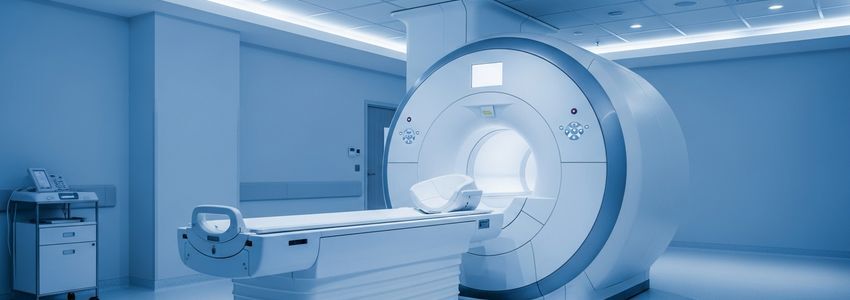
- MRI (Magnetic Resonance Imaging) Machines: This is often the most expensive asset in an imaging center.
- Cost Range: $1 million to $3 million+
- Key Factors: The main driver is magnet strength (Tesla). A 1.5T MRI is the industry workhorse, while a 3T MRI offers higher resolution for neurological and musculoskeletal imaging but comes at a premium. Open MRI systems, which are more comfortable for claustrophobic patients, may have different cost structures. The cost also includes specialized construction for the RF-shielded room.
- CT (Computed Tomography) Scanners: Another high-ticket item essential for a wide range of diagnostic procedures.
- Cost Range: $500,000 to $2.5 million
- Key Factors: The number of "slices" is the primary cost factor. A 64-slice scanner is a common standard, but high-end cardiac and trauma centers may opt for 128-slice, 256-slice, or even more advanced systems for faster and more detailed imaging. Features like dual-energy capabilities and dose reduction software also add to the price.
- PACS (Picture Archiving and Communication System): The digital backbone of a modern radiology practice.
- Cost Range: $100,000 to $500,000+
- Key Factors: Cost depends on whether it's a locally hosted server or a cloud-based solution, the number of user licenses, the complexity of the workflow integration with your RIS (Radiology Information System), and the amount of long-term storage required.
- Ultrasound Machines: Versatile and widely used, with a broad range of applications and costs.
- Cost Range: $30,000 to $300,000
- Key Factors: A basic black-and-white portable unit for simple procedures will be at the low end. A high-end console system with multiple probes (transducers), color Doppler, 3D/4D imaging capabilities, and elastography for specialties like maternal-fetal medicine or cardiology will be at the high end.
- Digital X-ray and Fluoroscopy Systems: The foundation of many imaging practices.
- Cost Range: $50,000 to $250,000+
- Key Factors: A simple digital radiography (DR) room is more affordable. A combination system that also includes fluoroscopy capabilities (a C-arm or an R/F room) for real-time imaging during procedures will be significantly more expensive.
- Nuclear Medicine Equipment (SPECT/PET): Used for functional imaging.
- Cost Range: $400,000 to $2 million+
- Key Factors: A SPECT (Single Photon Emission Computed Tomography) camera is less expensive than a PET (Positron Emission Tomography) scanner. Hybrid systems like PET/CT or SPECT/CT, which combine functional and anatomical imaging, are at the top of the price range.
Radiology Equipment Financing: Key Data Points
Average MRI Cost
$1.8M
Typical CT Scanner Cost
$1.2M
PACS Implementation
$250K
Financing Term Length
5-7 Yrs
Section 179 Limit (2023)
$1.16M
Market Growth (CAGR)
5.8%
Data sourced from industry reports by Reuters and market analysis. Figures are estimates and can vary.
Qualifying for a Radiology Practice Loan: What Lenders Look For
While lenders like Crestmont Capital who specialize in medical financing understand the high-revenue nature of radiology, they still have key criteria to evaluate risk and determine eligibility. Being prepared with the right documentation and understanding these factors will significantly smooth the application process.
Here are the primary factors lenders consider:
- Personal and Business Credit Score: This is a snapshot of your financial responsibility. For most financing products, lenders look for a personal credit score of 650 or higher. A score above 700 will open up the best rates and terms. Lenders will also look at your business credit history if it's established. While we do offer programs for those with less-than-perfect credit, such as bad credit business loans, a strong score is always beneficial.
- Time in Business: Lenders prefer to see a track record of success. Most traditional and SBA loans require at least two years in business. However, many alternative lenders, including Crestmont Capital, have programs for practices open for as little as six months. We also offer specialized startup financing for new imaging centers, which relies more heavily on the owner's experience and business plan.
- Annual Revenue: Your practice's revenue is a direct indicator of its ability to repay a loan. Lenders will want to see your recent business bank statements and tax returns to verify cash flow. A common minimum threshold is around $200,000 - $250,000 in annual revenue, but this can vary depending on the loan amount and type.
- Financial Statements: Be prepared to provide key financial documents, including profit and loss (P&L) statements, balance sheets, and business tax returns for the past 2-3 years. For larger loans, a detailed business plan and financial projections may also be required.
- Collateral: For equipment financing, the equipment itself is the collateral. For other loans, such as large working capital loans or SBA loans, other business assets or even a personal guarantee may be required. A personal guarantee is a common requirement where the business owner agrees to be personally responsible for the debt if the business defaults.
How Crestmont Capital Streamlines Radiology Financing
Navigating the financing process alone can be time-consuming and frustrating. As a #1 rated direct lender founded in 2015, Crestmont Capital has built its reputation on simplifying this process for medical professionals. We understand that your time is best spent interpreting scans and managing your practice, not filling out endless paperwork.
Here’s how we make a difference:
- Industry Expertise: Our financing advisors are not generalists; they have deep experience in the healthcare sector. They understand the value of a 3T MRI versus a 1.5T, the reimbursement cycles you face, and the importance of speed when a critical piece of equipment fails. This expertise translates into a smoother, more intuitive process. For more on this, see our general overview of Medical Equipment Financing.
- Simplified Application Process: We’ve streamlined our application to be as efficient as possible. For many of our financing products, you can apply online in minutes with minimal documentation. We leverage technology to make data collection quick and secure.
- Speed to Funding: We know that opportunities and needs don't wait. While a traditional bank or SBA loan can take weeks or months, many of our financing solutions can be approved in as little as 24 hours and funded shortly thereafter. This speed can be a significant competitive advantage.
- Wide Range of Products: We are not a one-size-fits-all lender. As detailed earlier, we offer everything from equipment financing and term loans to lines of credit and SBA loans. This allows us to tailor a financing package that precisely matches your practice's specific needs, whether it's a single purchase or a complex, multi-phase expansion.
- Dedicated Support: When you work with Crestmont Capital, you are assigned a dedicated advisor who will be your single point of contact throughout the entire process. They will answer your questions, help you gather the necessary documents, and advocate on your behalf to get you the best possible terms.
Real-World Scenarios: Radiology Financing in Action
To better illustrate how these financing tools work in practice, let's explore four common scenarios faced by radiologists and imaging center owners.
Scenario 1: The Solo Practitioner Upgrading to an In-House MRI
The Situation: Dr. Evans runs a successful solo musculoskeletal radiology practice. For years, she has referred her patients out for MRI scans. She realizes she could significantly increase her practice's revenue and provide more convenient patient care by purchasing her own 1.5T MRI machine. The all-in cost, including the machine and a modest build-out, is $1.4 million.
The Challenge: Paying $1.4 million in cash would wipe out her business and personal savings, leaving her dangerously illiquid.
The Solution: Dr. Evans works with Crestmont Capital to secure a 7-year equipment financing agreement. The MRI machine itself serves as the collateral for the loan. She is able to finance 100% of the cost. Her monthly payment is predictable, and the new revenue from performing her own MRI scans more than covers the payment. She also works with her accountant to take a large Section 179 deduction in the first year, significantly lowering her tax burden.
Scenario 2: The Group Practice Expanding to a Second Location
The Situation: A radiology group with three partners has a thriving imaging center that is at full capacity. They identify an opportunity to open a second, smaller location in a growing suburb 20 miles away. The project requires $2 million to lease and renovate a commercial space, purchase a new CT scanner and ultrasound machine, and cover initial operating expenses like marketing and staffing for the first six months.
The Challenge: The project has multiple funding needs: real estate improvements, equipment, and working capital. A single equipment loan won't cover it all.
The Solution: The group applies for an SBA 7(a) loan. This single loan provides the full $2 million they need. The long repayment term of 10 years keeps the monthly payments manageable, especially during the new location's ramp-up period. The government guarantee allows the lender to offer a very competitive interest rate. This comprehensive financing package enables a smooth and successful expansion.
Scenario 3: The Startup Outpatient Imaging Center
The Situation: Two experienced radiologists with a strong business plan decide to leave their hospital jobs to open their own independent imaging center. They have excellent credit and personal savings for a down payment, but as a new business, they have no revenue history.
The Challenge: Most traditional lenders will not fund a startup with no operational history.
The Solution: They partner with a specialized lender like Crestmont Capital that offers startup financing programs. The loan approval is based on their strong personal credit, the professional experience of the partners, a detailed business plan with realistic revenue projections, and the value of the equipment being purchased. They secure a financing package that includes an equipment loan for a refurbished CT and X-ray machine and a working capital loan to cover their initial lease payments and payroll. This allows them to get their doors open and start building a patient base.
Scenario 4: The Established Center Upgrading Technology
The Situation: An imaging center has been operating for 10 years. Their 64-slice CT scanner is reliable but technologically behind. A nearby competitor recently installed a new low-dose, 128-slice scanner, and the center is starting to lose referrals from dose-conscious physicians.
The Challenge: They need to upgrade quickly to remain competitive, but their capital budget for the year is already allocated.
The Solution: The center's practice manager applies for a fast business loans for equipment. Because they are an established business with strong financials, they are approved within 24 hours for a $950,000 equipment loan. The funds are available in time for them to place the order with the vendor and take advantage of a limited-time manufacturer discount. They also establish a $150,000 business line of credit to handle any unexpected installation costs or to fund a marketing campaign announcing their new, state-of-the-art technology.
Turn Your Vision into Reality
Whether you're starting, expanding, or upgrading, Crestmont Capital has the financing to make it happen. Our simple application takes just a few minutes.
Start Your ApplicationFrequently Asked Questions (FAQ) About Radiology Practice Loans
1. What is the typical interest rate for a radiology equipment loan?
2. Can I finance 100% of the equipment cost?
3. How long does the financing process take?
4. Can I finance used or refurbished radiology equipment?
5. What is the difference between an equipment loan and a lease?
6. Will a business loan application affect my personal credit score?
7. What is Section 179 and how does it relate to financing?
8. Can I get a loan for soft costs like installation, training, and software?
9. What if my practice is a startup with no revenue history?
10. What documents do I need to apply?
11. Can I prepay my loan without a penalty?
12. What is a "personal guarantee" and is it always required?
13. Is it better to go to my local bank or a specialized lender like Crestmont Capital?
14. Can I use a loan to buy out a partner?
15. What if my credit isn't perfect?
Your Next Steps to Secure Funding
You now have a comprehensive understanding of the financing landscape for radiology practices. The next step is to turn this knowledge into action. Securing the right funding can be the catalyst that takes your practice to the next level of patient care and profitability.
- Assess Your Needs: Clearly define what you need to finance. Is it a specific piece of equipment, an expansion project, or working capital? Create a detailed list and estimate the total cost.
- Gather Your Documents: Get your key financial documents in order. This typically includes the last 3-6 months of business bank statements, your two most recent business tax returns, and a year-to-date profit and loss statement.
- Review Your Credit: Check your personal and business credit scores to understand where you stand. This will help set expectations for the types of rates and terms you may qualify for.
- Consult with an Expert: Contact our team at Crestmont Capital. Our dedicated financing advisors will provide a no-obligation consultation to discuss your goals, review your situation, and recommend the best financing solutions for your practice.
- Apply Online: Our secure online application is fast and easy. In just a few minutes, you can submit your information and begin the process of getting the capital you need to grow.
Investing in your radiology practice is an investment in better diagnostics, better patient outcomes, and a stronger financial future. Don't let a lack of capital be the limiting factor in achieving your vision.
Disclaimer: The information provided in this article is for general educational purposes only and is not financial, legal, or tax advice. Funding terms, qualifications, and product availability may vary and are subject to change without notice. Crestmont Capital does not guarantee approval, rates, or specific outcomes. For personalized information about your business funding options, contact our team directly.