Opening a Mr. Appliance franchise puts you in one of the most resilient sectors of the home services economy. Appliances break down regardless of the economic climate, and homeowners consistently need professional repair technicians they can trust. But before you can start dispatching service vans, you need capital -- enough to cover your franchise fee, equipment, vehicles, working capital, and more. That is where a Mr. Appliance franchise loan comes in.
In this guide, you will find everything you need to know about financing a Mr. Appliance franchise: how much it costs, which loan options fit this business model best, what lenders look for, and step-by-step strategies to secure funding fast.
Mr. Appliance Franchise Overview
Mr. Appliance is a subsidiary of the Neighborly family of home service brands, which also includes Mr. Rooter, Rainbow Restoration, and Dryer Vent Wizard. Founded in 1996, the brand has grown to more than 300 locations across the United States and Canada, making it one of the largest and most recognized appliance repair franchises in North America.
The business model is built around providing professional, guaranteed appliance repair services for all major brands and appliance types -- washers, dryers, refrigerators, dishwashers, ovens, and more. With appliance ownership near-universal among American households, the addressable market is enormous. According to the U.S. Census Bureau, approximately 97 percent of homes in the United States have at least one major appliance, creating steady year-round demand for repair services.
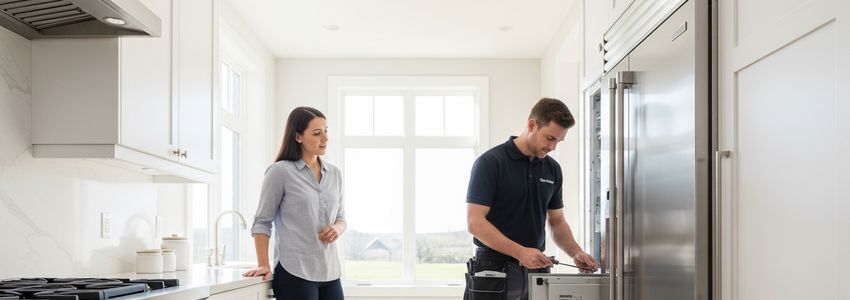
The typical Mr. Appliance franchisee operates one or more service vans, employs trained technicians, and handles both residential and commercial clients. Revenue is generated on a per-job basis, with average ticket sizes ranging from several hundred dollars for minor repairs to over a thousand dollars for complex appliance work.
Mr. Appliance Startup Costs and Investment Range
Before securing a Mr. Appliance franchise loan, you need a clear picture of the total investment required. According to the Mr. Appliance Franchise Disclosure Document (FDD), the total estimated initial investment ranges from approximately $74,750 to $154,750, depending on territory size, number of vehicles, and local market conditions.
| Cost Category | Estimated Range |
|---|---|
| Initial Franchise Fee | $30,000 - $50,000 |
| Service Vehicle(s) | $15,000 - $50,000 |
| Tools and Equipment | $5,000 - $12,000 |
| Initial Parts Inventory | $3,000 - $7,000 |
| Technology and Software | $1,000 - $3,000 |
| Working Capital (3 months) | $10,000 - $25,000 |
| Miscellaneous / Insurance | $2,000 - $8,000 |
| Total Estimated Investment | $74,750 - $154,750 |
These numbers reflect a single-territory setup. Multi-territory arrangements or larger fleet operations will push costs higher. Ongoing fees include a royalty of approximately 7 percent of gross revenue and a brand marketing fund contribution. These obligations factor into your cash flow projections, which lenders will review carefully.
Ready to Finance Your Mr. Appliance Franchise?
Crestmont Capital specializes in franchise financing and can help you secure the funding you need quickly. Get approved in as little as 24 hours.
Apply Now - Free ConsultationBest Loan Options for Mr. Appliance Franchisees
There is no single "best" loan for a Mr. Appliance franchise -- the right product depends on your financial profile, how much you need, and how quickly you need it. However, several loan types are particularly well-suited to home service franchises.
Traditional Term Loans
A traditional term loan from a bank or alternative lender provides a lump sum that you repay over a fixed period, typically 2 to 10 years. For franchisees with strong personal credit (650+) and some liquid assets, term loans offer competitive interest rates and predictable monthly payments.
According to the SBA, term loans are among the most commonly used financing tools for franchise startups because they provide structured capital with defined repayment timelines. This makes financial forecasting easier in your first year of operations.
SBA 7(a) Loans
SBA 7(a) loans are government-backed loans that allow lenders to offer better terms than they could on conventional products alone. Loan amounts up to $5 million are available, and repayment terms can extend to 10 years for working capital or 25 years for real estate. For a Mr. Appliance franchise, SBA 7(a) loans are commonly used to cover franchise fees, vehicles, and working capital in a single financing package.
SBA 504 Loans
If you plan to purchase real estate or major long-term equipment as part of your franchise setup, an SBA 504 loan can provide fixed-rate financing at below-market rates. The 504 program is less commonly used for appliance repair startups since most franchisees operate without a fixed commercial space, but it becomes relevant for franchisees who want to own their operational facility.
Equipment Financing
The service vehicles and specialized tools required to operate a Mr. Appliance franchise qualify as equipment collateral. Equipment financing lets you spread the cost of your van(s), diagnostic tools, and parts storage systems over 24 to 72 months. The equipment itself serves as collateral, making approval faster and easier than unsecured loans.
Business Lines of Credit
A business line of credit gives you revolving access to capital for ongoing expenses like parts orders, marketing campaigns, and payroll gaps. Unlike a term loan, you only pay interest on what you draw, making it an efficient tool for managing the uneven cash flows typical of service-based businesses.
SBA Loans for Home Service Franchises
The SBA maintains a franchise registry that identifies brands that have pre-approved franchise agreements, simplifying and speeding up the loan process for franchisees. Mr. Appliance's parent company, Neighborly, is one of the most recognized franchise networks in the country, and most SBA lenders are familiar with this brand's financials and business model.
To qualify for an SBA 7(a) loan for your Mr. Appliance franchise, you will typically need:
- Personal credit score of 650 or higher (680+ preferred)
- Minimum 10 to 20 percent cash injection from personal funds
- No recent bankruptcies, defaults, or unresolved tax liens
- A detailed business plan including financial projections
- Signed or pending franchise agreement
SBA loans offer terms up to 10 years for working capital and business acquisition, with interest rates currently ranging from approximately 10 to 14 percent depending on the base rate and the lender's spread. While the approval process can take 30 to 90 days, the favorable terms often justify the wait for new franchisees who want to minimize debt service costs in their early years.
Forbes has noted that SBA loans remain one of the most cost-effective ways for franchisees to launch their businesses, particularly when personal assets are limited or the franchisee wants to preserve cash reserves for early operational needs. See the Forbes guide to SBA loans for additional context on this financing type.
Equipment and Vehicle Financing
For Mr. Appliance franchisees, the service van is the most critical piece of equipment -- it is your mobile office, parts warehouse, and the vehicle your technicians rely on for every service call. Financing this asset separately from your franchise fee can simplify your capital stack and reduce upfront cash requirements.
With equipment financing, the vehicle and tools you purchase serve as collateral. This means:
- Approval is faster (often 24 to 48 hours)
- Credit score requirements are more flexible
- Down payments can be as low as 10 percent
- Terms typically range from 24 to 84 months
For new franchisees with limited business credit history, equipment financing is often the most accessible first step. Once your Mr. Appliance territory generates revenue and establishes credit history, you can layer on additional financing products as needed.
How to Apply for a Mr. Appliance Franchise Loan
Check credit score, calculate net worth, and gather tax returns and bank statements.
Request the Franchise Disclosure Document from Mr. Appliance and review it with an attorney.
Select SBA, equipment, term loan, or line of credit based on your needs and profile.
Complete the lender's application with all required documents and financial projections.
Upon approval, funds are disbursed directly -- often within 24 to 72 hours for alternative lenders.
Working Capital and Lines of Credit
Most new franchise owners underestimate how much working capital they need in the first 90 to 180 days. Even with a strong marketing launch, revenue ramps up gradually as you build your customer base, generate referrals, and appear in local search results. A working capital buffer ensures you can pay technicians, purchase parts, and cover insurance without dipping into personal savings.
A small business loan structured specifically for working capital gives you a fixed lump sum to deploy in your early months. This is distinct from a line of credit, which is more flexible but typically harder to obtain without at least some revenue history.
For established Mr. Appliance franchisees looking to grow -- adding vans, hiring technicians, or acquiring additional territories -- a business line of credit is often the most efficient financing tool. Lines can be drawn down as needed and repaid as cash flow allows, offering maximum flexibility for a service business with seasonal demand fluctuations.
CNBC has reported that service-sector small businesses frequently cite access to working capital as one of their top financial challenges. For franchisees specifically, the combination of an upfront franchise fee, ongoing royalties, and variable revenue cycles makes maintaining adequate working capital reserves critically important. See CNBC's small business resources for additional context.
Need Working Capital for Your Mr. Appliance Franchise?
Crestmont Capital offers working capital loans and lines of credit tailored for franchise owners. Flexible terms, fast approvals.
Get a Free Quote TodayHow to Qualify for a Mr. Appliance Franchise Loan
Lenders evaluate franchise loan applications using several key criteria. Understanding these factors helps you prepare a stronger application and anticipate any issues before they arise.
Personal Credit Score
Most lenders require a personal credit score of at least 620 to 650 for alternative loans, and 680 or higher for SBA-backed financing. Your personal credit history is especially important for new franchisees because there is no business credit history to evaluate. Check your credit reports from all three bureaus (Equifax, Experian, TransUnion) before applying and dispute any errors.
Liquid Assets and Net Worth
Lenders want to see that you have skin in the game. For a Mr. Appliance startup, expect to contribute at least 10 to 20 percent of the total project cost from your own funds. The higher your liquid reserves, the more favorable your loan terms will typically be.
Business Plan and Financial Projections
A detailed business plan that includes 12- to 36-month revenue projections, expense forecasts, and break-even analysis demonstrates that you understand the business and have planned for realistic outcomes. Lenders reviewing franchise applications want to see that you have studied the Mr. Appliance FDD, spoken with existing franchisees, and built conservative projections based on real data.
Industry and Management Experience
While Mr. Appliance does not require prior appliance repair experience (the franchise provides training), having a background in home services, skilled trades, or business management strengthens your application. Lenders like to see that franchisees are equipped to run a competent service operation.
Franchise Agreement Status
Having a signed or conditionally signed franchise agreement -- or at minimum, a commitment letter from Mr. Appliance's corporate development team -- demonstrates that your application is serious and that the franchise has been vetted. This can accelerate lender review timelines significantly.
The Loan Application Process Step by Step
Applying for a Mr. Appliance franchise loan follows a structured process. Here is what to expect:
Step 1: Prepare Your Documents
Gather the following materials before contacting lenders:
- Personal tax returns (last 2 to 3 years)
- Business tax returns if you own other businesses
- Personal financial statement (assets, liabilities, net worth)
- Bank statements (last 3 to 6 months)
- Resume highlighting business and management experience
- Copy of the franchise agreement or letter of intent
- Business plan with financial projections
Step 2: Compare Lenders
Not all lenders have the same appetite for franchise lending. Specialized franchise lenders -- including SBA Preferred Lenders and alternative fintech lenders -- typically process applications faster and have more experience with the unique structure of franchise deals. Request quotes from at least two or three lenders to compare rates, terms, and fee structures.
Step 3: Submit Your Application
Complete the lender's application thoroughly and accurately. Incomplete applications delay approval. Be honest about any credit issues or past business challenges -- lenders prefer candor to surprises that emerge during underwriting.
Step 4: Underwriting and Due Diligence
The lender will review your application, verify your documents, and conduct background and credit checks. For SBA loans, this phase typically takes 2 to 4 weeks. Alternative lenders often complete underwriting in 24 to 72 hours.
Step 5: Closing and Funding
Once approved, you will sign loan documents and receive your funds. SBA loans fund within a few business days of closing. Alternative lenders can fund same day or next day after final approval.
Tips to Strengthen Your Mr. Appliance Franchise Loan Application
Lenders receive hundreds of franchise loan applications. Here is how to make yours stand out:
1. Build Your Business Credit Before You Apply
Even before launching, you can establish an EIN, open a business bank account, and apply for a small business credit card. These actions create a credit file for your business and show lenders you are organized and serious.
2. Reduce Personal Debt
Your debt-to-income ratio is a key factor in loan approval. Paying down credit card balances or personal loans in the months before you apply can meaningfully improve your DTI and lead to better loan terms.
3. Show Cash Reserves
Lenders want to see 10 to 20 percent of the loan amount in liquid savings beyond what you are putting down. These reserves demonstrate that you can weather unexpected expenses without defaulting on your loan.
4. Use a Franchise-Experienced Lender
Lenders who have previously financed Neighborly brands or other home service franchises understand the business model and require fewer explanations. This familiarity speeds up the process and often leads to better terms. Crestmont Capital works with franchise owners across the country and understands the unique needs of service-based franchise businesses.
5. Leverage SBA Resources
The SBA's network of Small Business Development Centers (SBDCs) offers free consulting to prospective business owners. SBDC advisors can review your business plan, refine your financial projections, and connect you with lenders in your region. Visit SBA.gov to find your local SBDC.
6. Consider a Broker
A franchise financing broker can submit your application to multiple lenders simultaneously, saving you time and giving you a broader view of available options. Look for brokers who specialize in franchise or small business lending and charge fees only upon successful funding.
If you are researching other home service franchise financing options, you may also want to read our guide on the Restoration 1 Franchise Loan, which covers a similar service-based franchise model within the Neighborly family.
Bloomberg has written extensively about the resilience of home services franchises during economic downturns, noting that demand for appliance repair tends to increase when consumers choose repair over replacement to save money. This counter-cyclical quality makes Mr. Appliance an attractive investment for lenders as well as franchisees. See Bloomberg's coverage of home services resilience for additional insight.
Alternative Financing for Mr. Appliance Franchisees
If traditional loans or SBA financing are not the right fit for your situation, consider these alternatives:
- ROBS (Rollover for Business Startups): If you have a 401(k) or IRA, a ROBS arrangement lets you use those funds to finance your franchise without paying early withdrawal penalties or taxes. This requires working with a specialized ROBS provider and an ERISA attorney.
- Fast business loans: Alternative lenders can approve and fund loans in as little as 24 hours, making them a strong option for franchisees who need to move quickly to secure their territory.
- Franchisor financing: Some franchise systems, including certain Neighborly brands, offer in-house financing or preferred lender relationships that can simplify the funding process.
- SBA microloans: For franchisees with smaller capital needs, SBA microloans up to $50,000 are available through approved nonprofit intermediaries.
Get Matched with the Right Franchise Loan Today
Crestmont Capital works with Mr. Appliance franchisees and other home service franchise owners to find the right financing solution. Apply online in minutes.
Start Your ApplicationComparing Mr. Appliance to Other Franchise Financing Options
Mr. Appliance sits in an attractive middle tier for franchise investment -- lower than restaurant concepts like Burger King or Texas Roadhouse, but with similar or better unit economics thanks to low real estate overhead. This makes it well-suited to long-term business loans that spread costs over time without overwhelming early cash flows.
Compared to a full-service restaurant franchise where build-out costs alone can exceed $500,000, a Mr. Appliance startup in the $75,000 to $155,000 range is accessible to a broader pool of aspiring franchisees. This lower cost basis also means faster payback periods and reduced risk for both you and your lender.
For franchisees who need immediate capital to secure a territory or purchase a van, short-term business loans can bridge the gap while you arrange longer-term SBA financing. This "layered" approach to franchise financing is increasingly common among new franchise owners who want to launch quickly without waiting 60 to 90 days for SBA approval.
Managing Debt After Your Mr. Appliance Launch
Responsible debt management is just as important as securing financing. After launching your Mr. Appliance territory, keep these principles in mind:
- Track revenue against projections monthly. If you are under-performing your FDD Item 19 benchmarks, address the gap immediately rather than allowing it to compound.
- Maintain a debt service coverage ratio above 1.25. This means your net operating income should be at least 1.25 times your annual debt payments. Lenders use this ratio to assess ongoing creditworthiness.
- Reinvest carefully in the first 12 months. Resist the temptation to expand your fleet or add technicians too quickly. Build reserves first, then scale from a position of strength.
- Communicate with your lender proactively. If you encounter unexpected challenges -- slow ramp-up, equipment issues, or staffing problems -- contact your lender before missing a payment. Most lenders will work with you on a solution if you communicate early.
Reuters has reported that small business loan default rates are highest in the first 18 months of operation, most commonly due to insufficient working capital rather than poor business fundamentals. Maintaining a healthy cash buffer is your best protection against early financial stress. See Reuters' coverage of small business lending for additional data.
Frequently Asked Questions About Mr. Appliance Franchise Loans
1. How much does a Mr. Appliance franchise cost in total?
The total initial investment for a Mr. Appliance franchise ranges from approximately $74,750 to $154,750, including the franchise fee, vehicle, tools, inventory, and working capital. Exact costs depend on your territory size, vehicle selection, and local market factors.
2. What credit score do I need for a Mr. Appliance franchise loan?
Most lenders require a personal credit score of at least 620 to 650 for alternative financing, and 680 or higher for SBA-backed loans. Higher scores typically result in lower interest rates and better loan terms.
3. Can I use an SBA loan to finance my Mr. Appliance franchise?
Yes. SBA 7(a) loans are commonly used for franchise financing and cover costs including the franchise fee, vehicles, equipment, and working capital. Mr. Appliance is part of the Neighborly family of brands, which is well-recognized by SBA lenders.
4. How long does it take to get approved for a franchise loan?
Approval timelines vary by loan type. Alternative lenders can approve and fund within 24 to 72 hours. SBA loans typically take 30 to 90 days from application to funding. Equipment financing usually falls in the 1 to 5 business day range.
5. Do I need to have the franchise agreement signed before applying for a loan?
Not always, but having a signed or conditionally signed franchise agreement strengthens your application significantly. Some lenders will begin the review process with a letter of intent. Having the FDD in hand is typically the minimum requirement.
6. How much of the startup costs do I need to contribute myself?
Most lenders expect you to contribute 10 to 20 percent of the total project cost from personal liquid assets. For a $100,000 project, that means $10,000 to $20,000 in personal investment. Higher personal contributions often lead to better loan terms.
7. Can I finance my service vehicle separately from the rest of the franchise costs?
Yes. Equipment and vehicle financing can be structured separately from your franchise fee and working capital loan. This approach simplifies your capital stack and may allow for faster vehicle acquisition while your main franchise loan is still in process.
8. What documents do I need to apply for a Mr. Appliance franchise loan?
Typical requirements include personal tax returns (2 to 3 years), personal financial statement, bank statements (3 to 6 months), resume, business plan with financial projections, and a copy of the franchise agreement or letter of intent.
9. Are there any Neighborly or Mr. Appliance preferred lender programs?
Neighborly, Mr. Appliance's parent company, has relationships with certain preferred lenders who understand the brand's business model and financial performance. Ask your Mr. Appliance franchise development representative for current preferred lender information during the discovery process.
10. What interest rates should I expect on a Mr. Appliance franchise loan?
Interest rates depend on your credit profile, loan type, and lender. SBA 7(a) loans currently carry rates ranging from approximately 10 to 14 percent. Equipment financing rates typically range from 6 to 18 percent. Alternative term loans may carry rates from 12 to 35 percent. Your actual rate will depend on your financial strength and the lender's pricing model.
11. What is the average payback period for a Mr. Appliance startup loan?
Loan terms vary widely. Equipment financing typically runs 24 to 72 months. SBA working capital loans can extend to 10 years. Choosing the right term requires balancing monthly payment affordability against total interest cost over the life of the loan.
12. Can I use a 401(k) to fund my Mr. Appliance franchise?
Yes, through a ROBS (Rollover for Business Startups) arrangement. This lets you use qualified retirement funds to invest in your franchise without incurring early withdrawal penalties or taxes. ROBS transactions require a C-corporation structure and should only be executed with the help of an experienced ROBS provider and legal counsel.
13. Does Mr. Appliance offer any in-house financing?
Mr. Appliance and its parent company Neighborly periodically offer financing programs or incentives for new franchisees, such as reduced franchise fees for veterans or qualified candidates. Check with the Mr. Appliance franchise development team for the latest available programs during your discovery process.
14. Is a personal guarantee required for a franchise loan?
Yes, most lenders -- including SBA lenders -- require a personal guarantee from all owners with 20 percent or more equity in the business. A personal guarantee means the lender can pursue your personal assets if the business defaults on the loan. This is standard practice for small business and franchise lending.
15. How soon after opening can I apply for additional financing to expand?
Most lenders require at least 6 to 12 months of operating history and positive revenue trends before approving expansion financing. Once you have demonstrated consistent revenue and good debt management, additional capital for a second van, additional territories, or working capital expansion becomes much more accessible.
Next Steps to Finance Your Mr. Appliance Franchise
Your 5-Step Action Plan
- Check your credit score and address any issues at least 90 days before applying.
- Request the Mr. Appliance FDD and review it with a franchise attorney to fully understand your obligations.
- Build your business plan with 24-month financial projections and a detailed cost breakdown.
- Contact a franchise-experienced lender like Crestmont Capital to explore loan options that fit your profile and timeline.
- Submit your application with complete documentation to move toward funding and your franchise launch.
Financing a Mr. Appliance franchise is a significant but entirely manageable undertaking when you approach it with preparation and the right lending partner. With a total investment under $160,000 and a proven brand in a resilient industry, Mr. Appliance represents one of the more accessible paths into franchise ownership for qualified candidates.
Crestmont Capital specializes in helping franchise owners secure the capital they need to launch and grow. Whether you need an SBA loan, equipment financing, a bad credit business loan, or a flexible line of credit, our team can guide you to the right product for your situation.
Disclaimer: The information provided in this article is for general educational purposes only and is not financial, legal, or tax advice. Loan terms, interest rates, and eligibility requirements vary by lender and change over time. Always consult with a qualified financial advisor, attorney, or tax professional before making financing decisions. Crestmont Capital is not affiliated with Mr. Appliance or Neighborly.