Gym equipment leasing has become one of the most strategic financing tools available to fitness businesses. Whether you operate a boutique fitness studio, a full-scale health club, a hotel gym, or a physical therapy center, the ability to access high-quality cardio and strength equipment through structured monthly payments can be the difference between a thriving operation and one held back by cash constraints. This guide covers everything you need to know about gym equipment leasing - how it works, what it costs, how it compares to buying outright, and how Crestmont Capital helps fitness businesses like yours get the equipment they need to grow.
In This Article
- What Is Gym Equipment Leasing?
- Key Benefits of Leasing Gym Equipment
- Types of Gym Equipment You Can Lease
- How the Leasing Process Works
- Costs, Rates, and Typical Terms
- Leasing vs. Buying: A Direct Comparison
- Who Qualifies for Gym Equipment Leasing?
- How Crestmont Capital Helps
- Real-World Scenarios
- Frequently Asked Questions
- How to Get Started
What Is Gym Equipment Leasing?
Gym equipment leasing is a financing structure that allows fitness businesses to use commercial-grade cardio and strength equipment in exchange for fixed monthly payments over an agreed term - typically 24 to 60 months. Rather than purchasing equipment outright with cash or a lump-sum loan, you spread the cost across predictable installments while gaining immediate access to the machinery your business needs.
A lease agreement defines the monthly payment amount, the term length, the equipment covered, and the end-of-lease options - which typically include purchasing the equipment at fair market value or a predetermined price (such as $1), renewing the lease, or returning the equipment. This flexibility makes leasing especially attractive in an industry where equipment models evolve rapidly and client expectations are constantly rising.
Gym equipment leasing is widely used by independent fitness studios, franchise gym operators, hotel and resort fitness centers, corporate wellness facilities, rehabilitation and physical therapy clinics, school athletic programs, and YMCA or community recreation centers. If your business involves fitness equipment of any kind, leasing is a viable - and often superior - financing strategy worth understanding in depth.
Industry Snapshot: According to the Equipment Leasing and Finance Association (ELFA), more than 80% of U.S. companies use some form of equipment financing. In the fitness industry, where a single treadmill can cost $5,000 or more and a full gym build-out can reach six figures, leasing has become the go-to strategy for preserving capital while staying competitive.
Key Benefits of Gym Equipment Leasing
The financial and operational advantages of gym equipment leasing go well beyond simple monthly payment convenience. Here is a detailed breakdown of why fitness business owners consistently choose leasing over other funding approaches.
Preserved Working Capital
Purchasing a commercial treadmill outright might cost $6,000 to $10,000. Multiply that by 20 units to outfit a mid-size gym floor and you are looking at $120,000 to $200,000 deployed in a single purchase. Leasing eliminates that lump-sum capital requirement entirely, freeing that cash for marketing, staffing, renovations, and operating expenses - areas that directly drive revenue and membership growth.
Predictable Monthly Budgeting
Fixed lease payments make financial planning straightforward. You know exactly what you owe each month, which simplifies cash flow projections and makes it easier to manage payroll, rent, insurance, and other operational costs without surprises. This predictability is particularly valuable for seasonal fitness businesses that experience revenue swings in the first quarter.
Access to Top-Tier Equipment
Many fitness operators find they can afford premium commercial equipment through leasing that would be out of reach as an outright purchase. High-end brands like Life Fitness, Technogym, Precor, and Matrix command significant price tags - but with a monthly lease structure, those payments become manageable even for smaller operators competing against larger chains.
Technology Refresh Flexibility
Commercial fitness equipment has a typical useful life of seven to ten years, but the technology gap between new and older machines can become a competitive disadvantage much sooner. Leasing allows you to upgrade to newer models at the end of each term, ensuring your gym floor stays current with interactive screens, app connectivity, virtual programming, and performance tracking features that members increasingly expect.
Potential Balance Sheet Advantages
Depending on how your lease is structured (operating lease vs. finance lease), leased equipment may not appear as a liability on your balance sheet in the same way a loan does, which can improve key financial ratios reviewed by banks or investors. Consult your accountant or CFO to understand how your specific lease structure affects your financial statements under current accounting standards including ASC 842.
By the Numbers
Gym Equipment Leasing - Key Statistics
80%+
of U.S. businesses use equipment financing
$32B+
Annual U.S. fitness industry revenue
24-60
Typical lease term in months
2-5 Days
Average time from approval to funding
Ready to Upgrade Your Fitness Facility?
Get flexible gym equipment leasing with fast approvals and competitive rates. No huge upfront costs - just the equipment your members deserve.
Apply Now →Types of Gym Equipment You Can Lease
One of the advantages of gym equipment leasing is that virtually any commercial fitness equipment qualifies. Whether you are outfitting a brand-new facility from scratch or replacing aging machines on an active gym floor, leasing can cover the full spectrum of equipment categories.
Cardio Equipment
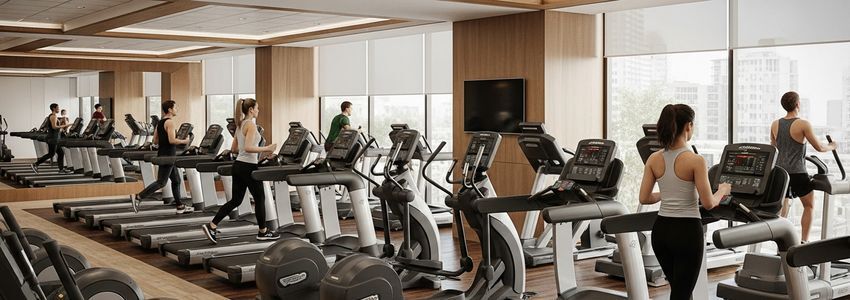
Treadmills, elliptical trainers, stationary bikes, rowing machines, stair climbers, and ski ergometers are all highly leasable. Commercial-grade cardio machines from major manufacturers typically run $3,000 to $12,000 per unit, making this category one of the most expensive line items in a gym build-out. Leasing multiple cardio units simultaneously is where the cash-flow benefit becomes most pronounced.
Strength and Resistance Equipment
Selectorized strength machines, cable systems, plate-loaded machines, functional trainers, and multi-station units are all eligible for lease financing. Smith machines, squat racks, power cages, and benches can also be financed, even as part of a bundled package alongside free weights and storage.
Group Fitness and Studio Equipment
Spin bikes for cycling classes, rowing ergometers for group rowing programs, TRX suspension systems, battle ropes, kettlebells, medicine balls, and plyo boxes can all be included in a lease arrangement. For studios running boutique group fitness concepts, this is often the fastest way to equip a new class format without draining operating reserves.
Technology and Digital Components
Modern gym equipment increasingly integrates with digital platforms. Interactive screens, Peloton-style connected monitors, heart rate monitoring systems, member-tracking software terminals, and performance analytics kiosks are all leasable, either as standalone items or bundled with the physical equipment.
Rehabilitation and Medical-Grade Equipment
Physical therapy practices, hospital wellness departments, and rehabilitation centers can lease therapeutic exercise equipment including balance boards, resistance bands dispensers, hydrotherapy systems, and clinical-grade strength and mobility machines. This category often qualifies for equipment-specific financing products with terms tailored to healthcare providers.
Pro Tip: Lenders like Crestmont Capital can finance both new and used commercial fitness equipment. If your budget is tight, leasing quality used equipment from a certified refurbisher is a legitimate strategy to minimize monthly payments while still offering members a functional, attractive gym floor.
How the Gym Equipment Leasing Process Works
Quick Guide
How Gym Equipment Leasing Works - At a Glance
Complete a short application with your business information, monthly revenue, and the equipment you need.
A funding specialist reviews your file - often within 24 to 48 hours - and presents you with lease term options.
Choose your preferred lease term (24, 36, 48, or 60 months) and end-of-lease option (buyout, renew, or return).
The lender pays the vendor directly and the equipment is delivered to your facility - typically within 2 to 5 business days of final approval.
Once the lease begins, you make your scheduled monthly payments for the duration of the term. The lender retains ownership of the equipment unless you exercise a purchase option at the end. Throughout the term, you are responsible for maintaining the equipment per the manufacturer's guidelines - most leases require this as a condition of the agreement.
At the end of the lease term, you typically have three options: purchase the equipment for its fair market value or a pre-agreed price (often $1 for finance leases), return the equipment to the lender, or roll into a new lease for updated models. The right choice depends on whether the equipment still serves your business well or whether upgrading to newer technology would give you a competitive edge.
Costs, Rates, and Typical Terms
Understanding the cost structure of gym equipment leasing helps you evaluate whether a lease offer is competitive and appropriate for your business. Here is what to expect.
Monthly Payment Calculation
Monthly lease payments are determined by the equipment cost, the lease term, the implicit interest rate (often called the "money factor"), and the end-of-lease residual value (if any). For example, leasing $50,000 in commercial fitness equipment on a 48-month term at a competitive rate might produce monthly payments in the range of $1,100 to $1,400, depending on your credit profile and the lender's terms.
Interest Rates and Money Factors
Equipment lease rates are influenced by the prime rate, your business credit score, time in business, annual revenue, and the type and value of equipment being leased. Strong-credit borrowers with established fitness businesses typically qualify for rates in the 5% to 12% range (effective annual percentage). Newer businesses or those with credit challenges may see rates in the 12% to 20% range.
Lease Terms
Most gym equipment leases run 24, 36, 48, or 60 months. Shorter terms mean higher monthly payments but less total interest paid. Longer terms reduce monthly payments but increase the total cost over the life of the lease. A 36 to 48 month term is the most common choice for commercial fitness equipment, balancing affordability with reasonable total cost.
Down Payment and First Payment
Many gym equipment leases require one to three months of payments as a security deposit or first payment at signing. Some lenders offer 90-day deferred payment options for qualified applicants, which can be valuable if you are leasing equipment for a new facility that has not yet opened.
| Feature | Leasing | Outright Purchase | Equipment Loan |
|---|---|---|---|
| Upfront Capital Required | Low (1-3 months) | Full purchase price | 10-20% down payment |
| Monthly Payments | Predictable, fixed | None | Fixed (principal + interest) |
| Equipment Ownership | Lender (option to buy) | Business owns immediately | Business (collateral to lender) |
| Upgrade Flexibility | High (at term end) | Low (must sell/donate old) | Low |
| Approval Speed | 24-48 hours | N/A | 1-5 business days |
| Total Cost Over Term | Moderate (rates + residual) | Lowest (no financing cost) | Moderate (interest on full value) |
| Balance Sheet Impact | Varies by lease type | Depreciating asset | Asset + liability on books |
Leasing vs. Buying Gym Equipment: Which Is Right for You?
The lease-vs.-buy decision depends on your business's cash position, growth stage, equipment longevity needs, and strategic priorities. Here is how to think through it.
Leasing makes more sense when: you need to conserve cash for other growth initiatives, you want the flexibility to upgrade equipment as technology evolves, you are outfitting a new facility that has not yet generated revenue, or you need to keep your monthly payment structure predictable for budgeting purposes.
Buying makes more sense when: you have strong cash reserves and no better use for the capital, the equipment has a very long useful life (15+ years) with little technological obsolescence risk, you want to build equity in your assets, or you qualify for financing with a very low interest rate that keeps total cost minimal.
For most growing fitness businesses - especially those in their first five years or those actively scaling - leasing is the better strategic choice. It keeps capital mobile and preserves financial agility in an industry that rewards operators who can adapt quickly to member demands and market trends.
Compare Your Gym Equipment Options Today
Our fitness financing specialists will walk you through leasing, loans, and lines of credit - and help you choose the structure that fits your business best.
Get Your Options →Who Qualifies for Gym Equipment Leasing?
Gym equipment leasing is broadly accessible compared to traditional bank loans, but lenders do evaluate several factors before approving an application. Here is what most lenders look for:
Time in Business
Established businesses with two or more years of operating history have access to the best rates and terms. Newer businesses (six months to two years) can still qualify, though they may face slightly higher rates or require a personal guarantee. Startups may need to provide stronger personal credit scores and possibly a down payment.
Annual Revenue and Cash Flow
Most lenders want to see that your business generates sufficient monthly revenue to comfortably cover the lease payments. A common guideline is that your monthly payment should not exceed 10% to 15% of your average monthly revenue. Lenders typically review three to six months of bank statements to verify cash flow consistency.
Credit Score
Business credit scores (Dun & Bradstreet Paydex, FICO SBSS) and personal credit scores both factor into gym equipment lease approvals. A personal FICO score above 650 generally qualifies for standard lease programs. Scores above 700 typically unlock the most competitive rates. Programs exist for borrowers in the 580-650 range, though at higher rates.
Equipment Value and Type
Commercial-grade fitness equipment from recognized manufacturers is considered strong collateral and generally easy to finance. The equipment itself secures the lease, which is part of why approvals are often faster and easier than unsecured business loans.
Business Structure
LLCs, corporations, partnerships, and sole proprietors all qualify, though the underwriting process may vary. Having a formal business entity and a dedicated business bank account strengthens your application profile significantly.
How Crestmont Capital Helps Fitness Businesses Get Equipment Faster
Crestmont Capital specializes in equipment financing and leasing for businesses across every industry - including fitness operators of all sizes. As the #1-rated U.S. business lender, we have helped thousands of business owners access the capital and equipment they need to grow without depleting their working capital.
Our gym equipment financing programs are designed specifically for the realities of fitness business ownership - including the need for fast approvals, flexible terms, and structures that accommodate seasonal revenue patterns. We offer lease terms from 24 to 60 months, competitive rates for qualified applicants, and access to both new and used commercial equipment.
For operators looking beyond equipment, we also offer broader fitness company business loans for renovations, working capital, marketing, staffing, and expansion projects. Whether you need $25,000 to replace aging treadmills or $500,000 to build a new location, Crestmont Capital can structure a solution that fits your timeline and budget.
Our equipment leasing platform connects fitness business owners with a network of lenders competing for your business - which means more options, more competitive terms, and a faster path to funding than approaching a single bank. Applications take minutes, decisions often come back within 24 hours, and equipment can be on your floor in as few as two to five business days after approval.
We also offer business lines of credit that give fitness operators ongoing access to capital for unexpected repairs, promotional campaigns, or opportunistic inventory purchases - a flexible complement to a structured equipment lease.
Real-World Scenarios: Gym Equipment Leasing in Practice
Understanding how other fitness businesses have used gym equipment leasing can help you visualize how it might work for your own operation.
Scenario 1: Boutique Cycling Studio Opening
A fitness entrepreneur is launching a 30-bike boutique cycling studio in a leased retail space. The commercial spin bikes cost $2,500 each - $75,000 total - plus $15,000 in audio-visual equipment and sound systems. Rather than depleting her $90,000 in startup capital entirely on equipment, she leases the full package on a 48-month term at $2,100 per month. This leaves her startup capital for working capital, marketing, and the first three months of operations while she builds her membership base.
Scenario 2: Hotel Fitness Center Upgrade
A boutique hotel's fitness center has aging treadmills and stationary bikes that are generating negative guest reviews. The property manager wants to replace 12 cardio units with modern, screen-equipped machines from a premium brand. The replacement package costs $96,000. The hotel leases the equipment on a 36-month term with a $1 buyout option, with monthly payments of approximately $2,900. Guest satisfaction scores improve, and the property renews higher rates on bookings that cite the updated fitness center.
Scenario 3: Independent Gym Adding a Strength Section
A 5-year-old independent gym with 800 members wants to add a dedicated strength training section with commercial racks, plates, benches, and cable machines. The total equipment cost is $60,000. Rather than financing this expansion through a business loan (which would appear as a liability on the balance sheet), the owner leases the equipment on a 48-month operating lease, keeping the debt off the books and preserving borrowing capacity for a potential second location acquisition within the next three years.
Scenario 4: Physical Therapy Clinic Expanding Services
A physical therapy practice wants to add therapeutic exercise equipment including resistance machines, balance training systems, and functional movement tools to expand their rehabilitation services and compete with larger hospital-based programs. The $40,000 equipment package is leased on a 36-month term. The monthly lease payment is covered within three new patient billing cycles per month, making the ROI calculation straightforward for the practice owner.
Scenario 5: Franchise Gym Operator Adding a Location
A multi-unit fitness franchise operator is opening his fourth location and needs to equip a 6,000 square foot gym floor. His franchise agreement requires a specific equipment package from an approved vendor. The total equipment cost is $180,000. He negotiates a 60-month lease at competitive rates, keeping his monthly equipment payment below $3,500 while funding the construction and build-out separately. The lower monthly obligation allows him to reach break-even membership numbers faster.
Key Takeaway: Gym equipment leasing is not a one-size-fits-all solution - it works differently depending on your stage of growth, your facility type, your cash position, and your long-term equipment strategy. The common thread is that leasing preserves financial flexibility while giving you immediate access to the equipment you need to serve your members and generate revenue.
Frequently Asked Questions
How to Get Started
Complete our quick application at offers.crestmontcapital.com/apply-now - just your basic business information, monthly revenue, and the equipment you need.
A Crestmont Capital advisor will review your application and present you with lease options tailored to your facility size, equipment needs, and budget.
Once approved, your equipment vendor is paid directly and your new machines are delivered - often within days. Start serving members and generating revenue immediately.
Conclusion
Gym equipment leasing is one of the most effective financing strategies available to fitness business owners at every stage of growth. By spreading the cost of high-quality cardio and strength equipment across predictable monthly payments, you preserve working capital, maintain financial flexibility, and give yourself the ability to upgrade as technology evolves - all while delivering the equipment experience your members expect.
Whether you are opening your first boutique studio, expanding an established health club, refreshing an aging hotel gym, or scaling a multi-location franchise, gym equipment leasing can be structured to fit your specific situation. The key is working with a lender who understands the fitness industry and can move quickly when timing matters.
Crestmont Capital offers competitive gym equipment leasing programs with fast approvals, flexible terms, and the expertise to help you make the right financing decision for your business. Apply today and get your gym floor equipped - without draining the capital you need to grow.
Ready to Lease Your Gym Equipment?
Apply in minutes and get a decision within 24 hours. Crestmont Capital makes gym equipment leasing fast, simple, and built for fitness business owners.
Apply Now →Disclaimer: The information provided in this article is for general educational purposes only and is not financial, legal, or tax advice. Funding terms, qualifications, and product availability may vary and are subject to change without notice. Crestmont Capital does not guarantee approval, rates, or specific outcomes. For personalized information about your business funding options, contact our team directly.