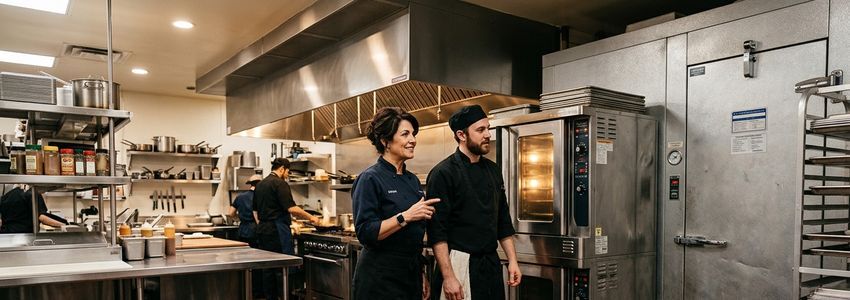
Running a business with siloed departments is like trying to drive a car with four different steering wheels. Sales uses one system, operations uses another, and your finance team is working from spreadsheets no one else can read. The friction is real, the costs are mounting, and growth is stalling. Equipment financing for business operations gives you a direct path to fix this - by funding the tools, technology, and infrastructure that pull every department into alignment.
Whether you need a unified communication system, advanced inventory management hardware, fleet vehicles for logistics, or specialized machinery that multiple departments share, equipment financing makes it possible to invest in your infrastructure without wiping out cash reserves. This guide covers everything you need to know about using equipment loans to centralize operations and build a more coordinated, efficient business.
In This Article
- What Is Equipment Financing for Business Operations?
- Why Centralizing Operations Changes Everything
- Key Benefits of Equipment Loans for Centralized Operations
- Types of Equipment You Can Finance Across Departments
- How Equipment Financing for Business Operations Works
- How Crestmont Capital Helps Centralize Your Operations
- Who Qualifies for Commercial Equipment Financing?
- Real-World Scenarios: Centralizing Operations with Equipment Loans
- Equipment Financing vs. Other Business Financing Options
- Frequently Asked Questions
- How to Get Started
What Is Equipment Financing for Business Operations?
Equipment financing for business operations is a type of business loan specifically designed to fund the purchase or lease of physical assets your business needs to function and grow. Unlike general-purpose working capital loans, equipment financing uses the asset itself as collateral - meaning you can often secure approval without pledging other business property or personal assets.
This financing approach is widely used across industries, from manufacturing and construction to healthcare and professional services. The U.S. Small Business Administration recognizes equipment financing as one of the most accessible forms of capital for growing businesses, particularly because repayment terms typically align with the useful life of the equipment being financed.
When you apply for equipment loans for business, the lender typically covers 80-100% of the asset's purchase price. You repay the loan in fixed monthly installments over a term that usually ranges from 24 to 84 months. At the end of the term, you own the equipment outright - which is different from equipment leasing, where you return or renegotiate ownership at the end of the lease period. You can learn more about the mechanics in our Equipment Financing 101 guide.
For businesses looking to centralize operations across departments, this type of financing provides a structured, budget-friendly way to make large capital investments without disrupting day-to-day cash flow. Instead of a single massive outlay, you spread the cost over time while gaining immediate use of the equipment.
Why Centralizing Operations Changes Everything
Decentralized operations cost businesses more than most owners realize. When departments operate independently - using different software, maintaining separate vendor relationships, or running on incompatible equipment - the inefficiencies compound. Staff spend time on workarounds instead of value-generating activities. Errors increase at the handoff points between departments. Leadership loses visibility into what's actually happening across the organization.
According to research highlighted by Forbes, companies that invest in operational centralization and unified systems consistently report measurable improvements in throughput, error reduction, and employee productivity within the first year of implementation. For growing small and mid-sized businesses, the competitive advantage of a well-coordinated operation is often the difference between sustainable scaling and stagnant growth.
Centralizing operations means investing in the shared infrastructure that ties your business together. That might mean a networked point-of-sale system that links your retail floor to your inventory warehouse. It might mean a fleet management system that connects dispatch with delivery in real time. Or it might mean production equipment that multiple departments - manufacturing, quality control, and shipping - all rely on daily. In every case, business equipment financing is the mechanism that makes these investments achievable without requiring years of savings or disrupting existing cash flow.
Ready to Centralize Your Operations?
Get fast, flexible equipment financing from the #1 business lender in the U.S. No obligation - apply in minutes.
Apply Now →Key Benefits of Equipment Loans for Centralized Operations
Using equipment financing to centralize operations across departments delivers a distinct set of advantages that general business loans or out-of-pocket spending simply cannot match. Here is a breakdown of the most significant benefits:
Preserve Working Capital - Equipment loans allow you to acquire the infrastructure you need while keeping cash available for payroll, inventory, marketing, and unexpected expenses. Operational efficiency financing is designed to protect the liquidity that keeps your business moving day to day.
Fixed, Predictable Payments - Most equipment loans carry fixed interest rates and set monthly payments, which makes budgeting straightforward. You know exactly what your operational investment will cost each month for the life of the loan - no surprises, no variable-rate fluctuations.
Fast Approval and Funding - Unlike traditional bank loans that can take weeks or months to close, commercial equipment financing from lenders like Crestmont Capital is often approved within 24-48 hours and funded within a few business days. This speed is critical when you need to act on an operational upgrade before your competition does.
Flexible Terms Aligned with Equipment Life - Because the loan term typically matches the useful life of the equipment, you never end up paying for something long after it stops delivering value. This structural alignment makes equipment loans one of the most financially sound ways to invest in business infrastructure.
Builds Business Credit - Consistently repaying an equipment loan strengthens your business credit profile, improving your access to future financing at better rates. Every on-time payment is an investment in your company's financial reputation.
Cross-Department Impact - Unlike a loan tied to one team's budget, equipment financed for operational centralization serves multiple departments simultaneously. The ROI is compounded across every team that touches the asset.
Key Stat: The U.S. Census Bureau reports that small businesses employing 20-99 people account for more than $2 trillion in annual revenue, yet access to capital remains one of their top operational constraints. Equipment financing directly addresses this barrier by converting large upfront costs into manageable monthly investments.
Types of Equipment You Can Finance Across Departments
One of the most misunderstood aspects of business equipment financing is its breadth. Many business owners assume equipment loans only cover traditional machinery or vehicles. In reality, the range of assets you can finance is extensive - and nearly any tangible asset that supports business operations qualifies.
Here is a department-by-department breakdown of equipment that businesses commonly finance to centralize their operations:
Operations and Production - Manufacturing equipment, conveyor systems, automated packaging machinery, CNC machines, industrial tools, quality control instruments, and assembly line upgrades. Our guide on funding solutions for industrial equipment covers these in depth.
Logistics and Distribution - Delivery vehicles, forklifts, warehouse racking systems, dock equipment, inventory management hardware, shipping scanners, and fleet management technology. For businesses in this space, see also our construction equipment financing guide for additional financing frameworks applicable to heavy equipment.
Technology and IT Infrastructure - Servers, networking equipment, point-of-sale systems, integrated ERP systems, security cameras, communications platforms, and workstations that unify teams across locations.
Healthcare and Clinical - Diagnostic imaging systems, patient monitoring equipment, laboratory instruments, and digital records management hardware. Our dental equipment financing guide illustrates how specialized businesses use equipment loans for operational upgrades.
Hospitality and Food Service - Commercial kitchen equipment, point-of-sale systems, inventory tracking systems, refrigeration units, and service equipment that supports front-of-house and back-of-house coordination.
Professional Services - Printing and production equipment, broadcasting systems, audio/visual systems for multi-room facilities, and specialized instruments that support service delivery teams.
By the Numbers
Equipment Financing for Business Operations - Key Statistics
$1.16T
Annual equipment and software financed in the U.S. (ELFA 2024)
8 in 10
U.S. businesses use financing to acquire equipment (ELFA)
24-84
Months typical repayment terms for equipment loans
80-100%
Of the purchase price typically covered by equipment financing
How Equipment Financing for Business Operations Works
The equipment financing process is more streamlined than most business owners expect. Here is a step-by-step overview of how it works when you work with a lender like Crestmont Capital:
Step 1: Identify the Equipment and Vendor - Start by determining exactly what equipment you need and who you will purchase it from. Having a vendor quote or invoice in hand accelerates the underwriting process significantly.
Step 2: Submit Your Application - Complete a brief application that includes basic business information, time in business, revenue figures, and the equipment details. Most lenders require 1-3 months of bank statements and a business credit check. The entire application typically takes 10-15 minutes.
Step 3: Underwriting and Approval - The lender evaluates your creditworthiness and the value of the collateral (the equipment). Because the equipment secures the loan, qualification standards are often more flexible than unsecured financing. Approval can come within 24 hours at Crestmont Capital.
Step 4: Loan Funding and Equipment Delivery - Once approved, the lender pays the vendor directly or deposits funds into your business account. You take possession of the equipment and begin using it immediately. Repayment begins the following billing cycle.
Step 5: Repayment and Ownership - You make fixed monthly payments throughout the loan term. At the end of the term, you own the equipment outright with no residual payment or balloon balance.
This process applies whether you are financing a single piece of equipment for $10,000 or a comprehensive operational overhaul worth $500,000 or more. Lenders experienced in operational efficiency financing will work with you to structure terms that match your cash flow and business cycle.
Important Note: Equipment financing for small business typically does not require you to pledge real estate or personal assets as collateral. The equipment itself secures the loan, which significantly reduces the risk profile for both lender and borrower. This is one reason equipment loans often carry more competitive rates than general-purpose term loans.
How Crestmont Capital Helps Centralize Your Operations
Crestmont Capital has been rated the #1 business lender in the U.S., and our equipment financing program is specifically designed for growth-stage businesses that need to make significant operational investments without the friction of traditional bank lending. We offer equipment loans ranging from $10,000 to over $5 million, with terms that can be customized to your business situation.
Here is what sets our approach apart:
Speed That Matches Business Reality - We understand that operational upgrades cannot always wait for 60-day bank underwriting cycles. Our streamlined approval process is designed to get you a decision - and often funding - within 1-3 business days.
Industry-Agnostic Expertise - Whether you are running a manufacturing plant, a logistics company, a multi-location restaurant chain, or a professional services firm, our team has structured equipment financing for businesses across virtually every industry. We understand the specific operational needs that drive centralization investments.
Flexible Structures for Complex Needs - Sometimes centralizing operations requires financing multiple pieces of equipment simultaneously. We can structure blanket financing agreements that cover an entire equipment package under a single loan, simplifying your administrative burden and potentially improving your rate.
No Hard Upfront Costs - We do not charge application fees or require costly feasibility studies before making a financing decision. Our process is straightforward and transparent.
In addition to equipment financing, Crestmont Capital offers a full suite of business funding solutions. If your centralization project involves elements beyond equipment - like facility renovation, staffing, or working capital for the transition period - our small business loans and business line of credit products can complement your equipment financing to cover the full scope of your operational investment.
Centralize Operations Without Draining Cash
Crestmont Capital offers flexible equipment financing tailored to your operational needs. Decisions in as little as 24 hours.
Apply Now →Who Qualifies for Commercial Equipment Financing?
Equipment loan approval requirements vary by lender, but here are the standard benchmarks you should be aware of when applying for equipment financing small business programs:
Time in Business - Most lenders require at least 12-24 months of operating history. Lenders like Crestmont Capital may work with businesses that are slightly younger if the application is strong in other areas, such as revenue or credit score.
Annual Revenue - While there is no universal minimum, most lenders look for businesses generating at least $100,000-$150,000 in annual revenue to qualify for standard equipment loans. Higher-value equipment requests typically require proportionally stronger revenue profiles.
Credit Score - A personal credit score of 620 or higher is generally the baseline for equipment loan approval. Businesses with scores in the 680-720+ range typically qualify for the most competitive rates. Some lenders, including Crestmont Capital, offer programs designed for businesses with lower credit scores who can demonstrate strong revenue and cash flow.
Equipment Type and Value - Lenders evaluate the equipment's resale value and useful life as part of the collateral assessment. Standard commercial equipment with strong secondary markets is easiest to finance. Highly specialized or single-use equipment may require a larger down payment or slightly different terms.
Cash Flow - Lenders want to see that your business generates enough cash flow to comfortably service the new debt. Bank statements showing consistent deposits and a healthy cash position are important components of any equipment financing application.
If you are unsure whether your business qualifies, the best approach is to apply and let a specialist assess your situation. Many businesses that initially believe they will not qualify are surprised by what is available to them through alternative lenders like Crestmont Capital. For more on qualification, see our in-depth look at equipment leasing options as a qualification-flexible alternative.
Real-World Scenarios: Centralizing Operations with Equipment Loans
Abstract concepts only go so far. Here are six concrete examples of how businesses use equipment loans to centralize operations and drive measurable improvements across departments:
Scenario 1: Multi-Location Restaurant Group - A regional restaurant group with 8 locations was running each restaurant on separate POS systems with incompatible inventory tracking software. By financing a unified cloud-based POS and kitchen management system across all locations, they reduced food waste by 18% in the first quarter, eliminated duplicate vendor orders, and gave corporate leadership real-time visibility into every location's performance.
Scenario 2: Mid-Size Manufacturer - A manufacturing company producing industrial components had separate equipment sets for its machining, finishing, and quality control departments. By financing a shared CNC machining center with integrated quality scanning, all three departments gained access to a single, more capable piece of equipment. Production throughput increased 22% without adding headcount.
Scenario 3: Regional Logistics Company - A delivery and distribution business was managing a fleet of 40 vehicles using paper-based dispatch and manual route planning. Equipment financing covered a complete fleet management technology upgrade including GPS tracking, automated dispatch software, and driver performance monitoring tools. Fuel costs dropped 12% and on-time delivery rates improved significantly.
Scenario 4: Healthcare Practice Group - A multi-specialty medical group across three clinics was maintaining separate diagnostic equipment at each location, leading to scheduling conflicts and patient referral inefficiencies. By financing a shared mobile diagnostic imaging system, the group served more patients across all three locations without each clinic needing its own dedicated equipment.
Scenario 5: Construction Contractor - A mid-size contractor managing residential and commercial projects simultaneously was renting equipment by the project, at significant cost. Equipment financing for a shared equipment package - including excavation, grading, and compaction equipment - reduced rental spend by 35% in the first year while giving all project teams immediate access to what they needed.
Scenario 6: Specialty Food Manufacturer - A food production company with separate lines for processing, packaging, and distribution was using incompatible equipment that required manual handoffs between stages. By financing an integrated production line that served all three stages, throughput increased and product defects traced to handoff points dropped to near zero.
In every case, the common thread is using business infrastructure financing to fund the shared assets that multiple departments depend on - rather than asking each department to justify and fund its own equipment independently.
Bloomberg Perspective: According to Bloomberg analysis of U.S. small business trends, companies that invest in operational infrastructure during growth phases significantly outperform peers in profitability within 3-5 years. Equipment-driven centralization is one of the highest-ROI categories of business investment.
Equipment Financing vs. Other Business Financing Options
When evaluating how to fund operational centralization, it helps to understand how equipment loans compare to other common financing structures:
| Feature | Equipment Financing | Business Line of Credit | SBA Loan |
|---|---|---|---|
| Collateral Required | Equipment itself | Often unsecured | Business and personal assets |
| Approval Speed | 24-72 hours | 24-48 hours | 30-90 days |
| Use of Funds | Equipment only | Any business expense | Equipment, real estate, working capital |
| Ownership | Own at loan end | N/A | Own at loan end |
| Qualification Difficulty | Moderate | Moderate | High |
| Best For | Specific asset purchases | Recurring operational costs | Large long-term investments |
For most businesses focused on equipment-driven centralization, dedicated equipment financing offers the cleanest alignment between asset, loan structure, and repayment. If your operational upgrade includes non-equipment components - such as facility work, software licensing, or staffing - consider pairing equipment financing with a business line of credit to cover those additional costs. CNBC's small business coverage frequently highlights how successful businesses use layered financing strategies to fund major operational transitions.
Reuters also reports that businesses utilizing structured equipment financing outperform those relying solely on revolving credit during periods of capital-intensive growth, primarily because predictable fixed payments improve cash flow planning. You can see how this approach applies to specific sectors in our related post on equipment financing basics.
Frequently Asked Questions
What is equipment financing for business operations?
Equipment financing for business operations is a type of loan that funds the purchase of physical assets your business needs to function. The equipment itself serves as collateral, which typically makes qualification more accessible than unsecured loans. Businesses use this financing to acquire anything from manufacturing machinery to technology infrastructure to fleet vehicles - any asset that supports day-to-day operations and long-term growth.
How does centralizing operations with equipment loans save money?
Centralizing operations eliminates redundant equipment across departments, reduces vendor duplication, and cuts the inefficiency costs generated by incompatible systems. When multiple departments share financed equipment, the cost-per-use drops significantly compared to each department maintaining its own assets. Additionally, unified systems typically reduce error rates and rework costs, which represent hidden but significant drains on business profitability.
What types of equipment can be financed for business operations?
Virtually any tangible business asset can be financed. This includes manufacturing machinery, commercial vehicles, IT and networking equipment, point-of-sale systems, medical or diagnostic equipment, restaurant and food service equipment, construction equipment, agricultural machinery, office furniture and fixtures, and specialized tools. If the asset has a clear business purpose and documentable value, it can typically be financed.
How long does it take to get approved for equipment financing?
With lenders like Crestmont Capital, approval can come within 24-48 hours after submitting a complete application. Traditional banks may take 30-90 days, which often makes them impractical for time-sensitive operational investments. The speed advantage of alternative lenders is one of the key reasons growing businesses choose specialized equipment financing partners over their primary bank for these types of investments.
Do I need good credit to qualify for equipment loans for business?
A credit score of 620 or higher is a common baseline, but equipment financing offers more flexibility than unsecured loans because the equipment itself provides collateral. Businesses with stronger revenue and cash flow can sometimes qualify even with lower credit scores. Lenders evaluate the full picture - not just a number - so strong business performance can offset a below-average personal credit score in many cases.
What is the difference between equipment financing and equipment leasing?
With equipment financing (a loan), you own the equipment outright at the end of the repayment term. With equipment leasing, you make periodic payments to use the equipment for a set period, then either return it, renew the lease, or purchase it at a residual value. Equipment loans typically result in lower total cost of ownership over time for assets you intend to keep long-term. Leasing may be preferred when technology turnover is rapid and you want to upgrade frequently without residual asset risk.
Can I finance multiple pieces of equipment under one loan?
Yes. Many lenders offer blanket equipment financing arrangements that allow you to finance multiple assets under a single loan agreement. This is particularly useful for businesses conducting an operational overhaul that involves several pieces of equipment purchased simultaneously. A single loan simplifies administration, may improve your rate through volume, and gives you a clear consolidated repayment schedule.
How much can I borrow for equipment financing small business programs?
Loan amounts for equipment financing typically range from $5,000 for small tools and technology up to $5 million or more for large-scale industrial or commercial equipment packages. Crestmont Capital works with businesses across this full range. The amount you can borrow depends primarily on your revenue, creditworthiness, and the value of the equipment being financed.
What interest rates can I expect for commercial equipment financing?
Equipment financing interest rates vary based on credit score, business financials, loan term, and equipment type. Businesses with strong credit and revenue profiles typically see rates in the 6-12% range. Those with less established credit or shorter time in business may see rates from 12-25%. The collateral nature of equipment loans generally produces more competitive rates than unsecured alternatives, making them one of the more cost-effective financing options available for businesses that need physical assets.
Is equipment loan approval faster for businesses with existing lender relationships?
Existing lender relationships can expedite approval because the lender already has your financial history on file. However, with specialized lenders like Crestmont Capital that are built for speed, new applicants routinely receive approvals within 24-48 hours even with no prior relationship. The key to fast approval is having complete application documents ready - including recent bank statements, basic business financials, and equipment details.
What happens at the end of an equipment financing term?
At the end of an equipment financing term, you own the equipment free and clear with no further obligations to the lender. There is no balloon payment, no residual value calculation, and no renegotiation required. This clean-title ownership is one of the primary advantages of equipment loans over leasing arrangements, particularly for assets expected to deliver value long beyond the loan term.
Can I refinance existing equipment or only purchase new equipment?
Both new and used equipment can be financed, and sale-leaseback or refinancing arrangements are also available for equipment your business already owns. If you purchased equipment with cash or a less favorable financing arrangement, you may be able to refinance it to free up capital or improve your terms. Lenders evaluate used equipment based on age, condition, remaining useful life, and resale value in the secondary market.
How does business equipment financing impact cash flow?
Equipment financing has a positive net impact on cash flow for most businesses because it converts a large capital outlay into smaller predictable payments. Instead of spending $200,000 at once on an equipment package, you might pay $4,000-$5,000 per month over 48 months while immediately benefiting from the operational improvements the equipment enables. The revenue and efficiency gains typically exceed the monthly payment, generating a positive cash flow differential from the first month.
What documents do I need to apply for equipment loans for business?
Standard documentation for equipment loan applications includes recent business bank statements (3-6 months), basic business financials or tax returns, a vendor invoice or equipment quote, proof of business ownership, and government-issued ID. Some lenders may request a business plan or financial projections for larger loan amounts. Crestmont Capital's streamlined application process minimizes documentation requirements to get you a decision quickly.
Is equipment financing the right choice for every business centralization project?
Equipment financing is the right choice when the core investment involves tangible assets your business will use long-term. If your centralization project is heavily software-driven or involves primarily service costs, other financing options like a business line of credit or working capital loan may be more appropriate. Many large centralization projects combine equipment loans for hardware with a credit line for software, installation, training, and transition costs. A financing specialist at Crestmont Capital can help you structure the optimal combination for your specific project.
How to Get Started
Identify which departments need to be unified and what specific equipment will enable that centralization. Document the efficiency improvements you expect - this helps you evaluate the ROI and gives your lender confidence in the investment.
Obtain formal quotes or invoices from the vendors supplying the equipment. Having this documentation ready accelerates underwriting and ensures the loan amount precisely covers your equipment costs.
Submit your application at offers.crestmontcapital.com/apply-now. The process takes approximately 10-15 minutes and requires basic business information plus your equipment details.
A Crestmont Capital specialist will review your application and typically provide a decision within 24-48 hours. Once approved, funds are disbursed quickly so you can move forward with your operational centralization without delay.
Start Your Centralization Journey Today
Crestmont Capital - rated #1 business lender in the U.S. - is ready to help you fund the equipment that brings your departments together. Apply now for fast, flexible equipment financing.
Apply Now →Conclusion
Equipment financing for business operations is more than a funding mechanism - it is a strategic enabler that allows you to build the infrastructure your business needs to compete and grow. For businesses with fragmented departments and siloed systems, the opportunity to centralize operations through targeted equipment investment is one of the highest-ROI moves you can make. And with financing that spreads the cost over time while delivering immediate operational benefits, there has never been a better time to act.
From commercial equipment financing for manufacturing and logistics to operational efficiency financing for technology and healthcare, Crestmont Capital has the programs, the speed, and the expertise to fund your centralization vision. Whether you are looking to connect two departments or overhaul the infrastructure of an entire organization, we are ready to be your financing partner. Explore your equipment financing options today and take the first step toward a more coordinated, efficient, and profitable operation.
Disclaimer: The information provided in this article is for general educational purposes only and is not financial, legal, or tax advice. Funding terms, qualifications, and product availability may vary and are subject to change without notice. Crestmont Capital does not guarantee approval, rates, or specific outcomes. For personalized information about your business funding options, contact our team directly.