
 (800) 949-0401
Chassis Liner Financing and Leasing: The Complete Guide for Auto Repair Shops and Collision Centers
For automotive repair shops and collision centers, a chassis liner is not optional equipment — it is the backbone of high-quality frame repair work. These machines allow technicians to perform precise structural restorations, alignment corrections, and collision damage repairs that would otherwise be impossible. But chassis liners carry significant price tags, often ranging from $15,000 to more than $50,000, making them one of the largest capital purchases a shop will ever make.
That is where chassis liner financing and leasing come in. Rather than depleting your shop's cash reserves or waiting years to save up, the right financing solution allows you to put professional-grade equipment to work immediately — and grow your business in the process. This guide covers everything auto repair shop owners and collision center managers need to know about funding this critical equipment, from loan types and rates to qualification requirements and smart strategies for maximizing ROI.
Whether you are opening a new shop, expanding your services, or replacing aging equipment, understanding your options for chassis liner financing will give you a competitive edge in a market where speed, quality, and capability matter most.
In This Article
What Is a Chassis Liner?
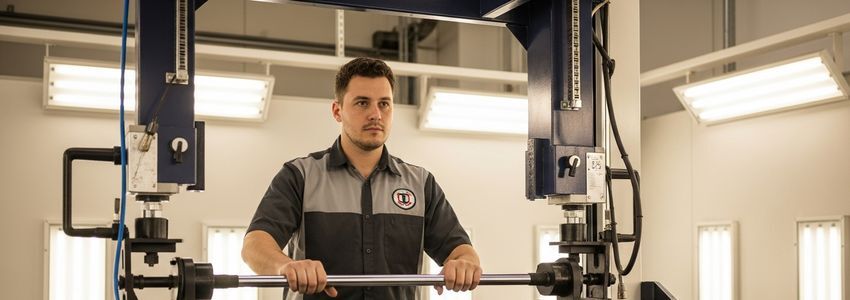
A chassis liner, sometimes called a frame machine or frame straightener, is a piece of heavy-duty automotive equipment used to repair vehicle frames that have been damaged in collisions. When a vehicle sustains significant impact, the underlying structural frame can bend, twist, or crack. A chassis liner applies precise hydraulic or mechanical force to restore the frame to factory specifications.
Modern chassis liners are sophisticated systems that combine anchoring components, measuring devices, pulling towers, and computerized measurement software. Top manufacturers like Car-O-Liner, Chief, Celette, and Spanesi produce systems that integrate digital measuring with repair capabilities, allowing technicians to work with millimeter-level precision. Entry-level systems start around $15,000, while advanced multi-pull computerized systems can exceed $60,000.
For collision repair shops, owning a chassis liner is not merely a competitive advantage — it is often a prerequisite for insurance certifications such as those offered by I-CAR. Without one, a shop must outsource structural repairs, sacrificing revenue and turnaround time to competitors who have the equipment on-site.
Why Finance or Lease a Chassis Liner?
Even profitable, well-established shops rarely pay cash outright for a chassis liner. The reasons are both financial and strategic. Financing or leasing preserves working capital, protects credit lines, and allows the equipment to generate revenue while you pay for it over time.
Consider a mid-sized chassis liner system priced at $35,000. If a shop charges an average of $1,200 per structural repair job and completes just two jobs per week, that machine generates approximately $124,800 in annual revenue. Monthly payments on a financed system might run $700 to $900. The math strongly favors financing — the equipment pays for itself many times over without requiring a large upfront cash outlay.
Industry Insight: According to the Collision Repair Education Foundation, there are more than 33,000 collision repair shops operating in the United States. Shops that offer in-house frame repair services typically see 25-40% higher average ticket values compared to shops that outsource structural work.
Financing also allows shops to access newer, more capable equipment than they could otherwise afford upfront. In the collision repair industry, the difference between a basic and advanced chassis liner can mean the difference between handling light passenger vehicles and accepting heavier trucks, SUVs, and commercial vehicles — a significant revenue gap.
Ready to Equip Your Auto Repair Shop?
Crestmont Capital offers fast, flexible equipment financing for chassis liners and collision repair equipment. No obligation — get a decision in minutes.
Apply Now →Chassis Liner Financing vs. Leasing: What's the Difference?
When seeking funding for a chassis liner, shop owners generally have two primary paths: equipment financing (a loan) or equipment leasing. Both options allow you to acquire the equipment and put it to work immediately, but they differ in structure, ownership, and long-term cost.
With an equipment loan, you borrow the money to purchase the chassis liner outright. The equipment serves as collateral, similar to how a car loan works. You make fixed monthly payments over the loan term (typically 24 to 72 months), and once the loan is paid off, you own the equipment free and clear. This option is best for shops that plan to keep the equipment for many years and want to build equity in their assets.
With an equipment lease, you are essentially renting the chassis liner for a set period. Monthly payments are typically lower than loan payments for the same equipment, which helps cash flow. At the end of the lease, you may have the option to purchase the equipment at a predetermined price (often $1 or fair market value), return it, or sign a new lease for newer equipment. Leasing is ideal for shops that want to stay current with technology or prefer lower monthly payments.
| Feature | Equipment Loan | Equipment Lease |
|---|---|---|
| Ownership | You own the equipment after payoff | Lender owns; you have option to buy |
| Monthly Payment | Typically higher | Typically lower |
| Down Payment | 0-20% typical | Often 0-3 months upfront |
| Technology Upgrades | Keep equipment indefinitely | Easier to upgrade at lease end |
| Balance Sheet Impact | Asset + liability recorded | Operating expense (depending on structure) |
| Best For | Long-term ownership, asset building | Cash flow management, staying current with tech |
| Typical Term | 24-72 months | 24-60 months |
How Chassis Liner Financing Works
Understanding the mechanics of equipment financing helps you make a smarter decision and prepare a stronger application. The process is more straightforward than most shop owners expect.
The fundamental structure of a chassis liner loan is similar to any secured equipment loan. The lender provides the funds to purchase the equipment, the equipment serves as collateral, and you make fixed monthly payments that include both principal and interest over the loan term. Interest rates for equipment loans typically range from 5% to 15% depending on your credit profile, time in business, and the loan term.
Quick Guide
How Chassis Liner Financing Works — At a Glance
Complete a short application with basic business and personal information — takes less than 10 minutes.
Your lender reviews your application and provides loan or lease terms, including rate, payment, and term length — often within 24 hours.
Compare offers, sign documents electronically, and confirm the purchase with your equipment supplier or dealer.
Your lender pays the vendor directly, and your chassis liner is delivered and installed at your shop — ready to generate revenue.
Types of Financing Available for Chassis Liner Equipment
Automotive repair shops have access to several distinct financing vehicles for chassis liner equipment. Each has its own structure, qualification requirements, and best-use scenarios. Understanding these options will help you select the right product for your shop's situation.
Equipment Loans
Traditional equipment loans are the most common funding mechanism for chassis liners. These are term loans secured by the equipment itself, typically requiring no additional collateral. Loan amounts generally match the purchase price of the equipment, and lenders often finance up to 100% of the cost, meaning no down payment is required for well-qualified borrowers. Terms typically run 24 to 72 months, and interest rates vary based on creditworthiness and loan structure.
Equipment Leasing
Equipment leasing is a popular choice for shops that prefer lower monthly payments, want to preserve their credit lines, or need flexibility to upgrade equipment as technology advances. Operating leases are treated as an expense rather than a liability on your balance sheet, which can be beneficial for shops managing debt ratios for future financing. Finance leases, by contrast, function more like loans with ownership transfer at the end of the term.
Business Line of Credit
A business line of credit can be used to fund equipment purchases while providing ongoing flexibility for other operational needs. Unlike a term loan, a line of credit is revolving — you draw funds as needed and repay them on your schedule. This is a useful option for shops that are simultaneously managing multiple equipment investments or need working capital alongside their chassis liner purchase.
SBA Loans
The Small Business Administration offers SBA loans that can be used for equipment purchases, including chassis liners. SBA 7(a) and SBA 504 loans typically carry lower interest rates than conventional equipment loans and offer longer repayment terms — up to 10 years for equipment. The trade-off is a more involved application process and longer approval timelines, which may not be ideal for shops with urgent equipment needs.
Commercial Financing
For larger shops or collision centers purchasing multiple pieces of equipment simultaneously, commercial equipment financing through a specialized lender like Crestmont Capital's commercial financing division can bundle multiple equipment items into a single financing arrangement. This simplifies the administrative process and may result in better overall terms.
Pro Tip: Many chassis liner manufacturers and dealers have existing relationships with equipment financing companies. While manufacturer-affiliated financing is sometimes convenient, it is almost always worth comparing those terms with independent lenders, which often offer more competitive rates and greater flexibility in structuring the deal.
How Crestmont Capital Helps Auto Repair Shops and Collision Centers
Crestmont Capital specializes in small business and commercial financing, including equipment financing for auto repair shops, collision centers, and other service businesses. With a streamlined application process and a team experienced in the automotive equipment space, Crestmont Capital provides shop owners with fast decisions and flexible terms tailored to their specific situation.
Unlike traditional banks that apply a one-size-fits-all underwriting model, Crestmont Capital evaluates each application with an understanding of the collision repair industry — including the revenue potential of the equipment, the typical payment patterns of service businesses, and the asset value that chassis liners retain over time. This industry-aware approach allows Crestmont Capital to approve financing for shops that might otherwise be turned away by a conventional bank.
Key features of Crestmont Capital's equipment financing programs include:
- Financing amounts from $5,000 to $500,000 for equipment purchases
- Terms from 24 to 84 months depending on equipment type and amount
- Competitive interest rates for qualified borrowers
- No prepayment penalties on most programs
- Same-day and next-day approval decisions for qualified applicants
- Options for shops with less-than-perfect credit
- Lease-to-own and traditional loan structures available
Get Your Chassis Liner Financed Today
Crestmont Capital is rated #1 in the U.S. for small business lending. Fast approvals, flexible terms, no obligation to apply.
Apply Now →Who Qualifies for Chassis Liner Financing?
Qualification requirements vary by lender, but most equipment financing programs for chassis liners look at a similar set of factors. Understanding what lenders evaluate helps you prepare a stronger application and set realistic expectations before you apply.
Time in Business
Most conventional equipment lenders prefer to see at least 2 years of operating history. This demonstrates that the business has survived the critical early stage and has an established revenue stream. However, some lenders — including Crestmont Capital — offer programs for businesses with as little as 6 months of operating history, particularly when the equipment itself serves as strong collateral.
Credit Score
Personal credit scores are a significant factor in most small business equipment loan decisions. Most lenders prefer a score of 650 or higher for their best rates, though programs are available for scores down to 550 or even lower through specialized financing channels. Building your personal and business credit before applying will improve both your approval odds and the terms you receive.
Annual Revenue
Lenders want to see that your shop generates sufficient revenue to service the new debt. For a chassis liner financed at $30,000 to $40,000, most lenders look for annual revenue in the range of $100,000 to $250,000 or more, depending on the term structure. Higher revenue strengthens your application significantly.
Existing Debt Obligations
Your current debt load matters. Lenders calculate a debt service coverage ratio (DSCR) — essentially, how much of your income is available after covering existing debt payments. A DSCR above 1.25 is generally considered strong. If you have significant existing equipment loans or lease obligations, that will factor into your approval.
Equipment Value and Type
Chassis liners are durable, high-value assets that retain their resale value reasonably well, which makes them favorable collateral. Name-brand systems from established manufacturers like Car-O-Liner, Chief, or Celette may receive better financing terms than lesser-known brands due to their established secondary market value.
Good to Know: Even if you have been denied equipment financing by a bank, alternative lenders like Crestmont Capital evaluate applications differently. Factors like the equipment's revenue potential, your industry experience, and collateral strength can offset weaker credit metrics in many cases.
Real-World Scenarios: Chassis Liner Financing in Action
Sometimes the best way to understand financing is to see it applied to real situations. The following scenarios illustrate how different shops approach chassis liner financing based on their stage of growth and financial position.
Scenario 1: The Growing Collision Shop Upgrading Its Equipment
Mario runs a 5-year-old collision center in Phoenix with steady revenue of $450,000 annually. He has a solid personal credit score of 710 and wants to replace his aging frame machine with a computerized Car-O-Liner system priced at $42,000. His shop qualifies for a 60-month equipment loan at 7.9% APR with no money down, resulting in monthly payments of approximately $852. Within his first month of operation, the new machine handles five structural repairs at $1,400 each — generating $7,000 in revenue against an $852 payment. The financing pays for itself many times over.
Scenario 2: The New Shop Getting Equipped
Priya recently opened her collision repair shop in Atlanta and has been in business for 10 months. Her personal credit is strong at 680, but her business credit history is limited and revenue is still ramping up at around $120,000 annually. She finds a quality frame machine for $22,000. Through a specialist equipment lender, she qualifies for a 48-month lease program. Her monthly payment is $540, and at the end of the lease, she can purchase the machine for its fair market value. The lower payment helps her manage cash flow during the critical first two years.
Scenario 3: The Multi-Bay Shop Expanding Services
David operates a 12-bay repair facility in Dallas that currently outsources structural work to a competitor. He has been in business for 8 years with strong revenue of $1.2 million annually. He wants to bring frame repair in-house and purchase a professional-grade, dual-pull Spanesi system for $58,000. Because of his strong financial profile, he qualifies for a 72-month commercial equipment loan at 6.5% APR, with a payment of approximately $971. He estimates the move will add $180,000 in annual revenue from structural repairs previously outsourced, providing an exceptional return on investment.
Scenario 4: The Shop with Challenged Credit
Keisha has operated her collision shop for 3 years, but her personal credit suffered during a health emergency two years ago, leaving her with a score of 580. She needs a chassis liner to compete for insurance-preferred shop status. Through a specialized equipment lender, she secures an equipment loan secured by the chassis liner at a higher rate of 16% APR over 36 months on a $18,500 machine — monthly payments of approximately $648. It is not the best rate, but the equipment generates enough new revenue to easily cover the payment. Over the next 18 months, her improved payment history helps rebuild her credit score.
Scenario 5: The Shop Using a Line of Credit
James already has an established business line of credit with Crestmont Capital, which he uses for inventory and payroll bridge financing. When a good deal on a used Chief frame machine ($14,000) comes up, he draws from his line of credit rather than applying for a new loan. He repays the draw over 12 months as revenue from the machine comes in, eliminating interest charges quickly. This approach demonstrates how having a business line of credit provides financial flexibility that extends to opportunistic equipment purchases.
Scenario 6: The Expanding Shop Bundling Equipment
Rosa is opening a second location for her collision repair business. The new location needs a chassis liner, a spray booth, and alignment equipment simultaneously. Rather than applying for three separate equipment loans, her lender bundles all three purchases into a single commercial equipment financing arrangement, simplifying the application process and resulting in a single monthly payment of $1,850 covering all three pieces of equipment valued at a combined $89,000.
Frequently Asked Questions
Start Your Chassis Liner Financing Application
Apply in minutes with Crestmont Capital — the #1 business lender in the U.S. Get same-day decisions and competitive rates.
Apply Now →How to Get Started with Chassis Liner Financing
Contact a chassis liner dealer or manufacturer for a quote. Having a specific price and equipment model in hand strengthens your application and gives you concrete numbers to plan around.
Pull your personal and business credit reports. Gather 3-6 months of business bank statements and your most recent tax returns. Knowing where you stand helps you choose the right financing program and set realistic expectations.
Complete our quick application at offers.crestmontcapital.com/apply-now — takes just a few minutes. A Crestmont Capital advisor will review your needs and match you with the right financing option.
Upon approval, your funds are disbursed quickly. Order your chassis liner, schedule installation, and start serving customers with your new capabilities — often within days of approval.
Conclusion
Chassis liner financing is one of the smartest investments a collision repair shop or automotive repair center can make. The right equipment enables structural repair capabilities that command premium labor rates, attract insurance preferred shop designations, and differentiate your shop from competitors. And with equipment financing and leasing options available from lenders experienced in the automotive space, there is no reason to let cost stand between your shop and the capabilities it needs.
Whether you are a new shop just getting started, an established collision center looking to upgrade, or a multi-location operator expanding services, chassis liner financing from Crestmont Capital provides the flexible, fast funding your business needs to stay competitive. The application process is simple, decisions are fast, and the path from application to equipment delivery is straightforward.
Do not let the upfront cost of a chassis liner prevent your shop from offering the structural repair services your customers need. Apply today and put a chassis liner to work in your shop — generating revenue from day one.
For more information on equipment financing options, visit our equipment financing page or explore commercial equipment financing for larger purchase needs.
External references: SBA.gov — Managing Business Finances | U.S. Census — Motor Vehicle Sales Data | CNBC Small Business
Disclaimer: The information provided in this article is for general educational purposes only and is not financial, legal, or tax advice. Funding terms, qualifications, and product availability may vary and are subject to change without notice. Crestmont Capital does not guarantee approval, rates, or specific outcomes. For personalized information about your business funding options, contact our team directly.








