Paint Booth Financing & Leasing: The Complete Guide for Auto Body Shops and Industrial Businesses
A high-quality paint booth is a cornerstone asset for any serious auto body shop or industrial finishing business, directly impacting finish quality, operational efficiency, and workplace safety. However, the significant upfront investment can be a major barrier to entry or expansion. This is where strategic paint booth financing provides a critical solution, allowing businesses to acquire essential equipment without depleting their cash reserves, paving the way for growth and enhanced profitability.
In This Article
- What Is Paint Booth Financing?
- Why Finance or Lease a Paint Booth?
- Types of Paint Booths You Can Finance
- Paint Booth Financing vs. Leasing: Which Is Right for You?
- How Paint Booth Financing Works
- Qualification Requirements
- Industries That Benefit from Paint Booth Financing
- How Crestmont Capital Helps with Paint Booth Financing
- Real-World Scenarios: Paint Booth Financing in Action
- Tax Considerations and Equipment Financing
- Tips for Choosing the Right Paint Booth Financing
- Frequently Asked Questions
- Conclusion
What Is Paint Booth Financing?
Paint booth financing is a specialized form of equipment financing designed to help businesses purchase or lease a new or used paint spray booth. Instead of paying the full cost upfront-which can range from $10,000 for a basic model to over $200,000 for a complex industrial system-a business can secure funding from a lender like Crestmont Capital. The business then makes regular, predictable monthly payments over a set term, typically ranging from two to seven years. The paint booth itself serves as the collateral for the loan, simplifying the application process and often eliminating the need for additional assets to secure the funding.
This type of financing is not just limited to the booth structure. A comprehensive financing agreement can bundle all associated costs into a single, manageable payment. This often includes:
- The Booth Itself: The primary structure, whether it's a crossdraft, downdraft, or another specialized model.
- Ventilation and Air Makeup Units (AMU): Critical systems for controlling airflow, temperature, and humidity, and for ensuring a clean, contaminant-free environment.
- Fire Suppression Systems: Essential for safety and required by law, these systems can add a significant cost to the overall project.
- Control Panels and Automation: Modern booths feature sophisticated controls for curing cycles, airflow management, and energy efficiency.
- Installation and Permitting: The labor-intensive process of assembling the booth, connecting utilities, and securing the necessary local permits can be included in the financing package.
- Shipping and Delivery Fees: The cost of transporting the large, heavy components of a paint booth from the manufacturer to your facility.
The high cost of this equipment is driven by several factors. The precision engineering required to create a controlled environment free of dust and debris is paramount. Materials must be durable and meet stringent safety codes, such as those from the National Fire Protection Association (NFPA). Furthermore, the complex interplay of HVAC systems, filtration, and lighting all contribute to the final price tag. For many businesses, particularly small to medium-sized auto body shops or manufacturing startups, paying for this entire package with cash is simply not feasible. It would tie up an enormous amount of working capital that is better used for payroll, inventory, marketing, and day-to-day operational expenses. Paint booth financing directly addresses this challenge by converting a prohibitive capital expenditure into a manageable operating expense.
Why Finance or Lease a Paint Booth?
Opting to finance or lease a paint booth instead of purchasing it outright with cash is a strategic financial decision that offers numerous advantages for businesses of all sizes. It moves beyond simple necessity and becomes a tool for intelligent growth, cash flow management, and maintaining a competitive edge. Here are the primary benefits that make paint booth financing an attractive option.
Preserve Working Capital and Maintain Liquidity
Cash is the lifeblood of any business. A large, one-time expenditure on a paint booth can severely drain a company's cash reserves, leaving it vulnerable to unexpected expenses or unable to seize new opportunities. By financing the equipment, you keep your cash on hand for more immediate needs. This preserved capital can be allocated toward:
- Operational Expenses: Covering payroll, rent, utilities, and other daily costs.
- Inventory: Purchasing paints, supplies, and parts needed for jobs.
- Marketing and Sales: Investing in campaigns to attract new customers and grow your client base.
- Hiring and Training: Expanding your team with skilled technicians.
- Emergency Fund: Having a buffer for unforeseen repairs or economic downturns.
Improve and Predict Cash Flow
Financing transforms a massive, unpredictable capital expense into a fixed, predictable monthly payment. This makes budgeting and financial forecasting significantly easier. You know exactly how much you need to allocate for your paint booth each month, allowing for more stable and reliable cash flow management. This predictability is crucial for long-term financial planning and helps avoid the boom-and-bust cycles that can result from large, irregular cash outlays.
Acquire Superior Equipment for Better Results
Financing empowers you to acquire the ideal paint booth for your needs, not just the one you can afford with the cash you have on hand today. A state-of-the-art downdraft booth, for example, can produce a significantly higher quality finish than a basic crossdraft model. This leads to fewer imperfections, less rework, and ultimately, more satisfied customers. Access to better technology allows you to:
- Increase Throughput: Modern booths often have faster curing cycles, allowing you to complete more jobs in less time.
- Enhance Finish Quality: Superior airflow and filtration systems reduce contaminants, leading to a glass-like finish that commands higher prices and builds a stronger reputation.
- Improve Energy Efficiency: Newer models are designed to be more energy-efficient, reducing your long-term operating costs.
- Meet OEM Certifications: For auto body shops, having a specific type of paint booth is often a requirement for obtaining certifications from major auto manufacturers, which can unlock more profitable repair work.
Gain a Competitive Advantage
In a competitive market, the quality and speed of your work are major differentiators. A new, efficient paint booth allows you to deliver superior results faster than competitors who may be using older, less effective equipment. This advantage can help you win more bids, secure high-value contracts, and build a reputation as a leader in your industry. It signals to customers that you are invested in quality and professionalism.
Potential Tax Advantages
Financing and leasing equipment can offer significant tax benefits. Under IRS Section 179, businesses may be able to deduct the full purchase price of qualifying equipment in the year it is placed into service. Additionally, bonus depreciation rules may allow for further deductions. Lease payments are also often treated as a fully deductible operating expense. These tax strategies can substantially lower your overall tax liability, effectively reducing the net cost of the equipment. (Note: It is essential to consult with a qualified tax professional to understand how these benefits apply to your specific financial situation.)
Ready to Finance Your Paint Booth?
Get fast, flexible equipment financing from the #1 business lender in the U.S. No obligation - apply in minutes.
Apply NowTypes of Paint Booths You Can Finance
The type of paint booth you choose will depend on your industry, the size of the objects you're painting, your desired finish quality, and your budget. Lenders like Crestmont Capital can finance a wide variety of new and used paint booths. Understanding the primary types and their functions is key to making the right investment for your business.
The main differentiator between paint booth types is the direction of airflow, which directly impacts how overspray is controlled and the final quality of the finish.
- Crossdraft Booths: These are the most common and generally most affordable type of paint booth. Air is drawn in through filters in the front doors and flows horizontally across the vehicle or object, exiting through exhaust filters at the rear of the booth. While cost-effective, this design can sometimes allow dust and overspray to be pulled across the freshly painted surface, potentially compromising the finish.
- Semi-Downdraft Booths: A step up from crossdraft models, semi-downdraft booths pull clean, filtered air from the ceiling at the front of the booth. The air then flows down and across the object at an angle, exiting through an exhaust system at the rear floor level. This design offers better contamination control than a crossdraft booth and is a popular choice for businesses seeking a balance between quality and cost.
- Side Downdraft Booths: In this configuration, air enters through the ceiling and is pulled out through exhaust filters located in the side walls of the booth. This provides excellent overspray control and is particularly useful in shops where a floor pit for a full downdraft system is not feasible. It delivers a high-quality finish comparable to full downdraft systems.
- Downdraft Booths: Considered the industry gold standard for achieving the highest quality finish, downdraft booths pull air from a full-ceiling filtration system, flowing it straight down over the object. The air and overspray are then pulled through a grated pit in the floor and exhausted. This vertical airflow is the most effective way to eliminate contaminants from the painting surface, resulting in a flawless, "factory-like" finish. While they are the most expensive to purchase and install (due to the need for concrete work), they are often required for OEM certification in the auto body industry.
- Open Face / Industrial Booths: These are typically used in manufacturing and industrial settings for painting parts, components, or furniture rather than entire vehicles. They have three walls and an open front, with air being pulled from the open face to an exhaust plenum at the back. They are excellent for high-volume production environments.
| Paint Booth Type | Airflow Direction | Typical Cost Range | Best For |
|---|---|---|---|
| Crossdraft | Horizontal (Front to Back) | $8,000 - $25,000 | Entry-level shops, industrial applications, businesses on a tight budget. |
| Semi-Downdraft | Diagonal (Ceiling Front to Floor Rear) | $15,000 - $40,000 | Collision repair shops seeking a balance of quality and cost. |
| Side Downdraft | Vertical to Horizontal (Ceiling to Side Walls) | $25,000 - $60,000 | High-end auto body shops where a floor pit is not practical. |
| Downdraft | Vertical (Ceiling to Floor Pit) | $35,000 - $100,000+ | High-volume collision centers, restoration shops, and businesses requiring OEM certification. |
| Open Face Industrial | Horizontal (Front to Back) | $5,000 - $20,000 | Manufacturing, woodworking, and parts finishing. |
Paint Booth Financing vs. Leasing: Which Is Right for You?
Once you've decided to acquire a paint booth through financing, the next critical decision is choosing the right structure: an equipment loan or a lease. Both are excellent tools for acquiring equipment, but they cater to different business goals, financial situations, and long-term strategies. Understanding the nuances of each will help you make the most informed choice.
Equipment Financing (Loan)
An equipment finance agreement is a straightforward loan used to purchase an asset. You borrow the full cost of the paint booth (including soft costs like installation and shipping), and the lender provides the funds directly to the vendor. You then make fixed monthly payments of principal and interest over a predetermined term. At the end of the term, once all payments are made, you own the paint booth outright.
Pros of Financing:
- Full Ownership: The primary benefit is ownership. The paint booth is a valuable asset on your company's balance sheet. You can modify it, sell it, or continue using it for as long as it remains operational, long after the loan is paid off.
- Build Equity: Each payment builds equity in the asset. This equity can be a valuable part of your business's net worth.
- Significant Tax Benefits: Ownership allows you to take full advantage of tax deductions like Section 179 and bonus depreciation, which can allow you to write off a large portion-or even all-of the equipment's cost in the first year.
- No Use Restrictions: Since you own the equipment, there are no restrictions on hours of use or mileage, which can sometimes be a factor in certain types of leases.
Cons of Financing:
- Higher Monthly Payments: Because you are paying for the entire value of the asset over the term, monthly payments are typically higher than they would be for a comparable lease.
- Responsibility for Maintenance: As the owner, you are fully responsible for all maintenance, repairs, and upkeep costs once the manufacturer's warranty expires.
- Risk of Obsolescence: You are locked into the technology. If a significantly more efficient or advanced paint booth model is released in a few years, you are still tied to your current equipment.
Best For: Businesses that plan to use the paint booth for its entire useful life (often 10-20 years or more), want to build assets on their balance sheet, and have stable cash flow to support slightly higher monthly payments.
Equipment Leasing
Leasing is essentially a long-term rental agreement. You pay a monthly fee to use the paint booth for a specific period (the lease term). At the end of the term, you typically have several options depending on the type of lease: you can return the equipment, renew the lease, or purchase the equipment.
There are two primary types of leases:
- Fair Market Value (FMV) Lease: This is a true lease. You have the lowest monthly payments because you are only paying for the depreciation of the equipment during the lease term. At the end of the term, you have the option to purchase the booth for its fair market value, return it, or start a new lease on a brand-new model.
- $1 Buyout Lease (or Capital Lease): This structure is more like a loan. The monthly payments are higher than an FMV lease because they are calculated to cover the full cost of the equipment. At the end of the term, you can purchase the paint booth for a nominal amount, typically $1. For tax purposes, this is often treated like a purchase.
Pros of Leasing:
- Lower Monthly Payments: Especially with an FMV lease, payments are significantly lower, which is great for preserving cash flow.
- Less Upfront Cost: Leases often require less money down than traditional loans, sometimes just the first and last month's payment.
- Avoid Obsolescence: Leasing makes it easy to stay current with the latest technology. At the end of your term, you can simply upgrade to a newer, more efficient model.
- Flexibility: The end-of-term options provide flexibility to adapt to your business's changing needs.
- Predictable Expenses: Maintenance and service packages can sometimes be bundled into the lease, making repair costs more predictable.
Cons of Leasing:
- No Ownership or Equity: With an FMV lease, you do not build any equity. The payments are purely an operating expense.
- Higher Total Cost: If you decide to purchase the equipment at the end of an FMV lease, the total amount you will have paid (lease payments + purchase price) can be higher than if you had financed it from the start.
- Potential Use Restrictions: Some lease agreements may have clauses related to excessive wear and tear.
Best For: Businesses that want the lowest possible monthly payment, prioritize having the latest technology, or are unsure of their long-term equipment needs. A $1 buyout lease is a great hybrid for those who want ownership but prefer the structure of a lease.
By the Numbers
Paint Booth Financing - Key Statistics
$1.16 Trillion
Annual value of equipment financed by U.S. businesses, highlighting its importance in economic growth. (Source: ELFA)
8 in 10
Number of U.S. companies that use some form of financing to acquire equipment, including loans, leases, and lines of credit.
$50,000
The average financing amount for a single piece of commercial equipment, aligning with the cost of a mid-range paint booth system.
24 Hours
Typical approval time for equipment financing applications under $250,000 with lenders like Crestmont Capital.
How Paint Booth Financing Works
Securing paint booth financing through a dedicated lender like Crestmont Capital is designed to be a streamlined and efficient process, allowing you to get your equipment ordered and installed with minimal delay. While specifics can vary slightly, the journey from application to installation generally follows four key steps.
Quick Guide
How Paint Booth Financing Works - At a Glance
Submit Your Application
Complete a simple online application in minutes. You'll need basic business information and a quote from your chosen paint booth vendor detailing the total cost.
Receive Approval & Terms
Our team reviews your application, often providing a credit decision within hours. You'll receive clear terms, including the monthly payment, term length, and interest rate.
Sign a Simple Agreement
Once you accept the offer, you'll sign the financing documents electronically. This straightforward agreement outlines the terms and conditions of your loan or lease.
Get Your Equipment Funded
We pay the paint booth vendor directly. The vendor then schedules your delivery and installation. Your monthly payments begin after you have your new equipment.
Qualification Requirements
Lenders evaluate several factors to determine your business's eligibility for paint booth financing, as well as the rates and terms you'll be offered. While alternative lenders like Crestmont Capital are often more flexible than traditional banks, having a strong financial profile will always yield the best results. Here are the key criteria that lenders typically consider.
Personal and Business Credit Score
Your credit history is one of the most significant factors. Lenders will look at both your personal FICO score and your business credit profile (if established). A strong credit score indicates a history of responsible borrowing and timely payments, reducing the lender's risk.
- Excellent Credit (700+): Applicants in this range can expect the most favorable interest rates, longest terms, and highest approval amounts. They may also qualify for programs with minimal documentation.
- Good Credit (650-699): Businesses with scores in this range are still strong candidates for financing and can access competitive rates and terms.
- Fair Credit (600-649): It is still very possible to secure financing in this range, though the interest rates may be slightly higher to compensate for the increased risk. The lender may also require a larger down payment or a shorter repayment term.
- Challenged Credit (Below 600): While more difficult, financing is not impossible. Lenders may look for other compensating factors, such as strong cash flow, significant time in business, or a substantial down payment.
Time in Business
The length of time your company has been operating is a key indicator of stability. Most lenders prefer to work with businesses that have been established for at least two years. This track record demonstrates that the business has a consistent revenue stream and has navigated the initial challenges of a startup phase. However, programs are available for newer businesses and startups, especially if the owner has strong personal credit and industry experience. Startup financing may require a more detailed business plan and financial projections.
Annual Revenue and Cash Flow
Lenders need to be confident that your business generates enough income to comfortably handle the new monthly payment for the paint booth. They will typically look at your last few months of business bank statements to assess your average daily balance and cash flow patterns. A consistent and healthy cash flow is a strong indicator of financial health. Many financing programs have a minimum annual revenue requirement, often starting around $100,000 to $150,000, though this can vary by lender and program.
Down Payment
While many equipment financing programs offer 100% financing with no money down, providing a down payment can significantly improve your application. A down payment of 10-20% reduces the amount being financed, which lowers the lender's risk. In return, this can help you secure a lower interest rate or get approved if you have some weaknesses in other areas of your application, such as a lower credit score or less time in business.
Did You Know?
The paint booth itself typically serves as the collateral for the loan or lease. This is known as a self-collateralized loan, which is why equipment financing applications are often simpler and faster than traditional business loans that may require you to pledge other business or personal assets.
Industries That Benefit from Paint Booth Financing
While often associated with automotive repair, professional paint booths are critical pieces of equipment across a wide spectrum of industries. Financing makes this technology accessible to any business that requires a controlled environment for applying coatings. Here are some of the key sectors that rely on paint booth financing to grow and thrive.
Automotive Collision and Repair
This is the most prominent industry for paint booth financing. A modern, efficient paint booth is non-negotiable for any reputable auto body shop. It's essential for producing the high-quality, factory-match finishes that customers and insurance companies demand. Financing allows shops to acquire downdraft or semi-downdraft booths needed to achieve OEM certifications from manufacturers like Ford, Honda, and BMW, which unlocks access to higher-paying and more complex repair jobs.
Industrial Manufacturing
Manufacturers of all types use paint booths to apply protective and aesthetic coatings to their products. This includes everything from heavy machinery and agricultural equipment to small metal components and consumer electronics. Industrial paint booths are often larger and more customized to handle specific product dimensions and production volumes. Financing allows these companies to install the necessary equipment to control quality, increase production speed, and meet environmental and safety regulations.
Aerospace and Aviation
The aerospace industry has some of the most stringent requirements for paint and coating applications. Paint booths used for aircraft components must have precise climate control (temperature and humidity) and exceptional filtration to ensure the integrity and durability of the coatings, which are critical for performance and safety. These highly specialized and expensive systems are almost always acquired through financing or leasing arrangements.
Furniture and Woodworking
Custom cabinet makers, furniture manufacturers, and high-end woodworkers rely on paint booths to apply stains, lacquers, and paints for a perfect, dust-free finish. A controlled environment prevents airborne particles from settling on wet surfaces, which is crucial for producing high-quality finished goods. Financing enables even smaller, artisanal shops to access the professional-grade equipment needed to compete with larger manufacturers.
Custom Fabrication and Metalworking
Shops that fabricate custom metal parts, from architectural elements to custom vehicle frames, use paint booths for both liquid paint and powder coating applications. A quality booth ensures a durable, even coating that protects the metal from corrosion and provides a professional appearance. Financing helps these businesses add or upgrade their finishing capabilities, allowing them to offer a more complete, in-house service to their clients.
Marine Industry
Painting boats, yachts, and other marine vessels requires large, specialized paint booths that can accommodate their size and shape. The coatings used in the marine industry must be extremely durable to withstand harsh saltwater environments. Financing is a vital tool for marinas, boat builders, and repair facilities to acquire the large-scale infrastructure needed for this type of work.
How Crestmont Capital Can Help
Crestmont Capital specializes in equipment financing for auto body shops, industrial businesses, and manufacturers. Flexible terms, fast approvals.
Get Your Quote TodayHow Crestmont Capital Helps with Paint Booth Financing
Navigating the world of equipment financing can be complex, but partnering with a specialist like Crestmont Capital simplifies the process and ensures you get the right funding solution for your business. We understand the unique challenges and opportunities faced by auto body shops and industrial businesses, and we have tailored our financing products to meet your specific needs.
At Crestmont Capital, we offer comprehensive equipment financing that covers 100% of your project cost. This means you can bundle the price of the paint booth, shipping, professional installation, and even training into one simple monthly payment. Our goal is to eliminate the financial barriers that prevent you from acquiring the mission-critical assets you need to grow. Whether you are looking at a brand-new downdraft system or a reliable used semi-downdraft booth, we have a program for you.
Our expertise in capital equipment financing allows us to offer flexible structures that align with your business's cash flow. We provide both equipment loans for those who want ownership and a variety of leasing options for businesses that prioritize lower payments and technological flexibility. Our team will walk you through the pros and cons of each, helping you make a decision that benefits your bottom line. To learn more about the fundamentals, you can read our detailed articles, such as this equipment financing guide and our post explaining "What is Equipment Financing?"
We recognize that purchasing a paint booth is often part of a larger expansion or upgrade project. Your business might also need funds for facility renovations, hiring additional staff, or purchasing initial inventory. That's why we also offer a range of small business financing solutions, including unsecured working capital loans. These can be used in conjunction with your paint booth financing to ensure your project is fully funded and successful from day one.
The Crestmont Capital advantage lies in our speed, simplicity, and service. Our streamlined online application takes only minutes to complete, and for most applications under $250,000, we can provide a credit decision in just a few hours. We work directly with your chosen paint booth vendor to handle the payment and paperwork, so you can focus on what you do best: running your business.
Pro Tip
Always get a complete, itemized quote from your paint booth supplier before you apply for financing. This quote should include the booth, all accessories, freight charges, installation costs, and any applicable taxes. Providing this detailed quote to your lender will expedite the approval process and ensure you are financed for the total project cost, avoiding any surprise out-of-pocket expenses.
Real-World Scenarios: Paint Booth Financing in Action
To better understand how paint booth financing works in practice, let's explore a few realistic scenarios for different types of businesses.
Scenario 1: The Startup Auto Body Shop
The Business: "Precision Auto Finishers," a new collision repair shop started by two experienced technicians. They have excellent skills but limited startup capital.
The Challenge: To be competitive, they need a quality semi-downdraft paint booth, which costs $35,000 including installation. Paying cash would wipe out their entire operating fund, leaving no money for marketing, tools, or initial payroll.
The Solution: They apply for paint booth financing through Crestmont Capital. Due to their strong personal credit scores and solid business plan, they are approved for a 60-month ($1 Buyout) lease. This structure keeps their monthly payments affordable at around $750 per month. It allows them to preserve their cash for critical launch expenses. At the end of the five-year term, they will own the booth for just $1, by which time their business will be well-established and profitable.
Scenario 2: The Expanding Manufacturing Plant
The Business: "Industrial MetalCo," a successful manufacturing company that produces metal enclosures for the electronics industry. They are landing larger contracts and need to increase their production capacity.
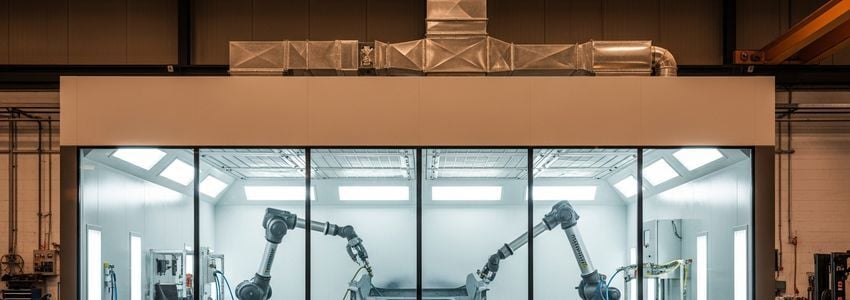
The Challenge: Their current painting setup is a bottleneck. They need a large, custom-designed conveyorized paint and cure system to keep up with demand. The total cost of the system is $150,000.
The Solution: The company's CFO decides an equipment finance agreement is the best route. They have been in business for 10 years and have strong financials. Crestmont Capital approves them for a seven-year loan. By financing the purchase, they can immediately install the new system and start fulfilling the larger orders. The increased revenue generated by the new system more than covers the monthly loan payment. Furthermore, they consult with their accountant and plan to use the Section 179 tax deduction to write off the full $150,000 cost on that year's taxes, significantly reducing their tax liability.
Scenario 3: The Established Custom Woodworking Business
The Business: "Heritage Cabinets," a 15-year-old family-owned business known for high-end custom kitchen cabinets. Their existing paint booth is outdated and inefficient.
The Challenge: They want to upgrade to a modern, energy-efficient downdraft booth to achieve an even better finish and reduce their utility bills. They are also interested in keeping up with the latest finishing technology as it evolves.
The Solution: The owner opts for a 48-month Fair Market Value (FMV) lease. This option provides the lowest possible monthly payment, maximizing their cash flow. They get the state-of-the-art $50,000 booth they need to maintain their premium brand reputation. In four years, at the end of the lease term, they will have the flexibility to either purchase the booth if it still meets their needs or, more likely, lease a brand-new model with even more advanced features, ensuring they always have the best technology available.
Tax Considerations and Equipment Financing
One of the most compelling financial reasons to finance or lease equipment is the potential for significant tax advantages. While you should always consult with a certified tax professional for advice specific to your business, understanding the basics of programs like Section 179 and Bonus Depreciation can help you appreciate the full value of your investment.
Section 179 Deduction
Section 179 of the IRS tax code is a powerful incentive created to encourage businesses to invest in themselves. It allows you to treat the purchase of qualifying equipment as an expense rather than a capital asset. This means you can deduct the full purchase price of the paint booth from your gross income in the year you place it into service. For example, if you finance a $60,000 paint booth and your business has a net income of $150,000, you could potentially deduct the full $60,000, reducing your taxable income to $90,000. This can result in substantial tax savings.
Bonus Depreciation
Bonus depreciation is another tax incentive that can be used in conjunction with or instead of the Section 179 deduction. It allows you to deduct a large percentage of the cost of new and used equipment in the first year. The percentage allowed can change based on current tax laws, so it's important to check the current regulations. This accelerated depreciation further reduces your taxable income in the year of purchase, freeing up cash flow.
Both financing and $1 buyout leases typically qualify for these deductions because they are treated as a purchase for tax purposes. A true lease (FMV) works differently; you generally deduct the monthly lease payments as a regular operating expense. This still provides a valuable tax benefit, just spread out over the term of the lease. The best strategy depends on your company's overall financial picture and tax situation, which is why professional consultation is crucial.
Tips for Choosing the Right Paint Booth Financing
Securing the right financing is just as important as choosing the right paint booth. A good financing partner can save you money and headaches down the road. Here are some practical tips to guide your decision-making process.
- Understand the Total Project Cost: Before you apply, get a comprehensive quote that includes not just the booth, but all "soft costs" like shipping, installation, electrical work, concrete work for pits, and permitting fees. Ensure your financing covers this total amount to avoid unexpected out-of-pocket expenses.
- Review Your Business Financials: Know your numbers before you talk to a lender. Have a clear understanding of your credit score, annual revenue, and recent cash flow. This will help you know what to expect and allow you to have a more productive conversation with your financing representative.
- Compare Offers Carefully: Don't just look at the monthly payment. Compare the interest rate (or factor rate), the term length, and any fees. A lower payment over a much longer term could end up costing you significantly more in total interest. Ask for a clear amortization schedule if possible.
- Read the Fine Print: Understand the terms of the agreement. Are there prepayment penalties if you want to pay the loan off early? For a lease, what are your exact end-of-term options and what are the associated costs? Clarity on these points is essential.
- Choose a Lender with Industry Experience: Work with a lender who understands your industry. A company like Crestmont Capital, which frequently finances paint booths, will understand the equipment, the vendors, and the unique needs of your business, leading to a smoother, faster process.
- Inquire About Application-Only Limits: Many lenders offer an "application-only" program for financing up to a certain amount (e.g., $250,000). This means you can get approved with a simple application and a credit check, without having to provide extensive financial documents like tax returns and profit-and-loss statements. This can dramatically speed up the funding process.
Frequently Asked Questions
What is the typical interest rate for paint booth financing?
Interest rates vary widely based on your credit score, time in business, and the lender. For well-qualified businesses with strong credit (700+ FICO), rates can be very competitive, often in the single digits. Businesses with fair or challenged credit can expect higher rates to offset the lender's risk. It's best to get a personalized quote.
Can I finance a used paint booth?
Yes, absolutely. Most equipment financing companies, including Crestmont Capital, offer financing for both new and used paint booths. Financing a used booth can be a great way to save money, but the lender may have some age or condition restrictions on the equipment.
How long are the financing terms?
Financing terms typically range from 24 to 84 months (2 to 7 years). Shorter terms mean higher monthly payments but less total interest paid. Longer terms offer lower, more manageable monthly payments. The best term length depends on your budget and cash flow.
What is the minimum credit score required?
While there's no universal minimum, most lenders look for a personal FICO score of 620 or higher. Some programs may be available for scores as low as 580, but these will likely require compensating factors like strong revenue, significant time in business, or a larger down payment.
Can startups get financing for a paint booth?
Yes, financing is available for startups (businesses with less than two years of operational history). Lenders will place a heavier emphasis on the owner's personal credit score, industry experience, and may require a detailed business plan and a down payment of 10-20%.
Does financing cover installation and shipping costs?
Yes. One of the major benefits of working with a lender like Crestmont Capital is the ability to finance 100% of the project. This includes these "soft costs" like installation, shipping, and training, bundling everything into one manageable monthly payment.
What's the main difference between a loan and a lease?
The primary difference is ownership. With a loan (equipment finance agreement), you own the equipment at the end of the term. With a true lease (FMV), you are renting the equipment and have the option to buy it, return it, or upgrade at the end. Leases typically have lower monthly payments.
How fast is the approval process?
For transactions under $250,000, the process is very fast. With a simple online application, credit decisions are often made within 2-4 business hours. Funding can occur in as little as 24-48 hours after all documents are signed.
Is a down payment always required?
No, it is not always required. Many programs for well-qualified businesses offer 100% financing with no money down. However, providing a down payment can help secure better rates or gain approval for businesses with less-than-perfect credit profiles.
What happens at the end of a paint booth lease?
This depends on the lease type. For a $1 Buyout lease, you pay $1 and own the booth. For a Fair Market Value (FMV) lease, you have three options: 1) Purchase the booth for its current fair market value, 2) Return the equipment to the lender, or 3) Renew the lease or start a new lease on a new piece of equipment.
Can I pay off my equipment loan early?
This depends on the lender and the specific terms of your agreement. Some loans have no prepayment penalties, while others might. It's an important question to ask your financing representative before signing the final documents.
What documents do I need to apply?
For most application-only programs (typically up to $250,000), all you need is a completed application and a quote from the equipment vendor. For larger amounts or more complex situations, the lender may request 3-6 months of business bank statements, and potentially business tax returns.
Will applying for financing affect my personal credit score?
Most business lenders will perform a "soft pull" of your credit initially to pre-qualify you, which does not affect your score. A "hard pull," which can have a minor, temporary impact on your score, is typically only done once you decide to move forward with a specific offer. Timely payments on the loan can help build both your business and personal credit over time.
Can I finance a paint booth from any manufacturer or vendor?
Generally, yes. Independent lenders like Crestmont Capital are vendor-agnostic, meaning you can choose the paint booth from the manufacturer or dealer that best suits your needs. You are not locked into a specific brand's captive financing program. We work with reputable vendors across the country.
Why choose Crestmont Capital over a traditional bank?
Crestmont Capital offers several advantages over banks for equipment financing. We have a much faster and simpler application process, higher approval rates (especially for small businesses), more flexible qualification criteria, and a focus specifically on equipment. Banks often have a lengthy, document-heavy process and may not finance soft costs or used equipment.
How to Get Started
Ready to take the next step? Getting paint booth financing with Crestmont Capital is simple. Follow this 4-step process to get the equipment you need to grow your business.
Step 1
Get Your Equipment Quote
Work with your preferred paint booth vendor to select your equipment and get a detailed, all-inclusive quote.
Step 2
Complete Our Online Application
Fill out our secure online application in just a few minutes. It's fast, easy, and there's no obligation.
Step 3
Review Your Offer
You'll receive a decision quickly, along with a clear, easy-to-understand financing offer outlining your terms.
Step 4
Receive Your Equipment
Once you sign the documents, we pay your vendor directly, and they arrange for your booth's delivery and installation.
Start Your Paint Booth Financing Application
Apply online in minutes and get a decision fast. Crestmont Capital - the #1 business lender in the U.S.
Apply NowConclusion
For any auto body shop, manufacturer, or industrial business, a modern paint booth is not a luxury-it is a fundamental asset that drives quality, efficiency, and profitability. The substantial cost of this equipment should not be a roadblock to your company's growth. By leveraging strategic paint booth financing or leasing, you can acquire the exact equipment you need to elevate your operations, all while preserving your valuable working capital and maintaining healthy cash flow.
Whether you choose the long-term ownership benefits of an equipment loan or the flexibility and lower payments of a lease, financing provides a clear and manageable path to upgrading your capabilities. It allows you to compete at a higher level, deliver superior results to your clients, and build a more resilient and successful business. If you are ready to invest in your future, exploring your paint booth financing options with an experienced partner like Crestmont Capital is the logical next step.
Disclaimer: The information provided in this article is for general educational purposes only and is not financial, legal, or tax advice. Funding terms, qualifications, and product availability may vary and are subject to change without notice. Crestmont Capital does not guarantee approval, rates, or specific outcomes. For personalized information about your business funding options, contact our team directly.